The Annapurna Base Camp Trek is possible in winter, but December, January and February don’t offer the same experience.
December can give you clear mountain views with manageable winter conditions, while January is usually the coldest and more demanding period. February gradually moves toward spring, although snow and freezing temperatures can still affect the higher sections of the trail.
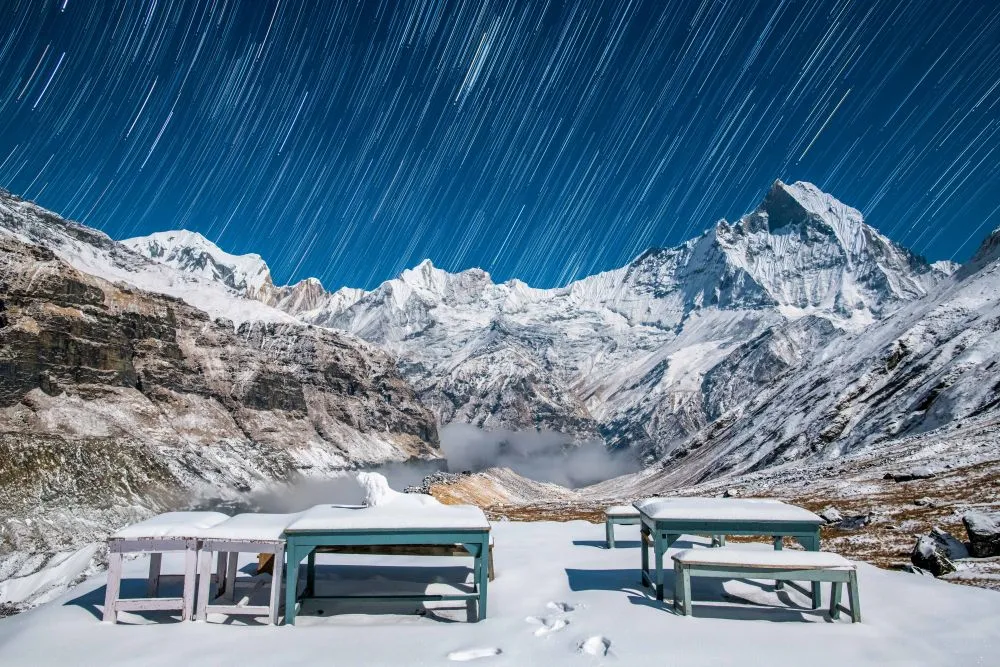
Winter also changes the character of the trek. The trails are quieter, the mountains can look exceptionally clear on good-weather days, and snow can transform the upper Annapurna Sanctuary into a completely different landscape.
But there is a trade-off: colder nights, shorter daylight, possible snow and more demanding trail conditions at higher elevations.
So, can you safely trek to Annapurna Base Camp in winter? Yes, with proper preparation and current trail information. But winter ABC is not simply the regular trek with an extra jacket.
Is Annapurna Base Camp Trek Possible in Winter?
Yes, the Annapurna Base Camp Trek is possible during December, January and February.
Winter is not the easiest season for the trek, but the route can still be rewarding for trekkers who are prepared for cold weather and changing conditions.
The biggest difference appears as you climb higher.
The lower sections around the villages can remain relatively comfortable during sunny days, while temperatures drop sharply toward Deurali, Machhapuchhre Base Camp and Annapurna Base Camp. Snow and ice can also make the upper trail slower and more difficult.
Nepal Tourism Board notes that winter does not completely prevent travel in Nepal and that December and January can still bring bright sunshine and clear mountain views. At the same time, spring and autumn remain the preferred trekking seasons for most trekking areas.
For ABC specifically, your experience will depend heavily on the month, recent snowfall and the conditions on the upper trail when you travel.
Why Trek Annapurna Base Camp in Winter?
Winter is not for everyone, but it has some advantages that you won’t get during the busy spring and autumn seasons.
Fewer trekkers on the trail
The main trekking seasons attract considerably more people to the Annapurna region. Winter is quieter, giving you a more peaceful experience on the trail.
This can be especially appealing if you prefer walking without large groups around you.
Clear mountain views
Cold winter air can produce excellent visibility when the weather is stable.
From the upper sections, you may get impressive views of Annapurna I, Annapurna South, Hiunchuli, Machhapuchhre and the surrounding peaks.
Clear conditions are never guaranteed, but winter can produce some exceptionally sharp mountain views.
Snow-covered landscapes
Snow is one of the main reasons trekkers choose winter.
The landscape changes considerably once snow settles on the higher sections of the trail. Forests, ridges and the Annapurna Sanctuary can look completely different from the green landscapes seen during warmer months.
However, don’t assume that the entire route will be covered in snow. Conditions vary with altitude and recent weather.
A quieter Annapurna Sanctuary
Reaching Annapurna Base Camp in winter can feel very different from arriving during the busy trekking seasons.
The combination of cold air, snow-covered peaks and fewer people can make the sanctuary feel much more isolated.
Annapurna Base Camp Winter Weather and Temperature
Winter temperatures vary significantly depending on where you are on the route.
Pokhara can still feel relatively mild during the day, while the temperature around Annapurna Base Camp can fall well below freezing at night.
Rather than relying on one temperature figure for the entire trek, think about the route in stages.
| Section | What to expect in winter |
|---|---|
| Pokhara and lower trail | Relatively mild during sunny days |
| Chhomrong and surrounding villages | Colder mornings and evenings |
| Bamboo to Deurali | Increasingly cold; frost and icy sections possible |
| Deurali to MBC | Snow and ice become more important considerations |
| MBC to ABC | Coldest section, with possible snow-covered trail |
| Annapurna Base Camp | Freezing conditions, particularly overnight |
Pokhara itself has a much milder winter climate than the high mountains. Nepal Tourism Board’s climate information gives average winter temperatures in Pokhara of around 20.3°C maximum and 7.7°C minimum, but these figures should not be used to predict temperatures at ABC, which sits at 4,130 m.
At ABC, the temperature can fall well below freezing overnight. Exact temperatures vary with weather conditions, wind and snowfall, so avoid planning your clothing around one fixed number.
Annapurna Base Camp Trek in December
December is generally the easiest month to start with if you want a winter ABC experience without going into the deepest part of winter.
Early December can still feel relatively similar to late autumn in terms of trail conditions, although temperatures are dropping.
As the month progresses, cold becomes more noticeable at higher elevations and snowfall can change the upper trail.
What December is like
- Cold mornings and nights
- Good potential for clear mountain views
- Fewer trekkers than October and November
- Increasing chance of snow at higher elevations
- Shorter daylight hours
- Colder conditions around MBC and ABC
If you want to trek in winter but are concerned about the extreme cold of January, early December can be a reasonable compromise.
That said, winter weather can change quickly, so the conditions immediately before your trek matter more than a general monthly description.
Annapurna Base Camp Trek in January
January is generally the coldest and most demanding month for an ABC winter trek.
This doesn’t mean January is impossible. It means you need to take the conditions seriously.
The upper sections around Deurali, Machhapuchhre Base Camp and ABC can experience snow and icy surfaces, particularly following fresh snowfall. Shaded sections can remain slippery even when lower parts of the trail are clear.
Shorter winter daylight also means there is less room for delays.
Why choose January?
January can appeal to experienced trekkers who want:
- Very quiet trails
- A stronger chance of winter scenery
- Snow-covered upper sections
- Cold, clear mountain mornings
- A more challenging trekking experience
But January is not the month I’d automatically recommend to a first-time trekker simply because the trails are quieter.
If you’re considering January, current snow and trail conditions should be checked before departure, especially for the upper section of the trek.
Annapurna Base Camp Trek in February
February sits between deep winter and the beginning of spring.
It can still be very cold at high elevations, and snow can remain on the upper trail. However, conditions gradually begin to improve toward the end of the month.
This makes February interesting for trekkers who want some winter character without necessarily choosing the coldest part of the season.
Early vs late February
Early February can still feel like deep winter.
By late February, daylight increases and temperatures gradually become more manageable, although winter conditions can continue at 4,000 m.
So if you have flexibility within February, late February may offer a more comfortable transition toward spring than the beginning of the month.
December vs January vs February: Which Is Best?
The three winter months have different advantages.
| Factor | December | January | February |
|---|---|---|---|
| Cold | High | Highest | High |
| Snow possibility | Moderate to high at upper elevations | Higher concern | Still possible |
| Crowds | Low | Very low | Low |
| Mountain views | Often excellent in clear weather | Can be excellent | Often good |
| Trail difficulty | Moderate to challenging | Most challenging | Challenging |
| Daylight | Short | Shortest period | Increasing |
| Best for | Winter beginners with preparation | Experienced winter trekkers | Winter-to-spring transition |
This is a general comparison rather than a guarantee. A snowfall event can make one week of December more difficult than a clear week in January.
The actual weather and trail condition on your travel dates matter more than the month alone.
What Happens to the Trail in Winter?
The lower sections of the ABC route don’t suddenly become a snow trail as soon as December begins.
The conditions generally change progressively with elevation.
As you move toward the higher parts of the route, you may encounter:
- Frozen or slippery stone steps
- Snow patches
- Icy sections in shaded areas
- Snow-covered trail after fresh snowfall
- Slower walking speeds
- Reduced visibility during bad weather
The section above Deurali toward Machhapuchhre Base Camp and ABC deserves particular attention because you’re walking at significantly higher elevation and the terrain can become more difficult under snow.
This is one reason a winter itinerary should have some flexibility rather than being planned so tightly that one slow day causes problems for the entire trek.
Is Annapurna Base Camp Safe in Winter?
Winter ABC can be safe for properly prepared trekkers, but “safe” depends on the conditions and your preparation, not simply the calendar.
The main concerns are:
Cold
Exposure to freezing temperatures becomes a serious issue at higher elevations, particularly overnight.
You need proper insulation rather than relying on ordinary hiking clothes.
Snow and ice
Snow can cover parts of the trail, while ice can remain on shaded sections.
Trekking poles and appropriate traction equipment can become useful depending on current conditions.
Shorter daylight
Winter days provide less daylight than spring and autumn.
Starting early becomes more important because you don’t want a minor delay to push a high-altitude section into darkness.
Changing trail conditions
Fresh snowfall can change the difficulty of the upper route quickly.
If the trail becomes heavily covered, route-finding can also become more complicated.
For that reason, winter trekkers should have a guide or experienced local support who can assess current trail conditions rather than relying only on a fixed itinerary.
Annapurna Base Camp Winter Trek Difficulty
ABC is generally considered a moderate trek, but winter can make the same route considerably more demanding.
The difficulty comes from a combination of:
- Cold temperatures
- Snow and ice
- Higher elevation
- Shorter daylight
- Slower walking
- Potentially difficult upper-trail conditions
You don’t necessarily need mountaineering experience to complete a winter ABC trek, but you should be comfortable with long trekking days and prepared to adjust your plans if conditions deteriorate.
A trekker who is physically fit but poorly equipped for cold weather may have a harder time than someone with moderate trekking experience who has prepared properly.
Annapurna Base Camp Winter Trek Packing List
Winter packing should focus on warmth, waterproofing and traction.
Clothing
- Moisture-wicking base layers
- Warm fleece or insulating mid-layer
- Insulated down or synthetic jacket
- Waterproof and windproof outer layer
- Warm trekking trousers
- Thermal leggings for colder days
- Wool or thermal socks
- Warm hat
- Neck gaiter or buff
- Insulated gloves
The key is layering.
You may start the morning wearing several layers and remove some as you climb during sunny daytime conditions.
Footwear
Use sturdy trekking boots with good grip.
Waterproof boots are especially useful when snow or wet conditions are present.
Carry extra socks because wet feet become a much bigger problem when temperatures are low.
Winter trekking equipment
Depending on the current trail conditions, consider carrying:
- Trekking poles
- Microspikes or suitable traction devices
- Gaiters
- Headlamp
- Quality sunglasses
- Sunscreen
- Water bottle or insulated bottle
- Sleeping bag suitable for winter conditions
The exact equipment required should depend on the forecast and current trail conditions rather than buying every item marketed as “winter trekking gear.”
Do You Need a Sleeping Bag for ABC in Winter?
A warm sleeping bag is highly advisable for a winter ABC trek.
Teahouses provide beds and bedding arrangements vary, but the temperatures at higher elevations can become extremely cold.
A suitable winter sleeping bag gives you an additional layer of insulation and allows you to sleep more comfortably.
If you’re unsure about the exact rating, ask your trekking operator what equipment is provided and what they recommend for the conditions expected on your departure dates.
Accommodation and Food During Winter
Accommodation is one of the practical differences between winter and peak trekking seasons.
The ABC route has teahouses along the trail, but winter occupancy and operating conditions can vary, particularly at higher elevations.
Don’t assume every lodge will operate exactly as it does during October.
Before departure, confirm the availability of accommodation along your planned route, especially if you’re travelling during the coldest part of winter.
Food options can also be simpler than during busy periods, but common trekking meals such as dal bhat, noodles, soups, eggs and other basic dishes are generally the type of food you can expect.
A hot meal becomes more than just something to eat when you’re trekking in freezing conditions.
What Are the Biggest Challenges of ABC in Winter?
The biggest challenge isn’t one particular obstacle.
It’s the combination of several smaller difficulties.
1. Cold nights
Sleeping at high elevation in freezing temperatures can be uncomfortable without proper insulation.
2. Snow and ice
The trail can become slippery and slower after snowfall or overnight freezing.
3. Less daylight
You have less time to complete each day’s walk.
4. Changing conditions
A clear morning doesn’t guarantee clear conditions throughout the day.
5. Fewer people around
Quiet trails are one of winter’s biggest advantages, but they also mean there may be fewer trekkers around if you need assistance.
This is another reason proper preparation and local support matter during winter.
Is ABC in Winter Good for Beginners?
It depends on the beginner.
If you’ve never done a multi-day high-altitude trek before, spring or autumn is generally a more straightforward choice.
Winter adds cold, snow, shorter daylight and potentially more complicated trail conditions.
However, a physically prepared beginner travelling with an experienced guide and using the right equipment can still consider a winter ABC trek if the current conditions are suitable.
The important thing is not to choose winter simply because it is advertised as a “quiet” or “secret” season.
Choose it because you’re prepared for what winter actually involves.
Winter ABC vs Spring and Autumn
Spring and autumn remain the preferred seasons for most trekkers because the overall conditions are generally more predictable.
| Winter | Spring/Autumn | |
|---|---|---|
| Crowds | Low | Moderate to high |
| Snow | Possible/common at upper elevations | Less likely overall |
| Temperature | Very cold at high altitude | More comfortable |
| Mountain views | Can be excellent | Generally reliable |
| Trail conditions | Can be icy/snowy | Generally easier |
| Preparation | More demanding | More straightforward |
| Experience | Quiet and wintery | Classic ABC trekking |
If your priority is comfort and predictable trekking conditions, choose spring or autumn.
If your priority is quiet trails and winter scenery, ABC in winter can be worth the extra preparation.
Should You Trek Annapurna Base Camp in Winter?
Yes it can be a best season for ABC trek, but go into it knowing that winter ABC is a different experience from the standard spring or autumn trek.
December, January and February each have their own character.
December can offer a good introduction to winter trekking, particularly earlier in the month.
January is generally the coldest and most demanding period, making it better suited to experienced and well-prepared trekkers.
February gradually moves toward spring, with conditions generally becoming more manageable toward the end of the month.
If you want clear views, fewer people and the possibility of a snow-covered Annapurna Sanctuary, winter can be rewarding.
If you want the easiest conditions and don’t specifically need winter scenery, spring or autumn remains the better choice.
Most importantly, don’t judge winter ABC by a fixed temperature chart or a single month. Check the weather, recent snowfall, upper-trail conditions and accommodation availability close to your departure date.
FAQs
Can you do Annapurna Base Camp Trek in winter?
Yes. The Annapurna Base Camp Trek can be done in December, January and February, but winter requires better preparation for cold, snow, ice and shorter daylight.
Is Annapurna Base Camp safe in winter?
It can be, provided conditions are suitable and you are properly prepared. Snow, ice, cold temperatures and changing upper-trail conditions make winter more demanding than spring or autumn.
Is December a good time for Annapurna Base Camp?
December can be a good month for a winter ABC trek, particularly if you want fewer crowds and clear mountain views. Conditions become colder as the month progresses, so preparation is important.
Can I trek Annapurna Base Camp in January?
Yes, but January is generally the coldest and one of the more demanding periods for ABC. Be prepared for freezing temperatures and possible snow or ice on the upper trail.
Is February a good time for Annapurna Base Camp?
February can be a good option for trekkers who want winter conditions without committing to the entire deep-winter period. Conditions gradually become more manageable toward the end of the month, although snow and cold can still affect the higher sections.
Does it snow at Annapurna Base Camp in winter?
Snow is possible and can cover sections of the upper trail, particularly after fresh snowfall. The amount of snow varies from year to year and depends on recent weather.
How cold is Annapurna Base Camp in winter?
Temperatures at 4,130 m can fall well below freezing, particularly at night. Exact temperatures vary with weather conditions, so trekkers should prepare for severe cold rather than relying on one fixed temperature figure.
What should I pack for an ABC winter trek?
Pack warm layers, an insulated jacket, thermal base layers, gloves, warm socks, waterproof trekking boots, trekking poles, sunglasses, a headlamp and a suitable sleeping bag. Traction equipment such as microspikes may also be useful when the upper trail is icy.
Is ABC harder in winter?
Yes. The route itself does not change completely, but cold temperatures, snow, ice, shorter daylight and slower walking can make the trek more demanding.
Is Annapurna Base Camp in winter better than autumn?
Neither is universally better. Autumn generally offers easier trekking conditions and excellent mountain visibility, while winter provides quieter trails, colder conditions and the possibility of snow-covered landscapes. Choose based on the experience you want.