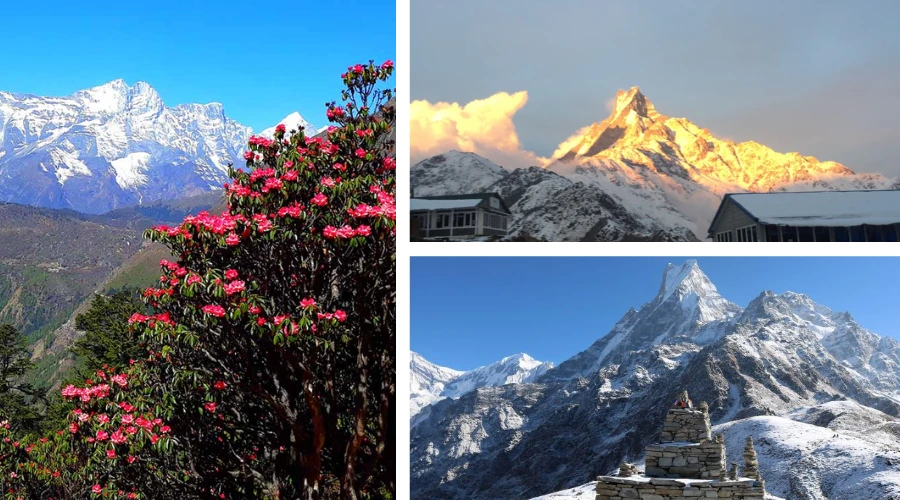
Predicting the Mardi Himal Trek weather is more challenging than it’s trail.
Because it changes with both the season and elevation.
You may start the trek in relatively mild conditions and reach much colder, windier weather as you climb toward High Camp and Mardi Himal Base Camp.
Rain, snow, clouds, and clear mountain views also vary considerably throughout the year.
Understanding the weather before your trek helps you choose the right season, prepare suitable clothing, and know what conditions to expect at different points on the route.
In general, spring and autumn offer the most favorable trekking conditions, with moderate temperatures and clearer mountain views. Winter brings colder conditions and the possibility of snowfall, while the monsoon months are wetter and more challenging.
Mardi Himal Weather at a Glance
Mardi Himal experiences four distinct seasons, and each creates a different trekking environment.
| Season | Months | Typical Conditions | Trekking Experience |
|---|---|---|---|
| Spring | March–May | Mild days, cool nights, blooming rhododendrons | Excellent |
| Monsoon | June–August | Rain, humidity, slippery trails, cloudy conditions | Challenging |
| Autumn | September–November | Stable weather, clear skies, pleasant days | Excellent |
| Winter | December–February | Cold temperatures, freezing nights, possible snowfall | Challenging |
For most trekkers, March to May and September to November are the best periods for the Mardi Himal Trek. If your main goal is to experience snow and quieter trails, winter can also be appealing with the right preparation.
Mardi Himal Temperature and Weather by Elevation
Weather becomes colder as you gain elevation on the Mardi Himal route. Conditions at the lower sections of the trek can feel very different from those around High Camp and Base Camp.
Forest Camp Weather
Forest Camp sits higher than the lower sections of the route and is surrounded by dense forest. The weather is generally cooler than at the start of the trek, with temperatures becoming noticeably colder after sunset.
During spring and autumn, daytime trekking conditions are generally comfortable, although mornings and evenings can be chilly.
Monsoon brings higher humidity and rainfall, while winter can make nights particularly cold.
Low Camp Weather
At Low Camp, the weather begins to feel more alpine as the trail climbs above the forested sections.
Spring and autumn usually provide pleasant conditions for walking during the day, but temperatures can fall quickly after sunset. Cloud and wind can also change the experience, particularly when moving toward the higher parts of the route.
If you are trekking during winter, warm layers become increasingly important from this point onward.
High Camp Mardi Himal Weather
Mardi Himal High Camp weather is considerably colder than conditions at the lower camps.
High Camp is more exposed, so wind can make the temperature feel colder, particularly early in the morning and after sunset. Winter conditions can be harsh, with freezing temperatures and snowfall possible.
Autumn generally provides stable weather and clear mountain views, while spring offers mild daytime conditions and increasingly accessible trails.
If you are planning the early morning walk toward the viewpoint or Base Camp, carry enough warm clothing even when the weather feels comfortable during the day.
Mardi Himal Base Camp Weather
The Mardi Himal Base Camp weather is colder and more unpredictable because of the higher elevation and exposed landscape.
Winter can bring snowfall, and sudden changes in visibility are possible. Even during the more favorable trekking seasons, temperatures can feel very cold around the higher sections, especially before sunrise.
Clear autumn mornings can provide excellent views of the surrounding Himalayan peaks, while clouds can move in quickly during less stable conditions.
Because conditions at higher elevations can change quickly, trekkers should prepare for cold, wind, rain, and possible snow rather than relying only on the weather they experience at lower elevations.
Mardi Himal Weather Month by Month
The best time to trek Mardi Himal depends largely on what you want from the journey. Some trekkers prioritize clear mountain views, while others prefer snow, fewer people, or greener landscapes.
Here is a general overview:
| Month | Weather | What to Expect |
|---|---|---|
| January | Cold and potentially snowy | Freezing nights and winter conditions |
| February | Cold, with possible snowfall | Quiet trails and winter landscapes |
| March | Increasingly mild | Spring begins and trekking conditions improve |
| April | Mild and generally favorable | Rhododendrons and clear mountain scenery |
| May | Warm lower down, increasingly humid | Good trekking early in the month |
| June | Rain begins | Increasingly wet and cloudy |
| July | Wet and humid | Heavy rain and slippery trails |
| August | Wet and green | Monsoon conditions continue |
| September | Weather begins to stabilize | Improving trekking conditions |
| October | Stable and generally clear | One of the best periods for trekking |
| November | Clear and cool | Excellent mountain visibility, colder nights |
| December | Cold and potentially snowy | Winter conditions begin |
These are seasonal patterns rather than a guarantee of daily conditions. Weather can change quickly in the mountains, particularly at higher elevations.
Mardi Himal Weather in Spring: March to May
Spring is one of the best times for the Mardi Himal Trek.
From March to May, temperatures become more comfortable and the winter snow begins to recede from many parts of the trail. Daytime temperatures in the region are generally moderate, while nights remain cool.
One of the biggest attractions of a spring trek is the rhododendron forest. As the national flower of Nepal comes into bloom, sections of the trail become filled with vibrant colors.
March
March marks the transition from winter into spring. Conditions gradually become warmer, although mornings and nights can still be cold, particularly at higher elevations.
Snow may still be present in some higher areas, depending on conditions earlier in the winter.
April
April generally offers comfortable trekking conditions, with mild daytime weather and good opportunities for mountain views.
The rhododendrons are also an important attraction during this period, making April particularly appealing for trekkers who want both mountain scenery and colorful forests.
May
May remains a good month for trekking, although temperatures and humidity begin to increase as the monsoon approaches.
The first part of May can offer favorable conditions, while cloud and rainfall become increasingly possible toward the end of the month.
Mardi Himal Weather in Monsoon: June to August
The monsoon season brings significant rainfall to the Mardi Himal region.
Daytime temperatures can range from around 15°C to 25°C, but high humidity and frequent rain can make trekking uncomfortable.
The trails may become:
- Wet and slippery
- Muddy
- More difficult to navigate
- Prone to leeches
- Affected by landslides in some areas
Clouds can also obscure mountain views, which means the chance of seeing clear Himalayan panoramas is generally lower than during autumn.
However, monsoon has its own appeal. The forests become lush and green, flowers bloom, and the trails are considerably quieter.
If you choose to trek during this period, waterproof clothing, sturdy footwear, and protection for your backpack and other belongings are essential.
Accommodation availability can also be more limited during the off-season, so check ahead before starting your trek.
Mardi Himal Weather in Autumn: September to November
Autumn is generally considered one of the best seasons for the Mardi Himal Trek.
After the monsoon, the weather becomes more stable and the skies are often clearer. This creates excellent opportunities to see the surrounding Himalayan peaks.
Daytime temperatures are generally comfortable, while nights become increasingly cold as November approaches.
September
September marks the transition from monsoon to autumn. Early September can still experience some rainfall, but conditions generally improve as the month progresses.
October
October is one of the most favorable months for the Mardi Himal Trek.
The weather is generally stable, the skies are often clear, and mountain visibility can be excellent. Daytime temperatures remain comfortable for walking, while nights are cooler.
If clear mountain views are your priority, October is a particularly strong choice.
November
November continues to offer generally clear and dry conditions, although temperatures begin to drop, especially at night.
The search data for Mardi Himal already shows interest in Mardi Himal weather in November, and this is important for planning: November can be an excellent trekking month, but you should be prepared for colder mornings and nights than earlier in autumn.
Mardi Himal Weather in Winter: December to February
Winter brings the coldest conditions to the Mardi Himal region.
Daytime temperatures can become quite cold, while nighttime temperatures at higher elevations can fall below freezing. Snowfall is also possible, particularly around the higher sections of the route.
For trekkers who enjoy snow-covered landscapes and quieter trails, winter can offer a completely different Mardi Himal experience.
However, winter trekking requires better preparation.
You should be prepared for:
- Freezing nights
- Snowfall
- Cold winds
- Reduced visibility
- Snow-covered trails
- Sudden changes in weather
A warm sleeping bag, insulated clothing, gloves, a warm hat, and suitable footwear are particularly important.
January
January is among the coldest months. Snow and freezing temperatures can make the higher sections of the trail more challenging.
February
February remains cold, but conditions gradually begin transitioning toward spring later in the month.
Snow may still be present at higher elevations, making this an appealing period for trekkers specifically looking for winter scenery.
When Does It Snow on Mardi Himal?
If your main reason for choosing winter is to experience snow, December to February generally offers the best chance of snowfall.
Snow is more likely around the higher sections, including High Camp and the Base Camp area. The amount of snow can vary considerably from one year to another, so there is no guarantee that a particular departure date will have fresh snowfall.
Spring and autumn can also experience occasional snow at higher elevations, but winter is the season most associated with snowy conditions.
Before heading toward the higher sections, check current conditions with your guide or local trekking operators, particularly after a snowfall.
Is Mardi Himal Cold at Night?
Yes.
The difference between daytime and nighttime conditions can be significant, especially as you gain elevation.
During spring and autumn, daytime temperatures may feel comfortable while mornings and nights remain cold. In winter, temperatures at higher elevations can fall below freezing.
This is why your packing list should focus on layers rather than relying on one heavy jacket.
A practical system includes:
- Thermal base layer
- Fleece or insulating mid-layer
- Down or warm insulated jacket
- Waterproof outer layer
- Warm gloves
- Hat or beanie
- Warm trekking socks
You can remove layers while walking and add them again when temperatures drop.
What Should You Pack for Mardi Himal Weather?
Your clothing should match both the season and the elevation.
For Spring and Autumn
Pack:
- Thermal layers
- Fleece jacket
- Warm insulated jacket
- Waterproof jacket
- Trekking trousers
- Warm gloves
- Hat
- Good hiking boots
- Sleeping bag
- Sunglasses
- Sunscreen
For Winter
Add extra protection against freezing temperatures:
- Heavier insulated jacket
- Warmer thermal layers
- Insulated gloves
- Warm hat
- Cold-weather sleeping bag
- Suitable winter footwear
For Monsoon
Rain protection becomes the priority:
- Waterproof jacket
- Rain cover for your backpack
- Waterproof bags
- Quick-drying clothing
- Waterproof or highly water-resistant hiking footwear
- Extra socks
- Insect repellent
The most important thing is to be prepared for changing conditions. Weather can shift during the same trekking day, so keeping waterproof and warm layers accessible is better than packing them at the bottom of your bag.
How to Check the Mardi Himal Weather Forecast
A weather forecast can help you plan your trek, but mountain weather should always be treated as changeable.
Before starting the trek:
- Check the forecast for the Mardi Himal region rather than relying only on Pokhara weather.
- Check conditions again shortly before heading toward higher elevations.
- Ask your guide or local accommodation about recent weather and trail conditions.
- Be prepared to change your plan if heavy snowfall, rain, or poor visibility develops.
- Carry appropriate clothing even when the forecast looks favorable.
A forecast is useful for planning, but it should not be treated as a guarantee of conditions at High Camp or Base Camp.
What Is the Best Time for Mardi Himal Trek?
For most trekkers, the best time for the Mardi Himal Trek is spring and autumn.
Choose spring if you want:
- Mild trekking temperatures
- Blooming rhododendrons
- Green forests
- Good mountain views
Choose autumn if you want:
- Stable weather
- Clear skies
- Excellent mountain visibility
- Comfortable trekking conditions
Choose winter if you want:
- Snow-covered landscapes
- Fewer trekkers
- A colder and more challenging experience
Choose monsoon if you want:
- Lush green landscapes
- Quieter trails
- A different side of the Mardi Himal region
If this is your first Mardi Himal Trek and your priority is a balance of comfortable weather and mountain views, autumn, particularly October and November, is one of the strongest choices.
Final Thoughts
The Mardi Himal weather is one of the most important factors to consider before starting the trek.
Conditions change as you move from the lower trail to Forest Camp, Low Camp, High Camp, and the higher Base Camp area. Spring and autumn generally offer the most favorable combination of moderate temperatures and clearer skies, while winter brings cold and possible snowfall. Monsoon is wetter and more challenging but offers lush green landscapes and quieter trails.
Rather than choosing your trekking date based only on the season, consider what you want from the journey. If you want clear mountain views, autumn is an excellent option. If you want rhododendron forests, spring is particularly attractive. If snow is your priority, winter may be worth considering.
Whatever season you choose, prepare for changing mountain weather and check current conditions before heading toward the higher elevations.
Recommended Read: Mardi Himal Trek Cost
FAQs
What is the weather like in Mardi Himal?
Mardi Himal weather varies by season and elevation. Spring and autumn generally have moderate daytime conditions and clearer skies, monsoon brings rain and humidity, while winter is cold with possible snowfall at higher elevations.
Which month is best for Mardi Himal Trek?
March to May and September to November are generally considered the best periods for the Mardi Himal Trek. Autumn is particularly favorable for stable weather and clear mountain views, while spring offers blooming rhododendrons.
What is the weather like at Mardi Himal High Camp?
High Camp is considerably colder and more exposed than the lower sections of the trek. Nights and early mornings can be very cold, and winter can bring freezing temperatures and snowfall.
What is the Mardi Himal Base Camp weather like?
Mardi Himal Base Camp has colder and more changeable conditions because of its higher elevation. Snowfall is possible during winter, while clear weather in autumn can provide excellent mountain views.
When does it snow on Mardi Himal?
Snowfall is most likely during the winter months from December to February, particularly around the higher sections of the route. Snow can also remain at higher elevations into other seasons depending on conditions.
Is Mardi Himal Trek possible in winter?
Yes, Mardi Himal can be trekked in winter, but the colder temperatures, snowfall, and potentially difficult trail conditions require proper preparation. Winter is better suited to trekkers who are comfortable with cold-weather trekking.
Is November a good time for Mardi Himal Trek?
Yes. November generally has clear and dry conditions and can offer excellent mountain visibility. However, temperatures, especially at night and at higher elevations, become colder as winter approaches.
Is Mardi Himal Trek possible during monsoon?
Yes, but June to August is a more challenging period because of rainfall, slippery trails, humidity, leeches, and reduced mountain visibility. Waterproof gear and careful planning are particularly important.
Does Mardi Himal Base Camp have snow?
Snow can occur around Mardi Himal Base Camp, particularly during winter. The amount of snow varies according to the weather conditions of a particular year.
How cold is Mardi Himal at night?
Nighttime temperatures become increasingly cold as you gain elevation. During spring and autumn, nights can be chilly, while winter nights at higher elevations can fall below freezing.
Leave a Reply