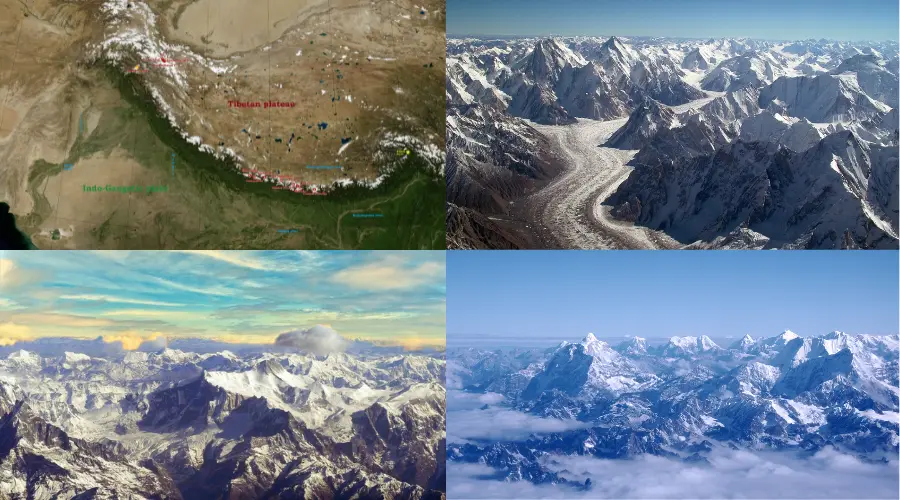
Eight of the world’s fourteen 8,000-meter peaks sit inside Nepal’s borders. If you’ve ever planned a trek toward Everest Base Camp or stood at Poon Hill at dawn, you’ve already been closer to these mountains than most people on Earth ever get.
Most of the world’s highest peaks are concentrated in the powerful Himalayan and Karakoram mountain ranges, stretching across Nepal, Tibet, Pakistan, and India. This region is home to all fourteen mountains that rise above 8,000 meters, often called the “eight-thousanders”, making it the ultimate destination for high-altitude expeditions and trekking adventures.
This guide breaks down all fourteen “eight-thousanders,” where they sit, how they were measured, what makes the infamous “death zone” so dangerous, why so many of them cluster in the Himalayas and Karakoram, and what actually makes climbing above 8,000 m so dangerous. We’ll also look at how trekkers (not just climbers) can get genuinely close to several of these giants without needing a mountaineering permit.
How Is Mountain Height Actually Measured? (Above Sea Level Explained)
Height above sea level is measured using a mix of GPS satellite positioning, geodetic leveling, and increasingly precise satellite radar. Using this method ensures that peaks are compared accurately, regardless of where their base begins.
For example, a mountain with a massive base but a lower summit will rank below a peak with a higher elevation. This is why Mount Everest is officially recognized as the tallest mountain, even though some volcanic mountains are technically taller when measured from the ocean floor.
In 2020, Nepal and China jointly resurveyed Everest using GPS and leveling teams from both countries and agreed on an official height of 8,848.86 meters (29,031.7 feet), a figure that finally resolved decades of disagreement between Nepali and Chinese survey data.
That 2020 joint announcement is worth knowing about, specifically if you’re fielding the “how tall is Everest, really?” question, since older sources still float Survey of India’s 1955 figure of 8,848 m or China’s earlier 2005 rock-height-only measurement of 8,844.43 m.
What Are the Tallest Mountains in the World?
The tallest mountains in the world are ranked based on their elevation above sea level rather than the distance from base to summit. This standardized measurement allows geographers and climbers to accurately compare the highest mountains on Earth, helping define which peaks truly dominate the global landscape.
To qualify among the highest mountains in the world, a peak typically must rise above 8,000 meters (26,247 feet). Only fourteen mountains reach this extraordinary height, a prestigious group often referred to as the eight-thousanders. Their extreme altitude, harsh weather, and thin oxygen levels make them some of the most challenging and dangerous climbs in mountaineering.
These towering giants were formed over millions of years when the Indian tectonic plate collided with the Eurasian plate, a powerful geological event that created the Himalayas and Karakoram ranges, home to nearly all of the world’s tallest mountains. Even today, these mountains continue to grow slowly due to ongoing tectonic activity.
Beyond their impressive elevation, the highest peaks in the world attract people from every corner of the globe. They are natural laboratories for science, bucket-list destinations for trekkers, and legendary challenges for climbers seeking to stand on top of the world.
Is Everest Actually the Tallest Mountain in the World?

Only if you measure height above sea level, which is the standard everyone actually uses. Once you change the measurement, the “winner” changes too:
| Measurement Standard | Tallest Mountain | Why |
|---|---|---|
| Height above sea level | Mount Everest (8,849 m) | Highest point on the standard global sea-level reference. |
| Base-to-summit height | Mauna Kea, Hawaii (10,210 m) | About 6,000 m of the mountain lies below the Pacific Ocean, making it taller from base to summit. |
| Distance from Earth’s centre | Mount Chimborazo, Ecuador | Earth’s equatorial bulge places its summit farther from the planet’s center than Everest’s. |
| Free-standing prominence | Mount Kilimanjaro, Tanzania | Rises independently rather than being part of a connected mountain range. |
Mauna Kea rises only 4,207 m above sea level, but its submerged base adds another roughly 6,000 m, for a true base-to-summit height of around 10,210 m, taller than Everest by that measure alone. Chimborazo’s case is different: because Earth bulges slightly at the equator, a mountain near the equator sits farther from the planet’s center than one nearer the poles at the same sea-level elevation.
Kilimanjaro’s claim is simpler: it’s the tallest mountain that doesn’t belong to a connected range, making it the tallest “free-standing” peak rather than the tallest by any height measurement.
For nearly every practical purpose, trekking, climbing, geography – “tallest mountain in the world” means Everest.
The Top 14 Tallest Mountains Over 8,000 Meters in the World
The tallest mountains in the world, known as the eight-thousanders, are the only fourteen peaks rising above 8,000 meters. Located primarily in the Himalayas and Karakoram, these giants represent the highest mountains on Earth and rank among the greatest natural wonders.
The comparison table below provides a quick overview of their elevations, locations, and rankings, making it easy to understand how these world’s highest peaks compare at a glance.
| Rank | Mountain | Height | Location |
|---|---|---|---|
| 1 | Mount Everest | 8,848.86 m | Nepal / Tibet |
| 2 | K2 | 8,611 m | Pakistan / China |
| 3 | Kangchenjunga | 8,586 m | Nepal / India |
| 4 | Lhotse | 8,516 m | Nepal / Tibet |
| 5 | Makalu | 8,485 m | Nepal / Tibet |
| 6 | Cho Oyu | 8,188 m | Nepal / Tibet |
| 7 | Dhaulagiri I | 8,167 m | Nepal |
| 8 | Manaslu | 8,163 m | Nepal |
| 9 | Nanga Parbat | 8,126 m | Pakistan |
| 10 | Annapurna I | 8,091 m | Nepal |
| 11 | Gasherbrum I | 8,080 m | Pakistan / China |
| 12 | Broad Peak | 8,051 m | Pakistan / China |
| 13 | Gasherbrum II | 8,035 m | Pakistan / China |
| 14 | Shishapangma | 8,027 m | Tibet |
1. Mount Everest (8,848.86 m) — Nepal / Tibet: The Tallest Mountain in the World

No list of the tallest mountains in the world is complete without Mount Everest, the ultimate symbol of human ambition. Mount Everest stands at 8,848.86 meters (8.849 km) above sea level, based on the official 2020 Nepal–China joint measurement.
Known locally as Sagarmatha in Nepali and Chomolungma in Tibetan, Everest sits in the Mahalangur Himal sub-range of the Himalayas on the border between Nepal–China. Tenzing Norgay Sherpa and Edmund Hillary made the first confirmed ascent in 1953, and more than 6,000 climbers have summited since.
You don’t need a mountaineering permit to see it up close: the Everest Base Camp Trek gets trekkers to 5,364 m with views of the summit itself, and the Everest Base Camp Heli Tour covers the same ground in a single day for those short on time.
If “tallest” means highest above sea level, Everest wins.
2. K2 (8,611 m) — Pakistan / China:(2nd Tallest Mountain in the World)
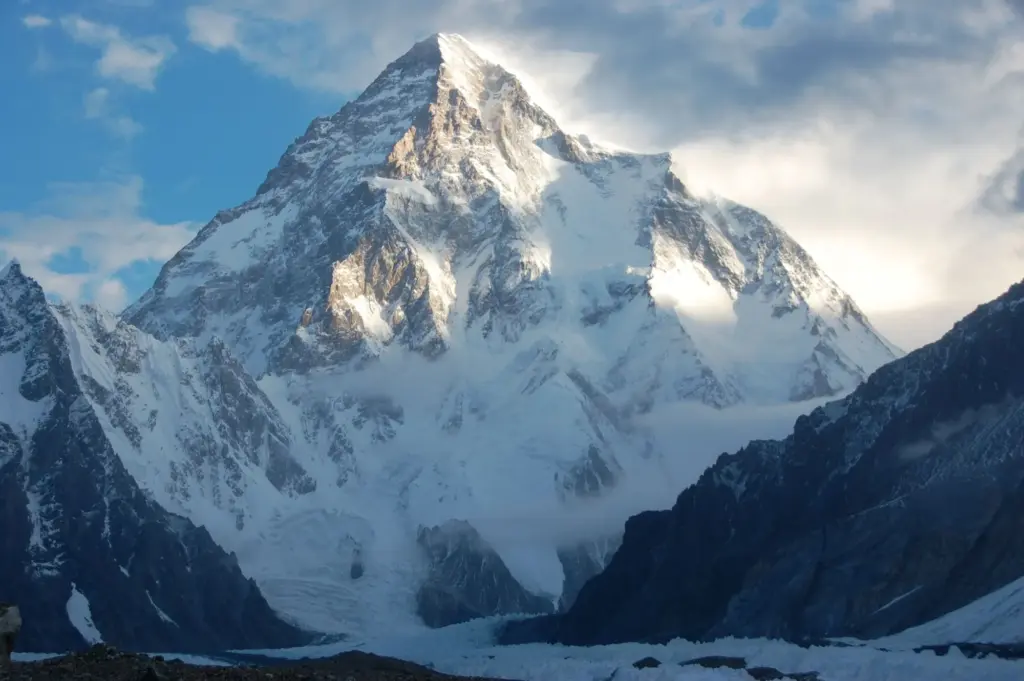
Known as the 2nd tallest mountain in the world, K2 rises dramatically to 8,611 meters (28,251 feet) and is widely regarded as one of the most challenging peaks on Earth.
K2’s nickname, “the Savage Mountain,” isn’t marketing, it reflects a genuinely higher fatality rate than Everest, driven by steeper ice faces, fewer fixed-rope sections, and far less predictable weather.
There’s no easy route to the summit, which is part of why K2 is widely regarded as the harder climb of the two despite Everest’s greater height. For a closer look at how the two compare, see our breakdown of Everest vs K2.
3. Kangchenjunga (8,586 m) — Nepal / India
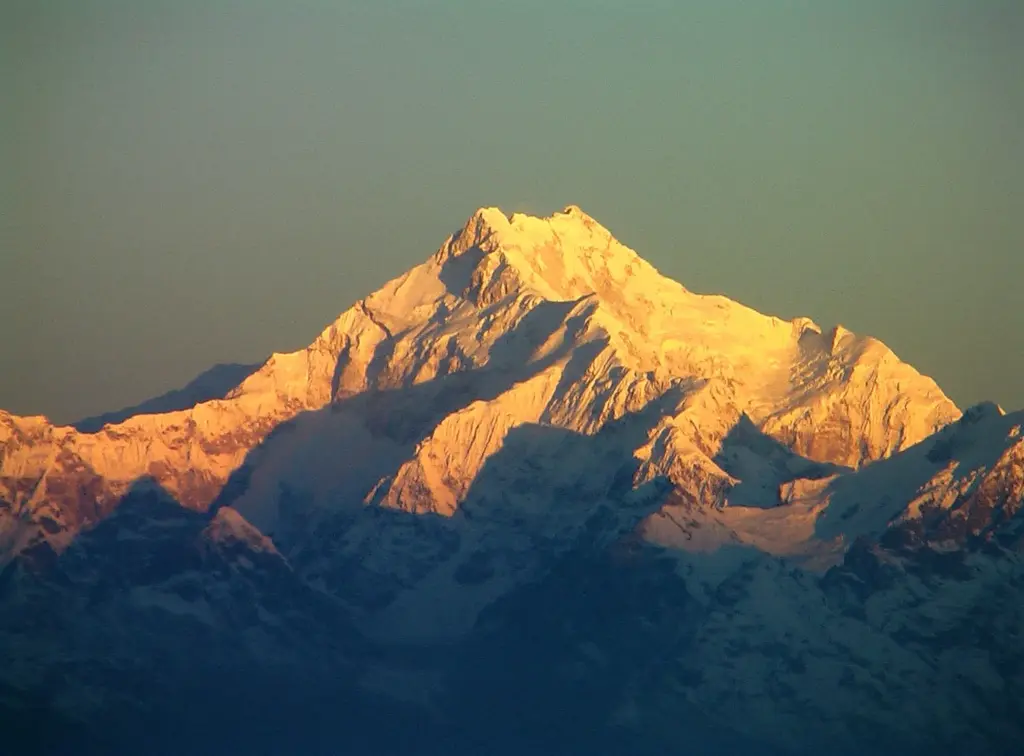
The 3rd tallest mountain in the world, Kangchenjunga, the name translates roughly to “Five Treasures of Snow,” referring to five distinct summits that locals associate with gold, silver, grain, holy scripture, and gems. Many climbing teams have historically stopped just short of the true summit out of respect for the mountain’s sacred status to local communities.
Curious whether it sits in Nepal or India? We’ve covered where Kangchenjunga is actually located in detail, and trekkers can get into the region itself on the Kanchenjunga Circuit Trek.
4. Lhotse (8,516 m) — Nepal / Tibet
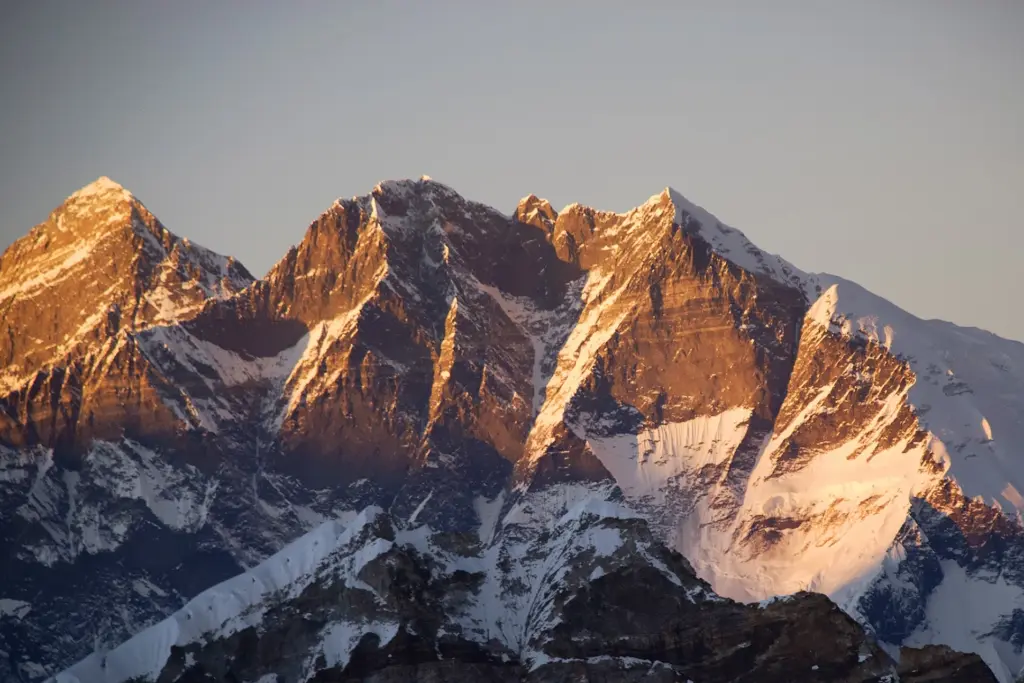
The 4th tallest mountain in the world, Lhotse shares the South Col with Everest and is often climbed as part of the same expedition logistics.
Its south face is one of the steepest sustained rock-and-ice walls in the Himalayas, which keeps Lhotse’s summit far less crowded than its famous neighbor despite the shared approach route.
5. Makalu (8,485 m) — Nepal / Tibet
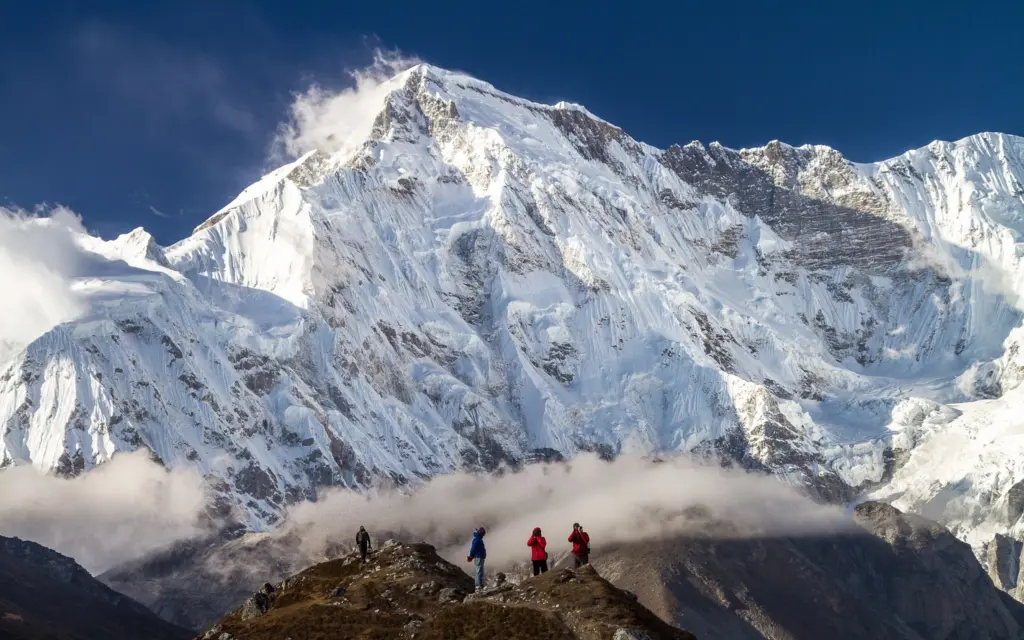
Makalu is the 5th tallest mountain in the world, famous for its near-symmetrical pyramid shape, which makes it one of the more recognizable 8,000ers from a distance, but its knife-edge ridgelines make it one of the more technically demanding climbs in the range, harder, by most accounts, than several taller peaks on this list.
6. Cho Oyu (8,188 m) — Nepal / Tibet
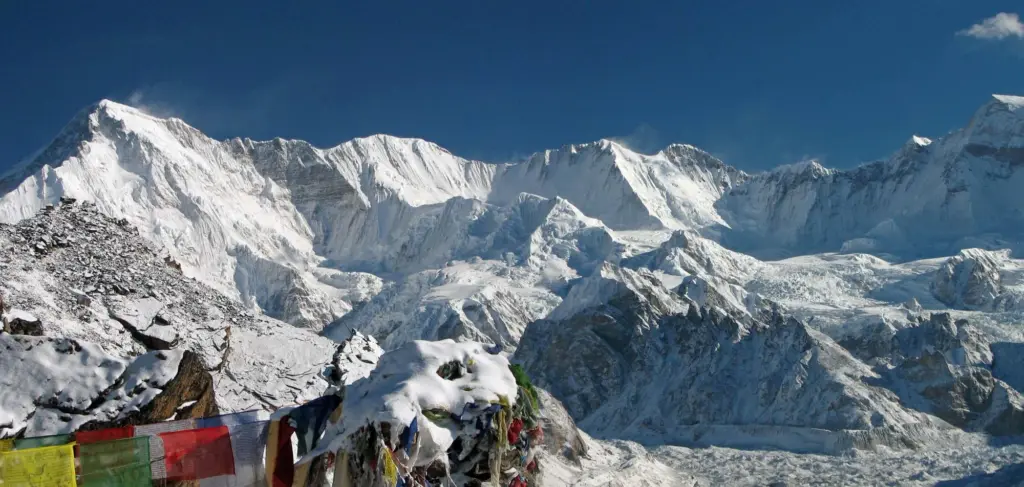
At 8,188 m, Cho Oyu has comparatively gentle slopes and lower avalanche exposure than most 8,000ers, which is why it’s frequently recommended as a first 8,000-meter summit for climbers building toward Everest. “Easier” is relative, altitude alone still makes it a serious undertaking.
7. Dhaulagiri I (8,167 m) — Nepal
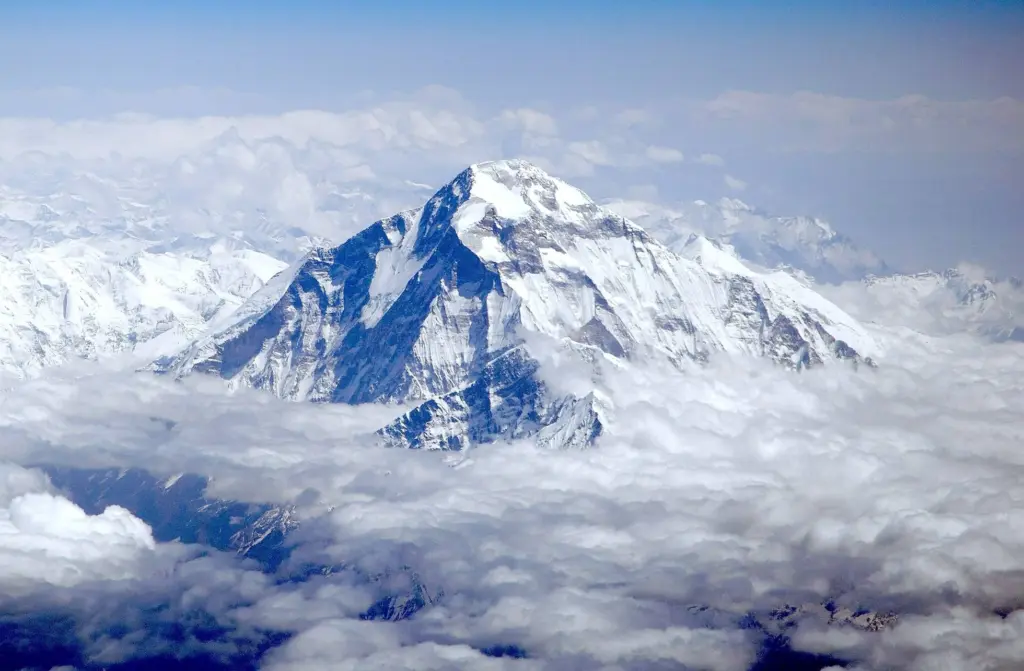
The 7th tallest mountain in the world, Dhaulagiri, which means “White Mountain,” sits in a remote stretch of western Nepal where rescue logistics are notably harder than on the more heavily trafficked Everest and Annapurna routes.
Trekkers can see it from a very different angle on the Dhaulagiri Circuit, which loops around the massif rather than approaching the summit.
8. Manaslu (8,163 m) — Nepal
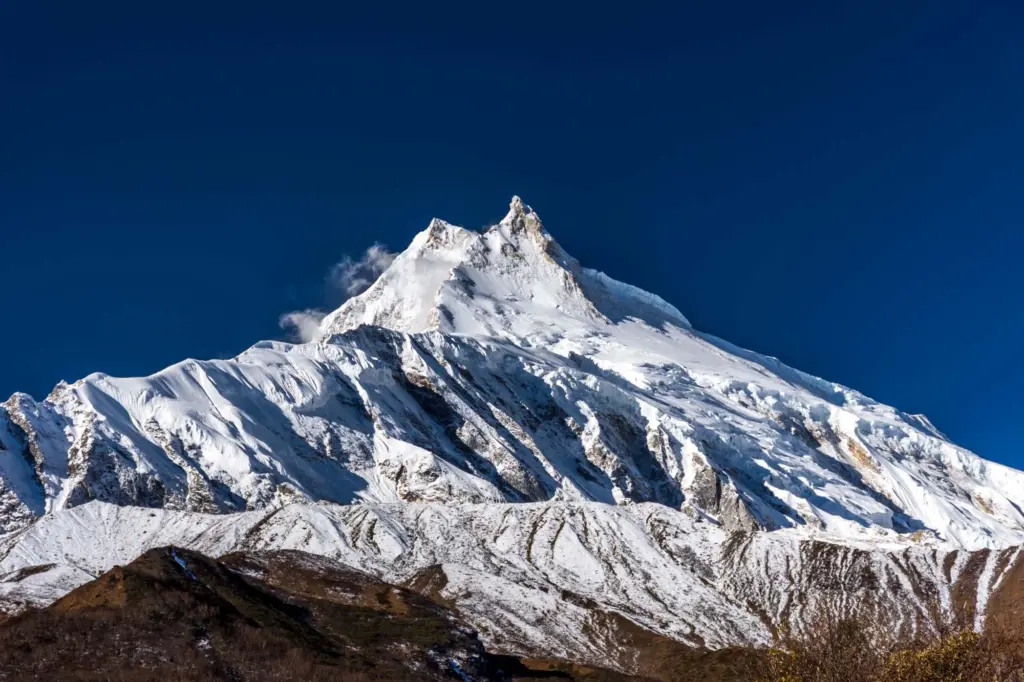
Manaslu, the 8th tallest mountain in the world, is named after the Sanskrit word “manasa,” meaning “soul” or “intellect.” The Manaslu Circuit Trek around its base has become one of Nepal’s fastest-growing routes precisely because it offers Everest- and Annapurna-caliber scenery with a fraction of the foot traffic; see our Manaslu Circuit cost breakdown and current permit requirements for planning.
9. Nanga Parbat (8,126 m) — Pakistan

Known as the 9th tallest mountain in the world, Nanga Parbat earned its nickname after numerous early climbing disasters.
Early 20th-century expeditions suffered such heavy losses on Nanga Parbat that it earned the nickname “Killer Mountain.” Its Rupal Face, rising roughly 4,600 m from base to summit, is among the tallest mountain faces on Earth.
10. Annapurna I (8,091 m) — Nepal

Annapurna I ranks as the 10th tallest mountain in the world and has one of the highest fatality-to-summit ratios among 8,000-meter peaks. It was the first 8,000-meter peak ever summited, in 1950, three years before Everest.
Trekkers wanting proximity without the technical climb typically choose the Annapurna Base Camp Trek or the longer Annapurna Circuit, both of which circle the massif rather than approaching the true summit.
11. Gasherbrum I (8,080 m) — Pakistan / China
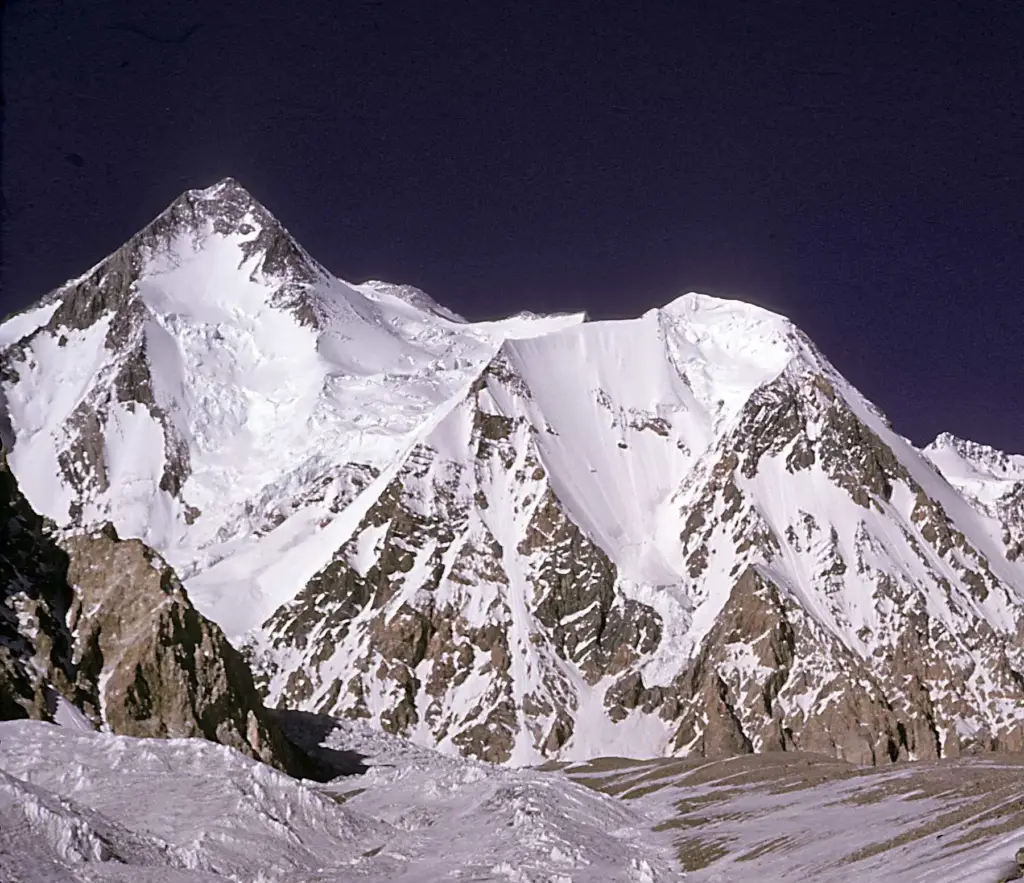
The 11th tallest mountain in the world, Gasherbrum I, also called “Hidden Peak” for its position deep inside the Karakoram, is well out of sight from the approach routes used to reach K2 and Broad Peak. Its remoteness alone makes it one of the least-visited 8,000ers.
12. Broad Peak (8,051 m) — Pakistan / China

Broad Peak, the 12th tallest mountain in the world, is named for its roughly 1.5-kilometer-long summit ridge, genuinely unusual among the eight-thousanders, most of which taper to a single distinct point.
13. Gasherbrum II (8,035 m) — Pakistan / China
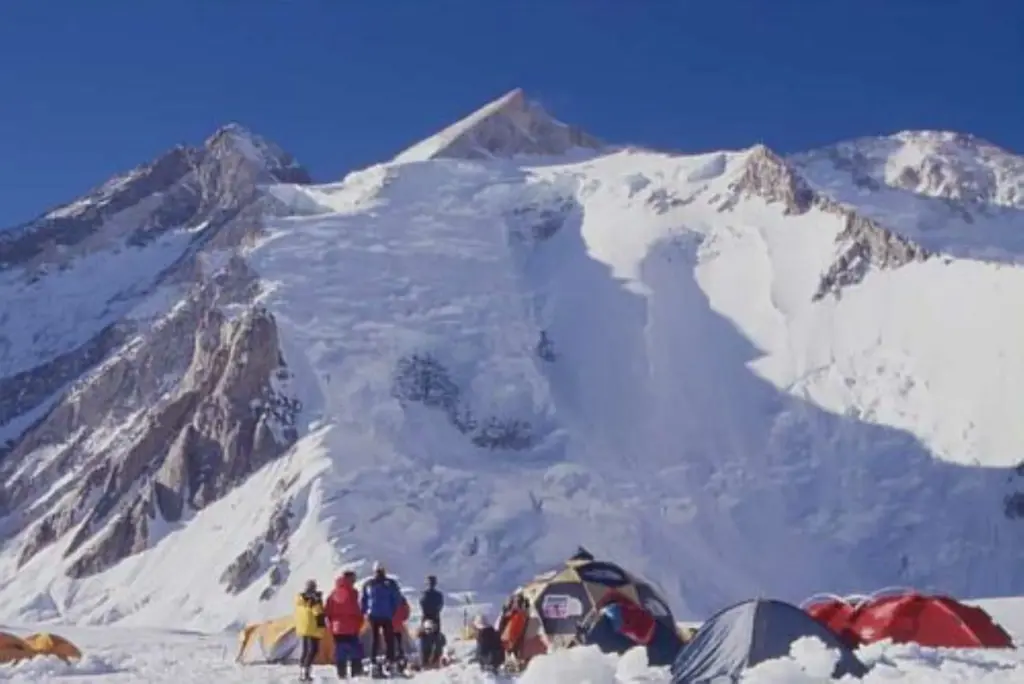
Ranked as the 13th tallest mountain in the world, Gasherbrum II is considered the most approachable of the Karakoram 8,000ers, with a more straightforward southwest-ridge route than its neighbors. “Approachable” by 8,000m standards still means serious technical climbing and weeks of acclimatization.
14.Shishapangma (8,027 m) — Tibet
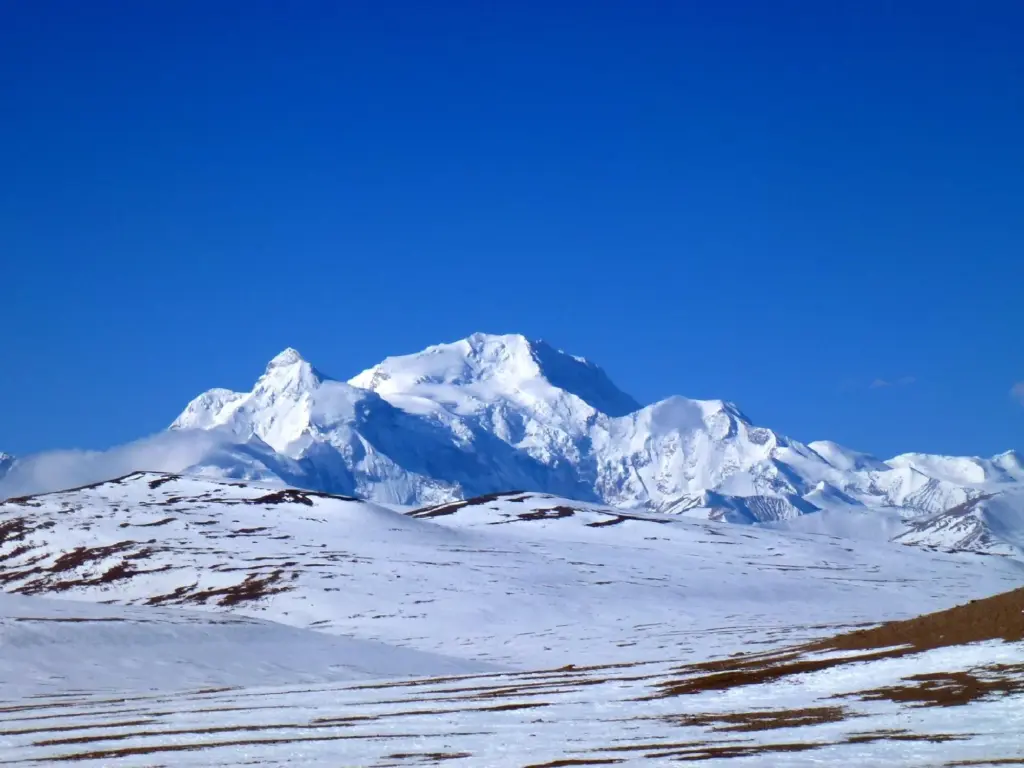
Shishapangma, the 14th tallest mountain in the world, is the only 8,000-meter peak located entirely within Tibet rather than straddling a border, which historically gave it fewer permit complications than peaks shared between Nepal, China, and Pakistan.
Why Most of the World’s Highest Mountains Are in Nepal and the Himalaya
The Himalayas are home to nearly all of the world’s highest mountains, including the tallest peaks on Earth. This region’s extraordinary height and dramatic landscapes are the result of its unique geology.
Eight of the fourteen eight-thousanders—Everest, Kangchenjunga, Lhotse, Makalu, Cho Oyu, Dhaulagiri I, Manaslu, and Annapurna I, sit at least partly within Nepal. Pakistan’s Karakoram range holds five more: K2, Nanga Parbat, Gasherbrum I and II, and Broad Peak. Shishapangma is the only one located entirely in a single country (Tibet) without a shared border.
The reason this geography exists at all comes down to the same tectonic collision mentioned earlier. The Indian Plate continues to push north into the Eurasian Plate at roughly 5 cm per year, among the faster plate movements on the planet, which is why the Himalaya, geologically speaking, are still a young and actively rising range rather than a settled, eroding one.
This combination of geology, altitude, and natural beauty has earned the Himalayas the nickname “Earth’s rooftop”, making it the ultimate destination for trekkers, climbers, and adventure travelers seeking the highest mountains on Earth.
Everest vs K2: Height Isn’t the Same as Difficulty
While Mount Everest is the tallest mountain in the world, many mountaineers consider K2, the 2nd tallest mountain in the world, far more challenging and dangerous.
Everest is taller. K2 is harder. Those two facts coexist because climbing difficulty depends far more on route technicality, weather reliability, and rescue access than on raw elevation.
Everest’s standard routes have decades of fixed-rope infrastructure and a well-established guiding industry, which raises success rates considerably. K2 has neither in the same way: its routes demand serious technical rock and ice climbing, its weather windows are shorter and less predictable, and rescue options above its high camps are minimal. For a fuller comparison, see K2 vs Everest: Which Peak Is Tougher?
What Is the Death Zone? (Above 8,000 Meters)

“Death zone” refers to altitudes above roughly 8,000 m, where atmospheric oxygen is too thin to sustain normal human physiological function for long. Even climbers using supplemental oxygen are racing against their body’s deterioration the longer they stay up there.
The main risks include:
- High-altitude cerebral edema (HACE) — swelling in the brain
- High-altitude pulmonary edema (HAPE) — fluid in the lungs
- Severe frostbite and hypothermia
- Progressive organ strain from prolonged oxygen deprivation
This is also why turnaround times are taken so seriously on summit pushes, including Everest’s well-known “2 PM rule,” which requires climbers to begin descending by early afternoon regardless of how close they are to the top, specifically to avoid being caught in the death zone after dark.
Countries With the Most 8,000-Meter Peaks
The world’s highest mountains are concentrated in a few key countries, making these regions the ultimate destinations for climbers and trekkers.
- Nepal – Home to eight of the fourteen tallest mountains in the world, including Mount Everest, Lhotse, and Makalu.
- Pakistan – Hosts five of the highest peaks in the world, including K2 and Nanga Parbat.
- China/Tibet – Contains several shared summits with Nepal, including Shishapangma, the only 8,000-meter peak entirely in Tibet.
Together, the Nepal–Tibet region serves as the global epicenter for high-altitude mountaineering, trekking, and adventure tourism, making it a hotspot for anyone aiming to explore the tallest mountains on Earth.
How Climate Change Is Reshaping These Mountains
The highest mountains in the world are extremely sensitive to climate change, and scientists are raising alarms over rapid environmental shifts in these fragile ecosystems. Glacial retreat across the Himalaya and Karakoram has accelerated over the past two decades, and the eight-thousanders are not insulated from it.
Faster ice melt is destabilising icefalls that climbing routes depend on, increasing avalanche risk on several standard routes, and altering the glacial meltwater systems that millions of people downstream rely on for water.
For trekkers, this is also showing up in shifting trail conditions and, in some regions, increased rockfall, one more reason route-specific, current-year guidance from a local operator matters more than a generic packing list.
Key impacts of climate change on the tallest mountains:
Trekking Near the World’s Highest Peaks: What You Actually Need to Know

You don’t need to summit an eight-thousander to stand close to one. Nepal’s trekking routes, not its mountaineering routes, are how the vast majority of visitors experience these mountains, and the planning fundamentals are different from what climbing expeditions require:
- Acclimatise properly: Altitude sickness, not technical terrain, is the most common reason trekkers turn back early. For a full breakdown of how to train and acclimatise before a high-altitude trek, see our altitude training and acclimatisation guide.
- Pick a route that matches your timeframe and fitness, not just the most famous name. EBC, Annapurna Circuit, and Manaslu Circuit all get you within sight of multiple 8,000ers, but they differ significantly in length, crowding, and difficulty.
- Go with a licensed local operator: Permit handling, guide-mandatory rules, and rescue coordination all work more smoothly with an established agency, see our guide on choosing a trekking agency in Nepal if you’re comparing options.
- Budget for evacuation insurance: Helicopter rescue in these regions is expensive and not optional to skip, see our helicopter rescue flights guide for what’s actually involved.
- Know your access point: Several of these routes begin with the same notoriously short, weather-dependent runway, see our guide to Lukla Airport, the gateway to the Everest region.
Fascinating Facts About the Tallest Mountains
The highest mountains in the world hold countless mysteries and surprises:
- Mount Everest grows about 4 mm per year due to tectonic activity.
- Jet streams near summits can exceed 200 mph, creating extreme wind conditions.
- Temperatures can plunge below −40°C, even in summer.
- Marine fossils have been discovered near peaks, proving these rocks were once seabeds.
These facts highlight how the tallest mountains on Earth are not only climbing challenges but also living records of geological history and natural wonder.
Final Thoughts
The tallest mountains in the world are far more than impressive geographic landmarks, they are enduring symbols of human ambition, resilience, and the spirit of exploration.
From Mount Everest, the highest mountain on Earth, to K2, the 2nd tallest mountain in the world known for its extreme difficulty, these majestic peaks showcase the sheer power and beauty of nature. They challenge climbers, inspire trekkers, and captivate adventure travelers from around the globe.
Whether you are planning to trek near the world’s highest mountains, dream of summiting an 8,000-meter peak, or simply want to witness these natural wonders, standing in the shadow of these giants is an unforgettable experience that transforms the way you see the world.
The tallest mountains on Earth are not just destinations, they are living testaments to endurance, nature, and human curiosity.
FAQs About the Tallest Mountains in the World
-
Which is the tallest mountain in the world?
Mount Everest, at 8,848.86 m above sea level, the standard measurement used for ranking mountains globally.
-
Is there a mountain technically taller than Everest?
Yes, by a different measurement. Hawaii’s Mauna Kea is taller from base to summit (~10,210 m total), but most of that height sits below sea level, so it doesn’t count for standard elevation rankings.
-
What are the top 10 tallest mountains in the world?
The top 10 tallest mountains are: Everest, K2, Kangchenjunga, Lhotse, Makalu, Cho Oyu, Dhaulagiri I, Manaslu, Nanga Parbat, and Annapurna I.
-
Where is the second-tallest mountain in the world?
K2, the 2nd tallest mountain in the world, is located in Pakistan’s Karakoram range.
-
Is Mount Everest in Nepal or India?
Neither alone — it sits on the Nepal–China (Tibet) border. Most climbing and trekking access routes start from the Nepal side.
-
Where are the 7 highest mountains in the world?
All seven are in the Himalayas, spanning Nepal, Tibet (China), and parts of India.
-
What is the ranking of Annapurna I?
Annapurna I is the 10th tallest mountain in the world and is known for its high fatality rate among climbers.
-
Which is higher, K2 or Nanga Parbat?
K2 is higher at 8,611 m, while Nanga Parbat stands at 8,126 m.
-
What is the hardest mountain to climb?
K2 is widely considered the most difficult and dangerous climb among the world’s tallest mountains due to steep slopes and unpredictable weather.
-
Can beginners climb an 8,000-meter peak?
No. Every eight-thousander requires years of technical mountaineering experience, high-altitude training, and significant logistical support, this is distinct from trekking to a base camp, which is accessible to reasonably fit beginners with proper preparation.
-
Can I see Everest from Nepal?
Yes, trekking routes like the Everest Base Camp Trek and nearby viewpoints offer stunning views of Mount Everest.
-
Is Mount Everest more in China or Nepal?
Everest straddles the Nepal–China (Tibet) border, with the summit shared between the two countries.
-
Why can’t planes fly over Mount Everest?
Extreme altitude, strong winds, and thin air make flying over Everest risky for commercial aircraft.
-
Why is there a 2 PM rule on Mount Everest?
Climbers must turn back by 2 PM to descend safely before darkness, reducing the risk of accidents in the death zone.
-
Which country has the most mountains?
China has the most mountains globally, while Nepal hosts the majority of the world’s highest peaks above 8,000 meters.
-
How many mountains are above 8,000 meters?
Exactly fourteen, all located in the Himalaya and Karakoram ranges across Nepal, Tibet, Pakistan, and India.
Sources: Survey Department of Nepal and the Ministry of Natural Resources of the People’s Republic of China (joint 2020 Everest elevation announcement); peak elevation data cross-referenced against Nepal’s Department of Tourism and standard mountaineering references for the Karakoram peaks.