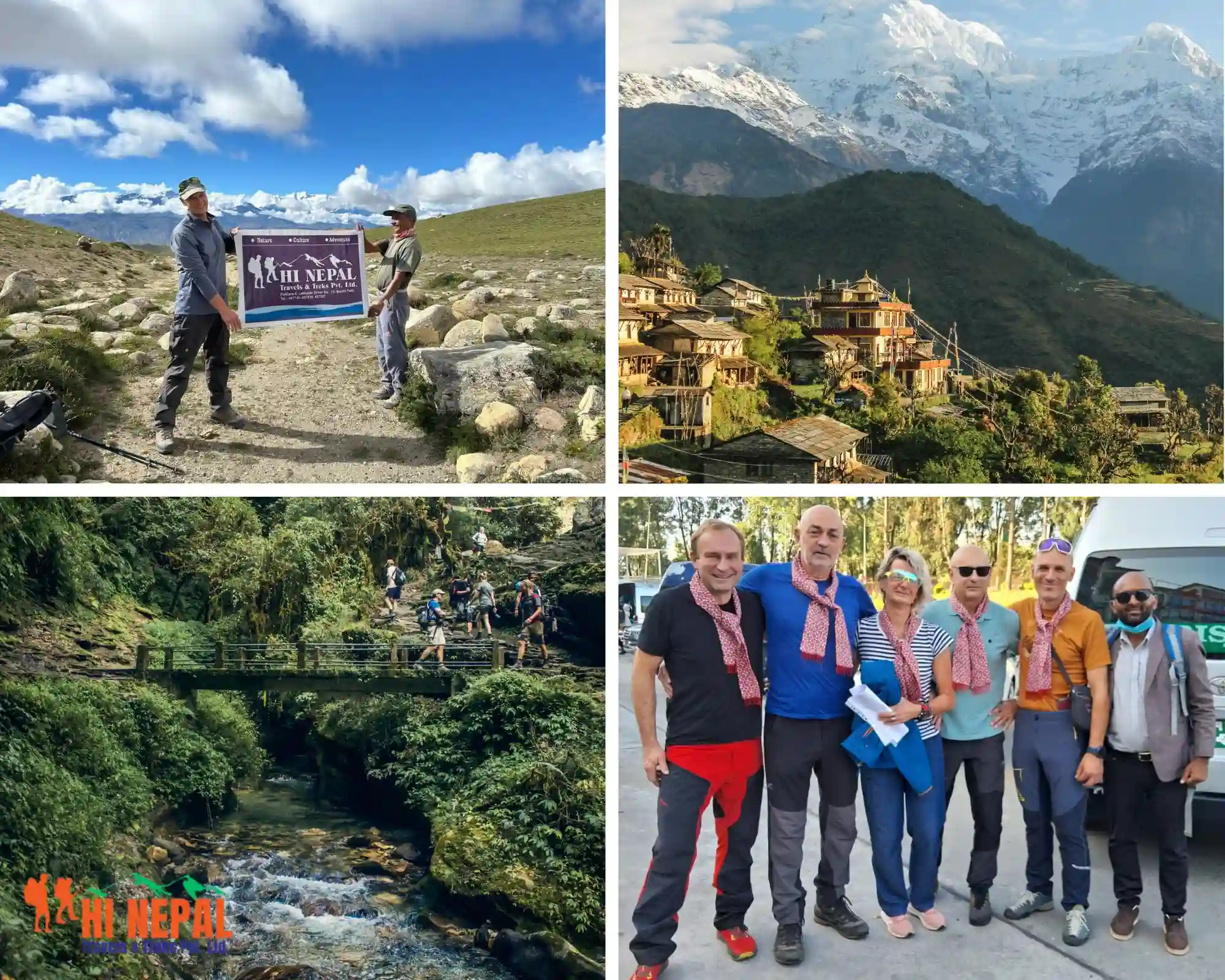
Nepal is one of those places where the trek you choose can completely change your experience of the country.
You can spend a week walking through rhododendron forests and mountain villages, cross a 5,000-meter Himalayan pass, follow an old Tibetan trade route, or stand beneath some of the highest mountains on Earth.
That is what makes choosing among the best treks in Nepal difficult. Everest Base Camp is not the only answer, and the most famous trek is not necessarily the right one for every traveler.
Your available time, fitness, trekking experience, preferred scenery, altitude tolerance, and even the season you visit Nepal all matter.
For 2026, some of the most popular choices include Everest Base Camp, Annapurna Circuit, Annapurna Base Camp, Manaslu Circuit, and Langtang Valley. But there are also quieter routes such as Tsum Valley, Khopra Ridge, and Upper Mustang for travelers who want something beyond the busiest trails.
This guide breaks down 15 of the best trekking routes in Nepal, including their approximate duration, difficulty, highlights, and ideal trekking seasons, so you can narrow down the route that actually suits you.
Best Treks in Nepal at a Glance
If you are still deciding where to trek, start here.
| Trek | Approx. Duration | Difficulty | Best For |
|---|---|---|---|
| Everest Base Camp | 12–14 days | Challenging | First Himalayan high-altitude trek |
| Annapurna Circuit | 15–20 days | Moderate to Challenging | Diverse landscapes and Thorong La |
| Annapurna Base Camp | 7–12 days | Moderate | Mountain views in less time |
| Langtang Valley | 7–10 days | Easy to Moderate | Beginners and first-time trekkers |
| Manaslu Circuit | 14–18 days | Challenging | Remote landscapes and Tibetan culture |
| Ghorepani Poon Hill | 4–5 days | Easy to Moderate | Short treks and sunrise views |
| Mardi Himal | 5–7 days | Moderate | Shorter off-the-beaten-path trek |
| Upper Mustang | 10–14 days | Moderate | Tibetan culture and rain-shadow landscapes |
| Gokyo Lakes | 12–14 days | Moderate to Challenging | Lakes and Everest-region views |
| Kanchenjunga Base Camp | 20–24 days | Challenging | Remote wilderness |
| Helambu | 5–7 days | Easy | Short trek near Kathmandu |
| Dhaulagiri Circuit | 18–20 days | Difficult | Experienced trekkers |
| Makalu Base Camp | 20–22 days | Challenging | Remote mountain adventure |
| Khopra Ridge | 7–9 days | Moderate | Quiet trails and panoramic views |
| Tsum Valley | 14–16 days | Moderate | Culture, monasteries, and solitude |
Duration and difficulty can vary depending on the itinerary, route conditions, acclimatization days, and individual pace.
Why Trek in Nepal?
Nepal’s appeal is not simply the number of high mountains packed into a relatively small country. Its trekking routes pass through remarkably different landscapes and communities.
A single trek can take you from subtropical forests and terraced farmland to alpine meadows, glacial valleys, and barren high-altitude terrain.
The mountains are only part of the experience.
On the trail, you may spend the night in a small Gurung village, walk past Buddhist monasteries, cross suspension bridges above mountain rivers, or share a meal with a family running a teahouse.
The experience also changes from region to region.
The Everest region is closely connected with Sherpa culture. Annapurna offers extraordinary geographic and cultural variety. Manaslu and Tsum Valley provide a stronger sense of remoteness and Tibetan influence. Upper Mustang feels completely different again, with its dry landscape, caves, monasteries, and former kingdom of Lo.
That variety is why there is no single “best trek in Nepal.”
There is a best trek for you.
When Is the Best Time to Trek in Nepal?
For most trekking routes, spring and autumn are the safest starting points when planning a Nepal trek.
Spring: March to May
Spring brings warmer temperatures at lower elevations and blooming rhododendrons across many mountain regions.
March can still feel cold at higher elevations, while April and May generally bring increasingly warm conditions. Visibility can vary later in the season, particularly as pre-monsoon moisture begins to build.
Autumn: September to November
Autumn is traditionally one of the most popular trekking seasons.
After the monsoon, many trails become greener and the atmosphere can be exceptionally clear. October and November are especially popular for classic high-altitude routes.
The trade-off is that popular trails and teahouses can be busy.
Winter: December to February
Winter does not mean trekking stops in Nepal.
Lower and mid-altitude routes such as Poon Hill, Helambu, and parts of the Annapurna region can work well for travelers who do not mind cold mornings and nights.
High passes and very high-altitude routes become more demanding because of snow, freezing temperatures, and changing trail conditions.
Monsoon: June to August
The summer monsoon makes many trekking routes wet, muddy, and less predictable.
However, not every part of Nepal receives heavy rainfall. The rain-shadow regions, particularly Upper Mustang, can be excellent alternatives during this period.
Before choosing a trek, check the specific route rather than assuming the same weather applies throughout Nepal.
For a more detailed seasonal breakdown, see our guide to the best time for trekking in Nepal.
15 Best Treks in Nepal for 2026
1. Everest Base Camp Trek
The Everest Base Camp Trek remains one of Nepal’s defining trekking experiences.
The route follows the Dudh Koshi Valley into the Khumbu, passing through Sherpa settlements such as Namche Bazaar, Tengboche, Dingboche, and Gorak Shep before reaching Everest Base Camp.
But the attraction is not simply reaching the base camp.
Along the way, you get increasingly dramatic views of Everest, Lhotse, Nuptse, Ama Dablam, and other Himalayan peaks. The trail also provides an opportunity to experience Sherpa culture and visit important monasteries such as Tengboche.
The altitude is the biggest challenge. The route reaches more than 5,000 meters, making acclimatization an important part of the itinerary.
Quick facts:
- Duration: Around 12–14 days
- Difficulty: Challenging
- Best time: March–May and September–November
- Highest point: Around 5,364 m at Everest Base Camp
- Best for: Travelers who want the classic Everest experience
If seeing Everest from the Khumbu is high on your list, this is difficult to beat.
2. Annapurna Circuit Trek
The Annapurna Circuit Trek is famous for one major reason: the scenery keeps changing.
The route moves through river valleys, forests, farmland, traditional villages, alpine terrain, and the high landscape around the Thorong La Pass.
One of the defining moments is crossing Thorong La at approximately 5,416 meters. But the pass is only part of the experience.
The trek also takes you through culturally diverse communities and into the drier landscape around Manang and Mustang. The contrast between the greener lower valleys and the arid upper sections is one of the circuit’s greatest strengths.
Because roads have changed parts of the traditional route, the exact trekking experience depends on the itinerary and starting point. A well-planned route can still provide an excellent long-distance Himalayan adventure.
Quick facts:
- Duration: Around 15–20 days
- Difficulty: Moderate to challenging
- Best time: March–May and September–November
- Highest point: Thorong La, approximately 5,416 m
- Best for: Travelers who want landscape and cultural variety
3. Annapurna Base Camp Trek
If you want dramatic Himalayan scenery but do not have two or three weeks available, the Annapurna Base Camp Trek deserves serious consideration.
The trail climbs through villages, terraced fields, forests, and mountain valleys before entering the Annapurna Sanctuary.
Eventually, the landscape closes around you.
At Annapurna Base Camp, around 4,130 meters, peaks rise dramatically on almost every side, including Annapurna I and Machapuchare.
The route is shorter than many classic high-altitude treks, but that does not make it effortless. There are plenty of steep sections and stone steps, and the elevation still requires sensible pacing.
Quick facts:
- Duration: Around 7–12 days
- Difficulty: Moderate
- Best time: March–May and September–November
- Highest point: Approximately 4,130 m
- Best for: Travelers wanting a shorter Himalayan trek
4. Langtang Valley Trek
The Langtang Valley Trek is one of the most accessible ways to experience a Himalayan trekking environment from Kathmandu.
The trail heads north from the capital toward the Langtang region, moving through forests, villages, and increasingly high mountain terrain.
It is especially appealing to first-time trekkers who want a genuine Himalayan experience without committing to a two-week-plus expedition.
The valley is also home to Tamang communities, giving the trek a strong cultural dimension alongside its mountain scenery.
Quick facts:
- Duration: Around 7–10 days
- Difficulty: Easy to moderate
- Best time: March–May and September–November
- Best for: First-time trekkers and travelers with limited time
- Major attraction: Langtang Lirung and Tamang culture
5. Manaslu Circuit Trek
The Manaslu Circuit Trek is a strong choice for travelers who want a more remote Himalayan experience.
The route circles Mount Manaslu, the world’s eighth-highest mountain, while passing through villages with strong Tibetan cultural influence.
The landscape gradually changes as the trail climbs. Lower sections are greener and more heavily vegetated, while the upper valley becomes increasingly alpine and rugged.
The biggest challenge comes toward the end of the trek, when the route crosses Larkya La Pass, which rises above 5,000 meters.
Compared with Everest and Annapurna, the Manaslu region generally feels less developed and less crowded.
Quick facts:
- Duration: Around 14–18 days
- Difficulty: Challenging
- Best time: March–May and September–November
- Highest point: Larkya La Pass, above 5,000 m
- Best for: Experienced trekkers seeking a quieter route
6. Ghorepani Poon Hill Trek
Not everyone visiting Nepal has two weeks to spend in the mountains.
That is where the Ghorepani Poon Hill Trek stands out.
Usually completed in around four to five days, this trek takes you through villages and rhododendron forests in the Annapurna region before reaching Poon Hill.
The big reward comes early in the morning.
From Poon Hill, the sunrise illuminates a wide Himalayan panorama, including peaks of the Annapurna and Dhaulagiri ranges.
It is short, accessible, and close enough to Pokhara to fit comfortably into many Nepal itineraries.
Quick facts:
- Duration: 4–5 days
- Difficulty: Easy to moderate
- Best time: March–May and September–November
- Best for: Beginners and short-trip travelers
- Major attraction: Sunrise from Poon Hill
7. Mardi Himal Trek
The Mardi Himal Trek has become a popular alternative for travelers who want mountain views without committing to a long Himalayan circuit.
The trail starts in the lower hills and climbs through forests before opening into increasingly expansive mountain landscapes.
As you approach the higher sections, views of Machapuchare become one of the defining features of the trek.
Mardi Himal works particularly well for travelers who have already considered Poon Hill but want something a little more adventurous.
Quick facts:
- Duration: Around 5–7 days
- Difficulty: Moderate
- Best time: March–May and September–November
- Best for: Shorter mountain adventures
- Major attraction: Mardi Himal and Machapuchare views
8. Upper Mustang Trek
The Upper Mustang Trek feels very different from trekking in the greener parts of Nepal.
The landscape becomes dry and almost desert-like, with dramatic cliffs, eroded valleys, monasteries, caves, and villages influenced strongly by Tibetan culture.
The historic walled settlement of Lo Manthang is one of the major attractions.
Upper Mustang is also a restricted trekking region, so travelers need the appropriate permit and must follow the regulations governing access.
Another major advantage is its location in the rain shadow of the Annapurna and Dhaulagiri ranges. This makes Upper Mustang one of the better trekking options during Nepal’s summer monsoon.
Quick facts:
- Duration: Around 10–14 days
- Difficulty: Moderate
- Best time: May–October, including the monsoon period
- Best for: Culture, history, and unusual landscapes
- Major attraction: Lo Manthang
9. Gokyo Lakes Trek
The Gokyo Lakes Trek offers a different way to experience the Everest region.
Instead of following the standard route to Everest Base Camp, the trail heads toward the Gokyo Valley and its collection of glacial lakes.
The climb to Gokyo Ri provides one of the trek’s best viewpoints. From the summit, trekkers can see a spectacular collection of Himalayan peaks, including Everest, Lhotse, Makalu, and Cho Oyu.
It is an excellent choice for travelers who want the Everest region but are more interested in lakes, viewpoints, and a slightly different route.
Quick facts:
- Duration: Around 12–14 days
- Difficulty: Moderate to challenging
- Best time: March–May and September–November
- Best for: Himalayan viewpoints and glacial lakes
- Major attraction: Gokyo Lakes and Gokyo Ri
10. Kanchenjunga Base Camp Trek
For travelers who genuinely want to get away from the major trekking crowds, the Kanchenjunga Base Camp Trek is worth considering.
Kanchenjunga is the world’s third-highest mountain, and its eastern Nepal location means reaching the trailhead itself takes more time than many popular treks.
That remoteness is part of the appeal.
The route passes through forests, alpine landscapes, remote villages, and high mountain valleys. Trekkers also have opportunities to experience communities and landscapes that see considerably fewer visitors than the Everest and Annapurna regions.
This is a serious trek requiring preparation, time, and good physical conditioning.
Quick facts:
- Duration: Around 20–24 days
- Difficulty: Challenging
- Best time: Late March–May and September–November
- Best for: Experienced trekkers seeking remote wilderness
- Major attraction: Kanchenjunga mountain and remote landscapes
11. Helambu Trek
The Helambu Trek is a practical choice if you want to trek in the mountains without traveling deep into the country.
Located relatively close to Kathmandu, the route combines forest trails, mountain scenery, and villages influenced by the Hyolmo culture.
It is shorter and generally lower than Nepal’s major high-altitude treks, making it suitable for beginners and travelers with limited time.
Quick facts:
- Duration: Around 5–7 days
- Difficulty: Easy
- Best time: March–May and September–November
- Best for: Beginners and short trips
- Major attraction: Culture and mountain scenery close to Kathmandu
12. Dhaulagiri Circuit Trek
The Dhaulagiri Circuit Trek is not a casual introduction to Himalayan trekking.
It is a demanding journey around Mount Dhaulagiri, the world’s seventh-highest mountain, through remote and rugged terrain.
The route includes high passes, glacial environments, remote camps, and long trekking days. The sense of wilderness is one of its greatest attractions.
Because of the physical demands and remote nature of the route, it is best suited to experienced trekkers who are comfortable with demanding conditions.
Quick facts:
- Duration: Around 18–20 days
- Difficulty: Difficult
- Best time: April–May and September–November
- Best for: Experienced trekkers
- Major attraction: Remote high-altitude wilderness
13. Makalu Base Camp Trek
The Makalu Base Camp Trek takes you toward Mount Makalu, the world’s fifth-highest mountain.
The journey begins in lower, greener environments before moving through increasingly rugged terrain toward Makalu Base Camp.
This dramatic change in elevation creates an impressive variety of landscapes, from forests and farmland to alpine terrain.
Like Kanchenjunga and Dhaulagiri, Makalu is better suited to experienced trekkers looking for a less commercialized Himalayan journey.
Quick facts:
- Duration: Around 20–22 days
- Difficulty: Challenging
- Best time: April–May and September–November
- Best for: Experienced trekkers and remote-route enthusiasts
- Major attraction: Makalu and surrounding Himalayan peaks
14. Khopra Ridge Trek
The Khopra Ridge Trek is one of the better alternatives for travelers who want panoramic mountain views without following Nepal’s busiest trekking routes.
The ridge provides impressive views toward the Annapurna and Dhaulagiri ranges, while the trail itself passes through forests and traditional villages.
It is longer and more demanding than a very easy short trek, but considerably more manageable than the major high-pass routes.
For travelers looking for a quieter Annapurna experience, Khopra Ridge is an option worth putting on the list.
Quick facts:
- Duration: Around 7–9 days
- Difficulty: Moderate
- Best time: March–May and September–November
- Best for: Quieter trails and panoramic views
- Major attraction: Annapurna and Dhaulagiri views
15. Tsum Valley Trek
The Tsum Valley Trek is particularly appealing to travelers who consider culture just as important as mountain scenery.
Hidden within the Manaslu region, Tsum Valley has strong Tibetan Buddhist traditions, ancient monasteries, remote settlements, and a slower pace of life.
The valley’s relative isolation is precisely what makes it special.
Rather than focusing only on reaching a famous viewpoint, the trek is about experiencing the landscape and communities along the way.
Quick facts:
- Duration: Around 14–16 days
- Difficulty: Moderate
- Best time: March–May and September–November
- Best for: Cultural experiences and quieter trails
- Major attraction: Monasteries, villages, and Himalayan scenery
Best Treks in Nepal for Beginners
You do not need previous Himalayan trekking experience to trek in Nepal, but choosing the right route matters.
For a first trek, look at altitude, duration, daily walking hours, trail conditions, and access to accommodation rather than simply choosing the trek with the lowest difficulty label.
Good options for beginners include:
Ghorepani Poon Hill — A short route with spectacular mountain views and relatively manageable altitude.
Langtang Valley — A longer introduction to Himalayan trekking with mountain scenery and cultural experiences.
Helambu — A lower-altitude option close to Kathmandu.
Mardi Himal — A good choice for beginners who are reasonably fit and want something more adventurous.
Annapurna Base Camp — Suitable for fit beginners with proper preparation, although the elevation and daily walking should not be underestimated.
If this is your first trek, you may want to start with our guide to short treks in Nepal.
Best Short Treks in Nepal
Not every traveler can spend two or three weeks in the Himalayas.
If your Nepal trip is already packed with sightseeing, wildlife, or other activities, consider a shorter route.
Some of the best options include:
- Ghorepani Poon Hill: 4–5 days
- Helambu: 5–7 days
- Mardi Himal: 5–7 days
- Khopra Ridge: Around 7–9 days
- Langtang Valley: Around 7–10 days
- Annapurna Base Camp: Around 7–12 days
Your choice should depend on more than the number of days. A five-day trek at altitude can still be physically demanding, while a longer trek may feel easier because the daily elevation gain is more gradual.
Best Off-the-Beaten-Path Treks in Nepal
If your priority is getting away from the busiest trails, look beyond Everest Base Camp and the classic Annapurna routes.
Some alternatives include:
- Manaslu Circuit
- Tsum Valley
- Upper Mustang
- Khopra Ridge
- Kanchenjunga Base Camp
- Dhaulagiri Circuit
- Makalu Base Camp
- Arun Valley
These routes differ considerably in difficulty and infrastructure, so “less crowded” should not automatically be interpreted as “easier.”
In fact, some of Nepal’s quietest treks are considerably more demanding than the country’s most famous routes.
How Difficult Is Trekking in Nepal?
There is no single difficulty level for trekking in Nepal.
A short lower-altitude trek can be relatively straightforward, while a remote trek crossing a 5,000-meter pass can require considerable preparation.
A useful way to think about the routes is:
Easy
Suitable for beginners with reasonable fitness.
Examples include:
- Helambu
- Some short lower-altitude routes
Easy to Moderate
Good for beginners who are prepared for several consecutive days of walking.
Examples include:
- Ghorepani Poon Hill
- Langtang Valley
Moderate
Requires reasonable fitness and preparation, with some longer or steeper walking days.
Examples include:
- Annapurna Base Camp
- Mardi Himal
- Khopra Ridge
- Tsum Valley
Challenging
High altitude, longer duration, significant elevation gain, or demanding terrain make preparation particularly important.
Examples include:
- Everest Base Camp
- Manaslu Circuit
- Gokyo Lakes
- Kanchenjunga Base Camp
- Makalu Base Camp
Difficult
These routes are generally better suited to experienced trekkers.
Examples include:
- Dhaulagiri Circuit
- Other remote high-altitude expeditions
Remember that altitude is only one part of difficulty. Trail conditions, daily elevation gain, duration, weather, remoteness, and access to accommodation all influence how difficult a trek feels.
How Much Does Trekking in Nepal Cost in 2026?
There is no fixed price for trekking in Nepal because the total cost depends heavily on the route and the way you travel.
A short trek near Pokhara will naturally cost less than a three-week remote expedition.
Your budget may include:
- Trekking permits
- TIMS requirements
- Conservation or national park fees
- Restricted-area permits where applicable
- Guide and porter costs
- Accommodation
- Meals
- Transportation
- Domestic flights where required
- Travel insurance
- Trekking equipment
- Personal expenses
Popular teahouse routes can be relatively straightforward to budget because accommodation and food are available along the trail. Remote routes can require more logistics and may involve camping or additional support.
Do not choose a trek solely because its advertised package price is lower. Check what is actually included before booking.
Essential Tips for Trekking in Nepal
A successful trek is usually the result of good preparation rather than simply having good fitness.
Train before you arrive
You do not need to become an elite athlete, but regular walking, hiking, stair climbing, and cardiovascular training can make consecutive trekking days much easier.
Take altitude seriously
High-altitude trekking requires gradual acclimatization.
Do not rush simply because you want to reach the next destination faster. Learn the symptoms of altitude sickness and know when descending is necessary.
Pack for changing conditions
Mountain weather can change quickly.
Your packing list should reflect the altitude and season of your specific trek rather than relying on a generic Nepal packing list.
Get appropriate travel insurance
If you are trekking at high altitude, check that your insurance actually covers the elevation and activities involved.
Respect local communities
Many trekking routes pass through villages, monasteries, and culturally significant areas.
Ask before photographing people, follow local customs, and treat religious sites respectfully.
Prepare for connectivity limitations
Some remote routes have limited mobile coverage and internet access. Download important information before leaving and carry the essentials you may need offline.
Do You Need a Guide for Trekking in Nepal?
Whether you need a guide depends on the specific route and the regulations in force for that trekking area.
Some trekking regions have guide requirements, while others may offer more flexibility. Regulations can also change, so check the current requirements before departure.
Even where a guide is not strictly required, local support can be particularly valuable on remote or high-altitude routes.
A good guide can help with:
- Route navigation
- Altitude management
- Weather and trail decisions
- Accommodation
- Local communication
- Cultural interpretation
- Emergency coordination
For restricted and remote areas, experienced local support becomes even more important.
Which Trek Should You Choose?
The easiest way to narrow down Nepal’s trekking options is to start with what you actually want from the trip.
Want to see Everest?
Choose Everest Base Camp or Gokyo Lakes.
Want a classic long-distance Himalayan journey?
Consider the Annapurna Circuit.
Want dramatic mountains in about a week?
Annapurna Base Camp or Mardi Himal may suit you.
Want your first Himalayan trek?
Langtang Valley or Ghorepani Poon Hill are good places to start.
Want fewer people and more remote landscapes?
Look at Manaslu, Tsum Valley, Khopra Ridge, or Upper Mustang.
Want a serious wilderness challenge?
Kanchenjunga, Makalu, or Dhaulagiri deserve consideration.
Traveling during monsoon?
Upper Mustang is one of the most obvious options because of its rain-shadow location.
Ultimately, the “best trek in Nepal” is the one that matches your time, fitness, experience, season, and interests.
Frequently Asked Questions
What is the best time to trek in Nepal?
For most classic trekking routes, spring (March–May) and autumn (September–November) are the most popular seasons because of generally favorable weather and mountain visibility. However, the best season depends on your route. Upper Mustang, for example, can be suitable during the monsoon.
What are the best treks in Nepal for beginners?
Ghorepani Poon Hill, Langtang Valley, Helambu, and Mardi Himal are among the more accessible options. Annapurna Base Camp can also work for fit beginners with appropriate preparation and acclimatization.
What is the most popular trek in Nepal?
The Everest Base Camp Trek is arguably Nepal’s most internationally recognized trekking route. The Annapurna Circuit and Annapurna Base Camp are also among the country’s most popular choices.
Which trek is best for a short trip?
Ghorepani Poon Hill is one of the best choices if you have only a few days. Mardi Himal, Helambu, and Langtang Valley are other options depending on how much time you have.
Which trek is best during the monsoon?
Upper Mustang is one of the best-known monsoon trekking destinations because it lies in the rain shadow of the Annapurna and Dhaulagiri ranges.
Is trekking in Nepal safe?
Trekking in Nepal can be very safe with appropriate preparation, but mountain conditions can change quickly. Altitude, weather, landslides, trail conditions, and remoteness all need to be considered.
On high-altitude routes, proper acclimatization is particularly important.
How much does a trek in Nepal cost?
The cost varies significantly by route, duration, permits, transportation, guide services, accommodation, and personal spending. A short teahouse trek and a three-week remote expedition can have very different budgets.
Do I need a guide for trekking in Nepal?
Guide requirements vary by trekking region and current regulations. Some routes require licensed guide support, while requirements differ elsewhere. Always check the latest rules for your specific route before traveling.
What should I pack for trekking in Nepal?
Your packing list depends on the route and season, but common essentials include trekking boots, layered clothing, a warm jacket, rain protection, a backpack, water purification, personal medication, basic first aid, and appropriate sleeping equipment where required.
Conclusion
Nepal does not have one trek that everyone should do.
Everest Base Camp makes sense if reaching the world’s highest mountain is your goal. Annapurna offers exceptional variety. Langtang is a practical introduction to the Himalayas. Manaslu and Tsum Valley appeal to travelers who want a quieter cultural experience. Upper Mustang is unlike almost anywhere else in Nepal.
And if you only have four or five days, you do not need to abandon the idea of trekking altogether. Routes such as Poon Hill can still give you a genuine Himalayan experience.
Start with your available time, fitness, experience, preferred season, and the kind of landscape or culture you want to experience. Then choose the route that fits those conditions.
If you are planning a trek in Nepal for 2026, Hi Nepal Travels & Treks can help with route planning, permits, guides, accommodation, transportation, and trekking logistics.
Plan your Nepal trek with Hi Nepal and choose a route that fits your trip—not simply the one that happens to be the most famous.