If you search for “Where is Annapurna?”, you may be looking for one of two things: the location of Mount Annapurna I or the wider Annapurna region, where some of Nepal’s most popular trekking routes are located.
Both are in north-central Nepal, within the Himalayas. The Annapurna region stretches across a large area of mountains, valleys, villages and protected landscapes, while Annapurna I is the highest peak of the Annapurna massif at 8,091 m.
For trekkers, the name Annapurna is closely associated with routes such as the Annapurna Base Camp Trek, Annapurna Circuit and Ghorepani Poon Hill Trek. These routes offer very different experiences, from high mountain passes to sunrise viewpoints and close-up views of the Annapurna massif.
Where Is Annapurna Located?
The Annapurna massif is located in north-central Nepal, in the Gandaki Province. It lies within the broader Himalayan range and is surrounded by deep valleys, high mountain passes and traditional settlements.
The Annapurna Conservation Area covers much of the trekking region around the massif. As you travel through the area, the landscape changes considerably, from lower valleys and subtropical forests to alpine terrain at higher elevations.
Pokhara is the main gateway for most travellers visiting the Annapurna region. The city is located southwest of the main Annapurna trekking areas and is commonly used as the starting point for journeys toward routes such as Annapurna Base Camp, Mardi Himal, Ghorepani and the Annapurna Circuit.
Where Is Mount Annapurna on the Map of Nepal?
On a map of Nepal, Annapurna is located toward the north-central part of the country, north of Pokhara.
The massif sits between some of the major trekking landscapes of central Nepal. The Kali Gandaki Valley lies to the west, while the Marsyangdi Valley and Manang area are associated with the northern and eastern parts of the Annapurna trekking region.
This location is one reason the Annapurna region has such varied landscapes. A single trekking journey can take you from green valleys and forests to dry high-altitude terrain and snow-covered mountain passes.
For travellers, the easiest geographical reference point is Pokhara. Most trekking itineraries begin by travelling from Kathmandu to Pokhara before continuing by road or on foot toward the relevant trailhead.
Annapurna I vs Annapurna Region: What’s the Difference?
These two terms are often used interchangeably, but they refer to different things.
Annapurna I is a specific mountain. At 8,091 m, it is the highest peak in the Annapurna massif and one of the world’s 8,000-meter mountains.
The Annapurna region, on the other hand, is a much larger geographical and trekking area surrounding the mountain range. It includes several peaks, valleys, villages, trekking routes and protected landscapes.
So, when someone says they are trekking in the Annapurna region, they do not necessarily mean they are climbing Annapurna I.
In fact, most travellers visit the region to trek routes such as the Annapurna Base Camp Trek, Annapurna Circuit or Ghorepani Poon Hill Trek rather than attempt a mountain expedition.
How High Is Annapurna I?
Annapurna I stands at 8,091 m (26,545 ft) above sea level.
It is the highest mountain in the Annapurna massif and the tenth-highest mountain in the world.
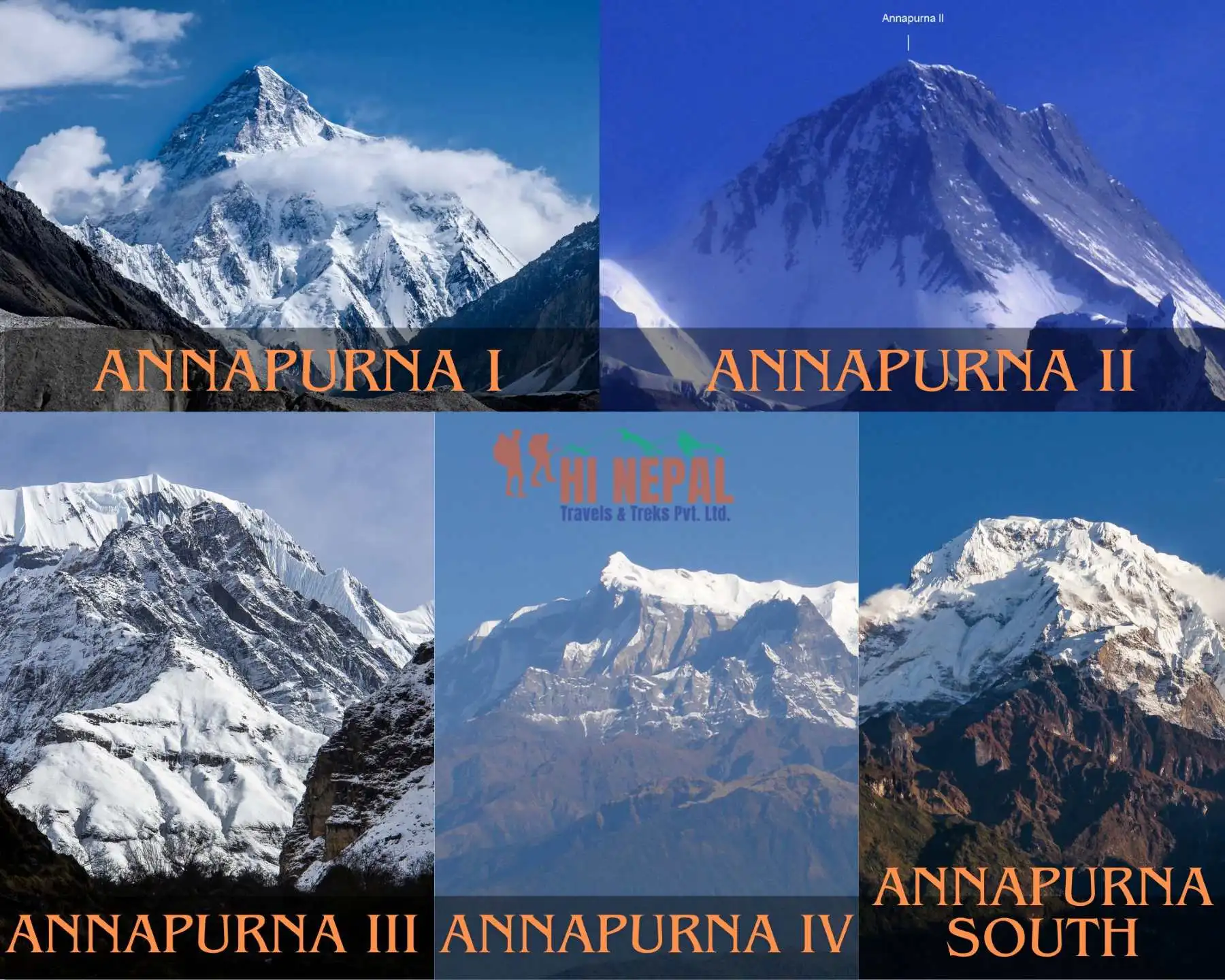
The massif also contains several other major peaks:
| Peak | Elevation |
|---|---|
| Annapurna I | 8,091 m |
| Annapurna II | 7,937 m |
| Annapurna III | 7,555 m |
| Annapurna IV | 7,525 m |
| Annapurna South | 7,219 m |
Machhapuchhre, or Fishtail, is another prominent mountain seen throughout the Annapurna trekking region. Although it is not one of the Annapurna peaks listed above, its distinctive double summit makes it one of the most recognizable mountains in the area.
Where Is Annapurna Base Camp?
Annapurna Base Camp is located at 4,130 m inside the Annapurna Sanctuary.
It is not on the summit of Annapurna I. Instead, the trekking route leads into a natural amphitheater surrounded by high Himalayan peaks.
This is what makes the ABC Trek different from simply viewing Annapurna from Pokhara or a lower viewpoint. As you approach the base camp, the mountains become increasingly prominent around you.
The classic route passes through places such as:
Pokhara → Ghandruk/Chhomrong → Bamboo → Deurali → Machhapuchhre Base Camp → Annapurna Base Camp
The exact starting point and itinerary can vary depending on the route and transportation arrangements.
At ABC, trekkers can see several major peaks, including Annapurna I, Annapurna South, Hiunchuli and Machhapuchhre.
Explore the Annapurna Base Camp Trek
How Do You Get to the Annapurna Region?
For most international travellers, the journey begins in Kathmandu.
From Kathmandu, you can travel to Pokhara, which serves as the main gateway to many Annapurna trekking routes.
Kathmandu to Pokhara
You can travel between Kathmandu and Pokhara by domestic flight or road.
Flying is the faster option, while travelling by road allows you to see more of Nepal’s changing landscape along the way.
Once you reach Pokhara, your onward journey depends on the trek you have chosen.
Pokhara to the Trekking Trail
Different Annapurna routes begin from different locations.
For example:
- Annapurna Base Camp: Travel toward the trailhead before beginning the trek through the Annapurna Sanctuary.
- Ghorepani Poon Hill: Travel toward the lower Annapurna foothills and trek through villages and forests to Ghorepani.
- Mardi Himal: Travel from Pokhara toward the starting point of the Mardi Himal route.
- Annapurna Circuit: Travel toward the Marsyangdi Valley and begin the trek from the chosen roadhead.
- Khopra Ridge: Approach the trail through the lower Annapurna villages before climbing toward Khopra Danda.
Because roads have extended farther into parts of the Annapurna region, the starting point of some itineraries can change depending on the route and current road conditions.
Popular Treks in the Annapurna Region
The Annapurna region offers several trekking experiences rather than one single trail.
Annapurna Base Camp Trek
The Annapurna Base Camp Trek takes you into the heart of the Annapurna Sanctuary.
The trail passes through villages, forests and high-altitude landscapes before reaching ABC at 4,130 m.
It is a popular option for travellers who want close views of the Annapurna massif without undertaking an expedition to climb one of its peaks.
Explore the Annapurna Base Camp Trek
Annapurna Circuit Trek
The Annapurna Circuit travels around the Annapurna massif and crosses Thorong La Pass at 5,416 m.
One of its major attractions is the dramatic change in landscape. The route moves from lower valleys into the high mountains and eventually toward the Mustang side of the Himalayas.
Unlike ABC, which takes you into a mountain sanctuary, the Circuit gives you a broader journey around the massif.
Explore the Annapurna Circuit Trek
Ghorepani Poon Hill Trek
The Ghorepani Poon Hill Trek is a shorter alternative for travellers who want Himalayan scenery without committing to a long high-altitude trek.
The main highlight is the sunrise from Poon Hill at 3,210 m, where the Annapurna and Dhaulagiri ranges can be seen on clear mornings.
It is also known for its forested trails, traditional villages and rhododendron landscapes.
Explore the Ghorepani Poon Hill Trek
Mardi Himal Trek
Although the Mardi Himal route is not a trek to Annapurna Base Camp, it is closely associated with the Annapurna trekking region.
The upper trail provides impressive views of Machhapuchhre and Annapurna South, making it a popular choice for travellers looking for mountain scenery on a shorter route.
Major Peaks of the Annapurna Range
Annapurna is not a single mountain. The massif contains several major peaks.
Annapurna I
At 8,091 m, Annapurna I is the highest peak in the massif. It was the first 8,000-meter mountain to be successfully climbed, with Maurice Herzog and Louis Lachenal reaching the summit on June 3, 1950.
Annapurna II
Annapurna II reaches 7,937 m and forms an important part of the eastern section of the massif.
Its enormous ridges and steep mountain faces make it a prominent feature of the northern Annapurna landscape.
Annapurna III
Annapurna III stands at 7,555 m. Its distinctive ridges and dramatic profile make it particularly recognizable from several viewpoints and trekking routes.
Annapurna IV
At 7,525 m, Annapurna IV is another major peak within the massif. It is less commonly discussed by general trekkers but remains an important mountain in the Annapurna range.
Annapurna South
Annapurna South, also called Annapurna Dakshin, rises to 7,219 m.
It is especially prominent from trekking routes such as Mardi Himal and the Annapurna Base Camp approach.
What Is the Annapurna Region Known For?
The Annapurna region is popular because it combines several experiences in one destination.
Diverse Landscapes
The landscape changes dramatically with elevation. Lower sections contain forests, rivers and agricultural land, while higher areas become increasingly alpine.
Himalayan Mountain Views
The region provides views of Annapurna I, Annapurna South, Machhapuchhre, Dhaulagiri, Nilgiri and many other peaks.
Traditional Mountain Villages
Trekking routes pass through villages inhabited by communities including Gurung, Magar and Thakali people. Villages such as Ghandruk and settlements throughout the Manang and Mustang areas add a cultural dimension to the trekking experience.
Annapurna Conservation Area
The Annapurna Conservation Area protects a large and biologically diverse landscape. The region contains different ecosystems ranging from lower subtropical areas to high-altitude environments.
Variety of Trekking Routes
Perhaps the biggest attraction is the choice of routes. You can choose a short trek such as Poon Hill, a more immersive route such as ABC, or a longer journey such as the Annapurna Circuit.
Interesting Facts About Annapurna
Here are some facts that help explain why Annapurna is so well known.
Annapurna I is 8,091 m high. It is the highest peak in the Annapurna massif and one of the world’s fourteen 8,000-meter mountains.
Annapurna I was the first 8,000-meter peak to be climbed. Maurice Herzog and Louis Lachenal reached the summit in 1950.
The Annapurna region is much larger than Annapurna I. The name refers to an extensive mountain and trekking region containing several peaks and valleys.
Annapurna Base Camp is at 4,130 m. The trek takes visitors into the Annapurna Sanctuary rather than to the summit of Annapurna I.
Thorong La reaches 5,416 m. The pass is one of the defining features of the Annapurna Circuit.
Machhapuchhre is one of the region’s most recognizable mountains. Its distinctive shape makes it a major feature of views from Pokhara and trekking routes throughout the Annapurna area.
Best Time to Visit the Annapurna Region
The best time depends on the trek you choose, but spring and autumn are generally the most popular trekking seasons.
Spring: March to May
Spring brings warmer conditions at lower elevations and rhododendron blooms along many trekking routes.
It is a good season for combining mountain views with colorful landscapes.
Autumn: September to November
Autumn follows the monsoon and is one of the most popular periods for trekking.
Clearer skies can provide excellent mountain visibility, although popular routes can become busy.
Winter: December to February
Winter brings colder conditions, especially at higher elevations.
Lower-altitude viewpoints and some trekking routes can still be accessible, but high-altitude trails may experience snow and freezing temperatures. Trekkers should check recent conditions before setting out.
Monsoon: June to August
Monsoon brings frequent rainfall to much of the Annapurna region. Clouds can obscure mountain views, while rain can affect trails and road conditions.
Some travellers still visit during this period, particularly in rain-shadow areas, but it is not generally the first choice for clear mountain views. For detail, read this our guide.
Final Thoughts
So, where is Annapurna?
Mount Annapurna and the wider Annapurna region are located in north-central Nepal, with Pokhara serving as the main gateway for many trekking journeys.
But knowing its location is only the beginning. The Annapurna region offers very different ways to experience the Himalayas. You can trek into the Annapurna Sanctuary to reach ABC, cross Thorong La on the Annapurna Circuit, watch sunrise from Poon Hill or see Machhapuchhre from the Mardi Himal route.
If you are planning your first trip to the region, choose the trek based on the experience you want rather than simply choosing the most famous route. The length of your trip, trekking experience, desired altitude and the type of mountain scenery you want to see can all influence the right choice.
FAQs
Where is Annapurna located?
Annapurna is located in north-central Nepal in the Himalayas. The Annapurna region lies north of Pokhara and includes the Annapurna massif, surrounding valleys, villages and trekking routes.
Where is Annapurna Base Camp located?
Annapurna Base Camp is located at 4,130 m inside the Annapurna Sanctuary. It is reached by trekking through the Annapurna region, with routes commonly passing through Chhomrong, Bamboo, Deurali and Machhapuchhre Base Camp.
How far is Annapurna from Kathmandu?
The answer depends on which part of the Annapurna region you are travelling to. Most travellers first travel from Kathmandu to Pokhara and then continue toward their chosen trekking route.
How far is Annapurna from Pokhara?
Pokhara is the main gateway to the Annapurna region, but the distance varies depending on the specific destination. Places such as ABC, Poon Hill, Mardi Himal and the Annapurna Circuit all have different trailheads and approaches.
How high is Annapurna?
Annapurna I is 8,091 m above sea level. It is the highest peak in the Annapurna massif.
When was Annapurna first climbed?
Annapurna I was first successfully climbed on June 3, 1950, by French climbers Maurice Herzog and Louis Lachenal.
Why is Annapurna famous?
Annapurna is famous for its 8,091 m summit, mountaineering history, dramatic Himalayan landscapes and popular trekking routes. Annapurna I was the first 8,000-meter peak to be successfully climbed.
Is Annapurna the same as Annapurna Base Camp?
No. Annapurna I is a mountain reaching 8,091 m, while Annapurna Base Camp is a trekking destination at 4,130 m inside the Annapurna Sanctuary.
Which is better: Annapurna Base Camp or Annapurna Circuit?
It depends on the experience you want. ABC is more focused on reaching a high mountain sanctuary surrounded by peaks, while the Annapurna Circuit provides a longer journey around the massif with diverse landscapes and the Thorong La Pass crossing.