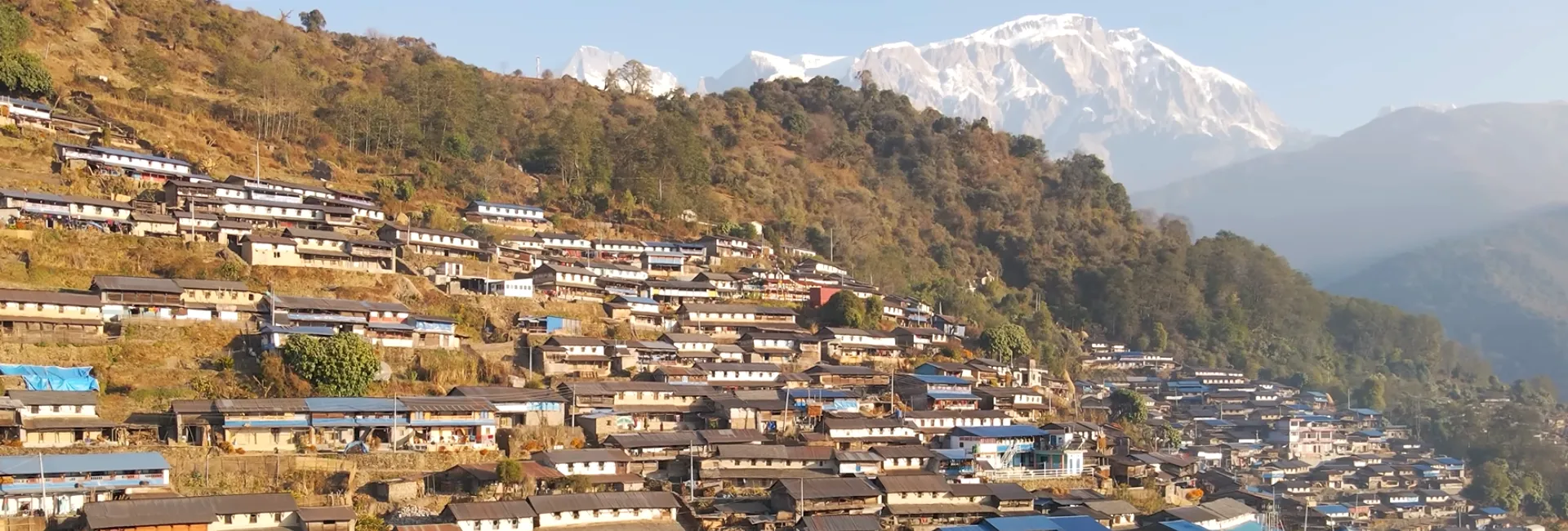
Most travelers fly into Pokhara, glance at the wall of the Annapurnas, and march straight onto the Annapurna Base Camp or Mardi Himal trails. Few of them ever turn northeast toward the Madi River valley, where one of the largest Gurung settlements in Nepal sits quietly on a ridge below Annapurna II and Lamjung Himal. That village is Sikles, and the trail to reach it remains one of the Annapurna region’s best-kept secrets.
We have walked these slate-roofed lanes and shared Dal Bhat in family teahouses where you are often the only foreigner staying the night. If you want close mountain views, authentic village culture, and a route free of the dust and crowds that now plague the busier circuits, the Sikles Trek deserves a serious look for 2026.
What Is the Sikles Trek?
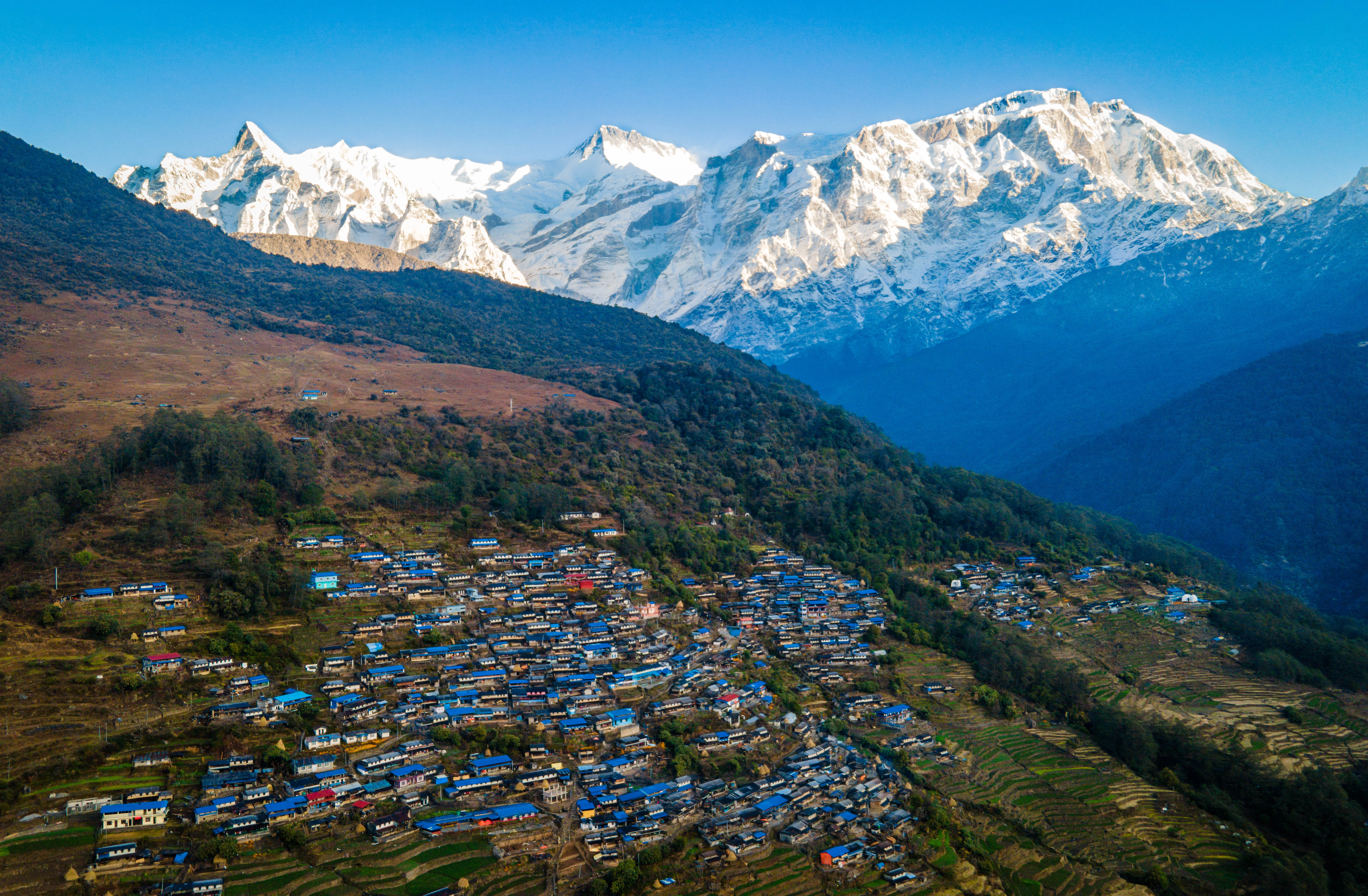
The Sikles Trek is a short, low-altitude village trek northeast of Pokhara that leads to Sikles, one of Nepal’s largest traditional Gurung villages at roughly 1,980 meters. It offers panoramic views of Annapurna II, Lamjung Himal, and the Madi valley, with cultural immersion rather than high passes, making it ideal for families and first-time trekkers.
This trail threads through terraced millet and rice fields, dense rhododendron and oak forest, and several smaller Gurung and Tamang hamlets. Because Sikles lies inside the Annapurna Conservation Area, the landscape stays protected and the air feels clean and unhurried. The whole circuit can be done comfortably in 3 to 5 days, which suits trekkers short on time.
Why Sikles Stays Overlooked
Sikles is overlooked mainly because it lacks a famous base camp or named pass to draw bucket-list trekkers. There is no Instagram-famous viewpoint with a signboard, no high-altitude record to chase, and limited marketing. What you get instead is genuine village life, empty trails, and unobstructed mountain views without the foot traffic.
The bigger trails near Pokhara pull almost everyone toward Ghorepani or Mardi Himal. Sikles, by contrast, feels lived-in rather than staged for tourism. Stone houses, water-powered grain mills, and grandmothers spinning wool on porches are part of daily routine here, not a performance.
Permits and Fees for 2026
The Sikles Trek requires two documents: the ACAP permit and the e-TIMS card. Sikles is not a Restricted Area, so no special RAP is needed, but it sits inside protected conservation land. Both permits are easy to obtain in Pokhara at the Nepal Tourism Board office before you start.
| Permit / Fee | Foreigners | SAARC Nationals |
|---|---|---|
| ACAP Permit | NPR 3,000 (~$23 USD) | NPR 1,000 |
| e-TIMS Card | NPR 2,000 (~$15 USD) | NPR 1,000 |
Carry passport-size photos and a copy of your passport for the paperwork. You can read more in our guides to the TIMS card and overall trekking rules and costs in Nepal. For your tourist visa, remember the standard fees: $30 USD for 15 days, $50 USD for 30 days, and $125 USD for 90 days.
Do You Need a Guide?
Sikles falls inside the Annapurna Conservation Area, where Nepal now strongly enforces the licensed-guide rule for foreign trekkers. While Sikles itself is not a Restricted Area requiring a guide by special permit law, hiring a licensed guide is the current expected practice. We recommend confirming the live rule with your operator before departure.
A local guide also adds real value here. Trail junctions in the Madi valley are not always marked, and a Gurung-speaking guide opens doors to homestays and stories that you would never access alone. If you are a solo female trekker, a guide is especially worth arranging.
Sikles Trek Itinerary: 4-Day Plan
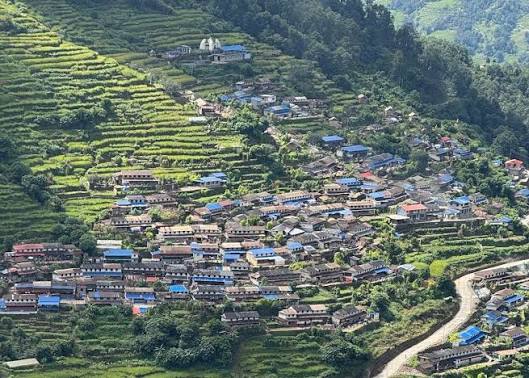
The classic Sikles loop runs 4 days from Pokhara, beginning with a short drive to the trailhead and following the Madi River up to Sikles before looping back via forested ridges. Daily walking time stays moderate at around 4 to 6 hours, with gentle elevation gain well within safe limits.
| Day | Route | Walking Time | Max Elevation |
|---|---|---|---|
| 1 | Pokhara to trailhead (drive), trek to Tangting | 4–5 hours | 1,600 m |
| 2 | Tangting to Sikles Village | 5–6 hours | 1,980 m |
| 3 | Sikles exploration & viewpoint, descend to Parche | 4–5 hours | 2,100 m |
| 4 | Parche to roadhead, drive to Pokhara | 3–4 hours | 1,400 m |
Because the maximum sleeping elevation stays below 2,100 meters, altitude sickness is not a major concern on the standard loop. Still, if you extend toward Kapuche Glacier Lake at around 2,500 meters, keep your daily sleep-elevation gain modest and review our notes on altitude sickness.
The Kapuche Glacier Lake Extension
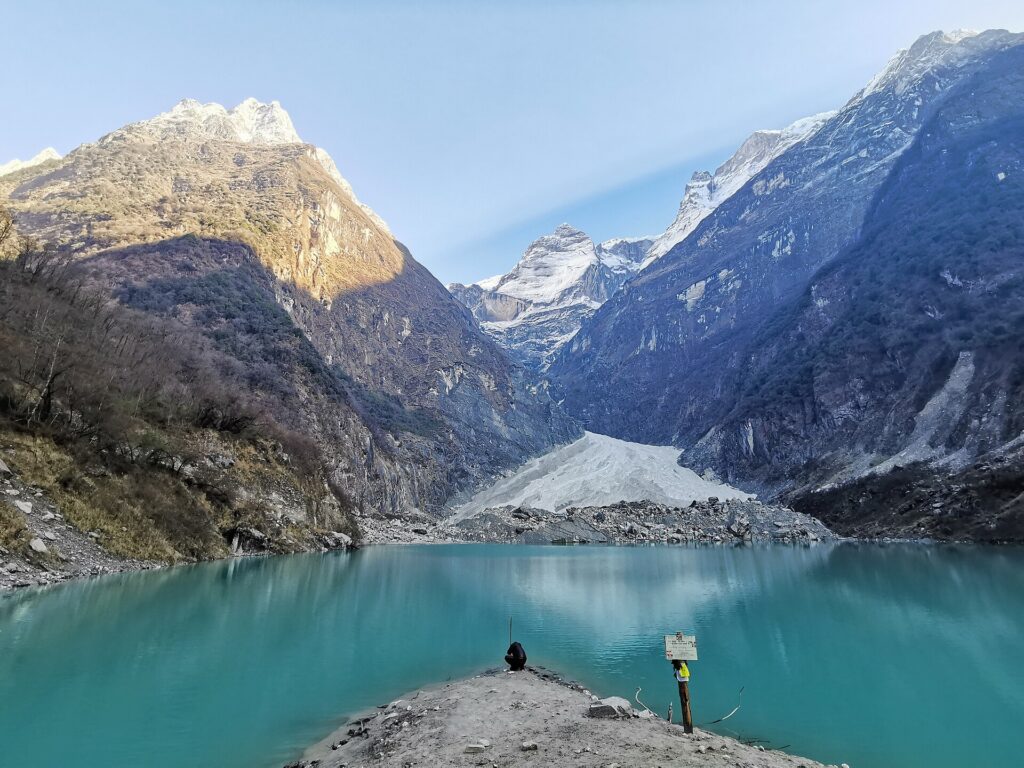
For trekkers wanting more, a 2-day extension from Sikles leads to Kapuche Glacier Lake, one of the lowest-elevation glacial lakes in Nepal at roughly 2,546 meters. The trail descends and climbs along the Seti tributary, ending at a turquoise lake fed directly by hanging glaciers below Annapurna III.
This add-on transforms the trek into a 6-7 day adventure and is best done with a guide who knows the river crossings. The terrain involves steep, narrow forest paths and occasional landslide-prone sections, so wear proper boots and trek poles.
Best Time to Trek Sikles
The best seasons for Sikles are autumn (late September to November) and spring (March to May), when skies are clear and rhododendrons bloom on the ridges. The trek is lower than most Annapurna routes, so it stays comfortable even in late autumn when higher trails turn cold.
| Season | Conditions | Verdict |
|---|---|---|
| Autumn (Sep–Nov) | Clear skies, crisp air, stable weather | Best overall |
| Spring (Mar–May) | Rhododendron bloom, warm days, some haze | Excellent |
| Monsoon (Jun–Aug) | Heavy rain, leeches, lush green terraces | Wet but possible |
| Winter (Dec–Feb) | Cold nights, clear days, quiet trails | Doable, pack warm |
Unlike the high-altitude crossings, Sikles remains walkable during the monsoon, though leeches and slippery trails make it uncomfortable. If you want a guaranteed dry summer trek, the rain-shadow regions of Upper Mustang and Upper Dolpo are far better monsoon choices. For more on timing, see our guide to the best time for the Annapurna region and trekking in October.
Getting to the Trailhead
Sikles begins with a 2-3 hour drive northeast from Pokhara to the road head near Tangting or Bhujung, depending on road conditions. Private jeep hire is the most reliable option, and rates fluctuate seasonally.
Public buses run partway but are slow and infrequent. We generally recommend a shared or private jeep, since the final stretch of road can be rough and unpredictable after rain. Build flexibility into your plans in case a landslide forces a longer walk-in.
Money, Charging, and Connectivity on the Trail
There are no ATMs beyond Pokhara, so carry all your NPR cash before leaving the city. Teahouses in Sikles, Tangting, and Parche operate on a small cash economy, and most extra services cost money on top of your room and meals.
Expect to pay roughly 200 to 500 NPR to charge a phone or power bank, similar amounts for a gas-heated hot shower, and a small fee for Wi-Fi where it exists. For connectivity, Ncell generally provides the strongest coverage throughout the Annapurna and Madi valley region, so buy a local SIM in Pokhara if you need to stay online.
Our breakdown of trek amenity costs explains these trail upcharges in detail, and our budget trekking guide helps you plan daily spending.
Food, Water, and Eating Well
Stick to fresh, locally grown carbohydrates on the trail, with the classic Dal Bhat (lentil soup, rice, and vegetable curry) as your reliable, refillable fuel. Lower-altitude villages like Sikles grow their own vegetables, so meals are fresher than on remote high routes, but we still recommend prioritizing vegetarian dishes.
For water, never buy plastic bottles. Carry a reusable bottle paired with a reliable purification system such as a UV purifier, a Sawyer squeeze filter, or chlorine dioxide drops. This keeps you healthy and protects the conservation area’s environment. Learn more about teahouse food on Nepal’s trails.
Gurung Culture and Trail Etiquette
Sikles is a deeply Gurung village with strong Buddhist and animist traditions, so respectful behavior matters. Always walk clockwise around mani walls, stupas, and chortens, keeping these sacred structures on your right side as you pass.
Before entering any monastery or village temple, remove your shoes and hat. Outdoor photography is fine, but never photograph inside monastery prayer halls unless a resident monk gives explicit permission. Ask before photographing people, and a smile goes a long way in these tight-knit communities.
Packing and Gear
Sikles is a low-altitude trek, so you need far less heavy gear than a high-mountain expedition, but layers still matter for cool evenings. A good base layer, fleece, light down jacket, and rain shell cover most conditions across the seasons.
If you do not own everything, you can easily arrange rental trekking gear in Kathmandu or Pokhara. Check our full trek packing list and our guide to choosing a sleeping bag for the right warmth rating.
Insurance and Safety
Standard travel insurance is not enough for any Nepal trek. Make sure your policy covers high-altitude emergency helicopter evacuation and treatment for AMS, HAPE, and HACE. While Sikles is lower-risk, accidents and rapid weather changes happen, and rescue coverage is essential.
The trail is gentle but includes some steep, slippery forest sections, especially near Kapuche. Trek with proper footwear, use poles on descents, and let your guide set a sensible pace.
Tipping Your Crew
Tipping is culturally expected in Nepal and forms a vital part of your guide and porter’s income. A standard guideline is 10% to 15% of your total trek cost, distributed among the crew at the end of the trip.
Hand tips over personally and thank your team directly. Our detailed guide and porter tipping guide breaks down realistic amounts for different trek lengths.
Who Should Choose Sikles?
Sikles suits trekkers who value culture over altitude, families with children, photographers, and anyone wanting a short escape from Pokhara without crowds. If you have already done the popular routes and want something quieter, this is the trail. Those craving high passes should look at the Mardi Himal trek or compare the Annapurna and Everest base camp options instead.
Pair Sikles with a few relaxed days exploring things to do in Pokhara, a boat trip on Phewa Lake, or a Sarangkot sunrise for a balanced trip.
Frequently Asked Questions
-
How many days does the Sikles Trek take?
The standard loop takes 3 to 5 days from Pokhara, with walking times of roughly 4 to 6 hours daily. Adding the Kapuche Glacier Lake extension stretches it to 6-7 days.
-
Is the Sikles Trek difficult?
No. It is rated easy to moderate. The maximum sleeping elevation stays around 2,100 meters, so altitude is not a serious concern, though some forest sections are steep.
-
Can I do the Sikles Trek solo?
Sikles sits in the Annapurna Conservation Area, where Nepal strongly enforces the licensed-guide rule for foreigners. We recommend hiring a licensed guide and confirming the current regulation before you travel.
-
How do I get to the Sikles trailhead?
Drive 2-3 hours northeast from Pokhara by private or shared jeep to the road head near Tangting or Bhujung. Confirm live jeep rates and road conditions in advance.
-
What is the best month for the Sikles Trek?
October and November offer the clearest skies and most stable weather. March to May brings rhododendron blooms and warm days with occasional haze.
-
Are there teahouses on the Sikles route?
Yes. Simple teahouses and homestays operate in Tangting, Sikles, and Parche. Facilities are basic, and most extra services like charging and hot showers cost an additional 200 to 500 NPR.
-
Is there Wi-Fi on the Sikles Trek?
Limited Wi-Fi exists in some teahouses for a small fee, but it is unreliable. An Ncell SIM card gives the most consistent mobile coverage in this part of the Annapurna region.
-
How much does the Sikles Trek cost?
Permits cost NPR 3,000 for ACAP and NPR 2,000 for e-TIMS. Daily teahouse costs, guide fees, and jeep transport vary, so budget realistically and carry all cash from Pokhara.
-
Can I see Annapurna from Sikles?
Yes. Sikles offers striking close views of Annapurna II, Annapurna IV, and Lamjung Himal directly above the village, especially at dawn from the upper viewpoints.
-
Is the Sikles Trek good for families?
Absolutely. Its low altitude, short walking days, and strong cultural experience make it one of the best family-friendly treks near Pokhara.
Leave a Reply