Not everyone has two or three weeks for a Himalayan trek. Fortunately, Nepal has plenty of shorter routes that still take you into the mountains without requiring a long commitment.
Some are close to Pokhara or Kathmandu, while others take you deeper into the Himalayas. You can choose between established routes such as Annapurna Base Camp, quieter viewpoints such as Pikey Peak, or shorter village and lake treks such as Kapuche and Khumai Danda.
Here are eight of the best short treks in Nepal for 2026, with a mix of scenery, altitude, difficulty, and trekking experience.
Annapurna Base Camp Trek
The Annapurna Base Camp Trek is one of Nepal’s most popular shorter Himalayan treks. Starting from the Pokhara area, the trail passes through Gurung villages, forests, waterfalls, and mountain landscapes before reaching Annapurna Base Camp at 4,130 m.
The main attraction is the mountain scenery. From the sanctuary, you are surrounded by peaks including Annapurna I, Annapurna South, Hiunchuli, and Machhapuchhre.
Although ABC is shorter than many high-altitude expeditions, it is not an effortless walk. There are plenty of stone steps and several days of sustained uphill and downhill walking.
Best for: Trekkers who want a classic Himalayan experience without committing to a three-week trek.
Spring and autumn generally offer the most reliable trekking conditions. Winter is also possible, although snow and cold can make the higher sections more challenging. The monsoon brings rain, slippery trails, and leeches, so it is generally less suitable.
Mardi Himal Trek
The Mardi Himal Trek is a popular short trek from Pokhara, particularly for trekkers who want impressive mountain views without spending two weeks on the trail.
The route climbs through forest and alpine landscapes toward Mardi Himal Base Camp, with views of Mardi Himal, Machhapuchhre, Annapurna South, and Hiunchuli.
One of the highlights is the changing landscape. Lower sections pass through dense forest, while the trail gradually opens into wider mountain views as you gain altitude.
The trek can be completed in different numbers of days depending on the starting point and itinerary, so it works well for travellers with limited time.
Best for: Trekkers looking for a relatively short route with big mountain views.
Ghorepani Poon Hill Trek
The Ghorepani Poon Hill Trek is one of the easiest ways to experience the Annapurna region on foot.
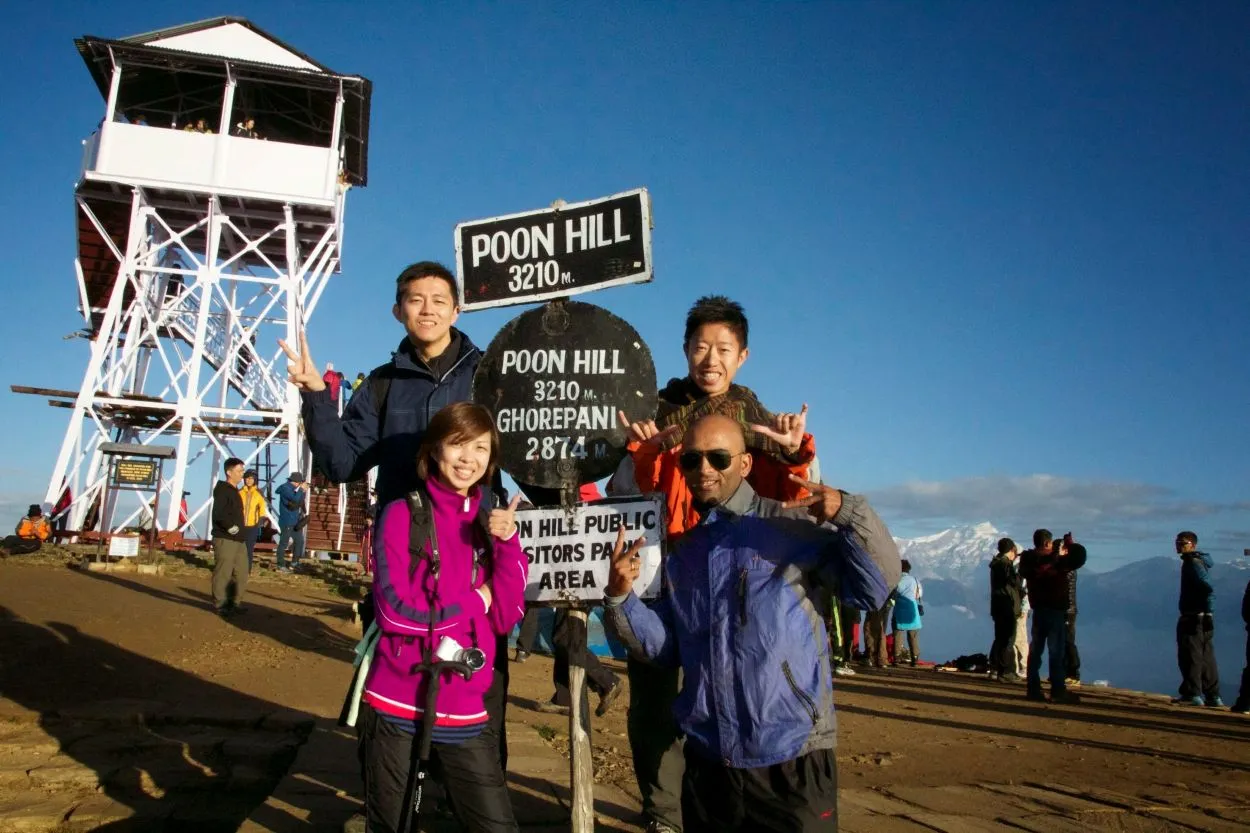
The trek combines mountain scenery with villages and forests, passing through communities such as Ghorepani and Ghandruk. The main highlight is Poon Hill, where an early-morning climb provides panoramic views across the Annapurna and Dhaulagiri ranges.
The route also passes through rhododendron forests, which become especially colourful during spring.
Compared with higher-altitude treks, Poon Hill is more accessible and does not require crossing a high mountain pass.
Best for: First-time trekkers, families, and travellers who want a shorter Himalayan experience.
Pikey Peak Trek
Located in the lower Everest region, the Pikey Peak Trek offers a quieter alternative to the heavily travelled Everest Base Camp route.
The trek passes through Sherpa villages, forests, and open mountain landscapes before reaching Pikey Peak. From the viewpoint, you can see a broad section of the Himalayan range, including Mount Everest on clear days.
The route is also interesting from a cultural perspective, with Buddhist monasteries and Sherpa settlements along the way.
Pikey Peak is particularly appealing if you want an Everest-region experience without spending two weeks walking to Base Camp.
Best for: Trekkers who want mountain views and Sherpa culture away from the busiest Everest trails.
Helambu Trek
The Helambu Trek is a relatively short trek accessible from the Kathmandu Valley. It takes you through forested hills, mountain villages, and communities with strong Buddhist and Tamang cultural influences.
The highest points of the route provide views toward peaks such as Langtang Lirung, Ganesh Himal, and Dorje Lakpa.
One of the biggest advantages of Helambu is accessibility. You do not need to travel all the way to the Annapurna or Everest regions to begin the trek.
The route is also less crowded than many of Nepal’s better-known trekking trails.
Best for: Travellers with limited time who want a quieter trek close to Kathmandu.
Langtang Valley Trek
The Langtang Valley Trek is another excellent option for a shorter Himalayan adventure from Kathmandu.
The trail follows the Langtang Valley through forests, villages, and increasingly dramatic mountain landscapes. As you move higher, the valley opens toward peaks including Langtang Lirung, while side trips can take you toward viewpoints such as Kyanjin Ri and Tserko Ri.
The trek also provides an opportunity to experience Tamang culture and visit Kyanjin Gompa in the upper valley.
It is a longer commitment than Poon Hill or Khumai Danda, but still considerably shorter than some of Nepal’s major high-altitude trekking routes.
Best for: Trekkers who want a deeper Himalayan experience without taking on an extremely long itinerary.
Kapuche Lake Trek
The Kapuche Lake Trek is one of the shorter lake treks accessible from Pokhara.
The trail passes through the Gurung village of Sikles before continuing toward Kapuche Lake at around 2,546 m. Surrounded by steep mountain landscapes, the lake is fed by glacial ice and offers a very different experience from Nepal’s more established trekking routes.
Because the altitude remains relatively moderate, Kapuche can be an appealing choice for travellers who want mountain scenery without spending several nights above 3,500 or 4,000 metres.
The journey also provides an opportunity to experience village life and Gurung culture around Sikles.
Best for: Travellers looking for a short, lower-altitude trek from Pokhara.
Khumai Danda Trek
The Khumai Danda Trek is another short route from Pokhara, known especially for its close views of Machhapuchhre (Fishtail).
The trail moves through forest and open hills before reaching Khumai Danda, where the mountain scenery becomes the main attraction. On clear days, you can also see parts of the Annapurna range.
Because the route is shorter and stays at a lower altitude than many classic Himalayan treks, it can fit easily into a limited Nepal itinerary.
Best for: Travellers with only a few days who want a quieter viewpoint trek near Pokhara.
Best Time to Trek in Nepal
The best trekking season depends on the route, altitude, and type of experience you want.
Spring (March to May) is popular for warmer conditions, clear mountain views, and rhododendron forests in bloom. It is particularly attractive on routes through the Annapurna, Langtang, and lower Himalayan regions.
Autumn (September to November) is generally considered the most reliable season for trekking. After the monsoon, the skies often become clearer and temperatures remain comfortable at lower and middle elevations.
Winter (December to February) can work well for lower-altitude short treks. Routes such as Ghorepani Poon Hill, Khumai Danda, and some lower sections of other trails can offer clear mountain views, although higher routes may experience snow and freezing temperatures.
Monsoon (June to August) is the least favourable period for many classic trekking routes because of rain, muddy trails, leeches, and possible landslides. However, some areas in Nepal’s rain-shadow regions can still be suitable during this season.
Before choosing a trek, check the expected weather and trail conditions rather than relying only on a general seasonal recommendation.
Final Thoughts
A short trek does not mean you have to miss out on the Himalayan experience.
Annapurna Base Camp takes you deep into a spectacular mountain sanctuary, Poon Hill offers an accessible sunrise viewpoint, and Mardi Himal combines a relatively short itinerary with impressive mountain scenery. Routes such as Pikey Peak, Helambu, Kapuche, and Khumai Danda offer quieter alternatives, while Langtang provides a more immersive valley experience.
The right choice depends on how much time you have, your previous trekking experience, your preferred altitude, and the type of landscape you want to see.
If you are planning a trekking tour in Nepal in 2026, choosing a route that matches those factors will matter more than simply picking the most popular trek.
FAQs
1. Are there easy short treks in Nepal?
Yes. Ghorepani Poon Hill, Khumai Danda, and some Helambu itineraries are among the more accessible short trekking options. Difficulty still depends on the itinerary, altitude, and your fitness.
2. Which is the best short trek in Nepal?
There is no single best option for everyone. Annapurna Base Camp is a strong choice for a classic Himalayan experience, while Poon Hill is better suited to travellers looking for a shorter and more accessible trek.
3. Which trek is best for beginners?
Ghorepani Poon Hill is one of the most approachable choices for first-time trekkers. Khumai Danda and lower-altitude routes can also work well depending on your fitness and itinerary.
4. Is trekking harder than hiking?
Trekking generally involves walking for several consecutive days, often with changes in elevation and overnight stays along the route. It can therefore be more demanding than a typical day hike.
5. Is trekking good for your health?
Trekking involves sustained physical activity and can improve cardiovascular fitness, strength, and endurance. The mental benefits of spending time outdoors can also be valuable.
6. Is trekking just walking?
Walking is the main physical activity, but trekking involves much more than that. It can include travelling through mountain landscapes, staying in local villages, experiencing different cultures, and adapting to changing terrain and altitude.