Tiji Festival in Upper Mustang: Dates, History, Rituals & Travel Guide

Tiji Festival Mask Dance - Upper Mustang, Lo Manthang

The Tiji Festival, also known as Tenchi, is a three-day sacred Buddhist festival celebrated in Lo Manthang, Upper Mustang, Nepal. Deeply rooted in the Tibetan Buddhist traditions of the former Kingdom of Lo, the festival brings together religious rituals, masked dances, prayers, music, and community celebrations.

For visitors, Tiji is one of the most distinctive cultural experiences available in Nepal. But it is important to understand that the festival is not simply a cultural performance arranged for tourists. Its masked dances and rituals are part of a living religious tradition associated with Vajrakila, a powerful figure and practice within Vajrayana Buddhism. The Nepal Tourism Board describes the festival as a prayer for peace, prosperity, and harmony for all beings.

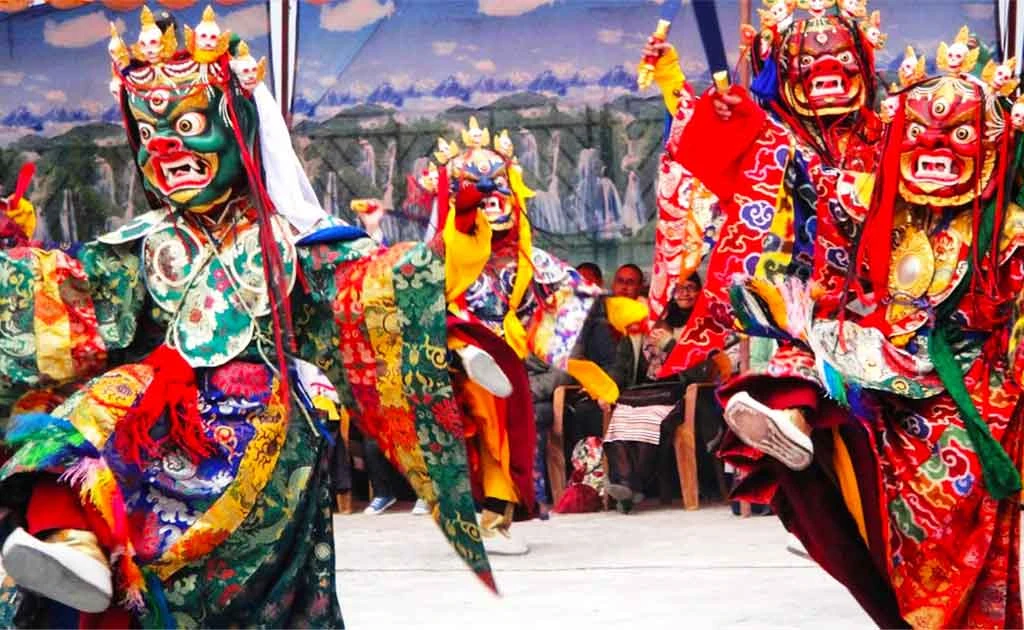
The festival takes place in Lo Manthang, the historic walled settlement in Upper Mustang. During the three-day celebration, monks perform elaborate masked dances that portray the struggle against destructive forces and the eventual restoration of peace and harmony.

The story behind the festival is traditionally connected with Dorje Jono and the demon Man Tam Ru Ta, whose actions were believed to bring suffering and disorder to the Kingdom of Mustang. Through the ritual performances, the destructive force is confronted and ultimately defeated.

For travelers, attending Tiji also means experiencing Upper Mustang at a particularly vibrant time of year. The festival is surrounded by the region’s distinctive high-altitude desert landscape, ancient monasteries, whitewashed villages, traditional Tibetan-style architecture, and dramatic Himalayan scenery.

The festival follows the Tibetan lunar calendar, which means its Gregorian dates change from year to year. The 2026 Tiji Festival was held from May 14 to May 16, while the next celebration is scheduled for June 1–3, 2027. Current 2027 festival itineraries identify these three dates as the upcoming celebration in Lo Manthang.

For international travelers, there is another important consideration: Upper Mustang is a restricted trekking region. Travelers entering the restricted area need the applicable permit arrangements, and these are normally handled through an authorized trekking agency. Nepal’s Department of Immigration currently lists the Upper Mustang restricted-area permit at USD 50 per person per day on its current trekking-route fee table.

Tiji Festival at a Glance: Dates, Location & Duration

Festival Information Details
Festival Name Tiji Festival / Tenchi
Location Lo Manthang, Upper Mustang, Nepal
Duration 3 days
2026 Festival May 14–16, 2026 — completed
2027 Festival June 1–3, 2027 — upcoming
Day 1 Tsa Chham — June 1, 2027
Day 2 Nga Chham — June 2, 2027
Day 3 Rha Chham — June 3, 2027
Calendar Tibetan lunar calendar
Main Setting Lo Manthang
Main Performances Sacred masked dances and Buddhist rituals
Religious Tradition Tibetan Buddhist / Vajrayana
Main Performers Monks
Restricted-Area Permit Required for entry into Upper Mustang’s restricted area

The 2027 Tiji Festival will be celebrated from June 1 to June 3. The three days have distinct ritual sequences, with Tsa Chham on June 1, Nga Chham on June 2, and Rha Chham on June 3. Current 2027 festival itineraries and trekking information identify these dates and ritual names.

Why Tiji Festival Is One of Upper Mustang’s Most Important Celebrations?

Tiji is significant because it brings together religion, history, community identity, and Mustang’s Tibetan Buddhist heritage.

The festival is based on the Vajrakila tradition, which is associated with removing negative forces and obstacles. Vajrakila is also known as Dorje Phurba or Vajrakumar, and the practice was brought to Tibet in the eighth century by important Buddhist masters, including Padmasambhava and the Nepali master Shilamanju.

The tradition of Tiji itself has a much later history in Mustang. According to the Nepal Tourism Board, the festival began in the early 15th century, was revived during the 17th century, and was restored again in 1963.

That long history helps explain why Tiji remains so important to the people of Lo. The festival is not simply something that happens around the local community; it is an important expression of the region’s religious and cultural identity. For travelers, this distinction matters.

Visitors are observers and guests at a sacred celebration. The masked dances should be approached with the same respect given to religious ceremonies elsewhere in Nepal. Photography may be possible, but visitors should follow local instructions, avoid interrupting rituals, and ask before photographing people at close range.

Tiji also provides a rare opportunity to see Upper Mustang’s cultural heritage in a living setting rather than only through monuments and museums.

The ancient settlement of Lo Manthang, its monasteries, traditional buildings, and surrounding villages are already major attractions. During Tiji, however, the cultural landscape becomes much more active as monks and local residents gather for the annual ceremonies.

For travelers interested in Tibetan Buddhism, Himalayan culture, photography, history, and responsible cultural tourism, this makes Tiji particularly compelling.

Tiji Festival Dates: 2026, 2027 & Future Years

Tiji Festival celebration in Lo Manthang, Upper Mustang

Tiji does not follow a fixed Gregorian date.

Instead, the festival is scheduled according to the Tibetan lunar calendar, which means its corresponding date on the Gregorian calendar changes each year.

This is one of the most important things to understand when planning a Tiji Festival trek. Knowing that the festival normally occurs around May or early summer is useful, but it is not enough to book flights and accommodation.

You need the specific festival dates for the year you plan to travel. Tiji festival is celebrated annually according to the Tibetan calendar and lasts for three days.

Tiji Festival Dates for 2026, 2027 & Future Years

Year Festival Dates Status
2026 May 14–16, 2026 Held
2027 June 1–3, 2027 Confirmed upcoming dates
2028 To be announced Future
Future Years To be announced annually Based on the Tibetan calendar

The 2026 Tiji Festival took place from May 14 to May 16.

The next celebration is scheduled for June 1–3, 2027, making it the key date range for travelers currently planning a Tiji Festival trip for 2027. Current 2027 trekking itineraries identify June 1 as the first day, June 2 as the second day, and June 3 as the final day.

For 2028 and later years, the Gregorian dates should be added once the relevant annual festival calendar is announced.

How Tiji Festival Dates Are Determined Each Year?

The Tiji Festival follows the Tibetan lunar calendar, rather than the Gregorian calendar used for most international travel planning. Tiji as an annual three-day celebration held according to the Tibetan calendar.

Because the lunar calendar and Gregorian calendar do not align to the same fixed dates every year, the festival moves on the international calendar. That is why the 2026 celebration took place in May, while the 2027 celebration is scheduled for June 1–3.

For travelers, the practical lesson is simple: Always check the festival dates for your specific travel year before booking your Upper Mustang trip.

Why Tiji Festival Dates Change Every Year?

Tiji’s changing Gregorian dates are a result of its traditional calendar system.

The festival is not tied to a permanent date such as “May 14 every year.” Instead, the corresponding Gregorian dates depend on the Tibetan calendar used to determine the religious observance.

This also explains why travelers may encounter different dates on older websites. A Tiji Festival article published several years ago may contain a perfectly correct date for the year it was written but be completely unsuitable for someone planning a future trip.

For that reason, year-specific dates should always be treated separately from the festival’s historical and cultural information.

For travelers planning the 2027 Tiji Festival, the key dates are:

  • June 1, 2027 — Tsa Chham
  • June 2, 2027 — Nga Chham
  • June 3, 2027 — Rha Chham

If you want to experience the entire festival, it is sensible to plan to be in Lo Manthang before June 1, rather than attempting to arrive on the first morning.

Upper Mustang is remote, and your journey may involve domestic transportation, road travel, trekking, or a combination of these depending on your itinerary. Building in a buffer before the festival gives you more protection against delays and lets you settle into Lo Manthang before the ceremonies begin.

History and Origin of the Tiji Festival

Lo Manthang Village in Upper Mustang

The history of Tiji is closely connected with Upper Mustang’s Tibetan Buddhist heritage and the historical Kingdom of Lo. The festival’s story is preserved through religious traditions, oral history, and the ritual dances performed in Lo Manthang.

Although modern travelers often encounter Tiji through photographs of colorful masked monks dancing in the historic streets of Lo Manthang, the festival has a much deeper purpose.

It is a religious ritual based on the defeat of destructive forces and the restoration of peace and harmony.

The Legend of Dorje Jono and the Demon Man Tam Ru Ta

At the center of the Tiji tradition is the story of a struggle between Dorje Jono and the destructive demon Man Tam Ru Ta. According to the traditional story, the demon threatened the Kingdom of Mustang and brought suffering and disorder to the people.

The story is represented through the festival’s three-day sequence of dances and rituals.

The first day introduces the conflict and the destructive forces represented by the demon. The second day develops the confrontation, while the final day brings the struggle to its symbolic conclusion.

Current accounts of the 2027 festival describe Tsa Chham on the first day, Nga Chham on the second, and Rha Chham on the third day, with the final ritual representing the defeat and banishment of the destructive force.

The story should not be understood simply as a dramatic historical battle. Within the Buddhist context of Tiji, the demon and its defeat have a broader symbolic meaning related to negative forces, obstacles, suffering, and the restoration of harmony.

That is why the festival remains a religious observance rather than merely a theatrical retelling of a legend.

Tiji Festival’s Roots in Tibetan Buddhism and Mustang’s Royal Past

Tiji’s religious roots extend into the wider history of Vajrayana Buddhism in Tibet and the Himalayan region.

The tradition of Vajrakila, also referred to as Dorje Phurba or Vajrakumar is fundamentally focused on expelling obstacles and negative forces. Tracing back to the eighth century, the Vajrakila lineage is closely tied to the historical propagation of Buddhism throughout Tibet.

The Tiji festival tradition in Mustang developed much later. According to the Nepal Tourism Board, it began in the early 15th century, when Khenchen Sonam Lhundrup, the son of Mustang’s second king, introduced the tradition. It was later revived in the 17th century under King Samdup Rabten and Sakya master Ngawang Kunga Sonam. The tradition was restored again in 1963.

This history reflects the close relationship between Mustang’s political rulers and Buddhist religious institutions. Lo Manthang was historically the center of the Kingdom of Lo, and its monasteries played an important role in religious and community life.

Tiji therefore represents more than an isolated festival. It is part of a much larger cultural system that connects religion, royal history, monastic institutions, community traditions, and the identity of Upper Mustang.

What Does “Tiji” or “Tenchi” Mean?

Tiji is also known as Tenchi; the name comes from Tenpa Chirim, which refers to the benefit of Buddha’s teachings for all sentient beings.

This meaning provides useful context for understanding the festival.

Tiji is ultimately concerned not simply with defeating a particular demon in a traditional story, but with the removal of harmful influences and the promotion of peace, prosperity, and harmony. The festival is a prayer for peace, prosperity, and harmony for all beings.

That broader spiritual meaning is an important part of why the festival continues to be observed today.

Where Is the Tiji Festival Held?

Elevated view of the historic walled city of Lo Manthang featuring ochre monastery walls set against desert mountain cliffs

The Tiji Festival takes place in Lo Manthang in Upper Mustang, Nepal.

Lo Manthang is one of the most historically significant settlements in the region and was formerly the capital of the Kingdom of Lo. For visitors, the setting is an important part of the experience.

The festival does not take place in an isolated modern event venue. Instead, the ceremonies are held within the historic cultural environment of Lo Manthang, surrounded by its traditional architecture and religious institutions.

Lo Manthang: The Walled City of Upper Mustang

Lo Manthang is famous for its historic walled settlement, monasteries, traditional houses, and Tibetan-influenced cultural heritage.

The town sits at roughly 3,840 meters (12,598 feet) above sea level, making altitude an important consideration for anyone traveling to the festival.

Its high-altitude location also contributes to the distinctive landscape surrounding the town.

Upper Mustang is characterized by dry valleys, eroded cliffs, dramatic rock formations, barren mountain slopes, and traditional villages, creating a landscape very different from the greener trekking regions farther south in Nepal.

Lo Manthang’s historical importance makes it a natural setting for Tiji. The town was the center of the former Kingdom of Lo, and its religious institutions continue to play an important role in local cultural life.

Where the Main Tiji Ceremonies Take Place?

The central festival activities take place in the historic ceremonial area of Lo Manthang, with the religious performances closely associated with Choede Monastery and its monks.

The monks’ role is particularly important because Tiji’s masked dances are sacred ritual performances rather than ordinary folk dances. The monks prepare for the festival through a three-month retreat before performing the sacred dances.

This preparation highlights the religious seriousness of the event. For visitors, the best approach is therefore to observe rather than interfere.

During the festival:

Stay within areas designated for visitors, follow instructions from local organizers or guides, avoid stepping into ritual spaces, and ask before taking close-up photographs of participants.

This is especially important during the most sacred portions of the ceremony. The combination of the ancient town, surrounding Himalayan landscape, and centuries-old Buddhist traditions makes Lo Manthang a particularly meaningful place to experience Tiji.

What Happens During the Tiji Festival?

Monks in Tiji Festival

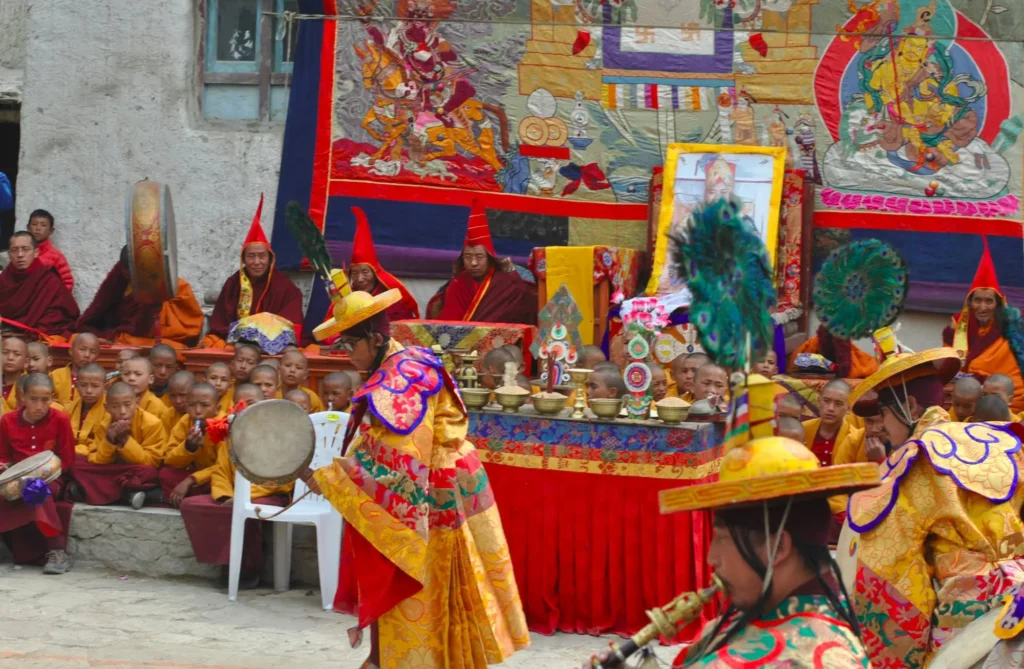
The Tiji Festival unfolds over three days, with each day presenting a different part of the religious story. The performances are traditionally carried out by monks wearing elaborate masks and costumes, accompanied by ritual music and instruments.

The three-day sequence for the 2027 Tiji Festival is:

Date Festival Day Ritual Main Theme
June 1, 2027 Day 1 Tsa Chham Introduction of the conflict and confrontation with negative forces
June 2, 2027 Day 2 Nga Chham Development of the struggle and the demon’s defeat
June 3, 2027 Day 3 Rha Chham Final victory, banishment, and blessings

The exact performance sequence can include multiple dances and ritual elements, so travelers should not expect the entire ceremony to follow a simple theatrical script.

Day 1 — Tsa Chham: Opening Rituals and Masked Dances

June 1, 2027, marks the opening day of the Tiji Festival. Known as Tsa Chham, the first day’s performances introduce the central conflict represented by the festival.

Monks appear in traditional masks and costumes as the ritual narrative begins to unfold. Current 2027 festival descriptions associate the opening day with the emergence of the demon and the disorder affecting the kingdom.

For visitors, the first day provides an introduction to the visual language of the festival. The masks, costumes, drums, horns, movements, and choreography all have symbolic purposes within the religious tradition.

Rather than interpreting the dances simply as entertainment, it is better to view them as visual expressions of Buddhist ritual and meditation. Individual dance movements symbolize aspects of the underlying meditation practice.

Day 2 — Nga Chham: The Central Battle

June 2, 2027, is the second day of Tiji and is known as Nga Chham. The narrative develops as Dorje Jono confronts the destructive demon.

This is generally one of the most dramatic parts of the festival, with more elaborate sequences representing the struggle between the opposing forces. The monks’ movements are accompanied by traditional ritual music, creating an atmosphere that is very different from an ordinary cultural performance.

For photographers, the second day can offer particularly strong opportunities to capture masked dancers, ceremonial costumes, traditional instruments, and the atmosphere of the historic Lo Manthang setting.

However, visitors should remember that photography should never take priority over the religious ceremony.

Day 3 — Rha Chham: Victory and Final Banishment

June 3, 2027, is the final day and is known as Rha Chham. The final performances bring the ritual narrative to its conclusion, representing the defeat and removal of the destructive force.

Current accounts describe the final day as the symbolic victory of Dorje Jono over the demon, with the demon’s representation being removed or destroyed as part of the concluding ritual.

On the final day, religious cakes are discarded to banish negativity, with the ritual guided by astrological considerations.

The conclusion of Tiji therefore carries the central message of the entire festival: negative forces are overcome, obstacles are removed, and peace and harmony are restored.

For travelers attending all three days, the final ceremony provides the natural culmination of the story and ritual sequence.

Sacred Masked Dances (Cham) of Tiji Festival Explained

Mask dance in Tiji Festival Celebration in Lo Manthang

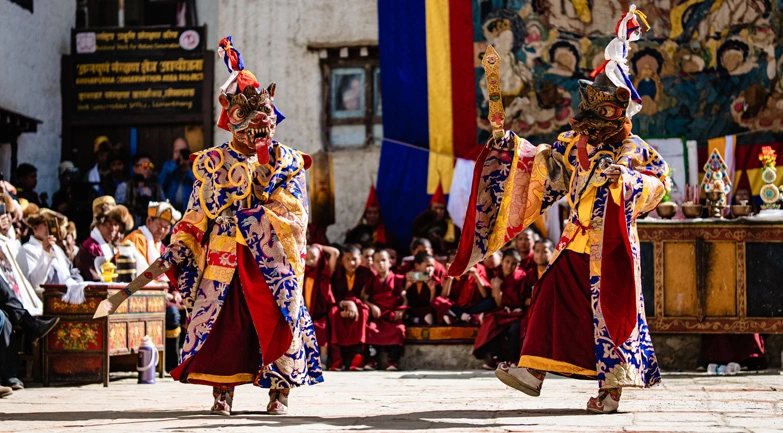
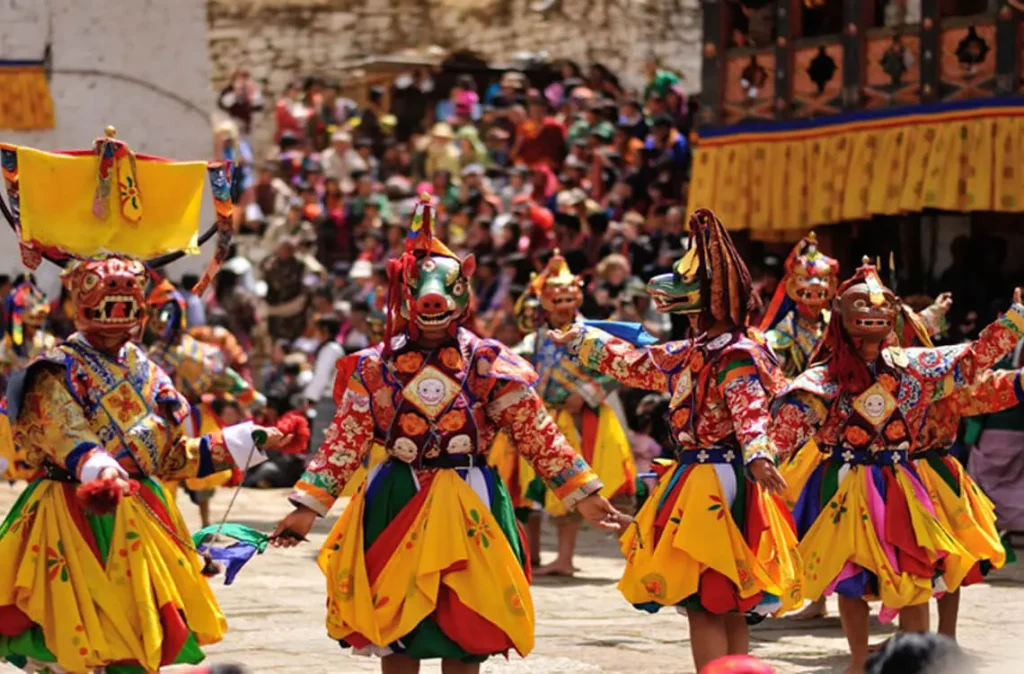
The masked dances, or Cham, are the visual centerpiece of the Tiji Festival. Performed by Buddhist monks in elaborate costumes and masks, these dances combine movement, music, symbolism, and religious practice.

For visitors, the masks and costumes may be the first thing that catches the eye, but their significance goes beyond appearance. The performances form part of a Vajrayana Buddhist ritual tradition, with gestures, movements, characters, and objects carrying religious meanings.

The dances should therefore be viewed as sacred ceremonies rather than conventional cultural shows.

Meaning Behind the Monastic Mask Dances

Cham dances are found in several Himalayan Buddhist traditions, and the Tiji performances have their own connection with the religious traditions of Mustang.

The masks represent different deities, spiritual beings, protective forces, and negative forces involved in the ritual narrative. Through the choreography, the monks symbolically confront and overcome harmful influences.

The visual elements are deliberately elaborate. Traditional masks can have distinctive expressions, colors, horns, crowns, or other features, while the dancers’ robes and movements help identify their ritual roles.

The accompanying music is also an important part of the ceremony. Long horns, drums, cymbals, and other traditional instruments help establish the rhythm of the performances and create the ceremonial atmosphere.

One of the most interesting aspects for visitors is that the dances are not improvised. The monks perform established sequences that have been preserved through the monastery’s religious tradition.

The monks’ movements symbolize aspects of meditation and religious practice, giving the dances a significance that goes well beyond their visual appeal.

Role of Choede Monastery Monks in the Festival

Choede Monastery plays a central role in Tiji, with its monks responsible for performing the principal sacred dances.

The preparation required for the festival is substantial. The monks undertake a three-month retreat before the festival, highlighting the religious preparation behind the public ceremonies.

This preparation is one reason travelers should not think of Tiji as a performance organized only during the tourist season.

The public celebrations are the visible part of a much longer religious process.

For visitors, watching the monks perform therefore provides only one part of the experience. The ceremony represents a continuation of a tradition that has been maintained within Lo Manthang’s Buddhist institutions over generations.

How to Get to Lo Manthang for Tiji Festival?

Lo Manthang - Ancient Village in Upper Mustang

Reaching Lo Manthang is an adventure in itself. Upper Mustang is a remote Himalayan region, and there is no direct commercial flight from Kathmandu to Lo Manthang.

Most travelers first make their way to Pokhara, followed by either an overland journey toward Upper Mustang or a combination of transportation and trekking.

The best route depends on your available time, budget, road conditions, and whether you want the journey itself to be part of the trekking experience.

Trekking Routes to Lo Manthang for the Festival

The classic approach to Lo Manthang follows the Kali Gandaki Valley through Upper Mustang, passing through historic settlements and landscapes along the way. A trekking itinerary can begin from the lower Mustang area and gradually progress north toward Lo Manthang.

Depending on the itinerary, travelers may pass through places such as:

  • Kagbeni
  • Chele
  • Syangboche
  • Ghami
  • Tsarang
  • Lo Manthang

The exact route and overnight stops can vary according to the trek duration and current road conditions.

A trekking approach is particularly suitable for travelers who want to experience Mustang’s villages, monasteries, landscapes, and changing terrain at walking pace rather than treating Lo Manthang simply as a festival destination.

However, the altitude needs to be taken seriously. Lo Manthang sits at approximately 3,840 meters, and the journey involves several days at increasingly higher elevations.

A well-designed itinerary should therefore allow enough time for gradual acclimatization rather than trying to reach Lo Manthang as quickly as possible.

Flight and Jeep Access Options to Upper Mustang

Travelers who have limited time can shorten parts of the journey by using domestic flights and road transportation. A common approach is to travel from Pokhara to Jomsom by domestic flight and then continue northward by road or trekking route.

However, flights to Jomsom are weather-dependent, and schedules can be affected by wind and visibility. Road conditions can also change depending on weather, maintenance, and seasonal conditions.

For a Tiji Festival trip, this makes an important difference.

If you have a fixed requirement to be in Lo Manthang for the first ceremony on June 1, 2027, it is better not to build an itinerary that depends on arriving at the last possible moment.

A private jeep can provide greater flexibility for travelers who want to reduce walking days, while a trekking itinerary offers a more immersive experience. The appropriate choice depends on your priorities:

Travel Style Best For Main Consideration
Full Trek Trekking and cultural immersion Requires more time and physical effort
Jeep-Based Journey Shorter travel schedules Less walking, more time on rough mountain roads
Flight + Road/Trek Travelers with limited time Flights are subject to weather and operating conditions
Combination Itinerary Travelers wanting flexibility Requires careful coordination

For Tiji Festival, reliability is more important than simply choosing the fastest route. A small amount of extra travel time can provide valuable protection against transportation delays.

Recommended Itinerary Length to Attend Tiji Festival

There is no single ideal number of days because travelers have different priorities. If your primary goal is simply to attend the three festival days, you need to account for the journey to and from Lo Manthang in addition to the festival itself.

For a more complete experience, a roughly 10–14-day Upper Mustang itinerary can provide time for travel, acclimatization, cultural stops, the festival, and the return journey.

Travelers who want a more relaxed trek can choose a longer itinerary. The important point is to avoid planning the trip around only the three festival dates.

For example, someone attending the 2027 Tiji Festival from June 1–3 should ideally reach Lo Manthang before June 1. This provides time to settle in and protects against delays on the mountain roads or domestic transportation network.

Permits Required to Attend Tiji Festival in Upper Mustang

Annapurna Circuit Trek Permit - ACAP - Hi Nepal Travels & Treks

Attending Tiji does not remove the normal entry requirements for Upper Mustang.

Because Upper Mustang is a restricted area, international trekkers need the appropriate permits before entering the designated restricted route. These permits should be arranged before entering the restricted area, typically through an authorized trekking agency.

Upper Mustang Trek Permits at a Glance

Permit Required For Current Cost Where It Applies
Upper Mustang Restricted Area Permit (RAP) International trekkers entering restricted Upper Mustang USD 50 per person per day Restricted Upper Mustang
Annapurna Conservation Area Permit (ACAP) Travelers entering the Annapurna Conservation Area NPR 3,000 per person Annapurna Conservation Area
Nepal Tourist Visa International travelers entering Nepal Separate visa fee applies Nepal

Important: Permit fees and regulations can change. The applicable charges should be confirmed with the Department of Immigration and relevant Nepal authorities when your trek is arranged.

Restricted Area Permit (RAP) Requirements and Cost

The key permit for travelers entering restricted Upper Mustang is the Upper Mustang Restricted Area Permit (RAP).

The current Department of Immigration fee is USD 50 per person per day. The final cost depends on the number of days covered by your restricted-area itinerary.

For a Tiji Festival trip, the permit period depends on your chosen route and itinerary, so the RAP cost should not be calculated simply from the three festival days.

ACAP Permit Requirements

Upper Mustang also lies within the Annapurna Conservation Area, so travelers need the Annapurna Conservation Area Permit (ACAP) in addition to the RAP.

  • Upper Mustang RAP: USD 50 per person per day
  • ACAP: NPR 3,000 per person

The ACAP fee is separate from the Upper Mustang RAP. Since government fees can change, verify the current requirements before departure.

For a Tiji Festival package, Hi Nepal Travels and Treks can arrange the applicable permit requirements as part of the pre-trip preparation, allowing you to focus on the trek and festival rather than administrative procedures.

How to Apply for Permits Before Festival Dates?

The best approach is to arrange your permits before entering the Upper Mustang restricted area.

You will generally need your passport details and required travel documents for the application process.

Since Tiji attracts additional visitors to Lo Manthang, completing the permit arrangements ahead of time is particularly useful for travelers with fixed festival dates.

A professional trekking agency can coordinate:

  1. Upper Mustang Restricted Area Permit
  2. ACAP requirements
  3. Licensed guide arrangements
  4. Transportation
  5. Accommodation
  6. Trekking itinerary
  7. Tiji Festival scheduling

For travelers planning the June 1–3, 2027 Tiji Festival, arranging these components in advance helps ensure that your itinerary is ready before you enter Upper Mustang.

How to Plan a Trek Around Tiji Festival Dates?

Tenchi Festival celebration with locals and visitors in Lo Manthang

Planning around Tiji is slightly different from booking a normal Upper Mustang trek. Instead of choosing your departure date first, it is usually better to start with the confirmed festival dates and work backward.

For 2027, the three festival days are: June 1–3, 2027.

Your itinerary should then be designed to place you in Lo Manthang before the first ceremony.

Recommended Days to Arrive Before the Festival Begins

For travelers attending the full festival, arriving at least one day before Tiji begins is a sensible minimum. Arriving earlier can be even better if your itinerary allows it.

The reason is straightforward: Upper Mustang is remote, and travel conditions can be unpredictable. Domestic flights may be affected by weather, while mountain roads can experience delays.

If your itinerary has you reaching Lo Manthang on June 1 itself, even a relatively small delay could mean missing the opening ceremony.

A better approach is:

Arrive in Lo Manthang → settle in → explore the town → attend all three festival days.

This also gives you time to explore Lo Manthang without trying to combine sightseeing with the busiest festival activities.

Sample Itinerary: Upper Mustang Tiji Festival Trek

A sample festival-focused itinerary could look like this:

Day Route / Activity Purpose
Day 1 Kathmandu arrival/preparation Final preparations
Day 2 Kathmandu → Pokhara Travel toward Mustang
Day 3 Pokhara → Jomsom → Kagbeni Enter Mustang region
Day 4 Kagbeni → Chele Begin Upper Mustang journey
Day 5 Chele → Ghami Continue through Mustang
Day 6 Ghami → Tsarang Cultural and landscape experience
Day 7 Tsarang → Lo Manthang Reach festival destination
Day 8 Tsa Chham — June 1 First festival day
Day 9 Nga Chham — June 2 Second festival day
Day 10 Rha Chham — June 3 Final festival day
Day 11 onward Return journey Travel back toward Jomsom/Pokhara

This is only an illustrative structure, not a fixed route. Actual travel times, overnight stops, transportation arrangements, and road conditions should be checked when the trip is organized.

For travelers who have less time, a jeep-supported itinerary can reduce the number of walking days.

For travelers who want the complete Upper Mustang experience, a longer trek can include additional acclimatization and exploration days.

The key principle remains the same: Build the itinerary around the festival, not the other way around.

What to Expect as a Visitor During Tiji Festival?

Tiji changes the atmosphere of Lo Manthang considerably. The normally quiet settlement becomes busier as local residents, monks, Nepali travelers, international trekkers, and photographers gather for the celebration.

However, visitors should not expect a large commercial festival with stages, ticketed seating, and organized tourist entertainment.

The experience remains strongly connected to local religious and community life.

Crowd Size and Booking Lead Time

Tiji is one of the most important annual events in Upper Mustang, so accommodation and transportation can become more sought-after around the festival dates.

This is particularly relevant because Lo Manthang has a much smaller accommodation network than major Nepalese tourist destinations such as Kathmandu or Pokhara.

If you plan to attend the June 1–3, 2027 festival, booking your trek and accommodation well in advance is advisable.

Early planning is especially useful for:

  • Accommodation in Lo Manthang
  • Private jeep transportation
  • Domestic flights
  • Guides and porters
  • Restricted-area permits
  • Festival-focused trekking packages

Local Customs and Etiquette at the Festival

The most important rule is simple: Treat Tiji as a religious ceremony, not a tourist attraction.

Visitors should:

  • Dress respectfully.
  • Follow instructions from monks and local organizers.
  • Stay outside restricted ritual areas.
  • Avoid touching religious objects or ceremonial items.
  • Keep conversations quiet during important rituals.
  • Ask before photographing individuals at close range.
  • Avoid blocking the view of local worshippers.
  • Follow your guide’s instructions regarding where to stand.

If a monk, local resident, or organizer indicates that photography is not appropriate at a particular moment, respect the request. A respectful visitor can still enjoy the incredible visual and cultural experience without disrupting the ceremony.

Photography Rules and Tips During Sacred Dances

Tiji is an extraordinary photography opportunity, particularly for people interested in cultural, documentary, and travel photography. The combination of traditional masks, costumes, instruments, ancient architecture, and Himalayan surroundings creates distinctive images.

However, good festival photography requires more than simply taking as many photographs as possible.

Try to:

  • Observe the ceremony before photographing.
  • Use a longer lens where appropriate rather than pushing into the crowd.
  • Avoid standing directly in front of worshippers.
  • Never enter a restricted ritual space for a photograph.
  • Ask permission before making close-up portraits of local people.
  • Keep flash use to a minimum unless explicitly permitted.
  • Follow any instructions from monks or festival organizers.

The best photographs often come from being patient and observing the ceremony, rather than constantly moving around looking for a new angle.

Where to Stay in Lo Manthang During Tiji Festival?

Lo Manthang has a selection of local guesthouses, teahouses, and small hotels, providing accommodation for trekkers visiting Upper Mustang.

Facilities are generally more basic than those found in Kathmandu or Pokhara, and travelers should set realistic expectations.

During Tiji, however, the bigger issue is not luxury. It is availability.

Teahouse and Guesthouse Availability During Festival Season

Accommodation in Lo Manthang is limited compared with Nepal’s major trekking hubs. During the festival, demand can increase because travelers arrive specifically for the three-day celebration.

This means that walking into Lo Manthang without a confirmed room is not the best strategy during Tiji.

Accommodation standards vary, but travelers can generally expect basic rooms, beds, blankets, and shared or attached bathroom facilities depending on the property.

Heating may also be limited, so appropriate clothing remains important even when visiting during the warmer part of the year.

Why Advance Booking Is Essential for Festival Dates

For a normal Upper Mustang trek, your trekking agency can often coordinate accommodation as part of the itinerary. For Tiji, advance planning becomes even more important because your arrival date is fixed by the festival.

If you are traveling for the 2027 festival, your accommodation should be organized around:

May 31 — arrival/buffer
June 1 — Tsa Chham
June 2 — Nga Chham
June 3 — Rha Chham

This gives you a clear base for experiencing all three days without worrying about changing accommodation during the festival.

Weather and Packing Guide for Tiji Festival Season

Upper mustang trek in monsoon season

Tiji takes place during a relatively favorable period for traveling through Upper Mustang. The region lies within the Himalayan rain shadow, so it receives considerably less monsoon precipitation than many areas farther south.

However, “dry” does not mean warm. Upper Mustang is a high-altitude Himalayan environment, and temperatures can vary significantly between daytime and nighttime.

Expected Weather in Lo Manthang During Tiji Festival

The festival normally takes place around late spring or early summer, when daytime conditions can be pleasant under clear skies. However, mornings and evenings can still be cold, while winds can become stronger later in the day.

At Lo Manthang’s elevation of approximately 3,840 meters, travelers should prepare for significant temperature variation.

The most useful approach is layering. Rather than relying on one heavy jacket, bring several layers that can be added or removed as conditions change.

What to Pack for the Festival and Trek

Your packing list should combine normal Upper Mustang trekking equipment with a few items specifically useful for spending time outdoors during Tiji.

Essential clothing:

  • Moisture-wicking base layers
  • Warm fleece or mid-layer
  • Insulated jacket
  • Lightweight waterproof/windproof outer layer
  • Trekking trousers
  • Warm hat
  • Gloves
  • Sunglasses
  • Sun hat or cap
  • Warm socks

Trekking essentials:

  • Comfortable trekking boots
  • Daypack
  • Water bottles or hydration system
  • Headlamp
  • Personal first-aid supplies
  • Sunscreen
  • Lip balm with sun protection
  • Personal medications
  • Reusable water bottle

Festival and photography essentials:

  • Camera
  • Extra batteries
  • Memory cards
  • Power bank
  • Small daypack
  • Binoculars, if useful
  • A lightweight scarf or face covering for dusty conditions

One item travelers often underestimate is sun protection.

At high altitude, UV exposure can be strong even when the air feels cool. Sunglasses, sunscreen, and appropriate clothing are therefore important throughout the trek.

Tiji Festival vs Other Mustang and Mustang-Region Festivals

Mustang is home to several festivals that reflect the region’s distinctive Tibetan Buddhist and Himalayan cultural traditions. While Tiji is the best-known celebration in Lo Manthang, it is not the only festival worth experiencing in Mustang.

The best choice depends on what you want from your visit: religious ceremonies, traditional sports, local community celebrations, photography, or a broader cultural experience.

How Tiji Compares to Yartung Festival in Mustang

The Tiji Festival and Yartung Festival are both important celebrations in Mustang, but they offer very different experiences.

Tiji is primarily associated with religious rituals, Buddhist masked dances, and the symbolic defeat of negative forces. It takes place in Lo Manthang and is closely connected with the region’s monastic traditions.

Yartung, on the other hand, is particularly known for horse racing, horsemanship, music, dancing, and community celebrations. It provides a different window into Mustang’s traditional way of life.

Feature Tiji Festival Yartung Festival
Main Location Lo Manthang Mustang, particularly areas such as Muktinath and surrounding communities
Main Character Religious and ceremonial Community, cultural and sporting
Famous For Masked dances and Buddhist rituals Horse racing and traditional celebrations
Best For Religion, culture, photography and history Local culture, horses and community life
Atmosphere Sacred and ceremonial Festive and energetic
Experience Monastic traditions Traditional Mustang social life

If your main interest is Tibetan Buddhist culture and sacred masked dances, Tiji is the stronger choice.

If you are more interested in traditional horsemanship and community festivities, Yartung offers a different experience.

For travelers with enough time, experiencing Mustang outside a single festival can provide a broader understanding of the region’s cultural diversity.

Cultural Significance of Tiji Festival for the Loba People

Tiji Festival - Colorful celebration

For the people of Upper Mustang, commonly referred to as the Loba, Tiji represents an important part of their cultural and religious heritage.

The festival connects present-day communities with the traditions of the former Kingdom of Lo, preserving religious practices that have been passed between generations.

Its importance is not limited to the three days when the public ceremonies take place.

The festival is supported by months of religious preparation, particularly within the monasteries involved in the rituals. This helps explain why the event continues to have meaning for the local community even as Upper Mustang becomes increasingly connected to tourism.

How the Festival Preserves Mustang’s Tibetan Buddhist Identity Today?

Upper Mustang occupies a unique cultural position within Nepal.

Its geographic isolation historically helped preserve a way of life strongly influenced by Tibetan Buddhism, Tibetan language and traditions, traditional architecture, and trans-Himalayan trade.

Tiji provides one of the clearest examples of this heritage continuing into the present.

The festival brings together:

  • Buddhist religious practices
  • Traditional masked dances
  • Monastic knowledge
  • Local stories and oral traditions
  • Traditional music and instruments
  • Community participation
  • Historic architecture and cultural spaces

This makes Tiji particularly valuable from a cultural-tourism perspective. Rather than preserving Mustang’s heritage only through old buildings or archaeological sites, the festival allows visitors to see tradition being actively practiced.

That distinction is important. A monastery can preserve historical architecture, but a festival such as Tiji shows how religious traditions continue to influence community life.

Why Responsible Tourism Matters During Tiji?

The growing popularity of Upper Mustang creates both opportunities and responsibilities. Tourism can provide income for local guides, porters, guesthouses, transport operators, restaurants, and other community businesses.

At the same time, large numbers of visitors can place pressure on fragile cultural sites and local resources.

Travelers attending Tiji can help by choosing responsible practices:

  • Stay in locally operated accommodation where possible.
  • Hire licensed local guides and support staff.
  • Follow monastery and festival rules.
  • Avoid littering.
  • Carry reusable water bottles.
  • Do not remove stones, artifacts, religious objects, or other items from cultural sites.
  • Respect local photography restrictions.
  • Dress appropriately around monasteries and religious ceremonies.
  • Avoid treating sacred rituals as entertainment.

Responsible travel helps ensure that tourism supports the communities that keep Upper Mustang’s traditions alive.

Why Experience Tiji Festival With Hi Nepal Travels and Treks?

Planning an ordinary trek in Upper Mustang already requires coordination between permits, transportation, accommodation, altitude management, and route planning.

A festival-focused trip adds another layer of planning because your arrival in Lo Manthang needs to match the fixed festival schedule.

This is where working with an experienced local travel company can make the process easier.

Hi Nepal Travels and Treks can help travelers organize a Tiji Festival journey around the confirmed festival dates, including the practical arrangements required for traveling through Upper Mustang.

A well-organized Tiji itinerary can coordinate:

  • Upper Mustang restricted-area permit arrangements
  • Applicable conservation permits
  • Licensed guide arrangements
  • Porter support where required
  • Transportation
  • Accommodation
  • Festival-focused itinerary planning
  • Airport transfers
  • Pre-trek briefing
  • Route and weather updates
  • Emergency and logistical support

The biggest advantage is having one coordinated itinerary rather than arranging each component separately.

For travelers coming to Nepal specifically for Tiji, the itinerary should be built around the festival rather than simply adding the festival to an existing Upper Mustang package.

A Tiji Festival Trip Should Be More Than Three Days

Although Tiji itself lasts three days, reaching Lo Manthang is part of the experience. A properly designed trip can combine the festival with:

  • Traditional Mustang villages
  • Ancient monasteries
  • Kali Gandaki landscapes
  • High-altitude viewpoints
  • Traditional Tibetan-style settlements
  • Local cultural experiences
  • Upper Mustang’s distinctive desert-like landscape

This makes the journey much more rewarding than flying or driving to Lo Manthang simply to watch the festival and immediately leave.

Hi Nepal Travels and Treks can tailor the itinerary according to your available time, preferred transportation, trekking ability, and interest in cultural exploration.

Practical Tips for Attending Tiji Festival

A little preparation can make a significant difference when attending a festival in a remote Himalayan destination.

Arrive Before the First Festival Day

If you are attending the complete June 1–3, 2027 Tiji Festival, avoid planning your arrival in Lo Manthang on June 1 itself.

Reaching the town beforehand gives you time to:

  • Check into your accommodation
  • Rest after traveling
  • Explore the festival area
  • Confirm the daily schedule
  • Prepare your camera and equipment
  • Adjust to the altitude

It also gives you a buffer if your transportation is delayed.

Carry Enough Cash

Upper Mustang is remote, and card and ATM facilities cannot be relied upon in the same way as in Kathmandu or Pokhara.

Carry enough Nepalese rupees for personal expenses, snacks, drinks, tips, and other purchases. Your trekking agency can help you estimate an appropriate amount based on your itinerary.

Protect Yourself From the Sun and Wind

The high-altitude environment can be deceptively intense. Even when temperatures feel comfortable, strong sunlight and wind can make conditions uncomfortable.

A good pair of sunglasses, sunscreen, lip balm, a hat, and a wind-resistant outer layer are useful throughout the journey.

Take Time to Acclimatize

Do not underestimate the altitude simply because the festival itself does not involve strenuous trekking. Lo Manthang sits at approximately 3,840 meters, and your body needs time to adapt.

A properly designed itinerary should include gradual altitude gain and enough rest rather than rushing from low elevations to Lo Manthang.

If you experience symptoms that may indicate altitude illness, inform your guide immediately and follow professional medical advice.

Keep Your Festival Schedule Flexible

The festival dates are fixed, but the exact timing of individual activities can depend on the religious and local schedule.

Your guide or local representative can help you stay updated about the day’s program.

Do not assume that every ceremony will begin exactly when a generic travel website says it will.

Conclusion — Why Tiji Festival Should Be on Your Nepal Travel Bucket List

The Tiji Festival offers far more than a spectacular display of masks and costumes.

It provides travelers with a rare opportunity to experience a living Himalayan tradition in its original cultural setting.

For three days, the historic town of Lo Manthang becomes the center of religious ceremonies, traditional masked dances, music, prayers, and community gatherings. At the same time, the journey through Upper Mustang introduces travelers to ancient villages, Buddhist monasteries, dramatic high-altitude landscapes, and a culture shaped by centuries of connection with Tibet.

The upcoming 2027 Tiji Festival will take place from June 1–3, with Tsa Chham on June 1, Nga Chham on June 2, and Rha Chham on June 3.

If you are planning to attend all three days, arriving in Lo Manthang before the festival begins is the safest approach.

Because Upper Mustang is a restricted region, advance preparation is essential. Permits, transportation, accommodation, guide arrangements, altitude planning, and festival timing all need to work together.

That is where Hi Nepal Travels and Treks can help.

Rather than treating Tiji as a short stop on a standard Mustang itinerary, we can help you plan the journey around the festival itself, giving you time to reach Lo Manthang comfortably, experience all three days, and explore the cultural and natural highlights of Upper Mustang along the way.

If experiencing one of Nepal’s most distinctive Himalayan festivals is on your travel list, Tiji Festival is an experience worth planning well in advance.

FAQs About Tiji Festival, Upper Mustang

  1. What Does “Tiji” Mean?

    Tiji is also known as Tenchi. The name is associated with Tenpa Chirim, referring to the benefit of Buddha’s teachings and the well-being of sentient beings. The festival’s broader message is connected with peace, prosperity, harmony, and overcoming negative forces.

  2. How Many Days Does Tiji Festival Last?

    The Tiji Festival lasts three days. For 2027, the festival is scheduled for:
    June 1 — Tsa Chham
    – June 2 — Nga Chham
    – June 3 — Rha Chham

  3. When Is Tiji Festival in 2027?

    The 2027 Tiji Festival is scheduled for June 1–3, 2027, in Lo Manthang, Upper Mustang.

  4. When Was Tiji Festival Held in 2026?

    The 2026 Tiji Festival was held from May 14–16, 2026.

  5. Where Is the Tiji Festival Celebrated?

    Tiji is celebrated in Lo Manthang, Upper Mustang, Nepal, the historic walled settlement that was formerly the center of the Kingdom of Lo.

  6. Can Tourists Attend Tiji Festival?

    Yes. International travelers can attend Tiji Festival, provided they meet the applicable entry and permit requirements for Upper Mustang.
    Because it is a religious festival, visitors should behave respectfully and follow local instructions during ceremonies.

  7. Do You Need a Guide to Attend Tiji Festival?

    For international travelers entering the Upper Mustang restricted area, trekking arrangements must comply with the applicable restricted-area regulations. In practice, travelers visit through an authorized trekking agency with the required permits and guide arrangements.
    Working with a registered local trekking company also makes transportation, accommodation, permits, and festival scheduling considerably easier.

  8. What Is the Best Way to Reach Lo Manthang for Tiji Festival?

    There is no single best option for everyone.
    Travelers can choose between trekking, jeep-supported travel, or combinations involving a flight to Jomsom and onward road travel.
    Your choice should depend on your available time, budget, physical ability, and desired experience.

  9. How Early Should I Arrive in Lo Manthang for Tiji?

    Ideally, arrive at least one day before the festival begins.
    For the 2027 festival, reaching Lo Manthang by May 31 gives you a useful buffer before the first ceremony on June 1.

  10. What Should I Wear to Tiji Festival?

    Wear warm, comfortable, and respectful clothing.
    Good choices include layered trekking clothing, a warm jacket, trousers, comfortable shoes, sunglasses, and sun protection.
    When visiting monasteries or attending religious ceremonies, avoid clothing that may be considered inappropriate in a sacred setting.

  11. Can I Take Photos During Tiji Festival?

    Photography is generally one of the attractions for visitors, but religious ceremonies should always take priority over photography.
    Follow local instructions and ask permission before photographing people at close range. Do not enter restricted areas to get a better photograph.

  12. Is Tiji Festival Suitable for First-Time Trekkers?

    It can be, provided the itinerary is appropriately designed.
    The main consideration is not only trekking difficulty but also altitude. Lo Manthang is at around 3,840 meters, so proper acclimatization is essential.
    First-time trekkers should consider traveling with an experienced guide and choosing an itinerary that allows gradual altitude gain.

  13. Is Upper Mustang Cold During Tiji Festival?

    Conditions can vary, but Upper Mustang remains cool at altitude, particularly in the mornings, evenings, and during windy conditions.
    Even though Tiji generally occurs during a relatively favorable travel period, pack warm layers rather than assuming it will feel like summer in Kathmandu.

  14. Is Tiji Festival Worth Visiting?

    For travelers interested in Himalayan culture, Tibetan Buddhism, traditional festivals, photography, history, and unique trekking experiences, Tiji can be one of the most rewarding cultural experiences in Nepal.
    Its combination of religious ceremonies and the distinctive environment of Lo Manthang makes it unlike most conventional Nepal trekking experiences.

  15. How Much Does a Tiji Festival Trek Cost?

    The total cost depends on the number of days, transportation method, accommodation, permits, guide and porter services, group size, and itinerary.
    The Upper Mustang restricted-area permit is currently charged at USD 50 per person per day, while other trip costs are separate.
    For an exact quotation, it is better to calculate the price based on the traveler’s preferred itinerary rather than using a single generic figure.

  16. Can I Visit Upper Mustang Without Attending Tiji Festival?

    Yes.
    Tiji is an annual event, but Upper Mustang is a year-round cultural and trekking destination subject to seasonal conditions and permit rules.
    Travelers can visit Lo Manthang outside the festival period to explore its landscapes, monasteries, villages, and cultural heritage without planning their trip around the festival.