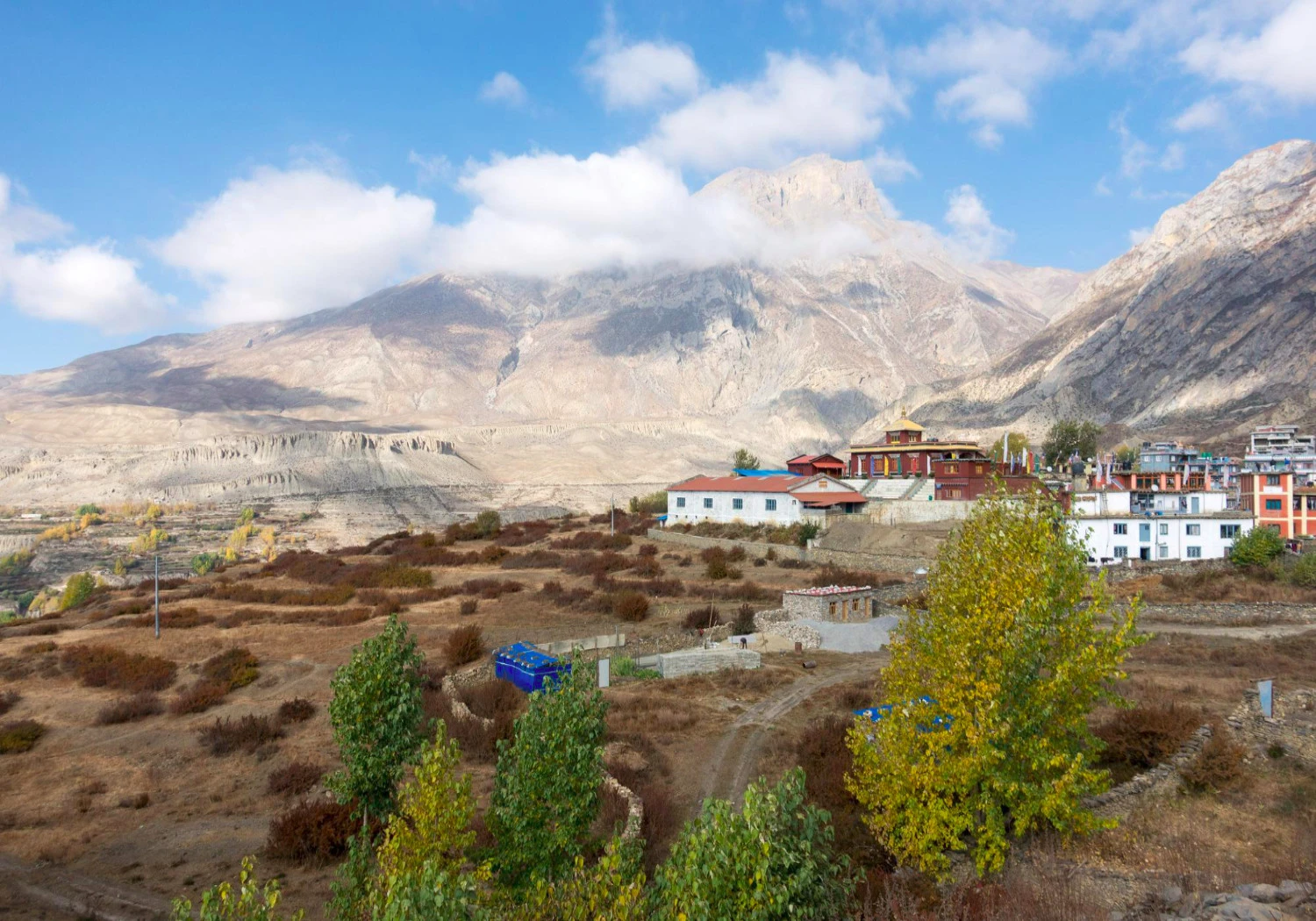
Introduction — Why Timing Matters for the Upper Mustang Trek?
Choosing the best time to trek Upper Mustang can make a significant difference to your experience. The region sits in the rain shadow of the Annapurna and Dhaulagiri mountain ranges, creating a climate that is considerably drier than much of Nepal. While heavy monsoon rainfall affects trekking areas such as Pokhara, the lower Annapurna region, and many trails in eastern Nepal, Upper Mustang can remain relatively dry during the same period.
That unusual climate makes Upper Mustang different from many of Nepal’s classic trekking destinations. June to August, normally considered monsoon months in Nepal, can still be a practical trekking period in Upper Mustang. The dry, desert-like landscapes, high Himalayan surroundings, ancient villages, monasteries, and Tibetan-influenced culture make the region particularly appealing during a season when many other trekking routes experience frequent rain.
However, “possible” does not always mean “best.” Weather conditions can vary considerably with altitude, wind, cloud cover, and the time of day. Upper Mustang is also a high-altitude, remote region, so travelers need to consider temperature changes, strong winds, trail conditions, accommodation availability, and transportation when choosing their travel dates.
For most travelers, spring and autumn remain the most comfortable seasons, particularly if clear mountain views, pleasant daytime temperatures, and reliable trekking conditions are priorities. Spring and autumn are the best general trekking seasons in Nepal, and October and November generally offer some of the clearest skies after the monsoon.
At the same time, travelers specifically looking for a monsoon trek in Nepal should not overlook Upper Mustang. Its rain-shadow geography is one of the region’s biggest advantages.
What Makes Upper Mustang’s Climate Different from Other Nepal Treks?

Upper Mustang is geographically and climatically different from the lush, humid trekking environments found on the southern side of the Himalayas. The region lies on the northern, leeward side of the Annapurna range, where the mountains block much of the moisture carried inland by the South Asian monsoon.
As moist air rises over the Himalayan mountains, much of its moisture is released as precipitation on the southern slopes. By the time the air reaches the Mustang region, considerably less moisture remains. This creates the rain-shadow effect responsible for Mustang’s dry, rugged environment.
The difference is substantial. According to the Nepal Tourism Board, Nepal receives around 80% of its precipitation during the June–September monsoon, while Mustang receives less than 300 mm of average annual rainfall.
This helps explain why Upper Mustang can look almost desert-like even while other parts of Nepal are green and receiving heavy rainfall.
The landscape is one of the clearest signs of this climate. Instead of dense forests and thick vegetation, trekkers encounter eroded cliffs, barren hills, dry valleys, rocky trails, caves, traditional villages, and broad Himalayan landscapes. The terrain has a strong Tibetan Plateau character, which is one of the reasons Upper Mustang is often described as one of Nepal’s most distinctive trekking regions. Upper Mustang is geographically part of the Tibetan Plateau and highlights its unique mountain culture and landscape.
But the rain shadow does not mean Upper Mustang has warm or easy weather throughout the year.
Wind is an important part of the Mustang experience. The region can become particularly windy during the afternoon, and temperatures can fall quickly when the sun disappears behind clouds or mountains. Nights are considerably colder than daytime conditions, especially at higher elevations.
Altitude is another factor. Lo Manthang sits at approximately 3,840 m (12,598 ft), and many trekking routes in Upper Mustang travel through similarly high terrain. At these elevations, travelers should be prepared for cold nights, intense sunlight during clear periods, dry air, and changing weather.
This is why choosing the right season is about more than avoiding rain.
It is about finding the right balance between temperature, wind, visibility, trail conditions, crowds, accommodation availability, and your personal trekking priorities.
Quick Answer: Best Months to Trek Upper Mustang at a Glance
If you want the short answer, March to May and September to November are generally the most favorable periods for an Upper Mustang trek, while June to August is an excellent alternative for travelers specifically looking for a dry monsoon destination. Winter is possible in principle but is generally less suitable because of cold temperatures, strong winds, snow, and reduced services.
Here is a practical overview:
| Season | Months | Overall Conditions | Best For |
|---|---|---|---|
| Spring | March–May | Mild to warm days, increasingly favorable conditions | First-time trekkers, scenery, culture |
| Early Summer/Monsoon | June–August | Relatively dry because of the rain shadow, but windy conditions possible | Monsoon trekking, photographers, fewer crowds |
| Autumn | September–November | Generally dry, stable, and clear | Best overall trekking experience |
| Winter | December–February | Very cold, windy, possible snow and limited services | Experienced trekkers seeking solitude |
For travelers who want the best combination of comfortable trekking conditions and clear Himalayan views, October and November are particularly strong choices. The clearest skies in Nepal are generally found after the monsoon, particularly during October and November.
If avoiding crowds is more important than having the most predictable conditions, late spring or the monsoon period can be attractive alternatives. Upper Mustang receives substantially fewer visitors during some of these months than during the major autumn trekking period, while the rain-shadow geography means rain is generally much less of a concern than it is on Nepal’s wetter trekking routes.
The Tiji Festival is another reason travelers may deliberately choose a particular period. The festival is held in Lo Manthang and is generally associated with May, although the exact dates vary according to the Tibetan lunar calendar. Nepal Tourism Board notes that many visitors travel to Lo Manthang specifically for the festival.
So, rather than asking only “When is Upper Mustang open?”, a better question is:
What kind of Upper Mustang experience do you want?
If you want clear skies and comfortable trekking, choose autumn.
If you want spring landscapes and cultural experiences, choose March to May.
If you want to explore one of Nepal’s best monsoon trekking destinations, consider June to August.
If your priority is solitude and a winter atmosphere, December to February may be possible with careful planning, but winter conditions should not be underestimated.
Upper Mustang is a restricted trekking region, so seasonal planning should also include the necessary permits and logistics. Travelers entering restricted areas must obtain a special trekking permit through the Department of Immigration, and Upper Mustang is specifically listed as a restricted area.
For that reason, your travel season, permit arrangements, transportation, accommodation, guide, and itinerary should be considered together rather than separately.
Upper Mustang Weather Overview: The Rain Shadow Advantage
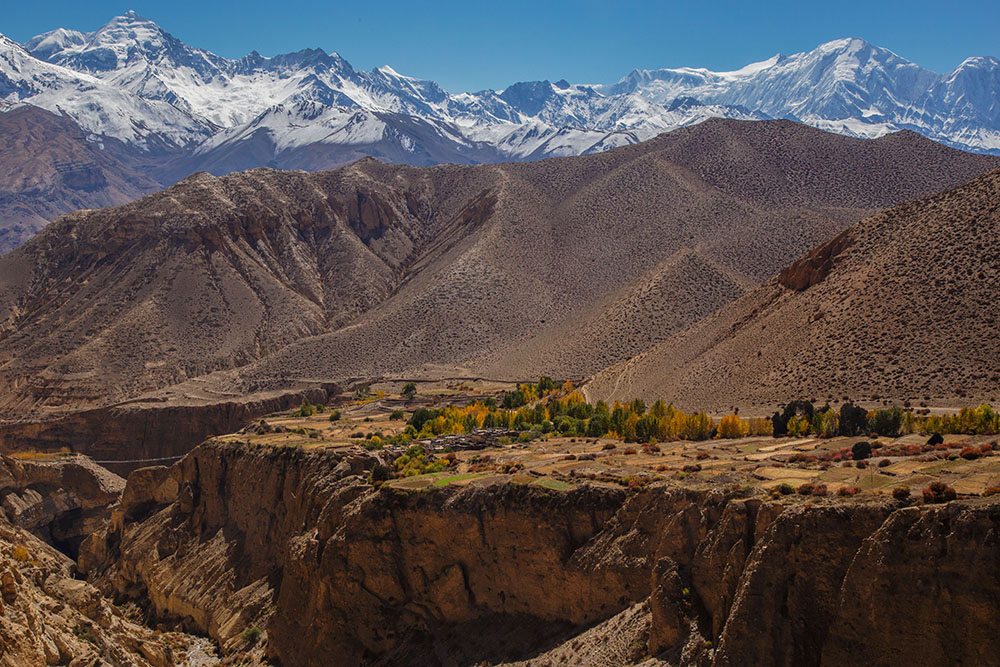
The defining feature of Upper Mustang weather is its position behind the Himalayas.
While the summer monsoon brings substantial rainfall to much of Nepal, the Upper Mustang region remains comparatively dry because it lies within the Himalayan rain shadow. As one of Nepal’s principal rain-shadow zones, Mustang offers conditions suitable for trekking even during the monsoon season.
This is the main reason Upper Mustang has become famous as a monsoon trekking destination in Nepal.
The rain-shadow effect also helps create the region’s distinctive appearance. The Upper Mustang landscape is dominated by dry valleys, exposed rock formations, cliffs, and barren hills rather than the dense green vegetation commonly associated with Nepal during the rainy season.
However, travelers should avoid interpreting “dry” as “hot.”
Upper Mustang is a high-altitude Himalayan region, and temperatures can vary significantly between daytime and nighttime. Clear sunny afternoons can feel surprisingly warm when you are walking in direct sunlight, while early mornings and evenings can be very cold.
Temperatures in Nepal generally decrease by around 6°C for every 1,000 m increase in elevation, although actual conditions vary with location, weather, wind, and season.
Why Upper Mustang Stays Dry During Monsoon (Rain Shadow Effect Explained)?
The monsoon arrives in Nepal carrying moisture from the south. When this moist air reaches the Himalayan mountain ranges, it is forced upward.
As the air rises, it cools and releases moisture as rain or snow on the windward side of the mountains.
The Annapurna and Dhaulagiri ranges form a major barrier between the wetter southern side of the Himalayas and the Mustang region to the north. As a result, Upper Mustang receives far less monsoon precipitation than many other trekking destinations in Nepal.
This geographical effect is known as a rain shadow.
It is the reason Upper Mustang can remain comparatively dry during June, July, and August while places such as Pokhara may be experiencing frequent rainfall.
The Nepal Tourism Board specifically describes Mustang as a rain-shadow region and states that below 300 mm of annual rainfall is recorded in Mustang, compared with much higher rainfall in wetter areas such as Pokhara.
That contrast is important when planning a summer trek.
A traveler may leave Kathmandu or Pokhara during the monsoon and experience rain along the way, then arrive in the Mustang region to find a much drier, more arid landscape.
Nevertheless, the rain shadow does not guarantee completely rain-free conditions. Localized rainfall can still occur, particularly around transitional areas and during changing weather patterns. Travelers should therefore pack appropriate protection rather than assuming they will encounter zero rain.
The biggest challenges during the Upper Mustang monsoon season are often wind, dust, changing visibility, transportation conditions, and temperature variation, rather than prolonged rainfall.
Average Temperature and Rainfall by Month in Upper Mustang
There is no single reliable official month-by-month climate table covering every trekking location in Upper Mustang, because weather varies with elevation and exact location. Conditions in lower Mustang can differ noticeably from those around Lo Manthang and the higher villages.
For that reason, it is better to use seasonal patterns rather than present false precision.
The broad pattern is:
- March–May: Temperatures gradually become more comfortable, with generally improving trekking conditions as spring progresses.
- June–August: The wider Nepal monsoon is active, but Upper Mustang remains relatively dry because of its rain-shadow location.
- September–November: Conditions generally become drier and more stable, with October and November particularly favorable for clear mountain views.
- December–February: Temperatures drop significantly, and winter conditions can become harsh, especially at higher elevations. Strong winds, cold, snow, and limited services make this the least favorable season for most trekkers.
Rather than relying on a single temperature number, trekkers should prepare for large differences between daytime and nighttime temperatures and changing conditions as elevation increases.
This is especially important around Lo Manthang and other high settlements.
A sunny afternoon can feel comfortable while walking, but once the sun drops, the temperature can fall rapidly. Strong winds can make it feel considerably colder than the thermometer suggests.
That is why a good Upper Mustang packing list should always include warm layers, even when you are trekking during the warmer months.
Mustang is a region that can be cold in winter and windy year-round, underscoring the need to consider wind and temperature, not rainfall alone, when selecting your trekking dates.
For most travelers, the takeaway is simple:
Upper Mustang’s rain-shadow climate makes it unusually suitable for monsoon trekking, but autumn offers the strongest combination of stable weather, clear visibility, and comfortable trekking conditions.
Season-by-Season Breakdown for Trekking Upper Mustang
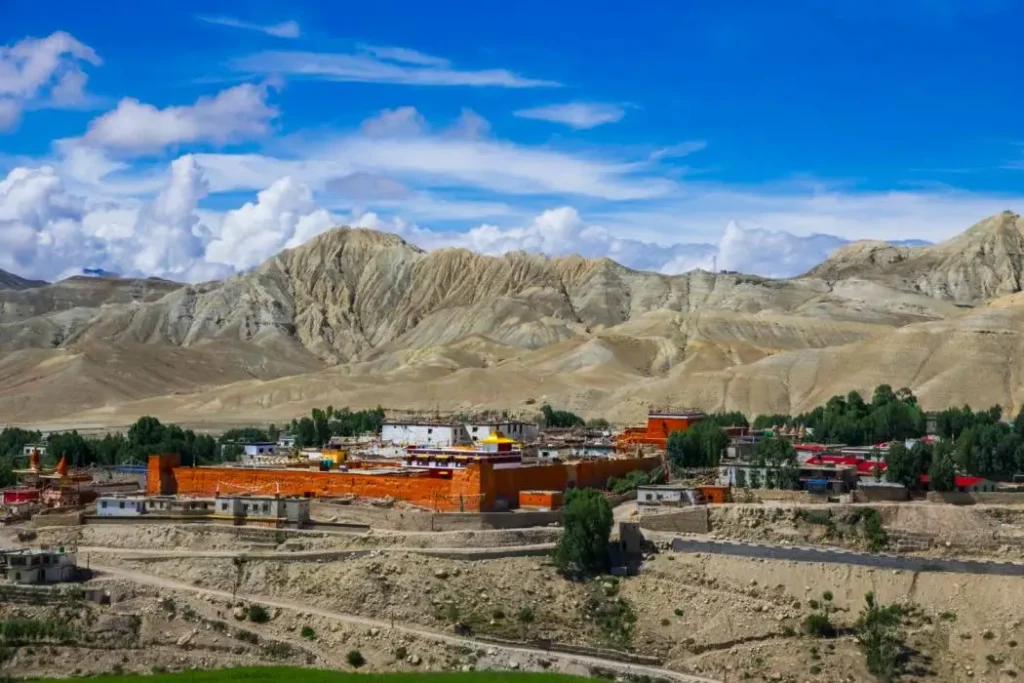
There is no single month that is perfect for every Upper Mustang trekker. The best season depends on what you value most, comfortable temperatures, clear mountain views, fewer people, cultural festivals, photography, or the chance to trek during Nepal’s monsoon.
Upper Mustang can be visited during several different seasons, but conditions change considerably throughout the year. Spring and autumn are generally the most favorable seasons for trekking, while summer offers a unique advantage because of the region’s rain-shadow climate. Winter is the most challenging period and requires considerably more preparation.
Spring (March–May) in Upper Mustang: Weather, Pros & Cons
March to May is one of the best periods to trek Upper Mustang, particularly for travelers who want a combination of improving weather, relatively comfortable daytime conditions, and the opportunity to experience the region before the main monsoon season.
Spring begins with colder conditions, especially in March, but temperatures gradually become more comfortable as April and May approach. The landscape remains dry and rugged, while warmer conditions make long trekking days more manageable than during winter.
April and May are particularly attractive months for an Upper Mustang trek.
One of the biggest advantages of spring is that you can enjoy the distinctive Mustang landscape without the intense cold associated with winter. The days generally become warmer, although early mornings, evenings, and higher elevations can still be cold.
Spring is also an important cultural season because the Tiji Festival is traditionally held in Lo Manthang during May. The festival follows the Tibetan lunar calendar, so the exact dates change each year. Travelers planning specifically around Tiji should confirm the official dates before booking flights, accommodation, and permits.
Advantages of Trekking Upper Mustang in Spring
- Comfortable trekking conditions, particularly later in spring
- Increasingly pleasant daytime temperatures
- Generally dry trails
- Excellent opportunities for landscape photography
- Opportunity to combine trekking with the Tiji Festival
- Less winter-related disruption than December–February
Potential Challenges
Spring is not completely predictable.
Wind can become noticeable during the afternoon, particularly in the exposed valleys of Mustang. Trekkers should also expect colder mornings and evenings at higher elevations.
May can also become warmer and busier as the main trekking season approaches.
For travelers interested in culture, photography, and a balance between weather and accessibility, April and May are excellent choices.
Summer/Monsoon (June–August) in Upper Mustang: Why It’s Actually Trekkable
For most of Nepal, June through August is the monsoon season. Heavy rainfall can make trails muddy, slippery, and difficult on many trekking routes.
Upper Mustang is different.
Because of its location in the Himalayan rain shadow, the region receives substantially less rainfall than Nepal’s wetter southern and central areas. This makes Upper Mustang one of the country’s most practical destinations for travelers who want to trek during the monsoon.
Nepal Tourism Board specifically identifies Mustang as a rain-shadow region and notes that trekking is possible there during the monsoon period.
That does not mean Upper Mustang becomes completely dry and cloudless every day.
Instead, the major advantage is that the amount and frequency of rainfall are generally much lower than on many other Nepal trekking routes.
For travelers with limited vacation windows during June, July, or August, this can be a major advantage.
Advantages of Trekking Upper Mustang in Summer
- Much drier than many other Nepal trekking regions during monsoon
- Excellent option for a monsoon trek in Nepal
- Fewer trekkers than the main autumn season
- Distinctive dry landscapes
- Strong opportunities for photography
- Good option for travelers who cannot visit Nepal during spring or autumn
What You Should Expect
The most noticeable issue during summer is often wind rather than rain.
Mustang’s valleys are highly exposed, and strong afternoon winds can blow through the region. Dust can also become an issue on exposed trails and roads.
Visibility can vary. Some days can be bright and exceptionally clear, while other days may have clouds or haze.
Transportation should also be considered carefully because getting to Mustang involves roads and, depending on the itinerary, flights through the Kali Gandaki corridor. Weather can still affect transportation even if Upper Mustang itself is relatively dry.
Therefore, travelers should build some flexibility into their itinerary rather than planning every transfer with zero margin for delays.
Overall, June to August is one of Upper Mustang’s biggest seasonal advantages.
Autumn (September–November) in Upper Mustang: Peak Season Explained
If someone asks for the best overall time to trek Upper Mustang, autumn is usually the safest recommendation.
September, October, and November bring some of the most favorable trekking conditions in Nepal, especially after the main monsoon period has ended.
The atmosphere generally becomes drier, visibility improves, and the Himalayan landscape can look exceptionally clear after the summer rains.
Spring and autumn are the best seasons for trekking, with October and November generally offering particularly clear skies.
For photographers and travelers whose priority is mountain scenery, this is a major advantage.
September
September is a transition month.
Early September can still experience some residual monsoon influence, while later September generally becomes increasingly stable.
The advantage of September is that it can provide a good balance between improving weather and somewhat lower visitor numbers than the busiest part of autumn.
October
October is arguably the strongest all-round month for an Upper Mustang trek.
The weather is generally dry, visibility is often excellent, and temperatures are more comfortable than during winter.
This makes October particularly suitable for:
- First-time trekkers
- Photography
- Mountain views
- Cultural exploration
- Longer trekking itineraries
- Travelers who want the most predictable conditions
The trade-off is demand.
Because October is one of Nepal’s major trekking months, popular accommodations and transportation can become busier. Booking your Upper Mustang trek in advance is recommended, particularly if you are traveling with fixed dates.
November
November remains an excellent month, but temperatures begin to fall as winter approaches.
The first part of November can still provide excellent trekking conditions, while late November can become significantly colder, particularly at night.
For travelers who want clear skies with somewhat fewer crowds than October, early November can be an excellent choice.
Winter (December–February) in Upper Mustang: Is It Possible?
Technically, winter trekking in Upper Mustang is possible, but it is not the season we would recommend for most travelers.
The biggest problem is not rainfall.
It is cold, wind, snow, and reduced services.
Nepal Tourism Board warns that winter in Mustang can be very cold and windy and recommends avoiding winter trekking because of unfavorable conditions.
As temperatures fall, higher sections of the route can become much more difficult. Snow and freezing conditions may affect trails and mountain passes, while some accommodation and local services may operate on a reduced basis because many residents traditionally move to lower areas during the harshest winter months.
This is particularly important around Lo Manthang and other high-altitude settlements.
Can Experienced Trekkers Visit in Winter?
Yes, under the right circumstances.
Experienced trekkers with appropriate equipment, flexible schedules, suitable support, and a good understanding of high-altitude winter conditions may choose to travel during this period.
But the question is not simply whether the trek is technically possible.
The better question is whether winter provides the experience you actually want.
If your priority is reliable accommodation, comfortable walking conditions, clear mountain views, and straightforward logistics, autumn is a much better choice.
If your priority is solitude and a stark winter landscape—and you have significant high-altitude trekking experience—winter may offer a completely different Upper Mustang experience.
Best Time to Trek Upper Mustang for Clear Mountain Views
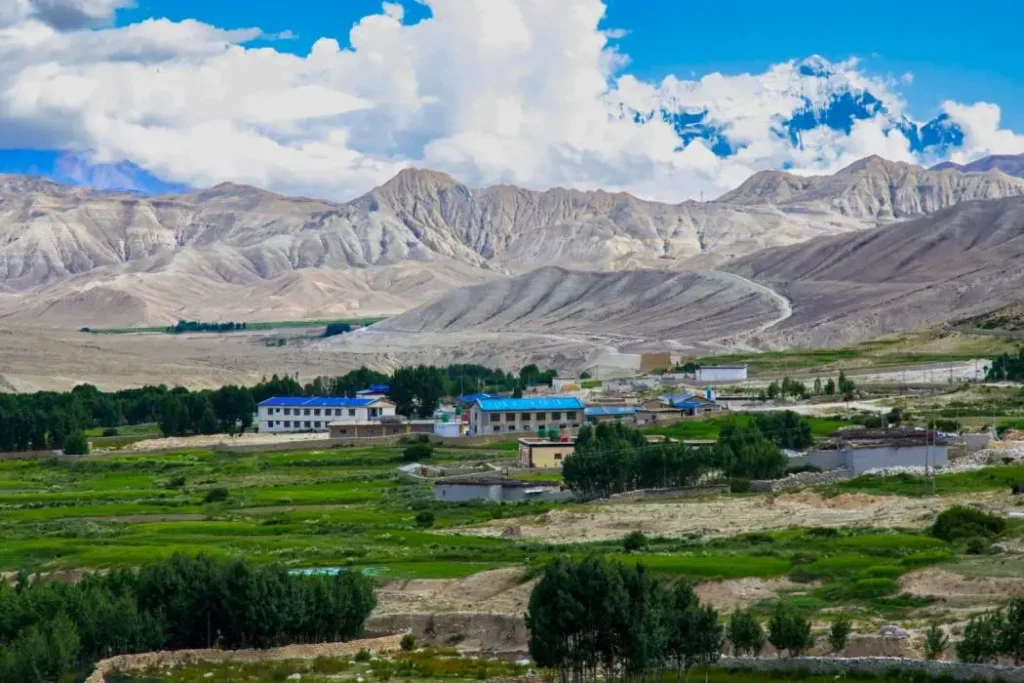
For many trekkers, the biggest reason for choosing a particular season is simple:
They want to see the Himalayas clearly.
Upper Mustang is surrounded by dramatic Himalayan terrain, including the Annapurna and Dhaulagiri ranges, and the region offers expansive views across dry valleys and high mountain landscapes.
Clear visibility depends on more than the calendar. Cloud cover, dust, wind, atmospheric haze, and recent weather conditions can all affect what you see.
Nevertheless, autumn generally offers the most reliable combination of clear skies and stable weather.
Months with the Clearest Skies and Best Visibility
October and November are among the best months for clear Himalayan views in Upper Mustang.
The main monsoon has ended, the atmosphere is generally drier, and the probability of prolonged cloud cover is lower than during the wetter months elsewhere in Nepal.
September can also provide excellent visibility, particularly later in the month as monsoon conditions retreat.
Spring is another strong option.
April and May can provide excellent mountain scenery, although increasing haze and afternoon cloud or wind can occasionally affect visibility.
For the clearest views, many trekkers also benefit from starting their daily walks relatively early.
Morning conditions are often calmer than the afternoon, when Mustang’s characteristic winds can become stronger.
Best Time for Photography in Upper Mustang
Upper Mustang is an exceptional destination for landscape photography because the scenery is visually different from the green valleys found on many other Nepal trekking routes.
Photographers can capture:
- Dry Himalayan valleys
- Red and ochre cliffs
- Ancient settlements
- Tibetan-style monasteries
- Whitewashed houses
- Prayer flags and mani walls
- Dramatic mountain backdrops
- Cave formations
- High-altitude landscapes
- Traditional Mustang architecture
October and November are excellent months for photography because clearer skies can provide strong contrast between the mountains, blue sky, and rugged terrain.
Spring is also attractive, especially for travelers who want softer light and a slightly different atmosphere.
For photographers, timing during the day matters as much as choosing the right month.
Early morning and late afternoon generally provide softer light, while the middle of the day can produce harsh shadows and strong glare at high altitude.
At the same time, the afternoon wind can create dust and make tripod photography more difficult in exposed areas.
A photographer planning an Upper Mustang trek should therefore consider not only the season but also daily trekking hours, wind conditions, and sunrise/sunset opportunities.
Trekking Upper Mustang During Monsoon Season (June–August)
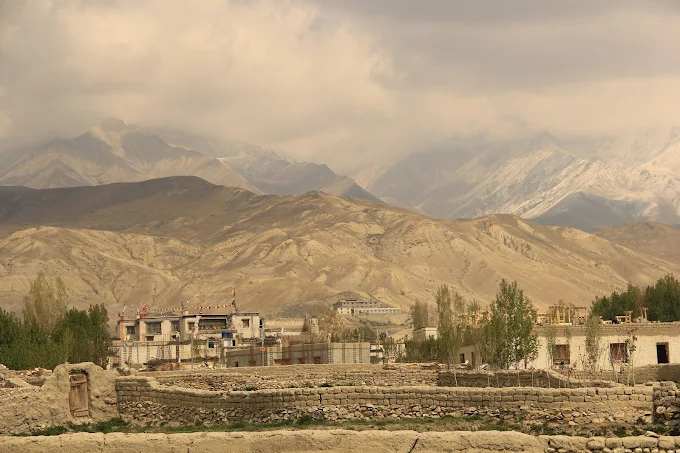
Upper Mustang is one of the rare trekking destinations in Nepal where the monsoon season can actually be an advantage.
While many travelers associate June, July, and August with wet trails and persistent rain, Upper Mustang’s rain-shadow geography creates a very different environment.
Why Upper Mustang Is a Top Monsoon Trek Destination in Nepal?
The main reason is geography.
Upper Mustang lies behind the major Himalayan ranges, which shield the region from much of the moisture associated with the South Asian monsoon.
This makes the region substantially drier than many popular trekking routes farther south.
For someone searching specifically for a monsoon trek in Nepal, Upper Mustang should therefore be high on the list.
The region also has another advantage during this period: the landscape can feel quieter than during the major autumn trekking season.
With fewer visitors, trekkers may have more opportunities to experience villages, monasteries, and cultural sites without the same level of traffic found during peak periods.
However, fewer trekkers should not be confused with completely empty trails.
Upper Mustang remains a restricted trekking destination, and visitors must arrange the appropriate permits and travel through the required trekking arrangements.
What to Expect: Trail Conditions During Monsoon in Mustang?
The most important thing to remember is:
Monsoon in Upper Mustang does not mean guaranteed rain-free trekking.
Rain can still occur, and weather can change.
Road and flight conditions can also be affected outside the immediate Upper Mustang rain-shadow area. This is especially relevant for travelers entering the region via Pokhara and Jomsom.
Once trekking deeper into Upper Mustang, however, the landscape is generally much drier than the southern side of the Himalayas.
Expect:
- Dry and dusty trails
- Strong afternoon winds
- Significant sun exposure
- Rapid temperature changes
- Occasional localized rain
- Possible cloud or haze
- Excellent dry-landscape scenery
- Potential transportation delays before or after entering the region
A lightweight rain jacket should still be packed, even for a monsoon Upper Mustang trek.
The rain shadow reduces rainfall; it does not eliminate weather uncertainty.
For the best experience, plan shorter walking periods during the strongest afternoon winds, protect your eyes and face from dust, stay hydrated, and keep your itinerary flexible enough to accommodate transportation changes.
For travelers who can only visit Nepal during the summer months, this makes June through August a genuinely viable season for Upper Mustang, rather than a compromise destination.
Tiji Festival Timing – Trekking Upper Mustang for the Festival
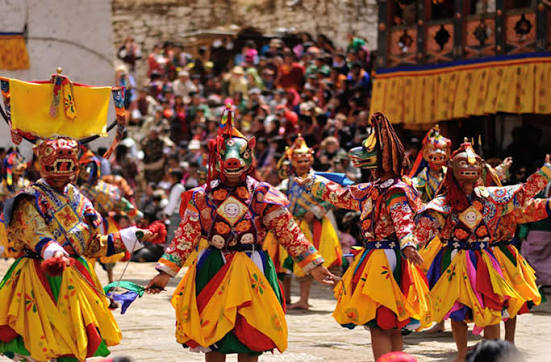
The Tiji Festival is one of the most important reasons travelers choose to visit Upper Mustang in May. Held in the ancient walled city of Lo Manthang, the festival combines Buddhist traditions, masked dances, religious ceremonies, music, and centuries-old local culture.
Nepal Tourism Board notes that many visitors travel to Lo Manthang specifically for the festival, which is usually scheduled in May.
For travelers interested in combining trekking with cultural exploration, planning around Tiji can turn an already remarkable Upper Mustang trek into a particularly memorable experience.
What Is the Tiji Festival and Why It Draws Trekkers to Lo Manthang?
Tiji, also spelled Teeji, is a traditional Buddhist festival celebrated in Lo Manthang. It is associated with the local Tibetan Buddhist tradition and is known for its elaborate masked dances and religious performances.
The festival is traditionally linked to the story of Dorje Jono, a deity who defeats a destructive demon and protects the region from drought and other troubles.
For visitors, however, Tiji is much more than a performance.
It provides an opportunity to experience an important part of Upper Mustang’s living cultural heritage.
During the festival period, Lo Manthang becomes considerably more active as local residents, monks, visitors, and trekkers gather for the ceremonies.
The atmosphere is very different from visiting the city on an ordinary trekking day.
Travelers should remember that Tiji is a religious and cultural event, not simply a tourist show. Visitors should dress respectfully, follow local instructions, avoid disrupting ceremonies, and ask before photographing people at close range.
The festival is particularly attractive for travelers who want to combine:
- Upper Mustang trekking
- Tibetan Buddhist culture
- Traditional architecture
- Monasteries and religious sites
- Photography
- Local festivals
- The historic city of Lo Manthang
Because Tiji takes place around May, it also fits naturally into the spring trekking season, which generally offers favorable conditions for traveling through Upper Mustang.
Tiji Festival 2027 Dates and How to Plan Your Trek Around It
The exact Tiji dates are determined according to the Tibetan lunar calendar, so they should always be confirmed from a reliable official or local source before finalizing travel arrangements.
For a 2027 trek, travelers should not rely on a generic “May” date published years in advance.
Confirm the exact 2027 festival dates before booking your international flights, domestic transportation, accommodation, and trekking itinerary.
This is particularly important because the festival attracts additional visitors to Lo Manthang.
If you are traveling specifically for Tiji, it is sensible to arrange your restricted-area permit, guide, transportation, accommodation, and itinerary well in advance.
Upper Mustang is a restricted trekking region, and the Department of Immigration states that permits for restricted areas are issued through authorized trekking agencies.
Best Time to Trek Upper Mustang by Traveler Type
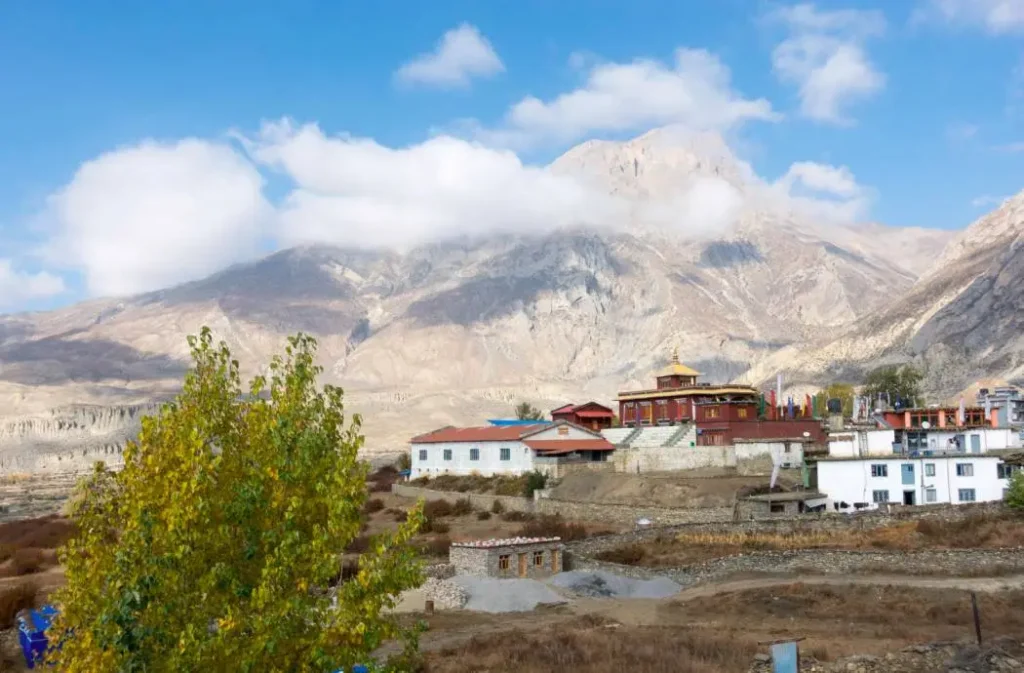
The best time for an Upper Mustang trek depends on the type of experience you want.
A photographer may prefer a different month from someone who wants the warmest possible trekking conditions. A first-time high-altitude trekker may prioritize predictable weather, while an experienced traveler looking for solitude may deliberately choose a shoulder season.
Best Season for First-Time Trekkers
For most first-time trekkers, autumn is the easiest recommendation, particularly October and early November.
During this period, weather conditions are generally stable, visibility is often excellent, and temperatures are more comfortable than during winter.
The main advantage for beginners is predictability.
You are less likely to spend your trek dealing with the extreme cold associated with winter, while the heavy monsoon conditions affecting many parts of Nepal have already passed.
October is particularly suitable for first-time Upper Mustang trekkers who want to concentrate on enjoying the scenery and cultural experience rather than dealing with challenging seasonal weather.
Spring, especially April and May, is another excellent option.
However, anyone planning a May trek should check whether their dates overlap with Tiji and expect greater demand around Lo Manthang.
Regardless of season, Upper Mustang is still a high-altitude trek, so first-time trekkers should prepare for altitude, dry air, strong sunlight, cold nights, and potentially strong winds.
Best Season for Photographers and Landscape Enthusiasts
For photographers, October and November are among the strongest months.
The combination of dry conditions, clearer skies, dramatic landscapes, and strong Himalayan visibility can produce excellent conditions for landscape photography.
Upper Mustang is particularly distinctive because its scenery differs from the lush green valleys commonly associated with Nepal.
Instead, photographers can capture:
- Barren Himalayan valleys
- Red and orange cliffs
- Dramatic rock formations
- Ancient settlements
- Tibetan-style architecture
- Monasteries
- Prayer flags
- Mani walls
- High mountain landscapes
- Lo Manthang’s historic buildings
May is especially interesting for cultural photographers because of the Tiji Festival.
During the festival period, photographers have opportunities to document traditional costumes, masked dances, religious ceremonies, architecture, and everyday cultural life.
However, cultural photography requires sensitivity.
Always respect local customs and ask permission before photographing people at close range, especially during religious ceremonies.
Best Season to Avoid Crowds in Upper Mustang
If avoiding busy trekking periods is your priority, consider late spring, summer/monsoon, or the shoulder periods around the main autumn season.
The major autumn trekking period is popular across Nepal, and Upper Mustang also attracts travelers seeking its dry weather and clear mountain views.
By contrast, June through August can provide a quieter trekking experience while still benefiting from Upper Mustang’s rain-shadow climate.
This is one of the reasons Upper Mustang is unusual compared with many other Nepal trekking destinations.
You can potentially travel during Nepal’s monsoon season without experiencing the persistent rain found on many southern Himalayan trails.
Winter offers even greater solitude, but there is an important trade-off: fewer people does not automatically mean better trekking conditions.
The cold, wind, possible snow, and reduced services make winter considerably more demanding. Winter conditions in Mustang are extreme at higher elevations, and trekking is advised against.
For most travelers seeking fewer crowds without extreme winter conditions, late spring or summer is a better compromise.
Month-by-Month Trekking Conditions in Upper Mustang (2026)
Understanding Upper Mustang weather month by month helps you choose the right travel dates based on weather, visibility, crowds, and trekking conditions. Because conditions vary by elevation and location, the information below is a practical seasonal guide rather than an exact weather forecast.
Upper Mustang Trekking Conditions by Month
| Month | Season | General Conditions | Best For |
|---|---|---|---|
| January | Winter | Very cold, windy, possible snow | Experienced trekkers |
| February | Winter | Cold with possible snow and limited services | Experienced trekkers |
| March | Spring | Cold mornings; conditions improving | Early-season trekking |
| April | Spring | Dry and increasingly comfortable | Excellent trekking |
| May | Spring | Favorable conditions; Tiji Festival | Tiji Festival & culture |
| June | Monsoon | Relatively dry due to rain shadow | Monsoon trekking |
| July | Monsoon | Dry compared with most of Nepal; windy | Monsoon trekking |
| August | Monsoon | Generally dry; occasional rain and wind | Monsoon trekking |
| September | Autumn | Conditions becoming more stable | Shoulder-season trekking |
| October | Autumn | Dry, clear, and comfortable | Best overall |
| November | Autumn | Clear but increasingly cold | Mountain views |
| December | Winter | Very cold; possible snow and strong winds | Experienced trekkers |
January & February
January and February are the most challenging months for most Upper Mustang trekkers. Higher elevations can experience freezing temperatures, snow, and strong winds, while some local services may be limited.
March, April & May
Spring brings gradually improving conditions. April and May are particularly favorable, with more comfortable trekking conditions. May is also important for travelers planning to experience the Tiji Festival in Lo Manthang.
June, July & August
Although these months fall within Nepal’s monsoon season, Upper Mustang lies in the Himalayan rain shadow, making it significantly drier than many other trekking regions. June to August can therefore be an excellent choice for monsoon trekking, although wind, dust, occasional rain, and transportation disruptions are still possible.
September, October & November
Autumn offers some of the most reliable trekking conditions of the year. September generally improves as the monsoon retreats, while October and early November are especially good for clear skies, mountain views, and comfortable trekking.
December
December marks the beginning of the harsh winter period. Temperatures fall significantly, and higher areas can experience snow and strong winds. Winter trekking is possible with specialist preparation but is not recommended for most travelers.
How Season Affects Upper Mustang Permits and Restricted Area Rules?
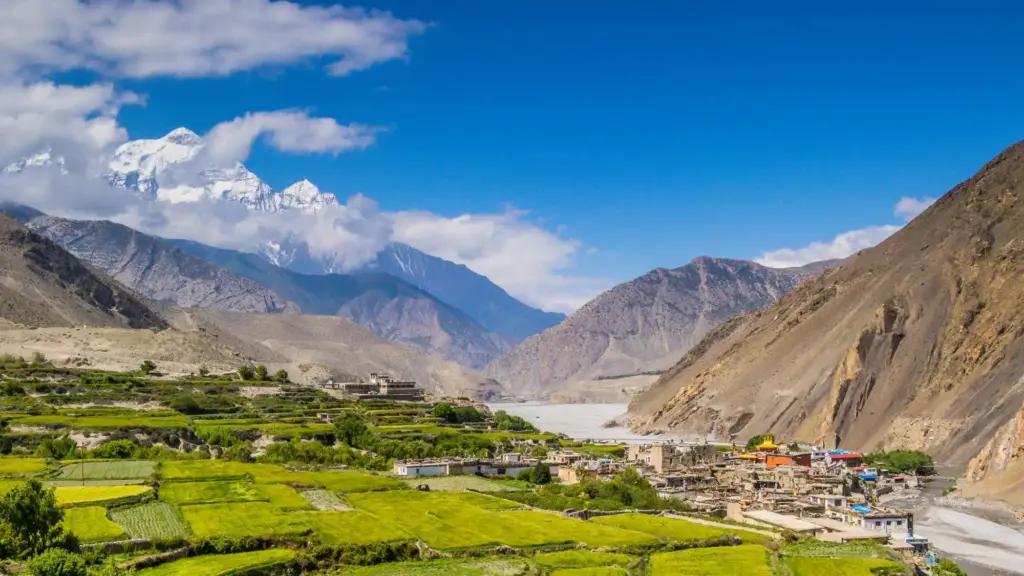
Weather determines when you may want to trek, but it does not remove the administrative requirements for entering Upper Mustang.
Upper Mustang remains a restricted trekking area, and foreign trekkers need the appropriate restricted-area trekking permit.
The Department of Immigration states that trekking permits for designated restricted areas are issued through authorized trekking agencies.
Restricted Area Permit (RAP) Requirements Year-Round
The permit requirement is not simply a spring or autumn rule.
Upper Mustang’s restricted-area permit applies regardless of whether you travel in spring, summer, autumn, or winter.
The current Department of Immigration trekking-route fee table lists the Upper Mustang permit at USD 50 per person per day.
This is important because older information online may still show a different Upper Mustang fee structure.
Always check the latest Department of Immigration information before publishing or booking, because government fees and trekking regulations can change.
In addition to the Upper Mustang restricted-area permit, travelers should also check the other permits or conservation-area entry requirements applicable to their itinerary.
Does Trekking Season Affect Permit Cost or Availability?
The Upper Mustang permit fee is not presented by the Department of Immigration as a seasonal rate in its current Upper Mustang fee table. The current listed rate is USD 50 per person per day.
However, seasonal travel can still affect the practical planning of your trek.
During peak periods such as October and November, transportation, accommodation, guides, and other trekking logistics can be in higher demand.
During winter, the issue is less about the permit itself and more about weather, accessibility, accommodation, and local services.
This is why arranging the permit alone is not enough.
A properly planned Upper Mustang trek should coordinate:
permit + authorized trekking agency + guide + transportation + accommodation + weather + itinerary.
For travelers booking with Hi Nepal Travels and Treks, arranging the required restricted-area documentation in advance can make the planning process much simpler, particularly for fixed-date journeys or trips planned around the Tiji Festival.
Packing List by Season for Upper Mustang Trek
Upper Mustang’s dry climate can make packing seem simple, but the region’s high altitude, strong sunlight, wind, and large temperature differences between day and night require careful preparation.
Your packing list should change depending on when you travel.
What to Pack for Spring and Autumn Treks
Spring and autumn are the most popular seasons, so a versatile layering system works well.
Essential items include:
- Layered trekking clothing
- Warm fleece or insulated mid-layer
- Windproof and waterproof outer shell
- Comfortable trekking trousers
- Thermal base layers
- Warm hat and gloves
- Sun hat or cap
- UV-protection sunglasses
- Sunscreen
- Reusable water bottle or hydration system
- Comfortable trekking boots
- Warm sleeping bag suitable for the season
- Headlamp
- Personal medications and basic first-aid supplies
- Power bank and charging accessories
- Trekking poles
- Lightweight rain protection
Do not underestimate the sun.
At high altitude, UV exposure can be intense even when temperatures feel cool, so sunglasses, sunscreen, and sun protection are essential.
What to Pack for Monsoon Season Trekking?
A monsoon Upper Mustang trek still requires rain protection even though the region lies in the rain shadow.
Pack:
- Lightweight waterproof jacket
- Waterproof protection for electronics
- Quick-drying trekking clothing
- Windproof layer
- Sunglasses
- Sun protection
- Dust mask or buff
- Trekking poles
- Water-resistant backpack cover
- Warm layers for cold mornings and evenings
- Sturdy trekking shoes
A windproof layer is particularly useful because afternoon winds can be more noticeable than rainfall.
What to Pack for Winter Trekking in Mustang?
Winter requires a significantly warmer setup.
If attempting a winter trek, you should be prepared for:
- Heavy insulated jacket
- High-quality thermal base layers
- Warm fleece or down layers
- Insulated gloves
- Warm hat
- Neck gaiter or buff
- Thick trekking socks
- Winter-rated sleeping bag
- Appropriate footwear for snow and freezing conditions
- Sunglasses with strong UV protection
- Sunscreen
- Headlamp
- Emergency supplies
Winter equipment should not be treated as optional.
Upper Mustang can become extremely cold at higher elevations, and weather conditions can change quickly.
For most travelers, however, the better solution is not simply carrying more winter equipment, it is choosing a more favorable trekking season.
Wind Factor – Why Afternoon Timing Matters Every Day in Upper Mustang?
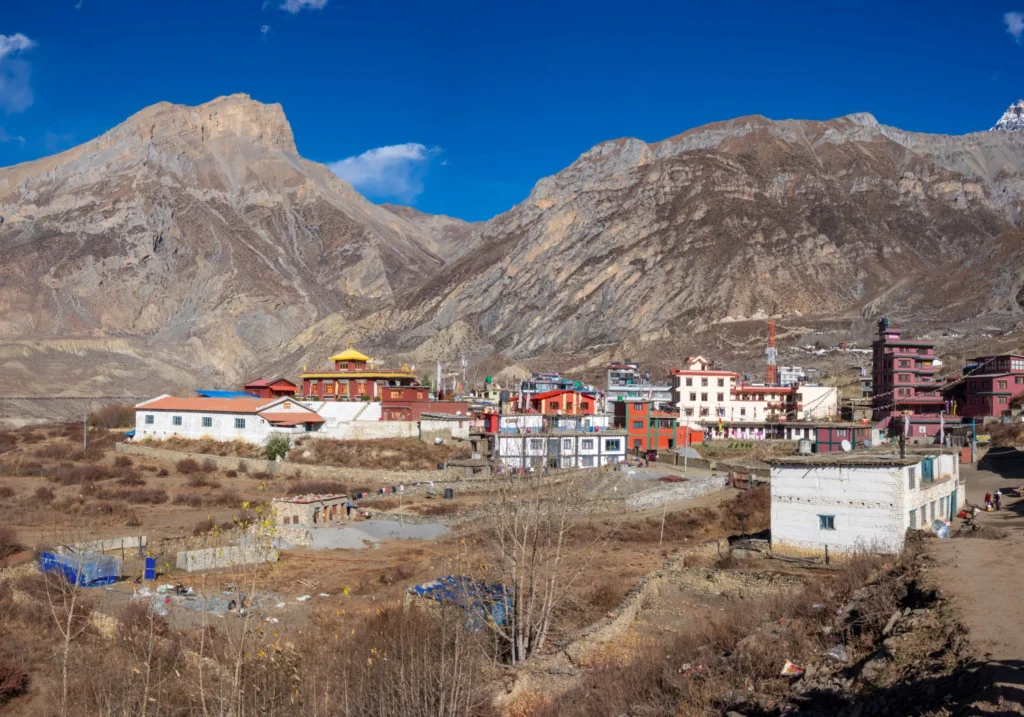
One of the most important weather factors to understand before an Upper Mustang trek is wind.
Visitors often focus on rainfall when planning their trip, particularly because Upper Mustang is known as a monsoon-friendly destination. However, wind can have a much more noticeable effect on your daily trekking experience than rain, especially on exposed trails and during the afternoon.
The Kali Gandaki valley and the surrounding Mustang landscape are highly exposed to mountain winds. As the day progresses, winds can become stronger, creating dusty conditions and making exposed sections of the trail feel colder.
This is one reason experienced trekkers and guides generally prefer to start walking early and complete the most exposed sections before the strongest afternoon winds.
Understanding Mustang’s Daily Wind Patterns
Upper Mustang’s dry, open terrain offers little protection from the wind.
During clear weather, the sun warms the land and surrounding air, while differences in temperature and pressure across the deep valleys and surrounding mountains contribute to the characteristic daily wind pattern.
The exact strength and timing of wind varies according to season, elevation, valley, weather system, and location.
You should therefore avoid treating a particular hour as a guaranteed daily wind forecast.
Instead, use the general pattern as a planning principle:
Mornings are often calmer, while afternoon conditions can become increasingly windy.
This is particularly noticeable around exposed sections of the route.
Wind can also carry dust, which may reduce comfort and visibility. Travelers with sensitive eyes may find sunglasses or protective eyewear particularly useful.
The wind can make a relatively moderate walking temperature feel much colder. This is especially important during spring, autumn, and winter when temperatures can already be low.
How to Plan Daily Trekking Hours Around the Wind?
A practical strategy is to start trekking relatively early in the morning.
Early starts provide several advantages:
- Cooler but often calmer conditions
- Better morning visibility
- More comfortable walking before afternoon winds increase
- More time to complete the day’s distance
- Greater flexibility if weather changes
- Better opportunities for morning photography
Your guide can adjust the walking schedule according to the actual conditions on the trail.
For example, if strong winds are forecast or already developing, your guide may recommend an earlier departure or a shorter break at an exposed location.
Do not feel that you need to maintain a rigid schedule simply because your itinerary says you will walk for a certain number of hours.
Mountain weather should always take priority over an exact timetable.
For photographers, early starts have another advantage.
The softer morning light can produce excellent conditions for photographing Lo Manthang, cliffs, monasteries, villages, and Himalayan landscapes before the stronger midday sunlight and afternoon winds arrive.
Worst Time to Trek Upper Mustang (And Why)
There is no universally “impossible” month for every traveler, but mid-winter is generally the least favorable period for a conventional Upper Mustang trek.
The combination of low temperatures, strong winds, possible snowfall, frozen conditions, and reduced local services can make the journey substantially more demanding.
Trekking Challenges During Peak Winter Months
December through February presents the greatest seasonal challenges.
At higher elevations, temperatures can drop well below freezing, particularly at night. Snow can affect trails and passes, while icy conditions can make walking more difficult.
Another issue is local infrastructure.
Upper Mustang is a remote Himalayan region, and many communities have traditionally adapted their lives around the harsh winter. Some residents move toward lower areas during the coldest period, which can mean fewer open accommodation and service options.
This matters because a trek is not only about whether a trail can physically be walked.
You also need:
- Accommodation
- Food
- Transportation
- Communication
- Permit arrangements
- Emergency support
- Local guides and logistics
Nepal Tourism Board advises against winter trekking in Mustang because of the region’s severe winter conditions.
For most visitors, there is therefore little reason to choose the harshest winter months when spring, summer, and autumn offer significantly easier alternatives.
Winter can still appeal to highly experienced trekkers seeking solitude, but it should be approached as a specialist high-altitude trip rather than a normal holiday trek.
Upper Mustang Trek Difficulty by Season
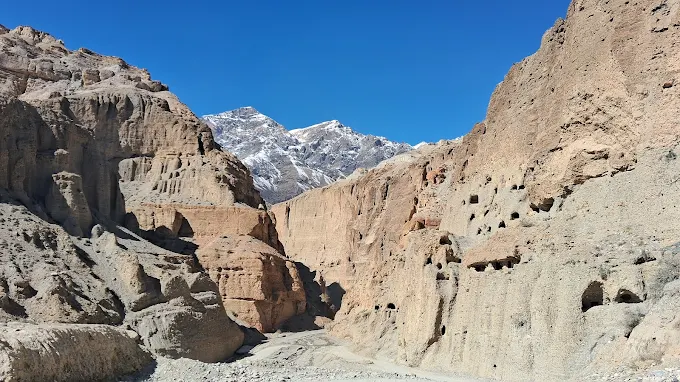
Upper Mustang is often described as a moderate-to-challenging trek, but season can significantly influence how difficult the route feels.
The physical challenge comes from a combination of:
- High altitude
- Long walking days
- Dry air
- Uneven and rocky terrain
- Ascents and descents
- Strong winds
- Temperature changes
- Remote locations
- Limited services in some sections
The same route can feel considerably easier in October than during a cold winter day with strong winds.
How Altitude and Weather Combine to Affect Difficulty?
Altitude is one of the most important considerations.
Much of the Upper Mustang trekking route takes place at high elevation, with Lo Manthang located at approximately 3,840 m (12,598 ft).
At this altitude, your body has to work harder because there is less available oxygen than at sea level.
Weather can make the experience even more demanding.
For example:
Cold + altitude + strong wind = significantly greater physical stress.
Similarly:
Strong sun + dry air + long walking hours = increased dehydration and fatigue risk.
This is why travelers should not judge Upper Mustang difficulty solely by distance.
A relatively short walking day can still be demanding if you are ascending rapidly or dealing with strong wind and cold temperatures.
The best way to manage the challenge is gradual acclimatization, appropriate hydration, sensible pacing, adequate nutrition, and listening to your body.
If symptoms of altitude illness develop, they should never be ignored.
Do not continue ascending if you are experiencing serious or worsening altitude-related symptoms. Inform your guide immediately and follow professional medical advice.
Seasonal planning also helps. For most trekkers, spring and autumn provide the most manageable combination of weather and trail conditions.
Conclusion – Choosing the Right Season for Your Upper Mustang Trek
The best time to trek Upper Mustang depends on the experience you want, but the region’s rain-shadow climate gives travelers more flexibility than many other trekking destinations in Nepal.
If you want the best overall combination of stable weather, clear Himalayan views, and comfortable trekking conditions, choose October or November.
If you prefer spring conditions and want the possibility of experiencing the Tiji Festival in Lo Manthang, consider April or May.
If your travel schedule falls during Nepal’s monsoon season, don’t automatically rule out Mustang. June, July, and August can be excellent months for Upper Mustang trekking because the region lies in the Himalayan rain shadow.
If you want solitude, winter may seem attractive, but December through February is the most challenging period because of severe cold, wind, possible snow, and reduced services.
Ultimately, the best Upper Mustang trek is not simply about picking a month.
It is about matching the season to your fitness level, trekking experience, photography goals, cultural interests, tolerance for cold, available travel dates, and preferred level of solitude.
Whichever season you choose, plan your permits and logistics carefully. Upper Mustang is a restricted region, and the journey requires more preparation than an ordinary Nepal trekking route.
For travelers who want local assistance with permits, transportation, accommodation, guides, acclimatization, and itinerary planning, working with an experienced Nepal trekking agency can make the journey considerably smoother.
With the right season and preparation, Upper Mustang offers something few other places in Nepal can match: an arid Himalayan landscape, centuries-old Tibetan-influenced culture, dramatic mountain scenery, ancient monasteries, and a trekking experience that feels remarkably different from the classic routes of Nepal.
FAQs
-
Can You Trek Upper Mustang in the Rain?
Yes.
Upper Mustang is one of Nepal’s best options for trekking during the monsoon because it lies in the Himalayan rain shadow.
However, rain can still occur, and conditions can change. You should carry a lightweight waterproof layer and keep some flexibility in your itinerary.
The larger practical concerns during monsoon can include wind, dust, changing visibility, and transportation conditions outside the rain-shadow area. -
Is Upper Mustang Trek Possible in Winter?
Yes, but winter is not recommended for most trekkers.
December through February can bring severe cold, strong winds, snow, and reduced services at higher elevations.
Experienced trekkers with suitable winter equipment and strong logistical support may undertake the journey, but spring or autumn is a much better choice for most travelers. -
What Is the Coldest Month in Upper Mustang?
January is generally among the coldest months, with December and February also experiencing severe winter conditions.
Exact temperatures vary significantly depending on elevation, location, time of day, and weather conditions.
Higher settlements and exposed areas can feel considerably colder than lower parts of Mustang. -
How Many Days Do You Need to Trek Upper Mustang?
A typical Upper Mustang trekking itinerary commonly takes around 12–16 days, depending on the starting point, transportation arrangements, acclimatization schedule, and route.
Longer itineraries allow more time for acclimatization and exploration, while shorter itineraries may use more road transportation.
The right duration depends on whether you want a trekking-focused experience or a combination of trekking and vehicle travel. -
Is Upper Mustang Good for a Monsoon Trek?
Yes. Upper Mustang is one of the best monsoon trekking destinations in Nepal.
Its rain-shadow location means it receives considerably less rainfall than many popular trekking regions farther south.
June, July, and August can therefore be excellent alternatives for travelers who cannot visit during spring or autumn. -
What Is the Best Month to Trek Upper Mustang?
For most travelers, October is one of the best months for an Upper Mustang trek.
It generally offers a strong combination of dry weather, good visibility, comfortable trekking conditions, and excellent Himalayan scenery.
April, May, September, and November are also strong choices depending on your priorities. -
Is April a Good Month for Upper Mustang Trek?
Yes. April is part of the spring trekking season and generally provides increasingly favorable conditions.
It is a particularly good option for travelers who want to avoid the colder winter months while traveling before the main monsoon period. -
Is May a Good Month to Visit Upper Mustang?
Yes. May can be an excellent month, particularly for travelers interested in the Tiji Festival in Lo Manthang.
The exact festival dates vary each year according to the Tibetan lunar calendar, so travelers should confirm the dates before booking. -
Is June a Good Time to Trek Upper Mustang?
Yes. June marks the beginning of Nepal’s monsoon season, but Upper Mustang’s rain-shadow geography makes it much drier than many other trekking destinations.
It is a particularly good option for travelers seeking a summer or monsoon trek in Nepal. -
Is July a Good Month for Upper Mustang?
Yes, with the right expectations.
July falls within the Nepal monsoon season, but Upper Mustang remains relatively dry because of its rain-shadow location.
Expect wind, dust, strong sunlight, and possible localized rain, and allow flexibility for transportation. -
Is August a Good Time to Trek Upper Mustang?
Yes. August is another viable monsoon trekking month in Upper Mustang.
The region’s dry climate makes it substantially more suitable for trekking than many wetter areas of Nepal during this period. -
Is September a Good Month for Upper Mustang?
Yes. September is a transition period between monsoon and autumn.
Later September can offer increasingly stable weather and improving visibility as the monsoon retreats. -
Is October the Best Month for Upper Mustang Trek?
For many travelers, yes.
October combines dry conditions, clear skies, excellent mountain visibility, and comfortable trekking temperatures.
It is also one of the busiest trekking periods, so advance planning is recommended. -
Is November Good for Upper Mustang Trek?
Yes. November remains one of the strongest months for trekking, particularly during the first half of the month.
Temperatures begin to fall toward winter, but clear skies and dry conditions can make the month excellent for trekking. -
Can You Trek Upper Mustang Without a Guide?
For foreign travelers entering the restricted Upper Mustang area, the required restricted-area permit must be arranged through an authorized trekking agency, and travelers should follow the current Department of Immigration requirements for restricted-area trekking.
Because regulations can change, travelers should confirm the current requirements before departure. -
How Much Is the Upper Mustang Permit?
The current Department of Immigration trekking-route fee table lists the Upper Mustang Restricted Area Permit at USD 50 per person per day.
Other applicable permits or entry fees may be separate depending on your itinerary.
Always verify the latest official fee before booking, because government regulations can change. -
Does Upper Mustang Get Rain During Monsoon?
It can. The rain-shadow effect means Upper Mustang receives far less monsoon rainfall than many parts of Nepal, but it does not mean the region is completely rain-free.
Pack basic rain protection and remain prepared for changing weather. -
When Is the Best Time for Photography in Upper Mustang?
October and November are excellent for landscape photography because of generally clear skies and strong visibility.
May can be especially rewarding for cultural photography because of the Tiji Festival in Lo Manthang.
Early morning and late afternoon can provide softer natural light, although afternoon winds may make exposed photography more challenging. -
When Is Upper Mustang Least Crowded?
Summer/monsoon and shoulder periods generally offer a quieter experience than the major autumn trekking season.
Winter is quieter still, but the severe conditions make it unsuitable for most travelers.
For a balance between fewer visitors and reasonable weather, late spring or summer can be a good option. -
What Should I Pack for Upper Mustang?
Regardless of season, pack layered clothing, a warm insulating layer, wind protection, sun protection, sturdy trekking footwear, a reusable water bottle, personal medication, and appropriate rain protection.
Your winter equipment should be substantially heavier than your spring or autumn setup. -
Is Upper Mustang Very Windy?
Yes, wind is an important part of the Upper Mustang climate.
Exposed valleys can become particularly windy during the afternoon.
This is one reason many trekkers prefer an early start, completing longer or more exposed sections before the strongest winds develop. -
What Time Should I Start Trekking Each Day?
There is no single fixed departure time for every route.
However, early morning starts are generally advantageous because conditions can be calmer and visibility can be better.
Your guide should adjust the daily schedule according to the route, weather, altitude, and actual wind conditions.
Leave a Reply