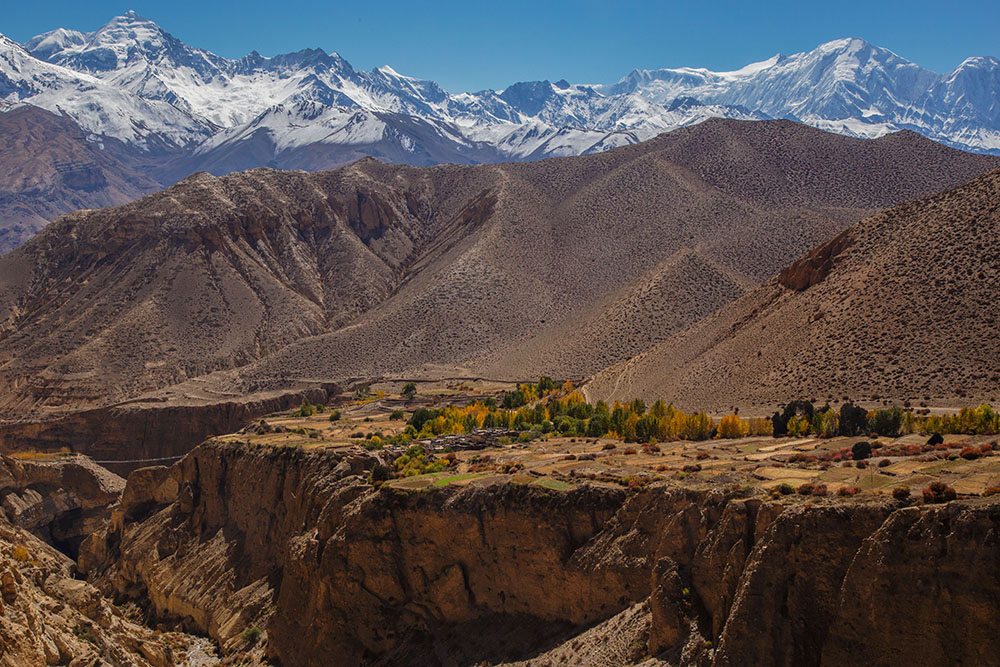
Few places in the Himalaya feel as untouched by time as Lo Manthang. Behind mud-brick walls that have stood for six centuries, this small capital of the former Kingdom of Lo guards a Tibetan Buddhist culture that has all but vanished across the border. Golden-hued cliffs, ancient monasteries painted with fading murals, and a fortress-like royal palace make it one of Nepal’s most extraordinary destinations.
Having guided and travelled through Upper Mustang across many seasons, we at Hi Nepal Travels and Treks put together this honest, practical guide to help you plan the journey properly, permits, timing, costs, and the local knowledge that turns a trip into an experience.
What Is Lo Manthang and Why It Matters
Lo Manthang is the ancient walled capital of Upper Mustang, a high-desert region in north-central Nepal that borders Tibet. Founded in 1380 by Ame Pal, it served as the seat of the Kingdom of Lo for over 600 years. Nepal formally absorbed the kingdom in 2008, but the last king, the Raja of Mustang, was recognised until then, making it one of the last living remnants of a Tibetan-style monarchy.
The town sits at roughly 3,840 metres on the arid Tibetan plateau. Its whitewashed walls enclose a maze of narrow alleys, chortens, and monasteries. Because the area was closed to outsiders until 1992, its culture stayed remarkably preserved.
Quick Answer: Lo Manthang is a medieval walled city in Upper Mustang, Nepal, once the capital of the Kingdom of Lo. It is famous for its 15th-century Tibetan Buddhist monasteries, desert landscape, sky caves, and the annual Tiji Festival.
Where Is Lo Manthang Located?
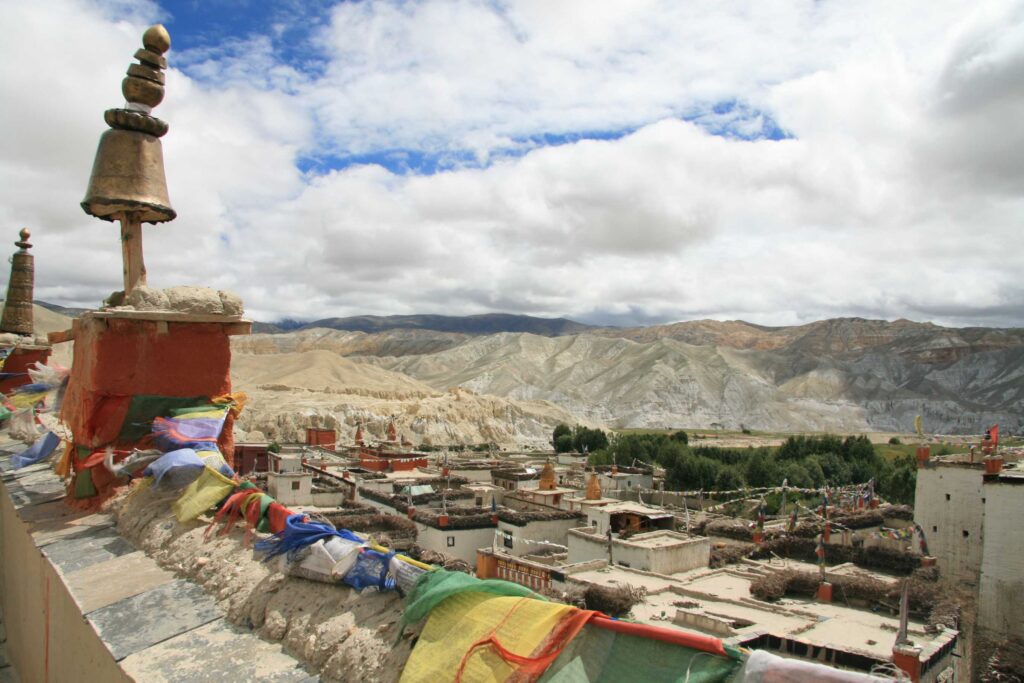
Lo Manthang lies in the northern part of the Mustang district, deep inside the rain-shadow of the Annapurna and Dhaulagiri massifs. The Kali Gandaki River, carving the world’s deepest gorge is your natural highway into the region.
| Detail | Information |
|---|---|
| Region | Upper Mustang, north-central Nepal |
| Elevation | ~3,840 m (12,600 ft) |
| Nearest Airport | Jomsom (STOL) |
| Gateway City | Pokhara |
| Distance from Tibet | ~20 km |
Permits Required for Upper Mustang
Upper Mustang is a restricted trekking area, so foreign trekkers need special permits and must follow stricter regulations than on standard trekking routes. The rules help regulate tourism in this culturally and environmentally sensitive region near the Tibetan border.
- Restricted Area Permit (RAP): The current Department of Immigration fee for Upper Mustang is USD 50 per person per day. For example, a 10-day permit costs USD 500, while a 14-day permit costs USD 700.
- Annapurna Conservation Area Permit (ACAP): The current Nepal Tourism Board park-entry fee table lists NPR 3,000 per foreign visitor for entry into the Annapurna Conservation Area.
- TIMS Card and Licensed Guide: Upper Mustang is among Nepal's trekking routes where trekkers must be accompanied by a licensed trekking guide and obtain a trekking-agency-issued TIMS Card.
- Registered Trekking Agency: The restricted-area permit must be arranged through a registered trekking agency rather than obtained independently by the trekker.
Important Note: Permit fees and trekking regulations can be revised by the Government of Nepal. The current Department of Immigration lists Upper Mustang's Restricted Area Permit at USD 50 per person per day, so check the latest official fee schedule before booking your trek.
Best Time to Visit Lo Manthang
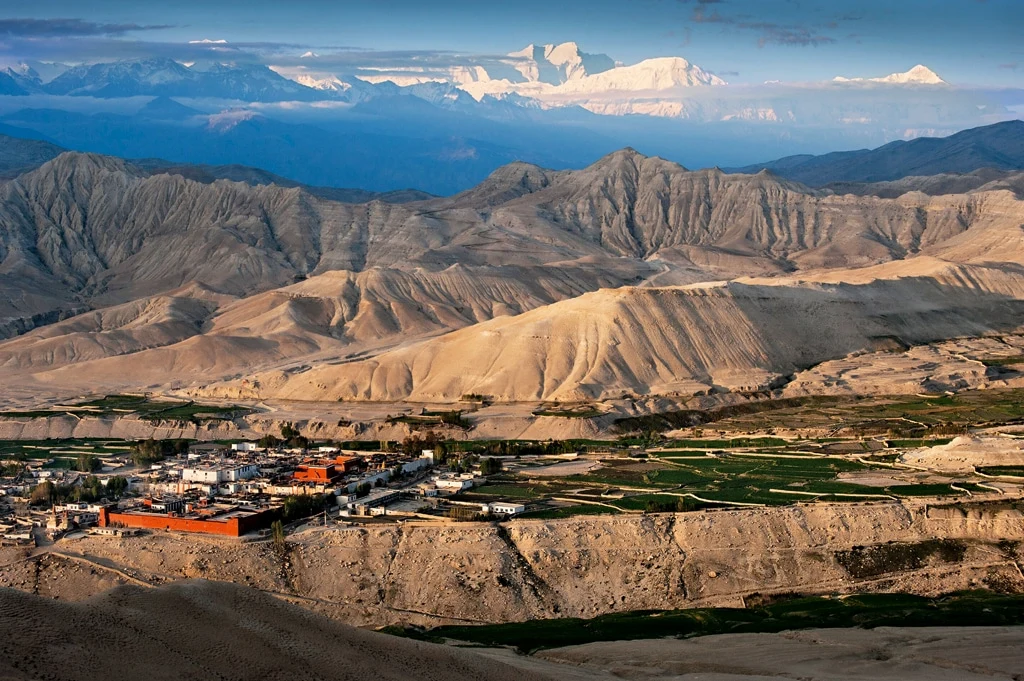
Here is where Upper Mustang breaks the usual Nepal trekking rules. Because it sits behind the great Himalayan wall, monsoon rains barely reach it. That means summer, otherwise a poor season for most Nepal treks, is a genuine window here.
| Season | Weather | Notes |
|---|---|---|
| Spring (Mar–May) | Dry, warming, clear | Best views; Tiji Festival in May |
| Summer/Monsoon (Jun–Aug) | Mostly dry, warm days | Rare rain-shadow trekking window |
| Autumn (Sep–Nov) | Crisp, clear, cool nights | Excellent conditions, popular |
| Winter (Dec–Feb) | Very cold, some closures | Locals migrate south; harsh conditions |
Winter brings bitter cold, and many locals leave for warmer areas, so teahouses and services thin out. Spring and autumn remain the most comfortable choices, while summer suits those who want to trek during Nepal's off-season.
The Tiji Festival: Lo Manthang's Cultural Highlight
If you can time your visit for May, the three-day Tiji Festival is unforgettable. Held in the central square of Lo Manthang, it re-enacts the myth of Dorje Jono defeating a demon to bring rain and prosperity to the valley.
Monks in elaborate masks and silk robes perform ritual dances over three days, watched by the whole community. It is one of the most authentic living festivals in the Himalaya, not a tourist show, but a genuine spiritual event.
Did You Know? Tiji dates shift each year according to the Tibetan lunar calendar, so book early. Accommodation in Lo Manthang fills quickly during the festival, and prices rise.
What to See in and Around Lo Manthang
Lo Manthang rewards slow exploration. Give yourself at least two full days here rather than rushing in and out.
Inside the Walled City
- Jampa Lhakhang: The oldest monastery, dating to the early 15th century, home to a towering Maitreya Buddha and rare mandala murals.
- Thubchen Gompa: A vast assembly hall with restored 15th-century wall paintings.
- Chodey Gompa: The main active monastery where you may hear monks chanting.
- The Royal Palace: A four-storey mud-brick building that once housed the King of Lo.
Beyond the Walls
- Chhoser Sky Caves: A short ride north, these ancient multi-storey cave dwellings carved into cliffs are among Mustang's greatest mysteries.
- Namgyal Monastery: A hilltop gompa serving as the region's high court and study centre.
- Ghar Gompa (Lo Gekar): One of the oldest Buddhist sites in Nepal, linked to Guru Rinpoche.
Travel Tip: Many monasteries charge a small entry fee and forbid interior photography to protect fragile murals. Always ask permission before taking photos of people or sacred art.
The Classic Upper Mustang Trekking Route
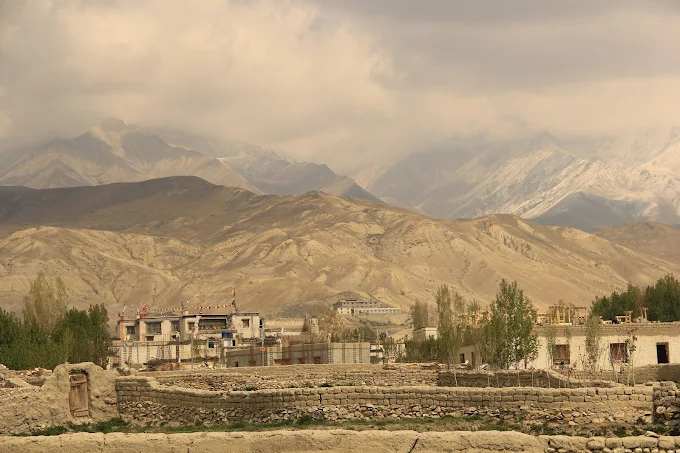
The traditional trek follows the Kali Gandaki upstream through a landscape of eroded cliffs, ochre canyons, and cliff-perched villages. Here is a typical itinerary from Jomsom.
| Day | Route | Elevation |
|---|---|---|
| 1 | Fly Pokhara–Jomsom, trek to Kagbeni | 2,810 m |
| 2 | Kagbeni to Chele | 3,050 m |
| 3 | Chele to Syangboche | 3,800 m |
| 4 | Syangboche to Ghami | 3,520 m |
| 5 | Ghami to Charang | 3,560 m |
| 6 | Charang to Lo Manthang | 3,840 m |
| 7 | Explore Lo Manthang & Chhoser | 3,840 m |
| 8–11 | Return via Dhakmar, Ghiling, Chuksang | Varies |
| 12 | Trek to Jomsom, fly to Pokhara | 2,720 m |
Because the trail crosses several passes above 3,700 m, altitude matters. Ascend gradually and stay hydrated. For a deeper look at planning, see our full Upper Mustang trek guide.
Altitude and Health on the Trek
Lo Manthang sits below 4,000 m, so serious altitude sickness is less common than on Everest or Annapurna routes. Still, several passes push higher and the dry, dusty air can be tough.
- Drink 3-4 litres of water daily.
- Walk at a steady, unhurried pace.
- Never ascend rapidly by jeep and then sleep high.
Understand the warning signs before you go. Read our guides on altitude sickness, the more serious HACE and HAPE conditions, and whether Diamox is right for you.
Safety Tip: The strong afternoon winds in Mustang carry fine dust. A buff or face scarf and good sunglasses protect your eyes and lungs. Sun protection is essential at this elevation.
Lo Manthang Trek Cost Breakdown
Upper Mustang Cost is one of Nepal's more expensive trekking destinations because of its restricted-area permit, mandatory guide arrangements, and relatively high transportation and accommodation costs in this remote region.
For a roughly two-week trip, the following gives a realistic per-person estimate for 2026. Actual costs vary depending on your itinerary, group size, season, and whether you choose flights or road transportation.
| Expense | Approx. Cost (USD) |
|---|---|
| Restricted Area Permit | $400-$500+ |
| ACAP Permit | $22–$35 |
| Licensed Guide (per day) | $25–$40 |
| Porter (optional, per day) | $20–$30 |
| Teahouse Lodging & Food (per day) | $30–$45 |
| Pokhara–Jomsom Flights (return) | $200–$260 |
For a broader sense of daily spending, see our trek amenities cost guide and tips on budget trekking in Nepal. Don't forget to factor in fair tipping for your guide and porter.
Where to Stay in Lo Manthang
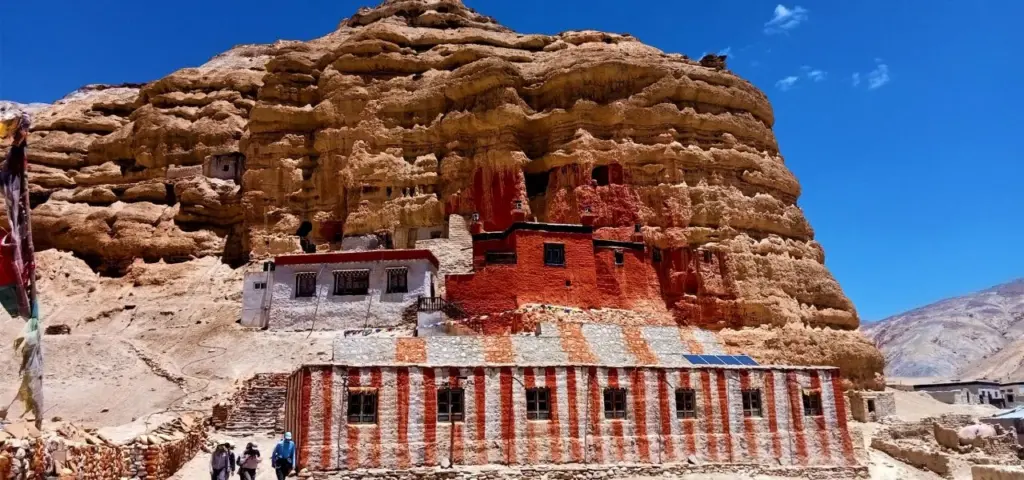
Accommodation is simple but comfortable. Lo Manthang has several teahouses and a couple of higher-end guesthouses catering to travellers who want more comfort. Expect twin rooms, shared bathrooms in basic lodges, and hearty local meals.
Rooms are limited during the Tiji Festival, so advance booking is vital. Our tips on booking teahouses and understanding typical teahouse food apply well here too.
What to Pack for Upper Mustang
The high desert brings intense sun by day and freezing nights, plus persistent wind and dust. Pack for extremes.
- Warm down jacket and thermal base layers
- Windproof outer shell
- Buff or scarf for dust protection
- High-SPF sunscreen and lip balm
- Quality sunglasses (UV protection)
- Broken-in trekking boots or trail runners
- Reusable water bottle and purification
For gear decisions, compare trekking boots vs trail runners, review the full trek packing list, and consider whether you need a sleeping bag. You can also arrange rental gear in Kathmandu before you fly.
Common Mistakes to Avoid
- Rushing the itinerary. People often try to reach Lo Manthang in a hurry and miss its atmosphere. Slow down.
- Skipping the buffer day. Jomsom flights cancel often; without a spare day you risk missing everything.
- Underestimating cold and wind. Even in summer, nights are cold and afternoon winds are fierce.
- Photographing sacred sites without asking. Respect local customs; some interiors are strictly off-limits.
- Booking last minute during Tiji. Permits, flights, and rooms sell out fast.
Why Travel With a Local Guide
Beyond the legal requirement, a knowledgeable guide transforms Upper Mustang. The murals, monasteries, and festivals carry layers of meaning you would never grasp alone. Local guides also read the weather, arrange jeeps, handle permits, and open doors - sometimes literally, to monasteries that are usually locked.
At Hi Nepal Travels and Treks, we work with licensed guides who know the Lo dialect, the monastery caretakers, and the safest ways to handle the region's unpredictable roads and flights. That local relationship is what makes the difference between simply seeing Lo Manthang and truly understanding it.
Expert Advice: If you have extra days, combine Upper Mustang with a visit to the pilgrimage site of Muktinath or explore Lower Mustang villages like Kagbeni, which offer a gentler introduction to the region's culture.
Nearby Trips to Combine With Lo Manthang
Because you'll be in the Annapurna and Mustang region anyway, consider extending your adventure. Popular pairings include:
- The remote Nar Phu Valley for even wilder Tibetan-influenced landscapes.
- The high-altitude Tilicho Lake trek.
- A relaxed few days in Pokhara before or after, with plenty to do around Phewa Lake.
Final Thoughts
Lo Manthang is not the easiest or cheapest trek in Nepal, and that is exactly why it stays so special. Behind its ancient walls lies a way of life that survived where the rest of the Tibetan world changed forever. The red cliffs, the wind, the fluttering prayer flags, and the quiet chant of monks stay with you long after you leave.
Plan carefully, respect the culture, allow enough time, and travel with people who know the region well. If you're ready to explore the walled capital of Upper Mustang, the team at Hi Nepal Travels and Treks would be glad to help you sort permits, guides, flights, and a realistic itinerary that fits your pace and budget. Reach out whenever you're ready to start planning.
FAQ's
-
What is Lo Manthang?
Lo Manthang is the historic walled capital of the former Kingdom of Lo in Nepal’s Upper Mustang region. Located at around 3,840 meters, it is known for its ancient monasteries, traditional Tibetan-style houses, royal palace, narrow streets, and rich Himalayan culture.
-
Where is Lo Manthang located?
Lo Manthang is located in Mustang District of Gandaki Province in north-central Nepal, close to the Tibetan border. It lies within the restricted Upper Mustang area and is surrounded by the dramatic landscapes of the Trans-Himalayan region.
-
Why is Lo Manthang called the walled city?
Lo Manthang is known as a walled city because its historic settlement is enclosed by a traditional defensive wall with gates. The wall protected the ancient kingdom and helped preserve the town's distinctive medieval character.
-
What is Lo Manthang famous for?
Lo Manthang is famous for its ancient monasteries, historic palace, traditional Tibetan-influenced architecture, surrounding caves, Buddhist culture, and spectacular desert-like Himalayan landscapes. It is also an important destination on the Upper Mustang Trek.
-
How high is Lo Manthang?
Lo Manthang sits at an altitude of approximately 3,840 meters (12,600 feet) above sea level. Because of its elevation, travelers should allow enough time for acclimatization when visiting or trekking in Upper Mustang.
-
How do you get to Lo Manthang from Kathmandu?
The most common route is to travel from Kathmandu to Pokhara, continue to Jomsom, and then travel by road toward Lo Manthang. Travelers can also visit Lo Manthang as part of a longer Upper Mustang trekking or jeep journey.
-
Can you drive to Lo Manthang?
Yes, Lo Manthang can be reached by road from Jomsom through the Upper Mustang region. A 4WD jeep is generally preferred because the route includes rough, mountainous and unpaved sections.
-
What are the best places to visit in Lo Manthang?
Some of the main attractions include the Lo Manthang Royal Palace, Jampa Lhakhang, Thubchen Monastery, Chodey Monastery, the old city walls, traditional streets, and surrounding villages and caves. The nearby Chhoser area is also popular for its ancient cave settlements.
-
Can you visit Lo Manthang as part of the Upper Mustang Trek?
Yes. Lo Manthang is one of the major highlights and traditional destinations of the Upper Mustang Trek. Trekkers typically spend time exploring the walled city and nearby cultural sites before continuing or returning along the Upper Mustang route.
-
Do you need a permit to visit Lo Manthang?
Yes. Lo Manthang lies within Nepal's restricted Upper Mustang area, so travelers need the required restricted-area trekking permit. The permit requirements and fees can change, so it is best to check the latest regulations before traveling.
-
Do you need a guide to visit Lo Manthang?
Yes. Travelers visiting the restricted Upper Mustang region must follow the applicable guided-travel requirements and travel with an authorized trekking agency or guide. A local guide can also make it easier to understand the region's history, culture and monasteries.
-
What is the best time to visit Lo Manthang?
The best time to visit Lo Manthang is generally during spring (March–May) and autumn (September–November). These seasons usually offer favorable trekking conditions, clearer mountain views and more comfortable weather.
-
Can you visit Lo Manthang in winter?
Yes, but winter travel can be challenging because temperatures are very low and snow can affect roads and trekking routes. Some local services may also operate on a limited basis, so winter visitors should plan carefully.
-
What is the Tiji Festival in Lo Manthang?
The Tiji Festival is a major three-day Buddhist festival celebrated in Lo Manthang. It features traditional dances, religious ceremonies, colorful costumes and rituals based on Tibetan Buddhist traditions, making it one of the most culturally significant events in Upper Mustang.
-
How much does a trip to Lo Manthang cost?
The cost of a Lo Manthang trip depends on the itinerary, permits, transportation, accommodation, guide and porter services, and trip duration. A guided Upper Mustang journey generally costs more than trips to unrestricted trekking regions because of the restricted-area permit and additional logistical requirements.