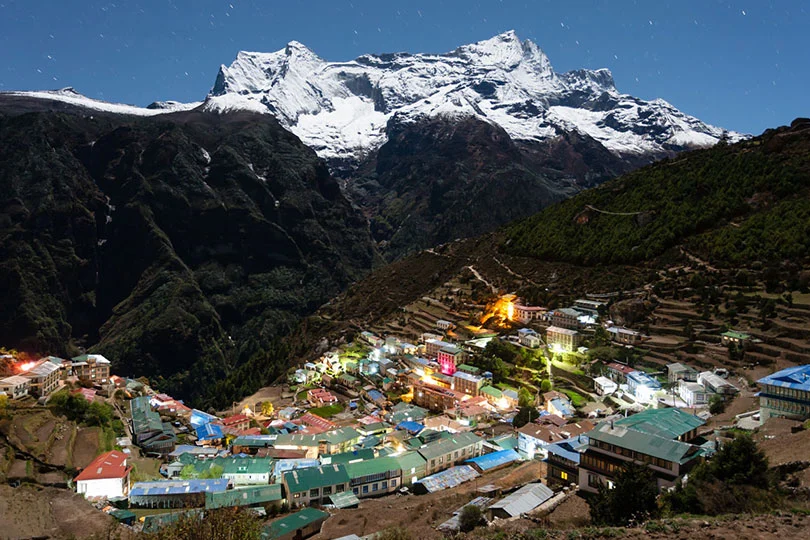
Two long days after leaving Lukla, the trail rounds a final dusty switchback and the whole horseshoe of Namche Bazaar opens up in front of you. Lodges painted blue, green and red stack up the hillside like a stadium, prayer flags snap in the wind, and somewhere a bakery is pulling apple pie out of the oven. After the steep climb up from the Dudh Koshi, this is one of the most anticipated milestones on the Everest Base Camp trek.
We run treks through the Khumbu every season, and we tell all our trekkers the same thing: do not rush Namche. This town at 3,440 meters is not just a pretty rest stop. It is the single most important acclimatization point on the entire Everest Base Camp route, and how you spend your time here shapes the success of your whole trek.
Where Is Namche Bazaar and Why It Matters

Namche Bazaar is the largest Sherpa town in Nepal’s Khumbu region, sitting at 3,440 meters in a natural amphitheater below the peaks of Kongde and Thamserku. It functions as the trading, supply, and acclimatization capital of the Everest region, and nearly every trek to Everest Base Camp, Gokyo, or the Three Passes passes through it.
Historically, Namche grew as a trading post where Tibetan salt met Nepali grain. Today it is the commercial heart of the Khumbu, with gear shops, bakeries, cafes, a German-style bakery or two, and even pool halls. But for trekkers, its real value is altitude. The jump from Lukla at 2,860 meters to Namche is significant, and your body needs time to catch up before you go higher.
Quick Facts About Namche Bazaar
| Fact | Information |
|---|---|
| Elevation | 3,440 m (11,286 ft) |
| Region | Khumbu, Solukhumbu District |
| National Park | Sagarmatha National Park |
| Main Ethnic Group | Sherpa |
| Famous For | Acclimatization stop on the Everest Base Camp Trek |
| ATM Available | Yes (last generally reliable ATM on the trail) |
| Mobile Network | Nepal Telecom (NTC) has the best coverage |
| Best Seasons | Spring (March–May) and Autumn (September–November) |
Best Time to Visit Namche Bazaar
Namche Bazaar can be visited throughout the year, but the experience varies greatly with the seasons. Spring (March to May) and autumn (September to November) offer the clearest mountain views, stable weather, and the busiest trekking season, making them the most popular times to visit Namche Bazaar. Rhododendrons bloom in spring, while autumn provides crisp skies after the monsoon.
Winter (December to February) is much quieter, with fewer trekkers and colder temperatures that often drop below freezing at night. Snow occasionally blankets the surrounding hills, creating spectacular scenery, although some lodges may close during the coldest months.
The summer monsoon (June to August) brings frequent rain, slippery trails, cloud-covered mountains, and an increased risk of flight delays to and from Lukla. However, the hills are lush and green, and trails are far less crowded for those comfortable trekking in wet conditions.
Namche Bazaar Altitude and Oxygen Levels
At an elevation of 3,440 meters (11,286 feet), Namche Bazaar marks the point where many trekkers begin to notice the effects of high altitude. The air contains the same percentage of oxygen as at sea level, but the lower atmospheric pressure means significantly less oxygen is available with each breath.
This is why most Everest Base Camp itineraries include two nights in Namche. Spending an acclimatization day here allows your body to gradually adapt before climbing to higher elevations such as Tengboche, Dingboche, and Lobuche. Even experienced trekkers should take altitude seriously, as Acute Mountain Sickness (AMS) can affect anyone regardless of age or fitness level.
The Essential Namche Acclimatization Day

The Namche acclimatization day is a non-negotiable rest day where you climb high during the day to roughly 3,880 meters and return to sleep at 3,440 meters. This “climb high, sleep low” approach lets your body adapt to lower oxygen without overloading it, and it sharply reduces your risk of Acute Mountain Sickness on the days ahead.
Above 3,000 m, it is generally recommended to increase your sleeping elevation by no more than 300–500 meters per day. Skipping the Namche acclimatization day to “save time” is the most common reason we see trekkers turned back with headaches, nausea, and worse higher up the trail. One spare day here protects your entire investment.
Hike Option 1: Everest View Hotel
The classic acclimatization hike climbs steeply out of Namche to the Syangboche plateau and on to the Hotel Everest View at around 3,880 meters. On a clear morning you get your first real look at Everest, Lhotse, and the perfect pyramid of Ama Dablam. The round trip takes about 3 to 4 hours at a relaxed pace.
Stop for a tea on the terrace, soak in the view, then walk back down to sleep low. The gentle up-and-down is exactly the kind of effort your body needs on a rest day.
Hike Option 2: Khumjung and Khunde Villages
For a deeper cultural day, extend the hike to the twin Sherpa villages of Khumjung and Khunde at around 3,790 meters. Khumjung is home to the Hillary School, the Khumjung Monastery, and a quieter slice of Sherpa life away from the lodges of Namche. This loop takes about 4 to 5 hours and keeps you moving without overexerting.
Hike Option 3: The Sherpa Culture Museum and Viewpoint
If you want a lighter day, walk up to the Sagarmatha National Park headquarters and the Sherpa Culture Museum on the ridge above town. The viewpoint here gives a fine Everest panorama on clear mornings, and the exhibits explain Sherpa traditions, yak herding, and mountaineering history. It is a short walk but still gains useful elevation.
Permits You Need for Namche and Beyond
The Everest region does not use the standard TIMS card system. Instead, trekkers pay the local Khumbu Pasang Lhamu Rural Municipality fee of NPR 3,000 (collected at Lukla or the Monjo checkpoint) plus the Sagarmatha National Park Permit of NPR 3,000, both checked before you reach Namche.
| Permit | Cost (Foreigner) | Where to Get It |
|---|---|---|
| Khumbu Pasang Lhamu Municipality Fee | NPR 3,000 | Lukla / Monjo checkpoint |
| Sagarmatha National Park Permit | NPR 3,000 | Monjo entry gate or Kathmandu |
Keep both permits handy. There is a checkpoint at Monjo before Namche and another as you leave Namche toward Tengboche. Carry your passport too, as officials sometimes ask to see it alongside the permits.
Getting to Namche: The Lukla and Ramechhap Reality
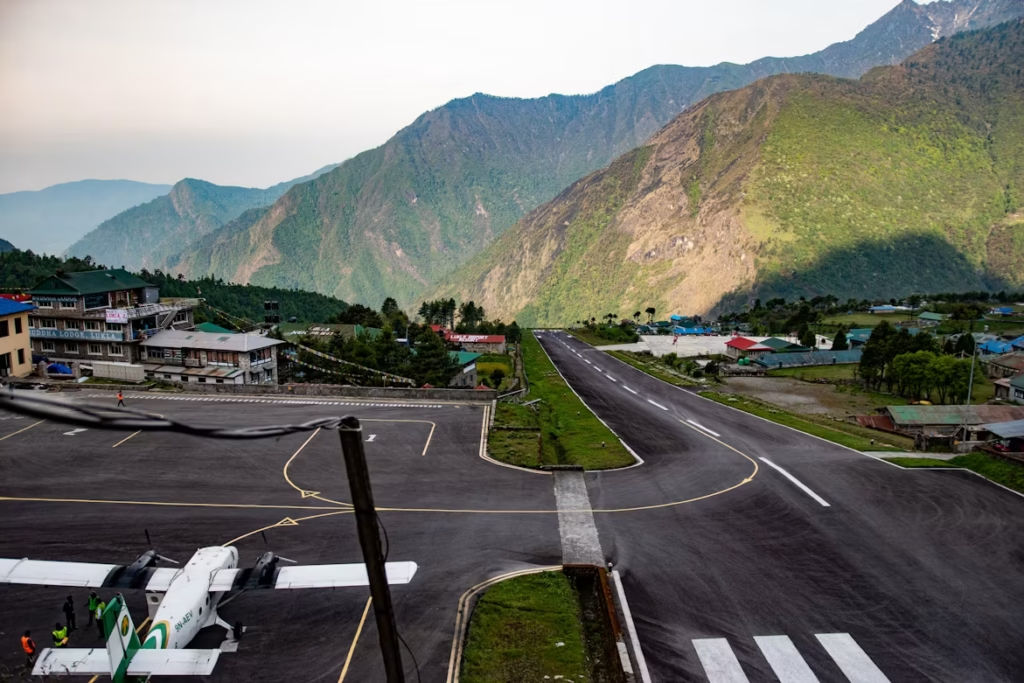
Most trekkers reach Namche after flying to Lukla and walking two days via Phakding and Monjo. During peak trekking seasons, many Lukla flights are shifted to Manthali Airport (Ramechhap) due to congestion at Kathmandu Airport. Which means a 4 to 5 hour overnight drive from Kathmandu, usually leaving around 1:00 AM.
Lukla weather is famously unpredictable, so build 1 to 2 buffer days into your itinerary for delays. Flight and jeep prices shift with season and demand, so always confirm live rates with your operator rather than relying on old figures. Our Lukla airport guide covers the flight logistics in detail.
Where to Stay in Namche Bazaar
Namche offers the widest range of accommodation on the entire Everest trail, from basic teahouses to comfortable lodges with attached bathrooms and proper heating. Rooms are plentiful, but during peak season the best lodges fill fast, so booking ahead through a guide is wise.
Expect simple twin rooms with shared bathrooms at the budget end, and warmer en-suite rooms with reliable hot water at mid-range and upper lodges. Lodge pricing is seasonal and changes year to year, so treat any quoted figure as a guide and verify current rates before you go.
| Lodge Type | What You Get | Best For |
|---|---|---|
| Basic Teahouse | Twin room, shared bathroom, dining hall stove | Budget trekkers |
| Mid-Range Lodge | Attached bathroom, hot shower, better heating | Most EBC trekkers |
| Premium Lodge | En-suite, reliable hot water, comfortable common areas | Comfort-focused groups |
Whatever you choose, bring a warm sleeping bag rated for cold nights, as Namche gets chilly after dark even with a stove in the dining hall.
Things to Do in Namche Bazaar
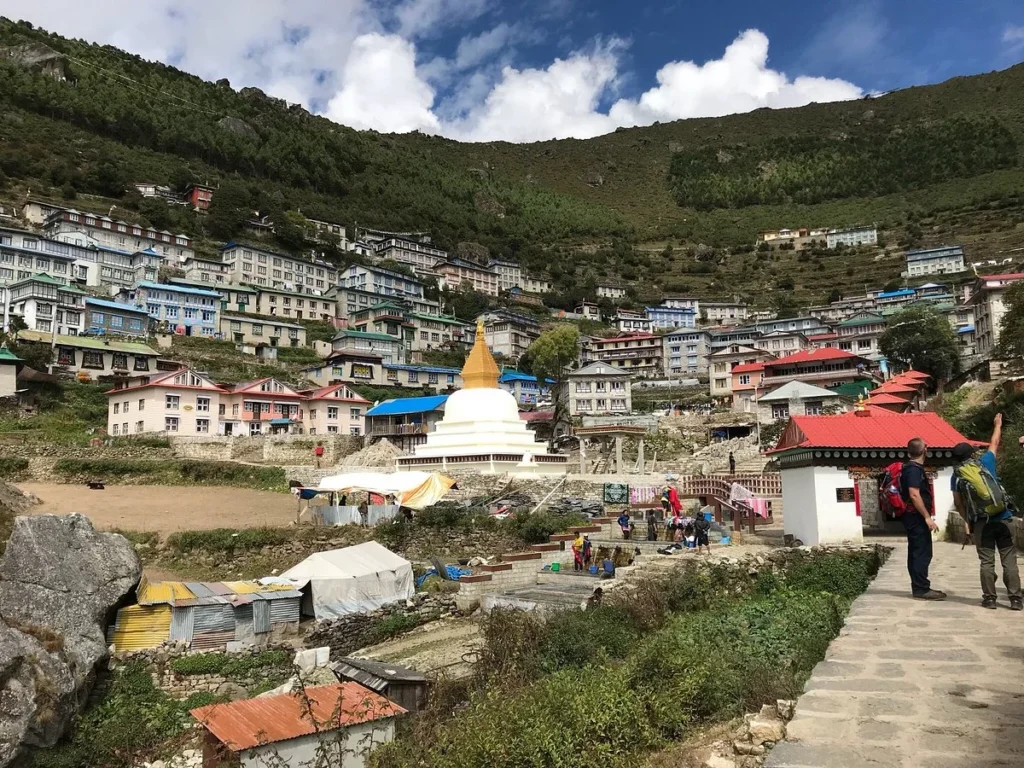
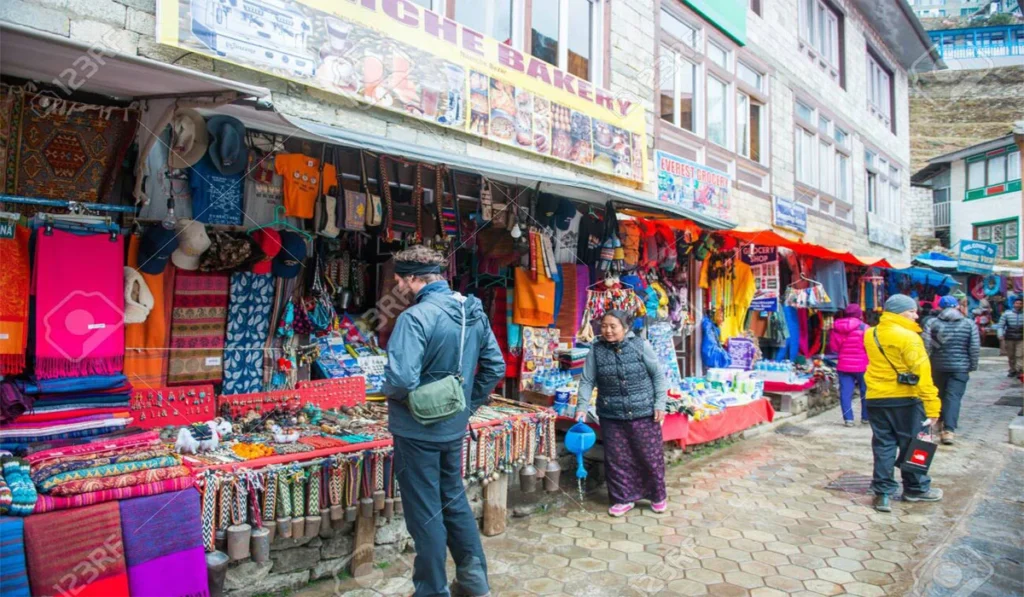
Although many trekkers treat Namche as simply an acclimatization stop, the town offers plenty to explore during your stay. Wander through the colorful streets lined with gear shops, bakeries, cafés, and souvenir stores. Visit the lively Saturday Market, where Sherpa traders and villagers from surrounding communities have gathered for generations to exchange goods.
If you’re interested in local culture, stop by the Sherpa Culture Museum or hike to Khumjung and Khunde villages for a deeper insight into traditional Sherpa life. Many visitors also enjoy relaxing at one of Namche’s famous bakeries with fresh coffee and apple pie while taking in panoramic Himalayan views.
Shopping in Namche Bazaar
Namche Bazaar is the largest shopping hub in the Everest region and the last place to purchase or replace trekking gear before heading deeper into the Khumbu. Numerous shops sell jackets, trekking poles, gloves, sleeping bags, snacks, batteries, and other essentials. Some stores also rent equipment for trekkers who prefer not to carry everything from Kathmandu.
While branded outdoor gear is available, not every product is genuine, so it is best to purchase critical equipment such as boots, waterproof clothing, and technical gear before arriving in the Everest region. Namche is better suited for last-minute supplies and emergency replacements than major shopping.
Money, Cash, and the Trail Micro-Economy
Namche is generally considered the last reliable place to withdraw cash on the Everest trail. Beyond Namche, there are no ATMs, so carry enough Nepalese Rupees to cover your entire trek up and back, plus a buffer.
The ATMs here can run out of cash or go offline, especially in peak season, so do not depend on them as your only plan. Bring backup NPR from Kathmandu. Many lodges and shops higher up accept only cash, and prices climb the higher you go.
Be ready for the trail upcharges. Charging a phone or power bank, taking a gas-heated hot shower, and using Wi-Fi like Everest Link are almost never included in your room rate. Each of these typically costs an extra 200 to 700 NPR per use, and the cost rises with altitude.
Wi-Fi, SIM Cards, and Connectivity
Namche has the best connectivity on the trail, with cafe Wi-Fi, the Everest Link network sold by data card, and mobile coverage. For the Everest region, Nepal Telecom (NTC) is the most reliable SIM, with stronger coverage in remote zones than the alternatives. Pick one up in Kathmandu before you fly.
Do not expect fast or free internet. Even in Namche the connection is slow, and it becomes patchy or paid-only as you climb toward Base Camp. Treat Namche as your last good chance to send messages home and back up photos.
Weather in Namche Bazaar by Season

Weather conditions in Namche Bazaar change dramatically throughout the year. Spring and autumn generally offer sunny mornings, cool afternoons, and excellent visibility of surrounding Himalayan peaks. Daytime temperatures typically range between 10°C and 18°C during the trekking seasons, while nights can fall below freezing.
Winter is cold but often clear, making it an excellent time for photographers willing to tolerate freezing temperatures. During the summer monsoon, clouds frequently obscure mountain views, and afternoon rain is common, although mornings can still offer occasional clear skies.
Regardless of the season, weather in the Everest region changes quickly, so trekkers should always pack warm layers and waterproof clothing.
What to Eat in Namche
Namche has bakeries, pizza joints, and coffee houses, but on the trail we always steer trekkers toward simple, fresh carbohydrates. The classic Dal Bhat (lentil soup, rice, and vegetable curry) is your best fuel: it is freshly cooked, high in energy, and usually comes with free refills.
Stick to vegetarian meals as you go higher. In the Buddhist Khumbu, slaughtering animals is prohibited by local custom, so all meat is carried up for days by porter or mule without refrigeration. Fresh, locally grown vegetables and carbohydrates are the safer, cleaner choice. Our teahouse food guide explains what to expect on the menu.
Altitude Safety and Insurance
Namche is where altitude sickness first becomes a real risk, so watch for headaches, loss of appetite, dizziness, and poor sleep. If symptoms worsen, do not climb higher. The safe response to worsening AMS is to descend, and never ascend with active symptoms.
Standard travel insurance is not enough for the Everest region. You need a policy that specifically covers high-altitude emergency helicopter evacuation up to 6,000 meters and medical treatment for AMS, HAPE, and HACE. Read our detailed notes on altitude sickness and on Diamox use before you trek.
Always carry your own reusable bottle with a purification system such as a UV purifier, a Sawyer squeeze filter, or chlorine dioxide drops. Please do not buy single-use plastic water bottles on the trail, as they create a serious waste problem in the Khumbu.
Sacred Etiquette in and Around Namche

Always walk clockwise around mani walls, stupas, and chortens, keeping these sacred structures on your right. You will pass several on the climb up to Namche and on the acclimatization hikes, so make this a habit early.
If you visit the Khumjung Monastery or any prayer hall, remove your shoes and hat before entering. Outdoor photography is fine, but taking photos inside monastery prayer halls is prohibited unless a resident monk gives you clear permission.
Wildlife Around Namche Bazaar
Namche Bazaar lies within Sagarmatha National Park, a UNESCO World Heritage Site known for its remarkable Himalayan biodiversity. While trekking around Namche, hikers may spot Himalayan tahr grazing on steep slopes, colorful Himalayan monal pheasants, blood pheasants, musk deer, and various species of eagles and vultures.
Although elusive, snow leopards and red pandas also inhabit parts of the national park, though sightings are extremely rare. Carry binoculars if you enjoy wildlife photography, especially during early morning acclimatization hikes.
Sample Itinerary Around Namche
| Day | Route | Elevation | Walking Time |
|---|---|---|---|
| 1 | Lukla to Phakding | 2,610 m | 3–4 hours |
| 2 | Phakding to Namche Bazaar | 3,440 m | 6 hours |
| 3 | Namche acclimatization (Everest View / Khumjung) | 3,880 m high, sleep 3,440 m | 3–5 hours |
| 4 | Namche to Tengboche | 3,860 m | 5–6 hours |
Tipping Your Crew
Tipping your guide and porters is culturally expected and forms a vital part of their income. The standard practice is to set aside 10% to 15% of your total trek cost, distributed among the crew at the end of the trek. Our guide and porter tipping guide breaks down realistic amounts.
Responsible Trekking Tips
Help preserve the fragile environment of the Everest region by following Leave No Trace principles. Carry a reusable water bottle and refill it using purification tablets, filters, or UV purifiers instead of purchasing single-use plastic bottles. Dispose of waste responsibly, remain on marked trails, and respect local customs and religious sites.
Support the local economy by staying in locally owned teahouses, hiring licensed guides and porters, and purchasing supplies from local businesses whenever possible. Small actions from every trekker help protect the Khumbu for future generations.
Frequently Asked Questions
-
How many days should I spend in Namche Bazaar?
Most trekkers spend two nights in Namche, with one full acclimatization day in between. This is the safe standard for the Everest Base Camp trek and gives your body the rest it needs before climbing higher.
-
Can I trek to Everest solo in 2026?
Regulations regarding independent trekking in the Everest region have evolved in recent years. Check the latest government guidance before traveling, as enforcement may change.
-
Is there Wi-Fi in Namche Bazaar?
Yes, Namche has cafe Wi-Fi and the paid Everest Link network, but it is slow and usually costs extra. It is the best connectivity you will get on the trail, so use it before heading higher.
-
Are there hot showers in Namche?
Yes, most lodges offer gas-heated hot showers, but they are rarely free. Expect to pay an extra 200 to 700 NPR depending on the lodge and season.
-
How cold does Namche get at night?
Nights are cold year-round, dropping below freezing in winter and chilly even in trekking seasons. Bring a warm sleeping bag and layers, as heating is limited to the dining hall stove.
-
Do I need cash in Namche or can I use cards?
Carry cash. Namche has ATMs but they often run out, and almost everything on the trail past Namche is cash only. Withdraw enough Nepalese Rupees here for your entire trek.
-
What is the best acclimatization hike from Namche?
The Hotel Everest View hike to around 3,880 meters is the classic choice for first views of Everest and Ama Dablam. Extending to Khumjung and Khunde adds great cultural value.
-
Can I buy or rent trekking gear in Namche?
Yes, Namche has many gear shops selling and renting jackets, gloves, and equipment, though selection and authenticity vary. It is better to sort major items in Kathmandu first using our gear rental guide.
-
Is altitude sickness common in Namche?
Mild symptoms like headaches and poor sleep are common at 3,440 meters. This is exactly why the acclimatization day exists. Rest, hydrate, and do not climb higher if symptoms worsen.
-
What food is safest to eat in Namche?
Stick to fresh, vegetarian Dal Bhat and locally grown vegetables. Avoid meat, as much of the meat served above Namche is transported over several days without continuous refrigeration.
-
How far is Namche from Everest Base Camp?
From Namche it typically takes a further 5 to 6 days of trekking to reach Everest Base Camp, with more acclimatization stops at places like Dingboche along the way.
-
Is Namche Bazaar worth visiting if I’m not trekking to Everest Base Camp?
Yes. Namche Bazaar is a destination in its own right, offering spectacular Himalayan views, Sherpa culture, excellent bakeries, and rewarding day hikes. Some visitors trek only as far as Namche before returning to Lukla, making it a great option for those with limited time or who do not wish to continue to Everest Base Camp.
-
Can beginners trek to Namche Bazaar?
Yes. Many first-time trekkers successfully reach Namche Bazaar with reasonable fitness and proper preparation. The hike from Lukla is challenging due to its long ascent and altitude gain, but following a gradual pace, staying hydrated, and allowing enough time for acclimatization makes the journey achievable for most healthy travelers.
-
How difficult is the hike from Lukla to Namche Bazaar?
The trek from Lukla to Namche Bazaar is considered moderately challenging. The first day to Phakding is relatively easy, while the second day includes a long, steep climb after crossing the Hillary Suspension Bridge. Most trekkers complete the route over two days.
-
How much does food cost in Namche Bazaar?
Food prices are higher than in Kathmandu because supplies are transported by air and carried along the trail. A typical meal such as Dal Bhat, fried rice, or noodles generally costs between NPR 700 and NPR 1,500, depending on the season and the lodge.
-
Is there electricity in Namche Bazaar?
Yes. Most lodges have electricity, and many offer charging facilities for phones, cameras, and power banks. Charging is often available for an additional fee, particularly during the busy trekking seasons.
-
Can I charge my phone in Namche Bazaar?
Yes. Nearly all lodges provide charging services, although most charge separately for using power outlets. Carrying a power bank is recommended, as charging costs increase at higher elevations beyond Namche.
-
Are there pharmacies in Namche Bazaar?
Yes. Namche Bazaar has a few pharmacies and medical clinics where trekkers can purchase basic medicines and seek medical advice. However, travelers should bring personal medications and a basic first-aid kit from Kathmandu, as availability can be limited.
-
Is Namche Bazaar safe for solo travelers?
Yes. Namche Bazaar is generally considered one of the safest trekking destinations in Nepal. Violent crime is extremely rare, and the trekking community is friendly and supportive. Solo trekkers should still take normal travel precautions, secure valuables, and stay informed about current trekking regulations before their trip.