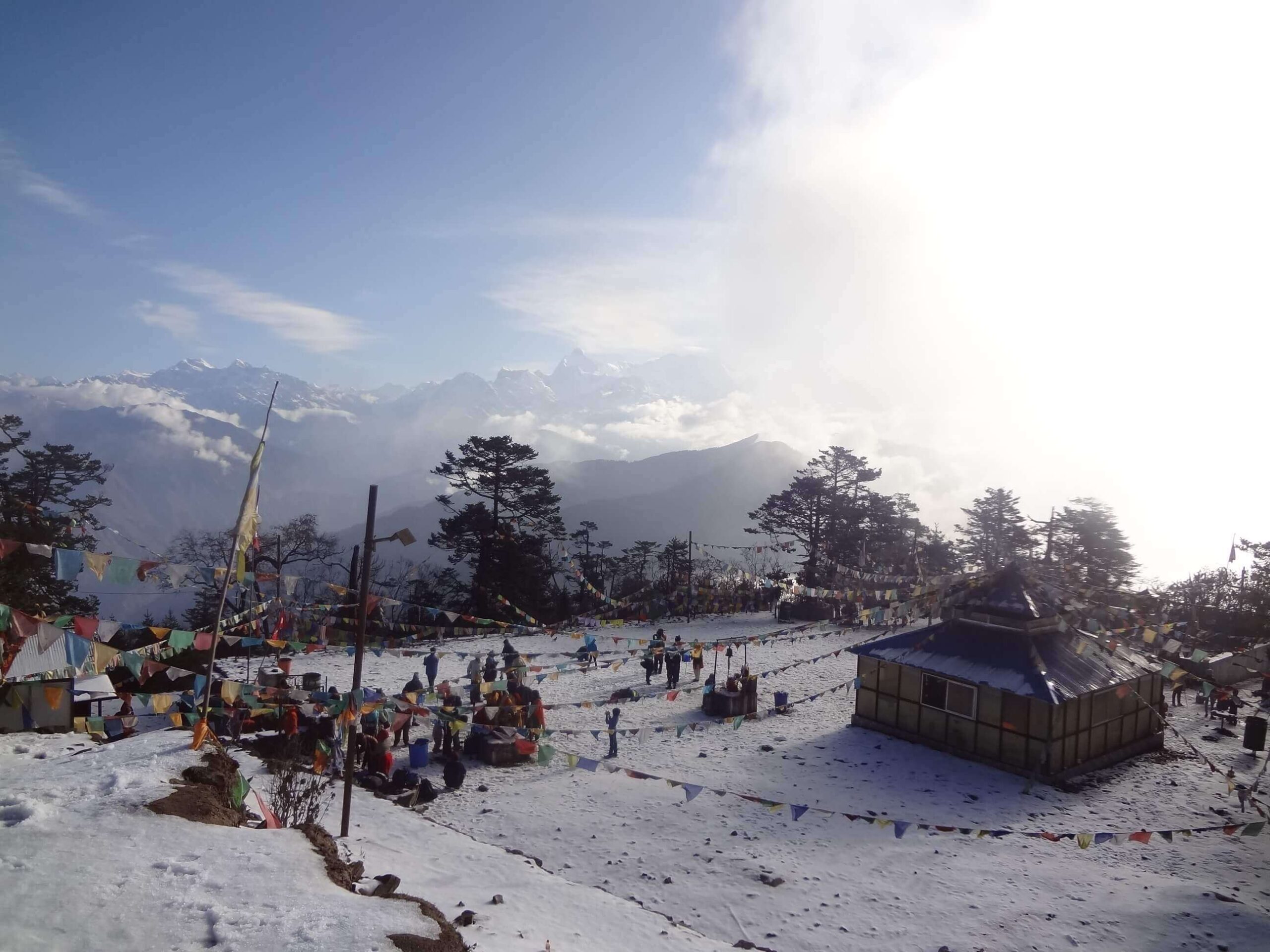
The wind on the final ridge below Pathibhara carries the smell of juniper smoke and the clang of bells, while pilgrims who walked through the night fold their hands toward a small stone shrine perched at 3,794 meters. This is far-eastern Nepal, a corner most foreign trekkers never reach, where Hindu and Buddhist devotion blend on a high mountain spur with the snow wall of Kanchenjunga filling the northern horizon.
Our field team coordinates regularly across the Taplejung region, and we wrote this guide because the Pathibhara trek is short, intensely spiritual, and offers Himalayan views that rival far longer journeys. Here is everything you need to plan it properly for 2026.
Pathibhara Temple Trek Overview
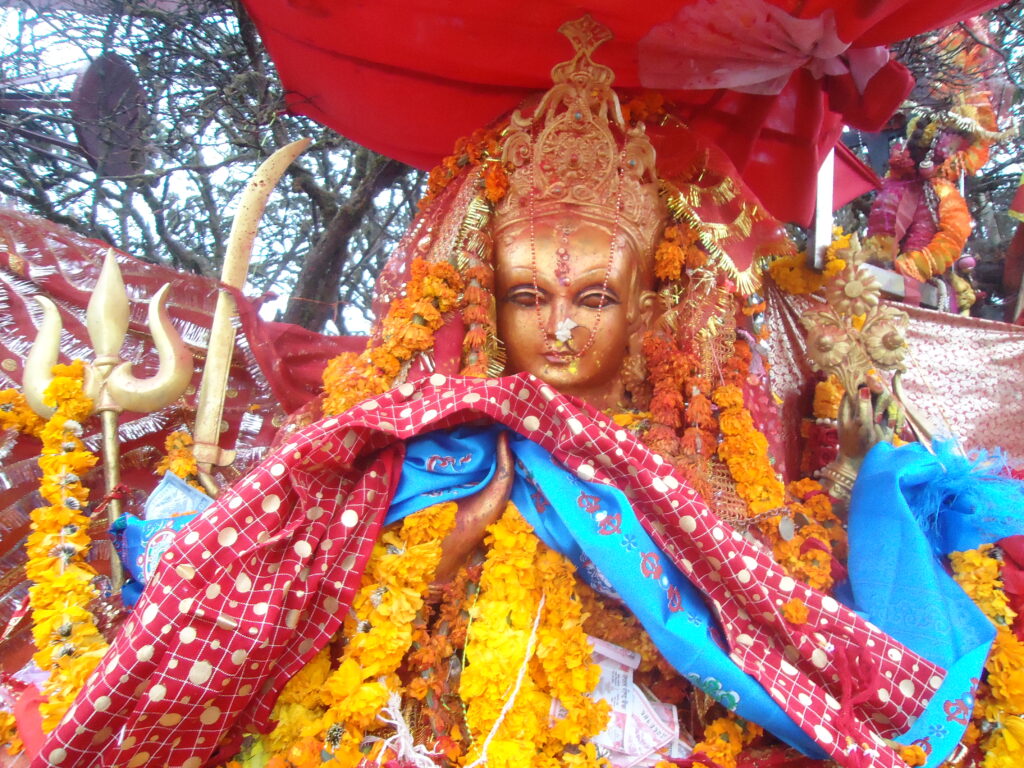
The Pathibhara Temple Trek is a short, high-impact pilgrimage in Taplejung District, far-eastern Nepal, reaching a sacred shrine at 3,794 meters. It requires no restricted-area permit, takes roughly 2 days using a combination of jeep and foot trails, rewarding visitors with sweeping views of Kanchenjunga (8,586 meters) and the eastern Himalaya.
Pathibhara Devi is one of Nepal’s most revered Shakti temples. Local belief holds that the goddess fulfills the sincere wishes of those who reach her, which is why you will see Nepali pilgrims from across the country making the climb, especially during festival periods.
The base town is Taplejung (Phungling), reachable by road or by a short domestic flight to nearby Suketar Airport. From there, the trail or the road climbs toward the trailhead at Kaflepati before the final ridge ascent.
How to Reach Taplejung in 2026
Most travelers reach Taplejung either by a long overland drive from Kathmandu or by flying into the eastern hub of Bhadrapur, then continuing by road. A short flight to Suketar Airport near Taplejung is also seasonally available but unreliable, so always keep a buffer day.
By Air
The fastest route is a flight from Kathmandu to Bhadrapur (around 50 minutes), followed by a long 8 to 10 hour drive up to Taplejung. Flights also occasionally serve Suketar Airport directly, but these are weather-dependent and frequently cancelled. We treat any Suketar flight as a bonus, never a guarantee. Verify live fares and schedules close to departure, as domestic air pricing shifts constantly.
By Road
Adventurous travelers can take a tourist bus or private jeep from Kathmandu toward eastern Nepal, then transfer to a local jeep up the mountain roads to Taplejung. Budget a realistic 16 to 22 hours of total travel split across days. Private jeep hire rates fluctuate by season and fuel cost, so confirm current quotes locally.
The Trekking Route to Pathibhara
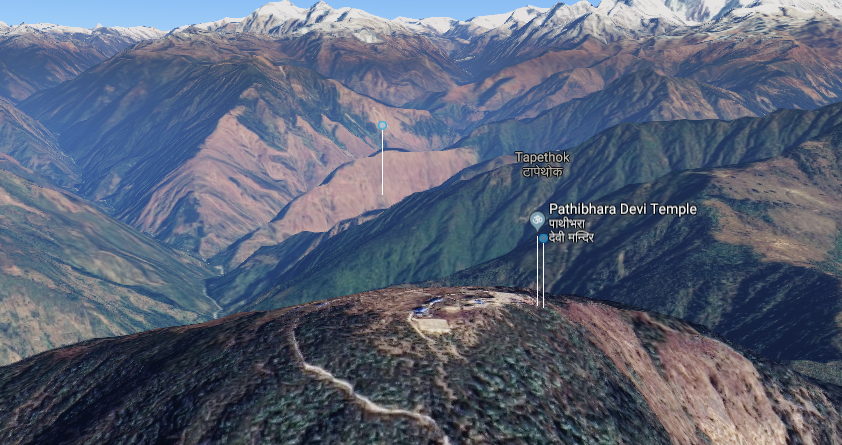
While hardcore hikers can still walk from Taplejung Bazaar, a rough mountain road now connects Taplejung directly to the trailhead at Kaflepati. Most itineraries utilize local jeeps to maximize time on the sacred mountain trails.
4-Day Pathibhara Devi Pilgrimage Tour
This 4-day itinerary offers a comfortable pace for pilgrims and travelers starting from Kathmandu. It combines scenic mountain travel, a rewarding Himalayan hike, and a visit to one of Nepal’s most revered Hindu pilgrimage sites.
Day 1: Kathmandu to Taplejung
Duration: Full day
Travel from Kathmandu to Taplejung (Phungling) by domestic flight (when available) or by an overland drive through eastern Nepal. Upon arrival, check into your hotel and spend the evening exploring the town or preparing for the pilgrimage ahead.
Day 2: Drive to Kaflepati – Hike to Thulo Phedi
Driving: 1.5–2.5 hours
Hiking: 2–3 hours
After breakfast, take a local 4WD jeep from Taplejung to Kaflepati (approximately 2,700 m), the main trailhead for Pathibhara Devi Temple. Begin a gentle uphill hike through rhododendron and bamboo forests, passing small teahouses before reaching Thulo Phedi (approximately 3,150 m). Spend the night at a mountain lodge and prepare for the early morning ascent.
Day 3: Sunrise Hike to Pathibhara Devi Temple – Return to Taplejung
Hiking: 5–7 hours
Driving: 1.5–2.5 hours
Start before dawn for the climb to Pathibhara Devi Temple (3,794 m). The trail follows a steep stone staircase through alpine forest before reaching the sacred hilltop shrine. Pilgrims offer darshan and prayers while enjoying breathtaking sunrise views of Kanchenjunga, Kumbhakarna (Jannu), Kabru, and other peaks of the eastern Himalayas on clear days.
After spending time at the temple, descend to Kaflepati, where your jeep awaits for the drive back to Taplejung. Overnight in Taplejung.
Day 4: Taplejung to Kathmandu
Duration: Full day
Return to Kathmandu by domestic flight (subject to flight schedules and weather conditions) or by overland drive. Your pilgrimage concludes upon arrival in the capital.
Trip Highlights
- Stay in local teahouses and lodges along the pilgrimage route.
- Visit the sacred Pathibhara Devi Temple (3,794 m), one of Nepal’s most important Hindu pilgrimage sites.
- Witness spectacular sunrise views over Kanchenjunga and the eastern Himalayan range.
- Hike through picturesque rhododendron and bamboo forests.
- Experience the spiritual traditions and mountain culture of eastern Nepal.
The final climb from Kaflepati is a relentless flight of stone steps. Many pilgrims set out before dawn to reach the shrine for sunrise, when the first light hits the Kanchenjunga massif. The cold at the top before sunrise is sharp, so carry warm layers even in spring.
The Pathibhara Cable Car (2026 Status Update)
Important Travel Note: A proposed 2.7-kilometer cable car system linking Kaflepati to the upper ridge is currently under construction but remains completely unoperational as of 2026. The project has faced a government-ordered construction halt due to ongoing dialogues regarding environmental preservation and indigenous Limbu (Yakthung) cultural heritage. For the foreseeable future, the historic stone-stepped trail is the only way to reach the summit—preserving the authentic, traditional spirit of the pilgrimage.
Permits and Costs for 2026
The Pathibhara region does not fall inside a national park or restricted area, so no ACAP, TIMS, or Restricted Area Permit is required for the standard route. This makes it one of the most paperwork-free treks in Nepal. Your main costs are transport, lodging, food, and the cable car if used.
Foreign visitors entering Nepal will still need a tourist visa. As of 2026, the Department of Immigration charges $30 USD for a 15-day visa, $50 USD for 30 days, and $125 USD for 90 days on arrival.
| Item | Approx. Cost |
|---|---|
| Trekking Permit | None required |
| Teahouse / Lodge (Per Night) | NPR 500–1,500 |
| Dal Bhat Meal | NPR 400–700 |
| Phone / Power Bank Charging | NPR 200–500 |
| Hot Shower (Gas-Heated) | NPR 200–400 |
Carry Enough Cash
There are no reliable ATMs on the mountain above Taplejung. Withdraw sufficient Nepalese Rupees (NPR) in Kathmandu or Bhadrapur before heading up. Expect small trail upcharges for charging devices, hot showers, and local Wi-Fi, which typically run 200 to 700 NPR per service and are almost never included in your room rate.
Best Time to Trek Pathibhara
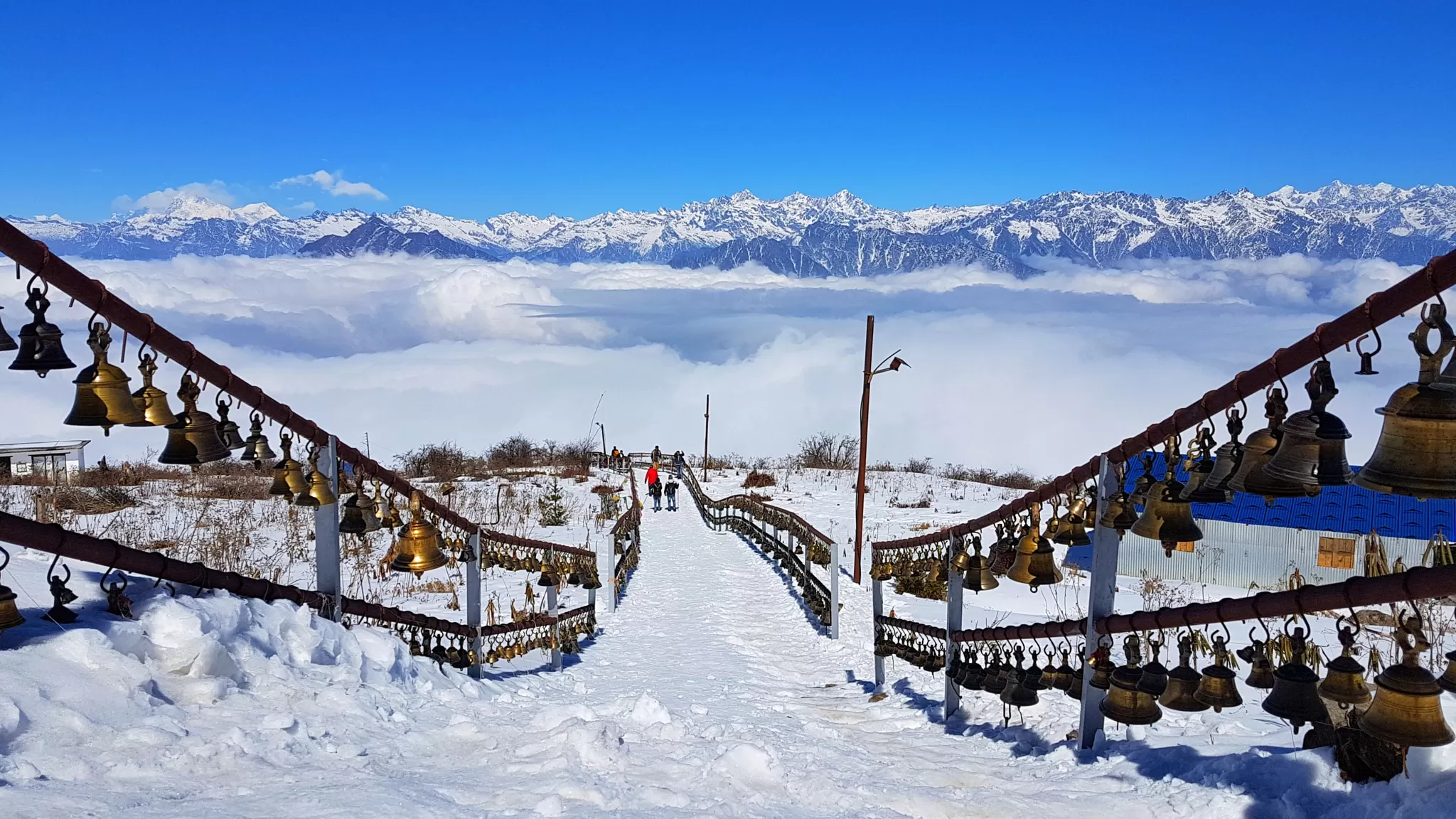
The ideal seasons are autumn (late September to November) and spring (March to May), when skies are clearest and the Kanchenjunga views are sharpest. The temple draws its largest pilgrim crowds during festival periods, so plan around them depending on whether you want energy or quiet.
| Season | Conditions | Verdict |
|---|---|---|
| Spring (Mar–May) | Rhododendrons bloom, clear mornings | Excellent |
| Autumn (Sep–Nov) | Crisp air, best mountain views | Best |
| Monsoon (Jun–Aug) | Rain, leeches, cloud cover | Difficult |
| Winter (Dec–Feb) | Cold, possible snow at the ridge | Quiet but harsh |
If you are weighing eastern Nepal against the classic regions, our overview of Nepal’s main trekking routes and the guide to trekking in October can help you fix the right window.
Altitude and Safety
Although Pathibhara is a short trek, you climb to 3,794 meters, where altitude can still affect unprepared visitors. The pilgrimage culture encourages fast pre-dawn ascents, but rushing from low elevation to nearly 3,800 meters in one push can trigger mild altitude symptoms.
Walk at a steady pace, hydrate well, and descend if you develop a persistent headache, nausea, or dizziness. Read our practical primer on altitude sickness and the role of Diamox before you go.
Insurance
We strongly advise travel insurance that explicitly covers high-altitude trekking and emergency helicopter evacuation up to 4,000 meters, plus medical treatment. Standard holiday insurance rarely includes mountain rescue, and Taplejung’s remoteness makes road evacuation slow.
Food, Water, and Lodging
Lodges along the route are simple family-run teahouses serving hot, filling meals rather than tourist menus. The reliable, high-energy choice everywhere is Dal Bhat, the lentil-rice-curry plate that often comes with free refills and keeps you fueled for the steep climb.
Skip plastic bottled water to protect this fragile mountain environment. Carry a reusable bottle with a purification system such as a UV purifier, Sawyer filter, or chlorine dioxide drops. Spring water is available, but always treat it. For a sense of what trail meals are like elsewhere, see our notes on teahouse food.
Connectivity
Mobile coverage in far-eastern Nepal is patchy on the ridge. Nepal Telecom (NTC) generally provides the most dependable signal in remote eastern zones, so we recommend an NTC SIM as your primary line, with Ncell as a backup in town. Expect connectivity to drop near the summit, which most pilgrims welcome.
Sacred Etiquette at Pathibhara
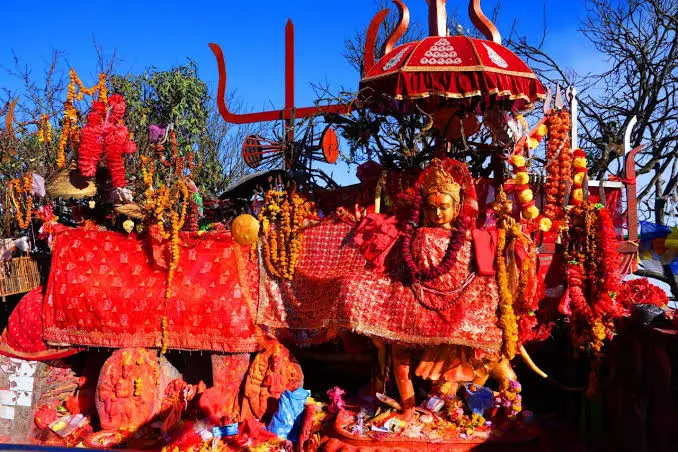
This is an active, deeply sacred shrine, not a viewpoint. Treat it with the respect Nepali pilgrims show. When you pass any mani walls, chortens, or stupas en route, walk clockwise so the structure stays on your right.
Remove your shoes and hat before entering the temple precinct. Outdoor photography of the ridge and shrine surroundings is fine, but do not photograph inside any inner sanctum or prayer area without explicit permission. Sacrificial offerings are part of the tradition here, so be culturally sensitive about what you observe and how you react.
What to Pack
- Warm insulating layers and a windproof jacket for the cold ridge
- Sturdy footwear for steep stone steps
- Headlamp for pre-dawn ascents
- Reusable bottle plus water purification
- Sufficient NPR cash in small notes
- Sun protection and a warm hat
For a fuller list adaptable to any Nepal trek, our trek packing list covers the essentials, and Kathmandu travelers can sort gear via our trekking rental gear guide.
Tipping Your Crew
If you trek with a guide or porter, tipping at the end is culturally expected and forms a vital part of their income. A standard guideline is 10% to 15% of your total trip cost, distributed fairly among the crew. Our dedicated guide and porter tipping resource breaks this down further.
Combining Pathibhara with Other Eastern Treks
Far-eastern Nepal is wide open and lightly trekked. Pathibhara pairs naturally with the longer, restricted Kanchenjunga Circuit trek, since both begin from the Taplejung side. Note that the Kanchenjunga restricted area carries different 2026 rules: a single traveler can now obtain the permit, but a licensed guide is mandatory and the guide-to-trekker ratio is capped at 1:7.
If you have more time in Nepal, weigh how this fits a wider plan with our 10-day adventure itinerary.
Frequently Asked Questions
-
Do I need a guide for Pathibhara?
No, the standard Pathibhara pilgrimage route does not legally require a licensed guide, unlike restricted regions. However, a local guide adds value for transport coordination and cultural context in this rarely visited area.
-
How difficult is the Pathibhara trek?
It is short but steep, with a relentless stone-step climb to 3,794 meters. Reasonably fit walkers manage it comfortably, and the cable car offers an easy alternative.
-
Can I do Pathibhara in one day?
Yes, but only if you charter a helicopter directly to the top. By trail, a single-day round trip from Taplejung via jeep and a fast hike is physically grueling due to the sudden 1,000-meter elevation gain. Splitting the journey with an overnight stay at Phedi is highly recommended.
-
Are there ATMs near Pathibhara?
No reliable ATMs exist above Taplejung. Withdraw all the NPR cash you need in Kathmandu or Bhadrapur before heading up.
-
Is Pathibhara open year-round?
Yes, the temple is open all year, but autumn and spring offer the clearest mountain views and safest trail conditions.
-
What mountains can I see from Pathibhara?
On a clear day you see the Kanchenjunga (8,586 meters) massif and surrounding eastern Himalayan peaks dominating the northern skyline.
-
Can foreigners visit Pathibhara Temple?
Yes, all visitors regardless of faith are welcome to make the climb, provided they respect the sacred customs of the site.
-
How cold does it get at the temple?
Pre-dawn temperatures on the ridge can drop near or below freezing in winter and stay chilly even in spring, so warm layers are essential.
-
Is the water safe to drink on the trail?
Spring water is available but must be purified. Avoid buying plastic bottled water and carry a reusable bottle with a filter or purification drops.
-
Which SIM works best in Taplejung?
Nepal Telecom (NTC) generally provides the most dependable coverage in this remote eastern region, with Ncell as a town backup.
Leave a Reply