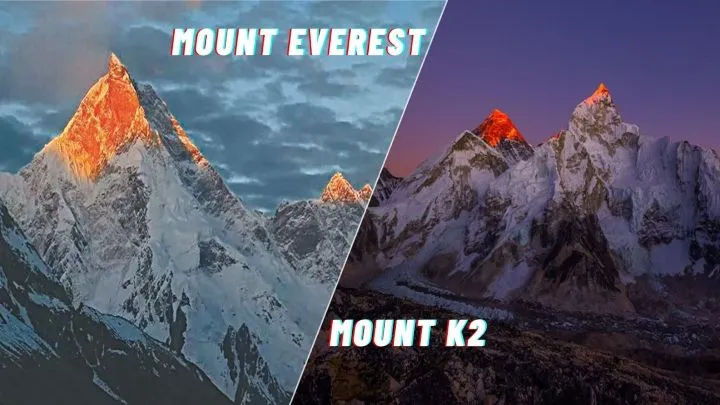
Whenever it comes to the world’s most legendary mountains, there has always been a debate between Mount Everest vs K2 among the climbers and adventurers. These giant mountains are not just symbols of natural wonders but also symbols of human ambitions, endurance, and the pursuit of adventure.
When Mount Everest, the tallest mountain, attracts thousands of people every year, the second-tallest mountain, K2, holds the title of “Savage Mountain” because of its extreme difficulties and harsh weather. However, climbing either of these giants is not an easy task.
Facts: Mount Everest vs K2
Mount Everest, situated at an altitude of 8,848.86 m above sea level, is the tallest peak in the world, which is standing tall on the border of Nepal and Tibet, China. It was first successfully ascended by Sir Edmund Hillary and Tenzing Norgay Sherpa in their Mount Everest expedition in 1953.
Mount K2, on the other hand, is the world’s second-highest peak, located at the border of Pakistan and China. Mount K2, also known as Mount Godwin-Austen, was first conquered by Achille Compagnoni and Lino Lacedell in 1954. Compared to Mount Everest, Mount K2 is climbed by fewer climbers.
Located in different regions, both K2 Mountain vs Everest are very different from each other. The following table is a quick comparison between K2 vs Mount Everest:
Feature
Mount Everest
Mount K2
Height
8,849 m (29,032 ft)
8,611 m (28,251 ft)
Location
Nepal-Tibet border
Pakistan-China border
First Ascent
1953 (Hillary & Norgay)
1954 (Compagnoni & Lacedelli)
Coordinates
27°59′17″ N, 86°55′31″ E
35°52′57″ N, 76°30′48″ E
Popularity
Very high
Low
Nickname
The Roof of the World
Savage Mountain
Best Season to Climb: Mount K2 vs Mount Everest
Climbing the world’s highest peaks is not just about skills and courage, but also about proper timing. The best seasons to climb Mount Everest vs K2 differ because of the weather patterns and safety considerations.
Best Season To Climb Mount Everest
The most favorable time to summit Mount Everest is during the pre-monsoon and post-monsoon.
Pre-monsoon (April to June): Pre-monsoon/spring is the most ideal time to climb Mount Everest. During these months, the climate is stable with longer days and clear skies.
Post-monsoon (September-November): Less popular than Spring, post-monsoon/Autumn is another favorable season to climb Mount Everest. During these months, the weather is simply stable, offering a clear mountain view.
Best Season to Climb Mount K2
In contrast to Mount Everest’s best climbing seasons, the most preferred time to climb Mount K2 is in the Summer from June to August, when the temperature is hotter and the skies are clear.
Summer (June-August): Summer is the only feasible time to climb Mount K2, as it is the best season offering clearer skies and a warmer climate, making it a comparatively better time to climb than any other month.
While making the comparison, Mount K2 vs Mt Everest, Everest offers two climbing windows with better infrastructure, guides, and a support system; K2, on the other hand, offers a narrow climbing window in summer with limited facilities and a tougher route.
Is K2 Harder than Everest?
Being logical, neither of the mountains is easy to climb. Climbing either of the mountains: Everest vs K2, is a life-risking challenge demanding years of mountaineering experience, physical strength, and a strong mentality. However, when compared, most climbers agreed with K2 being comparatively difficult.
Why is Mount Everest Difficult?
Climbing Mount Everest is one of the physically and mentally challenging adventures in the world. At an altitude of 8,488.86 m above sea level, the climbers are pushed towards the Mount Everest death zone, where the oxygen is one-third of sea level, making survival extremely difficult.
Sudden storms, freezing temperatures, and strong winds make the climbing further challenging. In addition, during peak climbing season, overcrowding makes the Mount Everest expedition further challenging.
Why is Mount K2 Difficult?
Mount K2 is considered to be more difficult and dangerous. Unlike Mount Everest, K2 does not have well-established routes, proper facilities, and guides. Instead, the climbers need to go through steep rock falls, icy slopes, and highly experienced climbing skills.
The weather in K2 is unpredictable. Uncertain storms, heavy snowfall, and a shorter climbing window make the expedition further challenging and dangerous.
Records and Achievement
Both of the legendary mountains have made significant contributions to the history of mountaineering worldwide.
Mount Everest Record and Achievements:
First Climbers: Sir Edmund Hillary and Tenzing Norgay Sherpa in 1953
Youngest Climber: Jordan Romero at the age of 13 in 2010
Fastest climber: Benjamin Vedrines – 10 hours, 59 minutes, and 59 seconds
Final Thoughts
Mount Everest vs K2, the world’s two giants, continue to enthrall mountaineers and adventurers with their majesty, mystery, and danger. While Everest is “The Roof of the World” and receives thousands thronging to its summit every year through its popularity, K2, the “Savage Mountain,” remains a test of sheer ability, stamina, and survival against hostile conditions.
Choosing between Mt Everest vs K2 is not simply a choice based on height, it’s a choice about what kind of challenge an individual climber wants. Everest boasts more established routes, facilities, and access, while K2 demands technical ability, stamina, and the courage to deal with unreliable weather. Both mountains are symbols of human determination, demonstrating that mountains aren’t merely ascended for titillating stories, but for the exhilaration of adventure and the motivation of pushing human boundaries.
Ultimately, whatever the step may be to Everest or K2, the achievement is a lifetime testament to human will and to the inescapable call of the mountains.
Nepal is a beautiful country known as the land of the Mountains. Every year, a large number of tourists visit Nepal to witness the immense Himalayas, vibrant cultures, and tranquil natural beauties. Ensuring the best time to visit Nepal is crucial to make the most of your exciting tour to Nepal.
This guide will cover the best time to go to Nepal, exciting things to do in Nepal, and must-see places to visit in Nepal, including top tourist places in Kathmandu.
Where is Nepal?
Nepal is an idyllic landlocked country in South Asia, located between the two large countries, China to the north and India to the east, west, and south. Known as the home of the world’s largest mountain, Mount Everest, and the birthplace of Lord Gautam Buddha, Nepal is a treasure of nature and culture. Geographically, Nepal is divided into three parts: the plain Terai with fertile lands, hills (Pahad) with lush forests and hills, and mountains (Himal) with the snow-capped Himalayas.
Best Time to Go to Nepal by Season
Nepal is a country worth visiting any time of the year; however, to make your journey the best out of the best, it’s crucial to know the best time to visit Nepal according to your experiences.
Moreover, you can tour various vibrant places in Nepal, such as Kathmandu, Pokhara, and Mustang. Between March and May, the country of Nepal is filled with lush green forests and colorful flowers, making the trip even more pleasing and memorable.
Autumn (September to December)
Autumn is also the best time to visit Nepal. Alike spring, the weather in autumn is clear and clean with moderate temperatures. This season is also considered to be the best time for trekking in Nepal. Whether you are looking for long and peaceful treks like Langtang Gosaikunda and the Kanchenjunga Circuit trek, or short and popular treks, such as Ghorepani Poon Hill and Mardi Himal trek, autumn is the perfect time.
Autumn, being the season of festivals, is a great time to witness some of Nepal’s major festivals, including Dashain and Tihar. If you are in Kathmandu at this time, exploring the major tourist attractions in Kathmandu, such as Pashupatinath Temple and Durbar Square, may offer you some unforgettable memories.
Summer, however, is not recommended like any other season. However, if you want to be a nature lover who loves lush hills and rain, then this might be a perfect time.
Nepal is a country of paradise, where, along with enjoying the immense beauty of nature, there are various things to do in Nepal. From peaceful tours to the various places in Nepal to adventure sports and thrilling treks, Nepal offers it all.
Trekking
Trekking is one of the most popular things to do in Nepal. Every year, a large number of people visit Nepal to take part in some of the major treks in Nepal, including EBC, ABC, Manaslu Circuit, and North Annapurna Base Camp Trek. If you’re planning for trek in Nepal, then the best time to visit Nepal for trekking is during the autumn and spring.
Sightseeing
Another one of the things to do in Nepal is the sightseeing tour of various famous places in Nepal, such as Upper Mustang, Kalinchowk, and Rara Lake. The best time to go to Nepal for such a trek is during the spring, autumn, and winter. However, summer is not recommended.
Religious Tour
Nepal is a hub for pilgrimage tourists, who are deeply devoted to various gods and goddesses. Some of the major sights for religious tours in Nepal are Pashupatinath, Muktinath, and Swargadwari.
Adventure Sport
Nepal is well-known for its thrilling adventure sports such as paragliding, bungee jumping, zip-lining, sky diving, ultralight flight, and hot air ballooning. You can enjoy these adventure sports along with the stunning natural beauty and cultural significance.
Tryout Famous Cusinies
One of the exciting features of Nepal is the unlimited variety of cuisines available here. From traditional local foods to lavish international cuisines, Nepal offers you all.
Famous local cuisines to try in Nepal:
MoMo
Thakali Khana Set
Yomari
Bara
Chatamri
Selroti
Sekuwa
Popular Places to Visit in Nepal
This beautiful country offers you tons of places to visit in Nepal. Whether you want to tour a busy city to a UNESCO World Heritage site, or to traditional cultural village life, Nepal provides you with all. Select the best time to go to Nepal for the best experience.
Famous places to visit in Nepal:
Kathmandu
The capital city of Nepal, Kathmandu, is one of the best places to visit in Nepal. From ancient life temples in Pashupatinath and Patan to modern nightlife in clubs and bars of Thamel, Kathmandu is full of surprises.
Pokhara
Known as one of the key tourist destinations of Nepal, Pokhara is a paradise, one of the best places to visit in Nepal. Pokhara offers you a range of adventure sports to cultural, and natural exposure to various short one-day tours, like Sarangkot, World Peace Pagoda, and Thulakot Hills.
Chitwan
If you are looking for a raw, natural, and wildlife touring experience, then Chitwan, one of the best places to visit in Nepal, for witness some of the rare wildlife in the world. The Chitwan National Park, a protected site of plants and animals, offers you to observe rare animals like the one-horned rhino and tiger.
Ghandruk
Looking for a peaceful getaway, the Ghandruk Village is one of the best places to visit in Nepal for a relaxing and peaceful experience. One of the oldest and largest Gurung settlements, Ghandruk village, offers exposure to traditional Gurung culture, ancient architecture, and stunning vistas of mountains and landscape.
Final Thoughts
Nepal is actually a place that has something for all, be it you are seeking Himalayan exploits, soaking up vibrant cultures, trekking, or seeking tranquility in spiritual retreats. You can determine the best time to go to Nepal according to your desires, but spring (March–May) and autumn (September–December) are ideal for trekking, cultural tours, and sightseeing for the majority of travelers. Winter is best for wildlife safaris and cultural excursions, and monsoon enthusiasts come during the rainy season.
With globally famous trekking routes like Everest Base Camp and Annapurna Circuit, adventure activities in Pokhara, spiritual pilgrimage sites like Pashupatinath and Lumbini, and varied fauna in Chitwan, Nepal is a country that promises memories never to be forgotten, irrespective of the time.
FAQs
1. When is the best time to visit Nepal?
The best time to visit Nepal is Spring (March-May) and Autumn (September-November).
2. What is the time zone of Nepal?
The time zone of Nepal is UTC+05:45.
3. What is off-season in Nepal?
Summer is considered the off-season in Nepal.
4. Which place is the most visited in Nepal?
The most visited place in Nepal is Kathmandu.
5. What are the famous things of Nepal?
The famous things to do in Nepal are trekking, touring, and adventure sports.
For decades, there’s been a debate about which one is the best trek. Despite both of these routes offering various similarities, there are various differences as well. Choosing any one of them depends upon your physicality, experiences, time, and budget.
Annapurna Vs Everest Base Camp Treks Overview
Everest Base Camp Trek Overview
One of the legendary trekking routes around the world, the Everest Base Camp trek lies at the foot of the world’s highest peak, Mount Everest, also known as Sagarmatha Himal. The EBC trek is famous for its challenging terrains, stunning vistas, and the raw and traditional Sherpa culture.
EBC Trek Difficulty & Duration
Number of days: 14 Days
Difficulty: Hard
Highlights:
Trek past renowned Sherpa towns like Namche, Tengboche & Dingboche
Stand at Everest Base Camp (5,364m), a lifetime goal
Sunrise from Kala Patthar (5,555m) with Everest in view
Experience Sherpa culture, monasteries & traditional villages
Walk along the Khumbu Glacier and view the Icefall
Annapurna Base Camp Trek Overview
The Annapurna Base Camp trek is a magnificent masterpiece of nature, with a mixture of different cultures. Renowned for its lush forests, terraced fields, and panoramic mountain views, the ABC trek is a paradise in itself. The trek offers beautiful mountain views, including Annapurna I, Machhapuchhre (Fishtail), and Hiunchuli.
ABC Trek Difficulty & Duration
Number of days: 12 Days
Difficulty: Moderate
Highlights:
Ghandruk village, a traditional Gurung village with stunning mountain views and a rich cultural heritage.
Trekking through green forests, terraced hills, and beautiful scenery.
Annapurna Base Camp (4,130m) amid Himalayan giants is breathtaking.
Relax in the natural hot springs at Jhinu Danda.
Culture and Local Experience in ABC vs EBC Trek: Sherpa Villages vs Gurung Settlements
The trail to Everest Base Camp trek passes through several Sherpa villages such as Namche Bazaar, Tengboche, Dingboche, and Lobuche. People from the Everest Region are known for their mountaineering skills, Tibetan traditions, and monasteries. You can witness the smiling local people and their unforgettable hospitality while trekking in these regions.
Annapurna Base Camp trek, on the other hand, is renowned for its traditional Gurung settlements such as Ghandruk (one of the oldest and largest Gurung villages), Jhinu, Sinuwa, etc. Gurungs of the Annapurna Region are known for warm hospitality, traditional folk dance, and unique stone houses.
Permit Requirements for ABC vs EBC
It is mandatory to have permits while trekking to any region of Nepal. Each region has a different set of permit requirements. Trekking permits requirement for ABC vs EBC treks:
EBC Trek Permits:
Sagarmatha National Park Entry Permit
Khumbu Pasang Lhamu Rural Municipality Permit
TIMS (Trekkers’ Information Management System) Card
ABC Trek Permits:
ACAP (Annapurna Conservation Area Project) Permit
TIMS (Trekkers’ Information Management System) Card
ABC vs EBC Treks Starting Points: Ghandruk vs Lukla
EBC trek starting point: After taking a 40-minute flight from Kathmandu, start your Everest Base Camp Trek from Lukla to EBC, passing Phakding, Namche Bazaar, Tengboche, Dingboche, Lobuche, and Gorak Shep.
ABC trek starting point: Commence your Everest Base Camp Trek from Ghandruk to ABC, after a drive from Kathmandu to Ghandruk via Pokhara. During the Ghandruk to ABC trek, pass through Jhinu, Sinuwa, Bamboo, and Deurali.
Other Famous Trekking Routes of the Everest and Annapurna Regions
Both the ABC vs EBC treks are unique blends of natural beauty, cultural significance, and challenges. If you are looking for more challenging routes, along with exploring the Sherpa culture, then the EBC trek is what you are looking for. However, it demands more time, physical effort, and budget.
On the other hand, if you are seeking shorter and easier trekking trails, then the ABC trek might be a better option for you. Explore the beautiful landscape and mountain views, and the traditional Gurung culture, on a budget-friendly and easier route.
FAQs
1. ABC vs EBC: Which Trek Is Better?
It depends upon an individual’s preferences to determine whether Annapurna or Everest Base Camp is better.
2. Is Annapurna harder to climb than Everest?
Annapurna is considered an easier trail compared to the Everest.
3. Can we see Everest from Annapurna Base Camp?
No, you can’t see Everest from the Annapurna Base Camp.
4. Can beginners do the Annapurna Base Camp trek?
Yes, beginners can do the Annapurna Base Camp trek as its difficulty level is moderate.
5. Which company is best for the Annapurna Base Camp trek?
There are several trekking agencies in Pokhara and different parts of Nepal. Among all, Hi Nepal Travels and Treks Pvt. Ltd. is one of the best trek and travel agencies in Nepal with years of high-quality services.
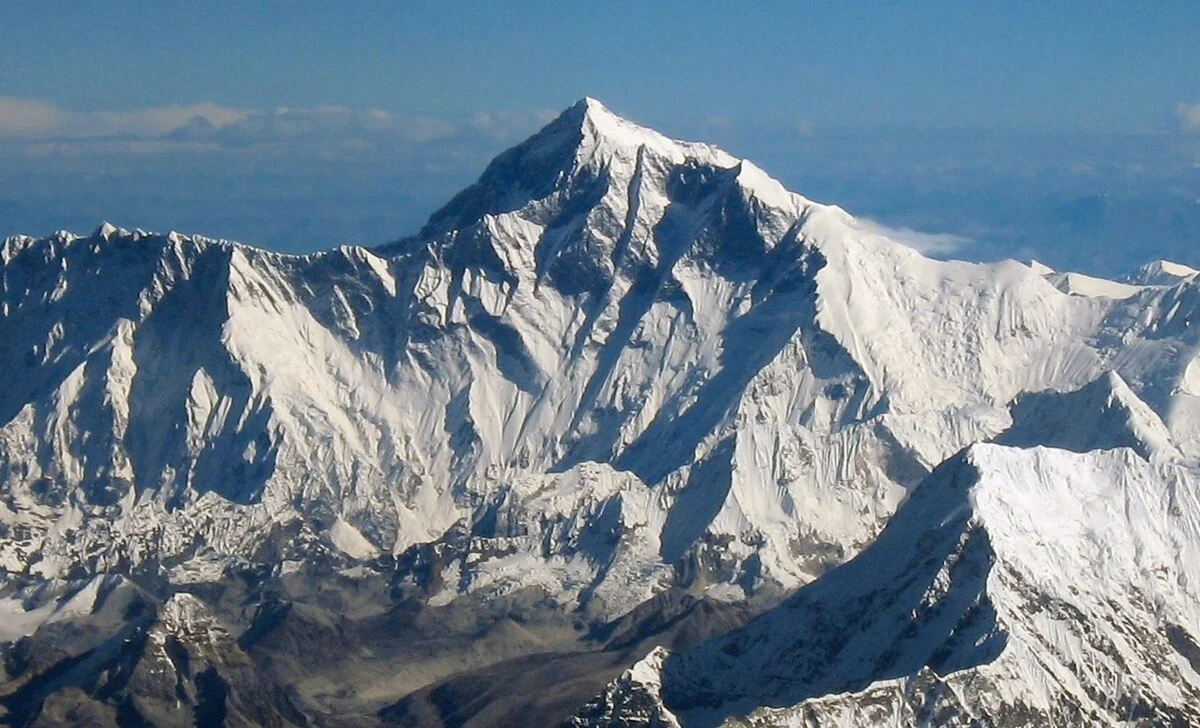
The crown of the earth, Mount Everest, is the highest peak in the world, situated at an altitude of 8,848.86 m above sea level. From climbers, adventurers, to travelers, Mount Everest, also known as “Sagarmatha” in Nepal and “Chomolungma” in China, has always been a major center of attraction. However, there’s always a question: where is Mount Everest? Nepal or China?
Mount Everest Location: Nepal or China?
If you are wondering where is Mount Everest, in Nepal or in China? The actual answer is in both, Mount Everest is located between the border of Nepal and Tibet (an autonomous Region of China). The southern side of Everest lies in Nepal, whereas the Northern part falls under the territory of China.
Geographical Facts About Mount Everest
Height: 8,848.86 meters (29,031.7 feet), the tallest mountain in the world.
Range: Himalayas, more precisely the Mahalangur range.
Coordinates: Latitude 27°59′ North, Longitude 86°55′ East.
Location: Nepal-Tibet Autonomous Region of China border.
National Park: In Nepal, it is part of Sagarmatha National Park, a UNESCO World Heritage Site.
Local Names: Sagarmatha in Nepal and Chomolungma in Tibet.
Historical, Cultural, and Religious Facts About Mount Everest
Local Names: Sagarmatha in Nepal (“Goddess of the Sky”) and Chomolungma in Tibet (“Mother Goddess of the World”).
English Name: Officially named Mount Everest in 1865 by the Royal Geographical Society, in recognition of Sir George Everest.
First Measurement: Identified as the highest mountain in the world in 1856 during the Great Trigonometric Survey of India, then called Peak XV.
First Successful Ascent: On May 29, 1953, by Sir Edmund Hillary (New Zealand) and Tenzing Norgay Sherpa (Nepal).
Cultural Significance: Considered sacred for thousands of years by native peoples before becoming a global mountaineering venue.
Sherpas hold a puja ceremony at Everest Base Camp before climbing to seek blessings for protection.
Tengboche Monastery in Nepal is one of the most significant religious centers where monks bless mountaineers.
Sherpa festivals such as Dumji and Mani Rimdu involve Buddhist rites and mountain worship.
The majority of locals believe Everest to be a living goddess to whom they offer deep reverence.
Where is Mount Everest in Nepal? (Everest South Base Camp)
In order to reach the South Base Camp of Everest, you need to catch a flight from Kathmandu to Lukla. From the Lukla trek to the Everest Base Camp, passing some major Sherpa villages like Phakding, Namche Bazaar, Tengboche, and others.
Where is Mount Everest in China (Tibet)? (Everest North Base Camp)
On the Chinese side, Mount Everest is located in Tibet, specifically within Tingri County of Shigatse Prefecture. You need to pass through the Everest North Base Camp to reach Everest. Compared to the Eversest South Base Camp, it’s easier to reach the Everest North Base Camp due to the easy road access.
Which Country Owns Mount Everest?
When the question is raised: Where is Mount Everest, or which country owns Mount Everest? The Peak is not owned by a single country; it lies on the border of Nepal and China. So, as the summit is shared by both countries, it belongs to both countries.
How old is Mount Everest?
Mount Everest is believed to be 50 to 60 million years old. When the Indian and Eurasian tectonic plates collided, the process pushed the landmass upward, raising the Himalayan region.
What is the Best Time to Climb Mount Everest?
The pre-monsoon season from April to May is considered to be the best time to climb Mount Everest. The weather in pre-monsoon is mostly stable with less snowfall and calmer winds. Although some climbers attempt to climb during Autumn (September to November), spring is the most ideal time to climb Everest.
Final Thoughts: Where is Mount Everest?
If you have ever been curious where is Mount Everest, then it proudly stands at the border of Nepal and Tibet (China), both of which countries share. Apart from its amazingly gorgeous and humongous size, Everest is also geographically, historically, culturally, and spiritually important. Whether you want to trek to its Base Camps or simply want to know about its past, Everest continues to inspire people across the globe.
FAQs
How tall is Mount Everest?
Mount Everest’s height is 8848.86 m.
How long does it take to climb Mount Everest?
Climbing Mount Everest can take about 60 to 70 days.
Who was the youngest person to climb Mount Everest?
American mountaineer Jordan Romero climbed Mount Everest at the age of 13.
Is Mount Everest a volcano?
No, Mount Everest is not a volcano.
Is Mount Everest in Nepal?
Yes, a major part of Mount Everest is located in Nepal, as well as in Tibet, China.
Is it possible to see Mount Everest from Annapurna Base Camp?
The Annapurna region is known for more than just long trekking routes. Some places offer close-up views of the mountains, some are famous for sunrise, and others let you enjoy the Annapurna range without committing to a long trek.
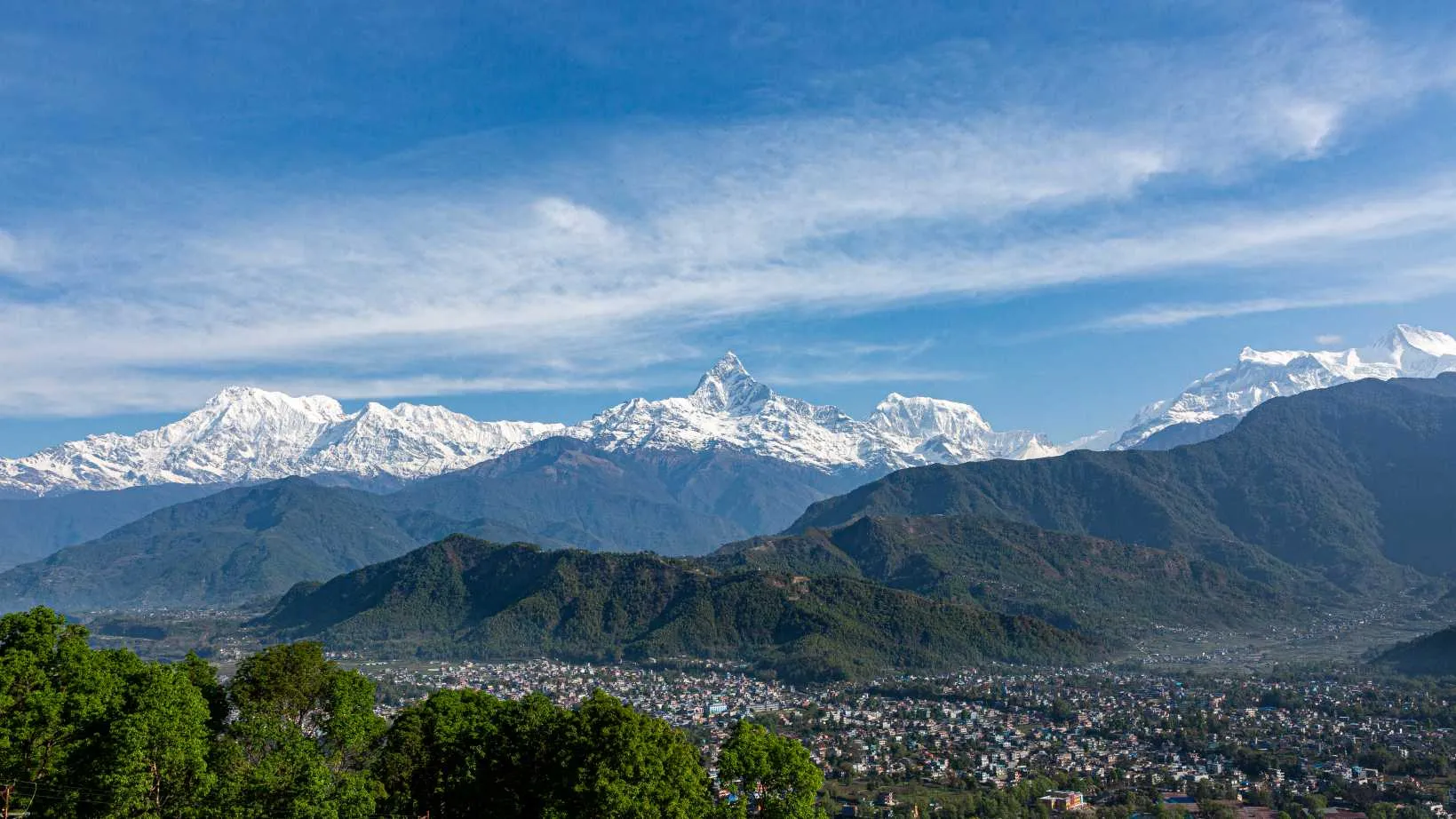
Annapurna I, Annapurna South, Machhapuchhre (Fishtail), Hiunchuli, Dhaulagiri, Nilgiri, and other Himalayan peaks can be seen from different parts of the region. The experience, however, changes depending on where you go.
For a close mountain experience, Annapurna Base Camp is hard to match. For sunrise, Poon Hill is one of the most popular choices. If you are staying in Pokhara and have limited time, Sarangkot offers mountain views without a multi-day trek.
Here are eight of the best viewpoints in and around the Annapurna region and what makes each one worth visiting.
Best Annapurna Viewpoints at a Glance
Viewpoint
Elevation
Best For
How to Reach
Annapurna Base Camp
4,130 m
Close-up Himalayan panorama
Multi-day trek
Thorong La Pass
5,416 m
High-altitude mountain scenery
Annapurna Circuit
Poon Hill
3,210 m
Sunrise views
Short trek from Ghorepani
Mardi Himal Viewpoint
Around 4,200 m
Machhapuchhre views
Mardi Himal Trek
Khorchan Danda
Around 3,700 m
Quiet mountain scenery
Khumai Danda Trek
Khopra Danda
3,660 m
Panoramic Himalayan views
Khopra Ridge Trek
Sarangkot
Around 1,600 m
Mountain views from Pokhara
Drive or short hike
Thulakot Hill
Around 1,400–1,500 m
Quiet viewpoint near Pokhara
Drive and short hike
1. Annapurna Base Camp
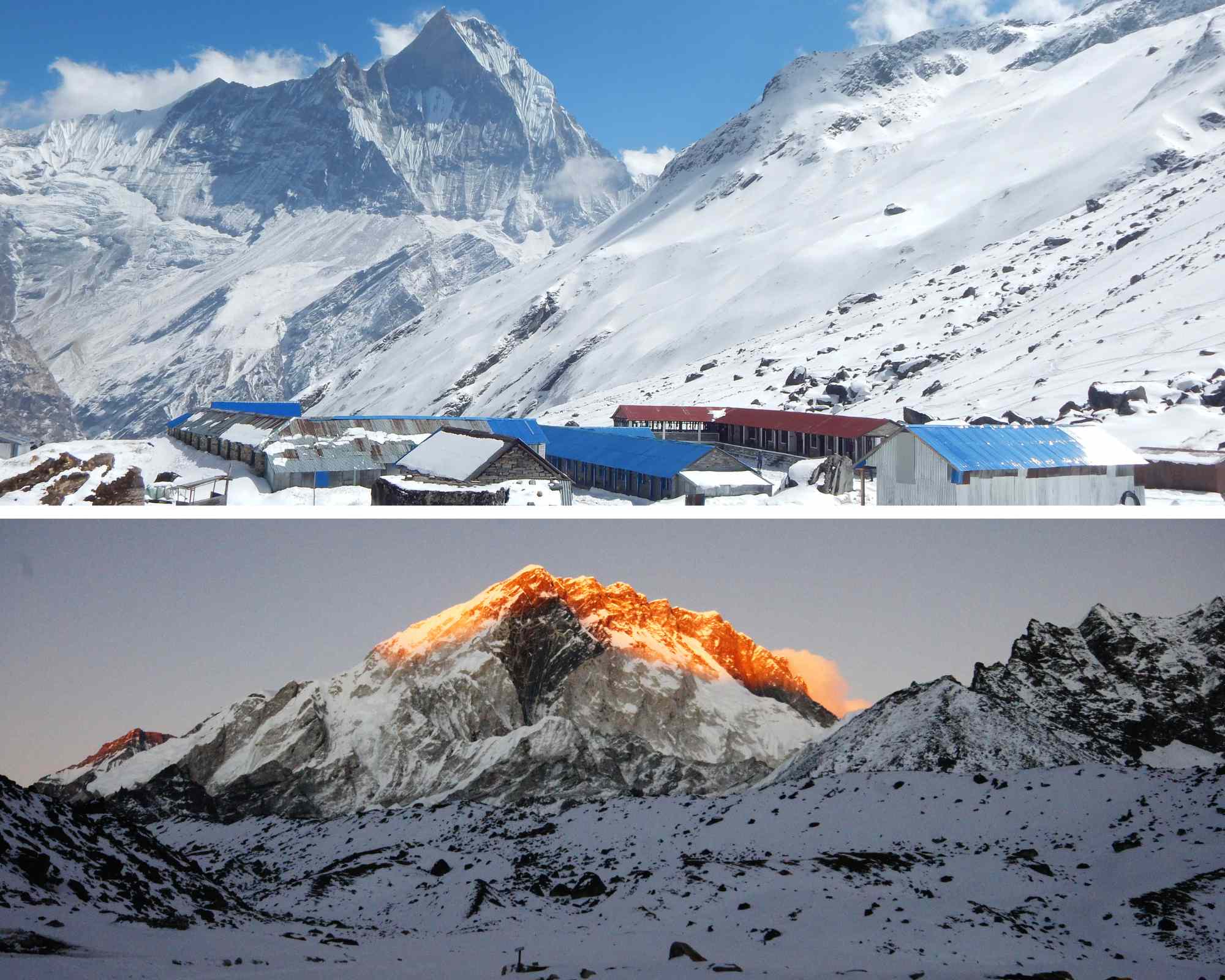
Annapurna Base Camp is one of the most impressive places to experience the mountains in the Annapurna region. At 4,130 m, the sanctuary places you among towering Himalayan peaks rather than viewing them from a distant hill.
From the base camp, you can see Annapurna I, Annapurna South, Hiunchuli, Machhapuchhre and other surrounding peaks. The mountains rise dramatically around the sanctuary, creating a very different experience from viewpoints that look toward the range from a distance.
The journey is also part of the attraction. The trail passes through villages, forests, rivers, waterfalls and rhododendron landscapes before reaching the high mountain sanctuary.
Best time: Spring and autumn generally offer good trekking and mountain-view conditions.
Highlights: Close-up views of Annapurna I, Annapurna South, Hiunchuli and Machhapuchhre.
How to reach: A multi-day trek through routes connecting places such as Ghandruk, Chhomrong and the Annapurna Sanctuary.
If your main goal is to experience the mountains from inside the Annapurna landscape rather than simply photograph them from a distance, ABC is one of the strongest choices.
Thorong La is different from the other locations on this list. It is a high mountain pass on the Annapurna Circuit rather than a conventional viewpoint.
At 5,416 m, the pass is one of the highest points reached on the Annapurna Circuit. The surrounding landscape changes dramatically as trekkers cross from the Manang side toward Muktinath.
The high elevation provides expansive views across the surrounding Himalayan terrain. Reaching the pass is also a major part of the Annapurna Circuit experience, as the trail involves a substantial climb and an early start is normally required for the crossing.
Best time: Spring and autumn are generally preferred for the Annapurna Circuit because of more favorable trekking conditions.
Highlights: High-altitude Himalayan scenery and the dramatic landscape around Thorong La.
How to reach: Trekking the Annapurna Circuit from the Manang side and crossing the pass toward Muktinath.
Thorong La is best suited to trekkers already planning the Annapurna Circuit rather than travellers looking for an easy viewpoint.
If sunrise is the priority, Poon Hill is one of the best-known viewpoints in the Annapurna region.
Located at 3,210 m above sea level, Poon Hill overlooks the Annapurna and Dhaulagiri ranges. Early in the morning, the first sunlight can illuminate the surrounding peaks, making sunrise the main reason many trekkers make the climb.
The viewpoint is particularly attractive because it does not require a long high-altitude trek to reach. Poon Hill is usually visited as part of the Ghorepani Poon Hill Trek, making it a practical option for travellers with limited time.
Best time: Spring and autumn are popular seasons, with clear mornings often providing better mountain visibility.
Highlights: Sunrise over the Annapurna and Dhaulagiri ranges, along with views of Machhapuchhre and Nilgiri.
How to reach: Trek to Ghorepani and make an early-morning hike to Poon Hill.
Poon Hill is a good choice if you want a Himalayan sunrise without taking on one of the longer Annapurna trekking routes.
The upper section of the Mardi Himal Trek provides some of the closest-looking views of Machhapuchhre, also known as Fishtail.
As you climb toward High Camp and the upper viewpoints, Machhapuchhre rises prominently ahead, while Annapurna South and other peaks appear across the surrounding landscape.
The viewpoint is particularly appealing to trekkers who want dramatic mountain scenery on a relatively shorter route than some of the classic Annapurna treks.
Best time: Spring and autumn are generally preferred for clearer mountain views and favorable trekking conditions.
Highlights: Close views of Machhapuchhre, Annapurna South and the surrounding Himalayan range.
How to reach: Trek through the Mardi Himal route toward High Camp and the upper viewpoint areas.
Mardi Himal is worth considering if your priority is a quieter trekking experience combined with strong views of Machhapuchhre.
Khorchan Danda is a quieter option for travellers looking beyond the most established viewpoints in the Annapurna region.
At around 3,700 m, the ridge provides wide Himalayan views and a more peaceful trekking environment. The route is associated with the Khumai Danda Trek, which is known for offering mountain scenery without the same level of traffic found on popular Annapurna trails.
The landscape also changes with the season. In spring, rhododendron forests add color to the lower sections of the journey, while clear weather can open up views of the surrounding Himalayan peaks.
Best time: Spring and autumn are good choices for combining trekking conditions with mountain visibility.
Highlights: Quieter trails, open mountain scenery and a less-developed trekking experience.
How to reach: Trek toward Khorchan Danda as part of the Khumai Danda Trek from the Pokhara area.
If you prefer lesser-known trekking destinations over crowded viewpoints, Khorchan Danda can be a worthwhile alternative.
Khopra Danda is another excellent option for panoramic Himalayan views without following one of the busiest trekking routes.
At 3,660 m, the ridge provides views toward Annapurna South, Dhaulagiri and Nilgiri. The location is also connected with Khayer Lake, which can be visited as an additional excursion depending on the itinerary.
One of the biggest advantages of Khopra Danda is the combination of mountain scenery and a quieter trail experience. The route passes through villages and forests before reaching the open high-altitude ridge.
Best time: Spring and autumn.
Highlights: Wide views of Annapurna South, Dhaulagiri and Nilgiri, with the option of visiting Khayer Lake.
How to reach: Trek through the Khopra Ridge route, commonly approached through areas such as Ghorepani or Tadapani.
Khopra Danda is a strong choice for trekkers who want impressive Himalayan views while exploring a less-crowded route.
You do not need to start a multi-day trek to see the Annapurna range.
Sarangkot, located above Pokhara, is one of the easiest places to enjoy Himalayan views while staying in the city. From the hill, you can look toward the Annapurna range and Machhapuchhre, with Pokhara Valley and Phewa Lake below.
Sunrise is particularly popular. On a clear morning, the mountains gradually become illuminated as the sun rises, creating a changing view over the valley and Himalayan range.
Best time: Clear mornings in autumn and winter can provide excellent visibility, although conditions vary throughout the year.
Highlights: Annapurna range, Machhapuchhre, Pokhara Valley and Phewa Lake.
How to reach: Drive from Pokhara or hike from the Lakeside area.
Sarangkot is especially useful for travellers who have only a day in Pokhara or do not want to commit to a trekking route.
Thulakot Hill offers another quieter alternative around Pokhara for travellers looking for mountain and valley views away from the more popular Sarangkot viewpoint.
The hill provides views toward the surrounding Himalayan ranges along with the landscapes around Pokhara. Because it is less internationally known than Sarangkot, it can be a better option for people who prefer a quieter outing.
It works well as a short excursion rather than as a destination requiring several days of trekking.
Best time: Autumn and winter mornings can offer good visibility when the skies are clear.
Highlights: Mountain views, Pokhara’s surrounding landscape and a quieter atmosphere.
How to reach: Drive toward the hill area and continue with a short hike depending on the selected route.
There is no single viewpoint that is best for every traveller. Your choice depends on how much time you have, how much trekking you want to do and what kind of mountain view you are looking for.
If you want…
Consider…
The closest mountain experience
Annapurna Base Camp
A famous sunrise viewpoint
Poon Hill
A high-altitude experience
Thorong La
Close views of Machhapuchhre
Mardi Himal
A quieter trekking route
Khopra Danda or Khorchan Danda
A mountain view without a long trek
Sarangkot
A quieter outing around Pokhara
Thulakot Hill
For a first-time visitor with enough time for trekking, ABC offers a particularly immersive experience. If you have only a few days, Poon Hill or Sarangkot may make more sense.
Best Time to See the Annapurna Mountains
Mountain views depend heavily on weather and visibility, so choosing the right season can make a significant difference.
Autumn
September to November is one of the most popular periods for trekking in the Annapurna region. After the monsoon, clearer skies can provide good visibility of the mountains.
October and November are particularly popular for trekking, although popular routes can also become busy.
Spring
March to May brings warmer conditions and rhododendron blooms across many lower sections of the trekking routes.
Spring can provide a combination of colorful forests and Himalayan scenery, although visibility can vary as the season progresses.
Winter
December to February brings colder conditions, particularly at higher elevations. Lower viewpoints such as Sarangkot can still be enjoyable on clear mornings, while high-altitude viewpoints require more preparation for cold, snow and changing trail conditions.
Monsoon
June to August brings rain across much of the Annapurna region. Clouds can obscure mountain views, while rain can affect trails and road access.
That does not mean travel is impossible, but travellers should have realistic expectations about visibility and trail conditions.
Tips for Getting Clear Annapurna Views
Even during the best trekking season, mountain views are not guaranteed. A few practical choices can improve your chances.
Start early. Mountain peaks are often easier to see in the morning before clouds build up later in the day.
Check recent weather conditions. A good month on the calendar does not guarantee a clear day. Local weather can change quickly in the mountains.
Allow some flexibility. If your itinerary permits, having some flexibility can help you make the most of clear conditions.
Choose the right viewpoint for your trip. A short stay in Pokhara does not require a multi-day trek. Likewise, if the mountains are the main reason for your trip, a trekking destination such as ABC can provide a much more immersive experience.
Dress according to elevation. Conditions at 3,000–5,000 m can be very different from those in Pokhara, even on the same day.
Can You See the Annapurna Mountains Without Trekking?
Yes. You do not necessarily need to undertake a multi-day trek to see the Annapurna range.
Sarangkot and Thulakot Hill are among the more accessible options from Pokhara. They are suitable for travellers who want mountain views while keeping the outing relatively short.
Poon Hill requires trekking but is still accessible through a shorter trekking itinerary compared with destinations such as Annapurna Base Camp.
For the closest and most immersive experience, however, you need to travel deeper into the mountains. ABC, Mardi Himal, Khopra Danda and Thorong La are all part of longer trekking experiences.
Final Thoughts
The Annapurna region gives you many ways to experience the Himalayas.
You can watch sunrise from Poon Hill, look directly toward Machhapuchhre from the Mardi Himal route, cross the high Thorong La Pass, or stand among the mountains at Annapurna Base Camp. If you are staying in Pokhara and have limited time, Sarangkot and Thulakot Hill provide easier alternatives.
The best viewpoint ultimately depends on the experience you want. Instead of choosing a destination simply because it is famous, consider your available time, trekking ability, elevation and whether you want a sunrise, a close-up mountain panorama or a quieter trail.
FAQs
Where is the best viewpoint for Annapurna?
Annapurna Base Camp is one of the best places for a close-up view of the Annapurna range because the surrounding mountains rise directly around the sanctuary. Poon Hill and Sarangkot are also popular for panoramic views.
Which Annapurna viewpoint is best for sunrise?
Poon Hill is one of the most popular sunrise viewpoints in the Annapurna region. Sarangkot is another good option, especially for travellers staying in Pokhara.
Can you see Annapurna without trekking?
Yes. Sarangkot and Thulakot Hill near Pokhara provide views of the Annapurna range without requiring a multi-day trek. The mountains can also be viewed from several locations around Pokhara on clear days.
Which viewpoint has the best view of Machhapuchhre?
The upper Mardi Himal route provides particularly close and prominent views of Machhapuchhre. Annapurna Base Camp also offers an impressive perspective of Machhapuchhre within the surrounding sanctuary.
What is the easiest Annapurna viewpoint to reach?
Sarangkot is among the easiest viewpoints to reach from Pokhara. It can be accessed by road, making it suitable for travellers who have limited time or do not want to trek.
What is the highest viewpoint in the Annapurna region?
Thorong La Pass reaches 5,416 m and is one of the highest points on the Annapurna Circuit. It is a mountain pass rather than a conventional viewpoint and requires a high-altitude trek to reach.
When is the best time for clear Annapurna views?
Autumn and spring are generally popular seasons for trekking and mountain views in the Annapurna region. Clear conditions can still vary from day to day, so recent weather and local conditions should be considered when planning a trip.
The Annapurna Base Camp Trek is possible in winter, but December, January and February don’t offer the same experience.
December can give you clear mountain views with manageable winter conditions, while January is usually the coldest and more demanding period. February gradually moves toward spring, although snow and freezing temperatures can still affect the higher sections of the trail.
Winter also changes the character of the trek. The trails are quieter, the mountains can look exceptionally clear on good-weather days, and snow can transform the upper Annapurna Sanctuary into a completely different landscape.
But there is a trade-off: colder nights, shorter daylight, possible snow and more demanding trail conditions at higher elevations.
So, can you safely trek to Annapurna Base Camp in winter? Yes, with proper preparation and current trail information. But winter ABC is not simply the regular trek with an extra jacket.
Is Annapurna Base Camp Trek Possible in Winter?
Yes, the Annapurna Base Camp Trek is possible during December, January and February.
Winter is not the easiest season for the trek, but the route can still be rewarding for trekkers who are prepared for cold weather and changing conditions.
The biggest difference appears as you climb higher.
The lower sections around the villages can remain relatively comfortable during sunny days, while temperatures drop sharply toward Deurali, Machhapuchhre Base Camp and Annapurna Base Camp. Snow and ice can also make the upper trail slower and more difficult.
Nepal Tourism Board notes that winter does not completely prevent travel in Nepal and that December and January can still bring bright sunshine and clear mountain views. At the same time, spring and autumn remain the preferred trekking seasons for most trekking areas.
For ABC specifically, your experience will depend heavily on the month, recent snowfall and the conditions on the upper trail when you travel.
Why Trek Annapurna Base Camp in Winter?
Winter is not for everyone, but it has some advantages that you won’t get during the busy spring and autumn seasons.
Fewer trekkers on the trail
The main trekking seasons attract considerably more people to the Annapurna region. Winter is quieter, giving you a more peaceful experience on the trail.
This can be especially appealing if you prefer walking without large groups around you.
Clear mountain views
Cold winter air can produce excellent visibility when the weather is stable.
From the upper sections, you may get impressive views of Annapurna I, Annapurna South, Hiunchuli, Machhapuchhre and the surrounding peaks.
Clear conditions are never guaranteed, but winter can produce some exceptionally sharp mountain views.
Snow-covered landscapes
Snow is one of the main reasons trekkers choose winter.
The landscape changes considerably once snow settles on the higher sections of the trail. Forests, ridges and the Annapurna Sanctuary can look completely different from the green landscapes seen during warmer months.
However, don’t assume that the entire route will be covered in snow. Conditions vary with altitude and recent weather.
A quieter Annapurna Sanctuary
Reaching Annapurna Base Camp in winter can feel very different from arriving during the busy trekking seasons.
The combination of cold air, snow-covered peaks and fewer people can make the sanctuary feel much more isolated.
Annapurna Base Camp Winter Weather and Temperature
Winter temperatures vary significantly depending on where you are on the route.
Pokhara can still feel relatively mild during the day, while the temperature around Annapurna Base Camp can fall well below freezing at night.
Rather than relying on one temperature figure for the entire trek, think about the route in stages.
Section
What to expect in winter
Pokhara and lower trail
Relatively mild during sunny days
Chhomrong and surrounding villages
Colder mornings and evenings
Bamboo to Deurali
Increasingly cold; frost and icy sections possible
Deurali to MBC
Snow and ice become more important considerations
MBC to ABC
Coldest section, with possible snow-covered trail
Annapurna Base Camp
Freezing conditions, particularly overnight
Pokhara itself has a much milder winter climate than the high mountains. Nepal Tourism Board’s climate information gives average winter temperatures in Pokhara of around 20.3°C maximum and 7.7°C minimum, but these figures should not be used to predict temperatures at ABC, which sits at 4,130 m.
At ABC, the temperature can fall well below freezing overnight. Exact temperatures vary with weather conditions, wind and snowfall, so avoid planning your clothing around one fixed number.
Annapurna Base Camp Trek in December
December is generally the easiest month to start with if you want a winter ABC experience without going into the deepest part of winter.
Early December can still feel relatively similar to late autumn in terms of trail conditions, although temperatures are dropping.
As the month progresses, cold becomes more noticeable at higher elevations and snowfall can change the upper trail.
What December is like
Cold mornings and nights
Good potential for clear mountain views
Fewer trekkers than October and November
Increasing chance of snow at higher elevations
Shorter daylight hours
Colder conditions around MBC and ABC
If you want to trek in winter but are concerned about the extreme cold of January, early December can be a reasonable compromise.
That said, winter weather can change quickly, so the conditions immediately before your trek matter more than a general monthly description.
Annapurna Base Camp Trek in January
January is generally the coldest and most demanding month for an ABC winter trek.
This doesn’t mean January is impossible. It means you need to take the conditions seriously.
The upper sections around Deurali, Machhapuchhre Base Camp and ABC can experience snow and icy surfaces, particularly following fresh snowfall. Shaded sections can remain slippery even when lower parts of the trail are clear.
Shorter winter daylight also means there is less room for delays.
Why choose January?
January can appeal to experienced trekkers who want:
Very quiet trails
A stronger chance of winter scenery
Snow-covered upper sections
Cold, clear mountain mornings
A more challenging trekking experience
But January is not the month I’d automatically recommend to a first-time trekker simply because the trails are quieter.
If you’re considering January, current snow and trail conditions should be checked before departure, especially for the upper section of the trek.
Annapurna Base Camp Trek in February
February sits between deep winter and the beginning of spring.
It can still be very cold at high elevations, and snow can remain on the upper trail. However, conditions gradually begin to improve toward the end of the month.
This makes February interesting for trekkers who want some winter character without necessarily choosing the coldest part of the season.
Early vs late February
Early February can still feel like deep winter.
By late February, daylight increases and temperatures gradually become more manageable, although winter conditions can continue at 4,000 m.
So if you have flexibility within February, late February may offer a more comfortable transition toward spring than the beginning of the month.
December vs January vs February: Which Is Best?
The three winter months have different advantages.
Factor
December
January
February
Cold
High
Highest
High
Snow possibility
Moderate to high at upper elevations
Higher concern
Still possible
Crowds
Low
Very low
Low
Mountain views
Often excellent in clear weather
Can be excellent
Often good
Trail difficulty
Moderate to challenging
Most challenging
Challenging
Daylight
Short
Shortest period
Increasing
Best for
Winter beginners with preparation
Experienced winter trekkers
Winter-to-spring transition
This is a general comparison rather than a guarantee. A snowfall event can make one week of December more difficult than a clear week in January.
The actual weather and trail condition on your travel dates matter more than the month alone.
What Happens to the Trail in Winter?
The lower sections of the ABC route don’t suddenly become a snow trail as soon as December begins.
The conditions generally change progressively with elevation.
As you move toward the higher parts of the route, you may encounter:
Frozen or slippery stone steps
Snow patches
Icy sections in shaded areas
Snow-covered trail after fresh snowfall
Slower walking speeds
Reduced visibility during bad weather
The section above Deurali toward Machhapuchhre Base Camp and ABC deserves particular attention because you’re walking at significantly higher elevation and the terrain can become more difficult under snow.
This is one reason a winter itinerary should have some flexibility rather than being planned so tightly that one slow day causes problems for the entire trek.
Is Annapurna Base Camp Safe in Winter?
Winter ABC can be safe for properly prepared trekkers, but “safe” depends on the conditions and your preparation, not simply the calendar.
The main concerns are:
Cold
Exposure to freezing temperatures becomes a serious issue at higher elevations, particularly overnight.
You need proper insulation rather than relying on ordinary hiking clothes.
Snow and ice
Snow can cover parts of the trail, while ice can remain on shaded sections.
Trekking poles and appropriate traction equipment can become useful depending on current conditions.
Shorter daylight
Winter days provide less daylight than spring and autumn.
Starting early becomes more important because you don’t want a minor delay to push a high-altitude section into darkness.
Changing trail conditions
Fresh snowfall can change the difficulty of the upper route quickly.
If the trail becomes heavily covered, route-finding can also become more complicated.
For that reason, winter trekkers should have a guide or experienced local support who can assess current trail conditions rather than relying only on a fixed itinerary.
Annapurna Base Camp Winter Trek Difficulty
ABC is generally considered a moderate trek, but winter can make the same route considerably more demanding.
The difficulty comes from a combination of:
Cold temperatures
Snow and ice
Higher elevation
Shorter daylight
Slower walking
Potentially difficult upper-trail conditions
You don’t necessarily need mountaineering experience to complete a winter ABC trek, but you should be comfortable with long trekking days and prepared to adjust your plans if conditions deteriorate.
A trekker who is physically fit but poorly equipped for cold weather may have a harder time than someone with moderate trekking experience who has prepared properly.
Annapurna Base Camp Winter Trek Packing List
Winter packing should focus on warmth, waterproofing and traction.
Clothing
Moisture-wicking base layers
Warm fleece or insulating mid-layer
Insulated down or synthetic jacket
Waterproof and windproof outer layer
Warm trekking trousers
Thermal leggings for colder days
Wool or thermal socks
Warm hat
Neck gaiter or buff
Insulated gloves
The key is layering.
You may start the morning wearing several layers and remove some as you climb during sunny daytime conditions.
Footwear
Use sturdy trekking boots with good grip.
Waterproof boots are especially useful when snow or wet conditions are present.
Carry extra socks because wet feet become a much bigger problem when temperatures are low.
Winter trekking equipment
Depending on the current trail conditions, consider carrying:
Trekking poles
Microspikes or suitable traction devices
Gaiters
Headlamp
Quality sunglasses
Sunscreen
Water bottle or insulated bottle
Sleeping bag suitable for winter conditions
The exact equipment required should depend on the forecast and current trail conditions rather than buying every item marketed as “winter trekking gear.”
Do You Need a Sleeping Bag for ABC in Winter?
A warm sleeping bag is highly advisable for a winter ABC trek.
Teahouses provide beds and bedding arrangements vary, but the temperatures at higher elevations can become extremely cold.
A suitable winter sleeping bag gives you an additional layer of insulation and allows you to sleep more comfortably.
If you’re unsure about the exact rating, ask your trekking operator what equipment is provided and what they recommend for the conditions expected on your departure dates.
Accommodation and Food During Winter
Accommodation is one of the practical differences between winter and peak trekking seasons.
The ABC route has teahouses along the trail, but winter occupancy and operating conditions can vary, particularly at higher elevations.
Don’t assume every lodge will operate exactly as it does during October.
Before departure, confirm the availability of accommodation along your planned route, especially if you’re travelling during the coldest part of winter.
Food options can also be simpler than during busy periods, but common trekking meals such as dal bhat, noodles, soups, eggs and other basic dishes are generally the type of food you can expect.
A hot meal becomes more than just something to eat when you’re trekking in freezing conditions.
What Are the Biggest Challenges of ABC in Winter?
The biggest challenge isn’t one particular obstacle.
It’s the combination of several smaller difficulties.
1. Cold nights
Sleeping at high elevation in freezing temperatures can be uncomfortable without proper insulation.
2. Snow and ice
The trail can become slippery and slower after snowfall or overnight freezing.
3. Less daylight
You have less time to complete each day’s walk.
4. Changing conditions
A clear morning doesn’t guarantee clear conditions throughout the day.
5. Fewer people around
Quiet trails are one of winter’s biggest advantages, but they also mean there may be fewer trekkers around if you need assistance.
This is another reason proper preparation and local support matter during winter.
Is ABC in Winter Good for Beginners?
It depends on the beginner.
If you’ve never done a multi-day high-altitude trek before, spring or autumn is generally a more straightforward choice.
Winter adds cold, snow, shorter daylight and potentially more complicated trail conditions.
However, a physically prepared beginner travelling with an experienced guide and using the right equipment can still consider a winter ABC trek if the current conditions are suitable.
The important thing is not to choose winter simply because it is advertised as a “quiet” or “secret” season.
Choose it because you’re prepared for what winter actually involves.
Winter ABC vs Spring and Autumn
Spring and autumn remain the preferred seasons for most trekkers because the overall conditions are generally more predictable.
Winter
Spring/Autumn
Crowds
Low
Moderate to high
Snow
Possible/common at upper elevations
Less likely overall
Temperature
Very cold at high altitude
More comfortable
Mountain views
Can be excellent
Generally reliable
Trail conditions
Can be icy/snowy
Generally easier
Preparation
More demanding
More straightforward
Experience
Quiet and wintery
Classic ABC trekking
If your priority is comfort and predictable trekking conditions, choose spring or autumn.
If your priority is quiet trails and winter scenery, ABC in winter can be worth the extra preparation.
Should You Trek Annapurna Base Camp in Winter?
Yes it can be a best season for ABC trek, but go into it knowing that winter ABC is a different experience from the standard spring or autumn trek.
December, January and February each have their own character.
December can offer a good introduction to winter trekking, particularly earlier in the month.
January is generally the coldest and most demanding period, making it better suited to experienced and well-prepared trekkers.
February gradually moves toward spring, with conditions generally becoming more manageable toward the end of the month.
If you want clear views, fewer people and the possibility of a snow-covered Annapurna Sanctuary, winter can be rewarding.
If you want the easiest conditions and don’t specifically need winter scenery, spring or autumn remains the better choice.
Most importantly, don’t judge winter ABC by a fixed temperature chart or a single month. Check the weather, recent snowfall, upper-trail conditions and accommodation availability close to your departure date.
FAQs
Can you do Annapurna Base Camp Trek in winter?
Yes. The Annapurna Base Camp Trek can be done in December, January and February, but winter requires better preparation for cold, snow, ice and shorter daylight.
Is Annapurna Base Camp safe in winter?
It can be, provided conditions are suitable and you are properly prepared. Snow, ice, cold temperatures and changing upper-trail conditions make winter more demanding than spring or autumn.
Is December a good time for Annapurna Base Camp?
December can be a good month for a winter ABC trek, particularly if you want fewer crowds and clear mountain views. Conditions become colder as the month progresses, so preparation is important.
Can I trek Annapurna Base Camp in January?
Yes, but January is generally the coldest and one of the more demanding periods for ABC. Be prepared for freezing temperatures and possible snow or ice on the upper trail.
Is February a good time for Annapurna Base Camp?
February can be a good option for trekkers who want winter conditions without committing to the entire deep-winter period. Conditions gradually become more manageable toward the end of the month, although snow and cold can still affect the higher sections.
Does it snow at Annapurna Base Camp in winter?
Snow is possible and can cover sections of the upper trail, particularly after fresh snowfall. The amount of snow varies from year to year and depends on recent weather.
How cold is Annapurna Base Camp in winter?
Temperatures at 4,130 m can fall well below freezing, particularly at night. Exact temperatures vary with weather conditions, so trekkers should prepare for severe cold rather than relying on one fixed temperature figure.
What should I pack for an ABC winter trek?
Pack warm layers, an insulated jacket, thermal base layers, gloves, warm socks, waterproof trekking boots, trekking poles, sunglasses, a headlamp and a suitable sleeping bag. Traction equipment such as microspikes may also be useful when the upper trail is icy.
Is ABC harder in winter?
Yes. The route itself does not change completely, but cold temperatures, snow, ice, shorter daylight and slower walking can make the trek more demanding.
Is Annapurna Base Camp in winter better than autumn?
Neither is universally better. Autumn generally offers easier trekking conditions and excellent mountain visibility, while winter provides quieter trails, colder conditions and the possibility of snow-covered landscapes. Choose based on the experience you want.
If you are choosing when to trek to Annapurna Base Camp, October, November, March and April are usually the easiest months to recommend. These periods generally offer good mountain visibility, comfortable daytime walking conditions and better trail conditions.
But there isn’t one perfect month for everyone.
You may want to see rhododendrons in bloom, walk through fresh snow, avoid the busiest trails, or simply trek when the weather is most predictable. The best time for the Annapurna Base Camp Trek depends on what matters most to you.
The trail also changes considerably with altitude. A warm afternoon around Ghandruk does not mean it will feel warm at Annapurna Base Camp, which sits at 4,130 m. Rain that is manageable lower down can also turn into snow higher on the trail.
So rather than simply calling one season “best,” here’s what you can expect from spring, autumn, winter and monsoon on the ABC Trek.
When Is the Best Time for Annapurna Base Camp Trek?
For most trekkers, autumn and spring are the best seasons for Annapurna Base Camp.
Season
Months
What to expect
Best for
Spring
March–May
Mild weather, rhododendrons, good visibility
First-time trekkers, nature lovers
Autumn
September–November
Stable weather, clear mountain views, busy trails
Best overall conditions
Winter
December–February
Cold, possible snow, quieter trails
Experienced trekkers, snow lovers
Monsoon
June–August
Rain, clouds, slippery trails, lush landscapes
Flexible trekkers, fewer crowds
Nepal Tourism Boardlists March–May and September–November among the best periods for trekking in the Annapurna region.
For a first ABC trek, I’d generally choose October, November, March or April.
Annapurna Base Camp Trek in Autumn: September to November
Autumn is the most reliable season for trekkers who want a combination of clear mountain views and comfortable walking conditions.
The monsoon has cleared much of the atmosphere by this period, and the higher sections of the trail are usually much drier than they are during summer.
September
September is a transition month.
Early September can still receive some monsoon influence, particularly at lower elevations. Conditions usually improve as the month progresses.
The advantage is that the trail can be greener and quieter than later in autumn.
If your dates are flexible, late September is generally a better bet than early September for mountain views.
October
October is one of the strongest months for the ABC Trek.
The weather is generally stable, the skies are often clearer and the mountain views can be excellent. It is also a popular time to trek, so you should expect more people on the trail and greater demand for teahouse rooms.
If your priority is:
Clear views + comfortable trekking + reliable conditions → October is one of the best choices.
November
November continues to offer good trekking conditions, although temperatures begin to drop as winter approaches.
The mornings and evenings at higher elevations can feel distinctly cold, but daytime walking can remain comfortable when the sun is out.
November is particularly attractive if you want clear mountain views without the slightly warmer conditions of early autumn.
Annapurna Base Camp Trek in Spring: March to May
Spring is another excellent period for ABC.
The biggest difference compared with autumn is the landscape. Instead of the post-monsoon clarity of autumn, you get a trail coming alive with rhododendrons, greenery and warmer conditions at lower elevations.
The Annapurna region is well known for its rhododendron forests, which add colour to the lower sections of the trek during spring.
March
March marks the beginning of the spring trekking season.
Higher sections can still be cold, and snow may remain around the upper trail depending on the year’s conditions. But lower elevations become increasingly pleasant for walking.
March works well if you want:
Fewer crowds than peak autumn
Spring scenery
Cooler walking temperatures
A chance of encountering snow higher up
April
April is arguably the best spring month for many trekkers.
The weather is generally comfortable, rhododendrons are prominent in the lower and middle sections, and mountain views can be excellent on clear days.
If you want colourful forests and good trekking conditions, April is difficult to beat.
May
May is warmer at lower elevations and marks the approach of the monsoon.
Early May can still provide good trekking conditions, but clouds and rain become increasingly likely as the month progresses.
If your schedule allows, early May is preferable to late May for a better chance of stable conditions.
Annapurna Base Camp Trek in Winter: December to February
Winter doesn’t make the ABC Trek impossible.
It simply changes what you need to prepare for.
Temperatures drop sharply at higher elevations, and snowfall can affect the upper trail. Conditions around the Base Camp section can become much more demanding than they are in spring or autumn.
The reward is a quieter trail and a very different Himalayan landscape.
Why trek ABC in winter?
Winter can be a good choice if you:
Prefer quieter trails
Want a chance to see snow-covered landscapes
Don’t mind cold mornings and nights
Have appropriate winter clothing
Are comfortable with changing trail conditions
However, winter requires more flexibility.
Snow can make sections of the higher trail slower or more difficult, and shorter daylight hours give you less room to recover from delays.
For an inexperienced trekker, spring or autumn is generally the easier choice.
Annapurna Base Camp Trek During Monsoon: June to August
Monsoon is the least predictable period for the standard ABC Trek.
The southern slopes of the Annapurna region receive substantial rainfall during the monsoon, while clouds can obscure the mountains for long periods. Nepal receives around 80% of its annual precipitation during the June–September monsoon period.
That doesn’t mean you cannot trek.
It means you need to accept a different experience.
What makes monsoon difficult?
Expect some combination of:
Frequent rain
Wet and muddy trails
Slippery stone steps
Leeches in lower, wetter sections
Cloudy mountain views
Possible landslides or trail disruption
Changes to your walking schedule
The upside is that the landscape becomes exceptionally green, waterfalls are fuller and the trail is considerably quieter.
If clear Himalayan views are your main reason for doing ABC, however, monsoon is not the season I’d choose.
Spring vs Autumn: Which Is Better for ABC?
Both seasons are excellent, but they offer different experiences.
Factor
Spring
Autumn
Mountain views
Very good
Excellent
Weather
Generally stable
Generally stable
Rhododendrons
Excellent
Limited
Greenery
Excellent
Good
Snow
Possible early in season
Less likely
Crowds
Moderate to busy
Busy
Temperature
Gradually warmer
Gradually colder
Best months
March–April
October–November
Choose spring if the landscape, flowers and warmer conditions appeal to you.
Choose autumn if your priority is clear mountain views and stable trekking weather.
Which Month Is Best for Annapurna Base Camp?
If you want a simple month-by-month answer:
March: Good, but higher sections can still be cold and snowy.
April: One of the best months for flowers, scenery and comfortable trekking.
May: Good early in the month; increasingly affected by pre-monsoon weather later.
June: Rain begins to become a serious consideration.
July: Wet, cloudy and generally not the first choice for ABC.
August: Similar to July, although conditions can vary from year to year.
September: Improving conditions, particularly toward the end of the month.
October: One of the best choices for clear skies and stable conditions.
November: Excellent views and cooler temperatures.
December: Cold but possible with proper preparation.
January: Very cold at higher elevations, with potential snow.
February: Still cold, but conditions gradually begin moving toward spring.
Best Time for ABC Based on What You Want
You don’t necessarily have to choose a season first.
Choose based on your priority.
For the clearest mountain views
October and November are excellent choices.
Post-monsoon conditions often provide the clear atmosphere that trekkers hope for when they reach the Annapurna Sanctuary.
For rhododendron flowers
Choose March and April.
The lower and middle sections of the trail can be particularly colourful during spring.
For snow
Choose winter, particularly when conditions are favourable.
But don’t plan a winter ABC trek simply because you want photographs of snow. Snow can also mean slower walking, colder nights and changes to the route.
For fewer crowds
Winter and monsoon are generally quieter than the major spring and autumn periods.
The trade-off is obvious: you give up some of the predictable weather that makes peak trekking seasons popular.
For first-time trekkers
I’d choose October, November, March or April.
These months give you a better balance between weather, trail conditions and overall comfort.
How Does Weather Affect the ABC Trek?
Weather doesn’t only determine whether you get a good photograph.
It can affect how far you walk, how long the day takes and whether your planned itinerary remains realistic.
A rainy morning can make lower trails slippery. Snow higher up can slow your pace. Cloud can remove the mountain views you expected to see from the sanctuary.
This is particularly important because ABC is not a high-altitude trek only at the end. You gradually move from lower, warmer areas into a much colder environment.
At 4,130 m, conditions around Annapurna Base Camp can be very different from those in Pokhara or lower villages.
That’s why packing for the ABC Trek should always account for the conditions at your highest elevation, not just the weather you experience when you start.
What Should You Pack for ABC by Season?
Your basic trekking equipment remains similar throughout the year, but the emphasis changes.
Spring and autumn: Focus on layers, a warm jacket, trekking shoes, rain protection and sun protection.
Winter: Add warmer layers, a better insulated jacket, gloves, warm socks and suitable protection for snow and cold conditions.
Monsoon: Prioritize waterproof protection, quick-drying clothing, a rain cover and footwear with reliable grip.
Regardless of season, you should be prepared for changing weather once you move higher into the mountains.
Is Annapurna Base Camp Trek Possible in Winter?
Yes, the ABC Trek can be done in winter, but it requires more preparation than trekking in spring or autumn.
Snowfall can affect the upper trail, temperatures can fall well below freezing and the shorter daylight hours leave less flexibility in your schedule.
If you’re planning a winter trek, check current trail conditions and be prepared to adjust your itinerary if weather changes.
Can You Do the ABC Trek During Monsoon?
Yes, but monsoon is not the easiest time.
The lower sections can be wet and slippery, while clouds can block mountain views. Rain can also affect transportation and trail conditions.
If you are flexible with your schedule and don’t mind rain, the green landscapes and quieter trails can still make it worthwhile.
If your priority is seeing Annapurna and Machhapuchhre clearly, however, choose spring or autumn instead.
Is Spring or Autumn Better for Beginners?
Both are suitable, but autumn is probably the simplest choice for a first-time trekker who prioritizes predictable conditions and mountain views.
Spring is equally attractive if you want rhododendrons and greener landscapes.
The important thing is not simply choosing a good month. You should also choose a sensible itinerary, walk at a manageable pace and prepare for the altitude as you approach 4,000 m.
Conclusion
For most people, October, November, March and April are the safest recommendations for planning an ABC Trek around good weather and scenery.
But the “best” month depends on what you want from the trek.
Best overall: October and November
Best for rhododendrons: March and April
Best for clear mountain views: October and November
Best for snow: Winter
Best for fewer crowds: Winter or monsoon
Best for first-time trekkers: Spring or autumn
Best for lush landscapes: Spring and monsoon
The Annapurna Base Camp Trek is possible beyond the main seasons, but the further you move away from spring and autumn, the more important it becomes to understand what you’re trading for quieter trails or seasonal scenery.
If you already know your travel month, the next step is to plan the itinerary around the conditions you are likely to encounter rather than simply choosing a standard number of days.
What is the best month for Annapurna Base Camp Trek?
October, November, March and April are among the best months. They generally offer a good combination of weather, trail conditions and mountain visibility.
Can I trek to Annapurna Base Camp in winter?
Yes. Winter trekking is possible, but snow and freezing temperatures can make the upper sections more difficult. Proper winter clothing and flexibility are important.
Is June a good time for Annapurna Base Camp?
June marks the beginning of the monsoon period, so conditions become increasingly wet and cloudy. It is not usually the first choice for ABC if clear mountain views are your priority.
Is Annapurna Base Camp Trek possible during monsoon?
Yes, but expect rain, muddy or slippery trails, leeches at lower elevations and less reliable mountain views. The landscape is greener and the trail is quieter.
When can I see rhododendrons on the ABC Trek?
Spring, particularly March and April, is the best period to see rhododendrons blooming along the lower and middle sections of the trail.
Is ABC Trek suitable for beginners?
Yes. ABC is a demanding mountain trek but does not require technical climbing. Beginners should still prepare physically, choose a sensible itinerary and take altitude seriously.
How high is Annapurna Base Camp?
Annapurna Base Camp is at approximately 4,130 m (13,550 ft) above sea level.
Is autumn better than spring for ABC Trek?
Not necessarily. Autumn generally has an advantage for clear mountain views, while spring offers rhododendrons, greener landscapes and comfortable trekking conditions. Both are strong choices.