Blog

  • Gokyo Lakes Trek 2026: Complete Guide to Route, Cost, Altitude & the Best Everest Views

    Gokyo Lakes Trek 2026: Complete Guide to Route, Cost, Altitude & the Best Everest Views

    There is a moment on Gokyo Ri, just after sunrise, when four of the world’s fourteen 8,000-metre peaks appear in the same frame. Everest. Lhotse. Makalu. Cho Oyu. Below you, a chain of turquoise glacial lakes catches the early light. There are no crowds. The silence is total. This is why seasoned trekkers, photographers, and repeat Himalayan visitors increasingly choose the Gokyo Lakes Trek over the classic Everest Base Camp route, and why 2026 may be the perfect year to go before word fully gets out.

    This guide covers everything: altitude and elevation profile, the full route day by day, 2026 permit costs, what it genuinely costs to trek Gokyo, how difficulty compares to EBC, and the honest case for why Gokyo Ri beats Kala Patthar for panoramic views. Whether you are planning your first high-altitude trek or returning to the Khumbu for something quieter and more rewarding, this is the resource you need.

    Ready to book? Explore the full Gokyo Valley Trek package here.

    What Is the Gokyo Lakes Trek?

    The Gokyo Lakes Trek is a high-altitude trekking route in Nepal’s Khumbu (Everest) region that takes trekkers through the Gokyo Valley to a system of six sacred glacial lakes and up to the summit of Gokyo Ri at 5,357 meters. The route runs through Sagarmatha National Park, a UNESCO World Heritage Site, along the flanks of Nepal’s largest glacier, the Ngozumpa Glacier.

    Unlike the Everest Base Camp Trek, which follows a busy highway of trekkers to a single famous landmark, the Gokyo Lakes Trek is a quieter, wilder, and arguably more visually rewarding journey. You do not see EBC from the trail, but from the top of Gokyo Ri you see Everest itself, along with three other giants, in a single sweeping panorama that EBC simply cannot match.

    The standard Gokyo Valley Trek runs 13 days from Kathmandu, including flights to and from Lukla. It can be extended or combined with the Cho La Pass to reach Everest Base Camp as well, a route Hi Nepal Treks offers as the 16-Day Cho La Pass Gokyo Trek

    Gokyo Lakes Trek Altitude Profile

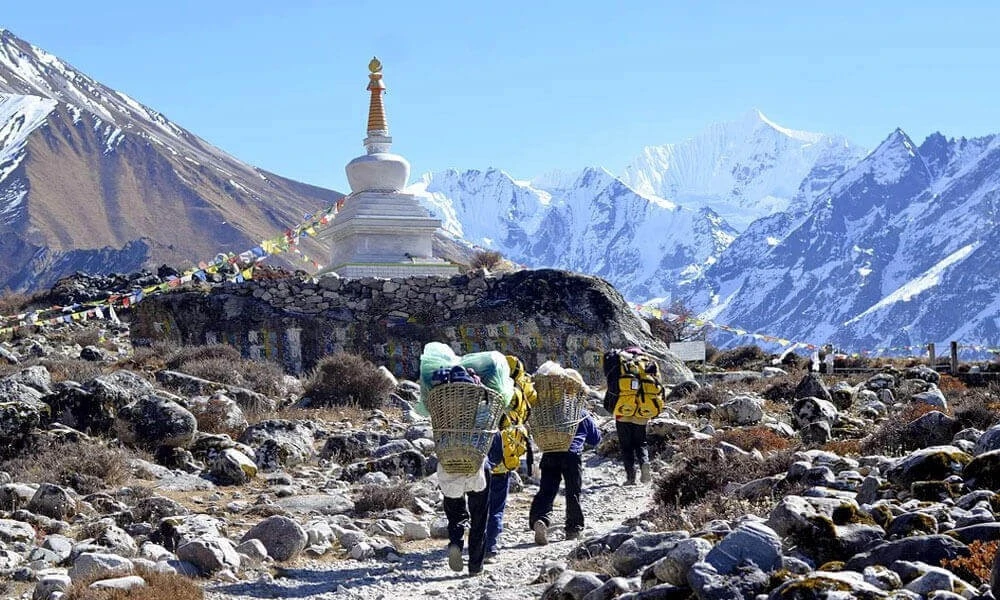
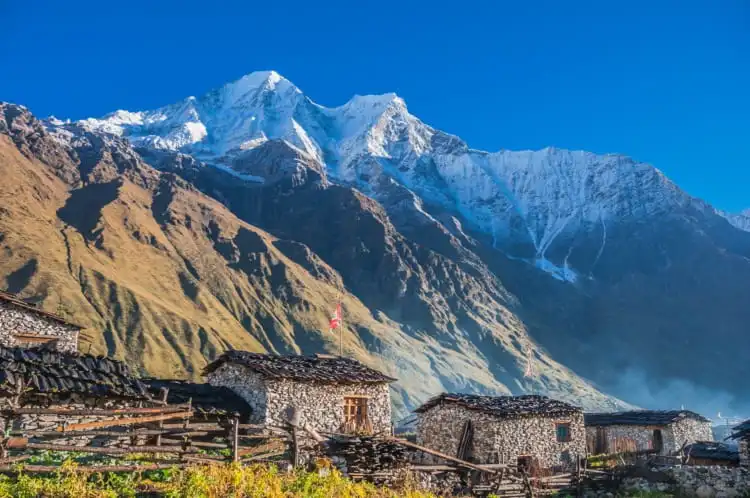
    Teahouses in Gokyo lake Trek - Sherpa Village

    Understanding the altitude is the single most important piece of trip planning. Altitude sickness (Acute Mountain Sickness, or AMS) does not distinguish between fit and unfit trekkers; it is about how quickly you ascend, not how strong you are.

    Here is the full altitude profile across the 13-day itinerary:

    Day 1 – Kathmandu: 1,300 m 

    Day 2 – Lukla (flight) then Phakding: 2,860 m → 2,610 m 

    Day 3 – Namche Bazaar: 3,440 m 

    Day 4 – Namche Bazaar (acclimatization rest day): 3,440 m 

    Day 5 – Dole: 3,680 m 

    Day 6 – Machhermo: 3,870 m 

    Day 7 – Gokyo Village (Third Lake): 4,800 m 

    Day 8 – Gokyo Ri Summit + Fifth Lake: 5,357 m (Gokyo Ri) / 4,980 m (Fifth Lake) 

    Day 9 – Descend to Dole: 3,680 m 

    Day 10 – Namche Bazaar: 3,440 m 

    Day 11 – Lukla: 2,860 m 

    Day 12 – Flight back to Kathmandu: 1,300 m 

    Day 13 – Departure

    The maximum sleeping altitude is around 4,800 m at Gokyo Village. This is notably lower than the maximum sleeping altitude on the standard EBC trek (roughly 5,140 m at Gorak Shep), which is one reason many trekkers find Gokyo physically more manageable despite similar summit altitudes.

    The mandatory acclimatization day at Namche Bazaar on Day 4 is not optional. Use it well: hike up to the Everest View Hotel at 3,880 m, rest, eat well, and drink water. Your summit attempt on Day 8 depends entirely on the groundwork you lay in Namche.

    The Six Gokyo Lakes: Names, Altitudes & What Makes Them Special

    The Gokyo Lakes are the centerpiece of this trek and among the most beautiful high-altitude bodies of water anywhere in the Himalayas. There are six lakes in total, all within Sagarmatha National Park, and together they form the world’s highest freshwater lake system. They are considered sacred by both Hindu and Buddhist communities and draw pilgrims during the annual Janai Purnima festival.

    Lake 1Longponga: 4,650 m. The first lake you reach on the approach from Machhermo. Deep blue and deceptively large, many trekkers are surprised by their size at this altitude.

    Lake 2 – Taboche Tsho: 4,710 m. Larger and deeper than the first. The trail hugs its eastern edge with views of Taboche peak above.

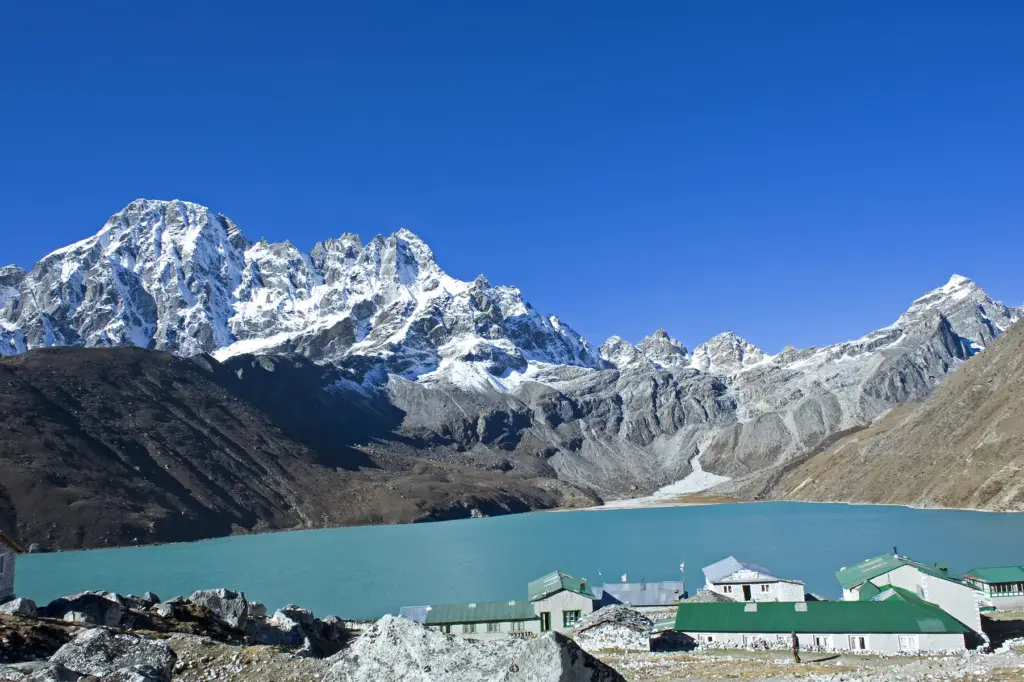
    Lake 3 – Gokyo Cho (Dudh Pokhari): 4,790 m. The most famous one that Gokyo village sits beside. Turquoise in clear conditions. This is where you sleep on Days 7 and 8.

    Lake 4 – Thonak Tsho: 4,870 m. The largest by surface area of all six lakes. Less visited, most day-trek itineraries turn around at Lake 3, which means it retains extraordinary quiet.

    Lake 5 – Ngozumpa Tsho: 4,980 m. Near Nepal’s largest glacier. Trekkers visit this on Day 8 after the Gokyo Ri summit.

    Lake 6 – Gyazumpa Tsho: 5,000 m. The highest and most remote. A serious extension from the standard itinerary, reached only by the most determined trekkers.

    The color of the lakes shifts with the angle of light and the season: deep sapphire in early morning, turquoise at midday, and a pale silver-grey as the sun drops behind the peaks. Bring a good camera and a polarizing filter.

    Day-by-Day Route Guide: Gokyo Lakes Trek 2026

    Day 1: Arrive Kathmandu (1,300 m) Fly into Tribhuvan International Airport. 

    Your Hi Nepal Treks team meets you on arrival and transfers you to your hotel in Thamel. Trek briefing in the evening, gear check, and any last-minute equipment shopping on Thamel’s trekking street.

    Day 2: Kathmandu to Lukla to Phakding (2,610 m) | 40-minute flight + 3–4 hours trekking 

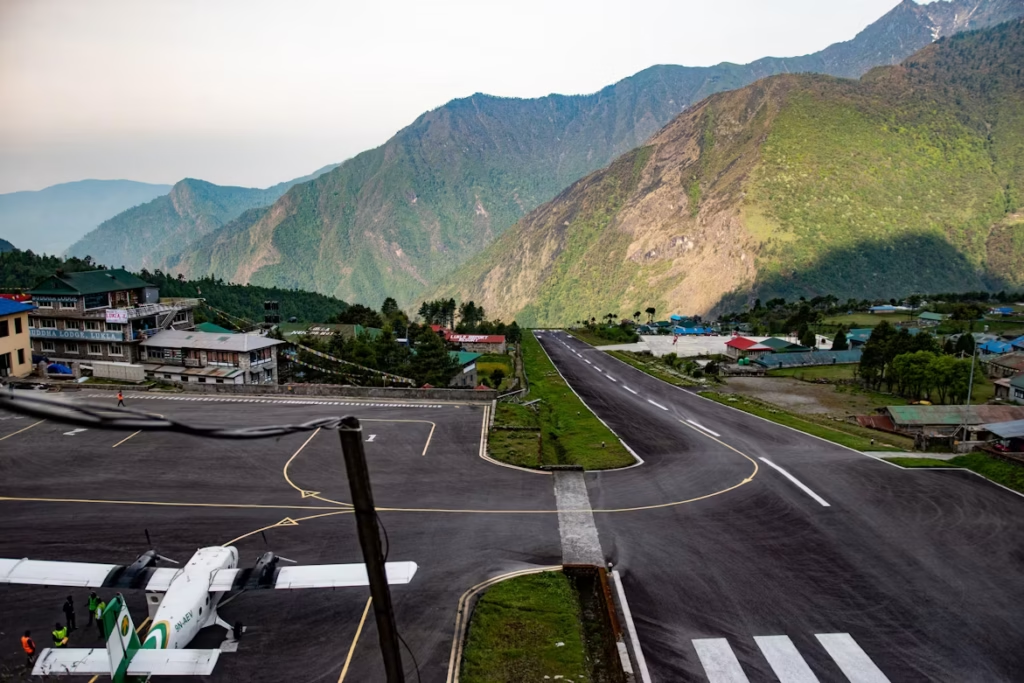
    The early-morning flight to Lukla is one of the great travel moments in Nepal, the runway appears to emerge from nowhere between ridgelines and drops away sharply at the lower end. From Lukla (2,860 m), the trail descends gently through Sherpa villages and pine forest to Phakding. A relaxed first day by design.

    Day 3: Phakding to Namche Bazaar (3,440 m) | 6–7 hours 

    The most dramatic day of the lower section. You cross several iconic suspension bridges, including the Hillary Suspension Bridge, with the Dudh Koshi River roaring far below. The trail enters Sagarmatha National Park at Monjo (permit check). 

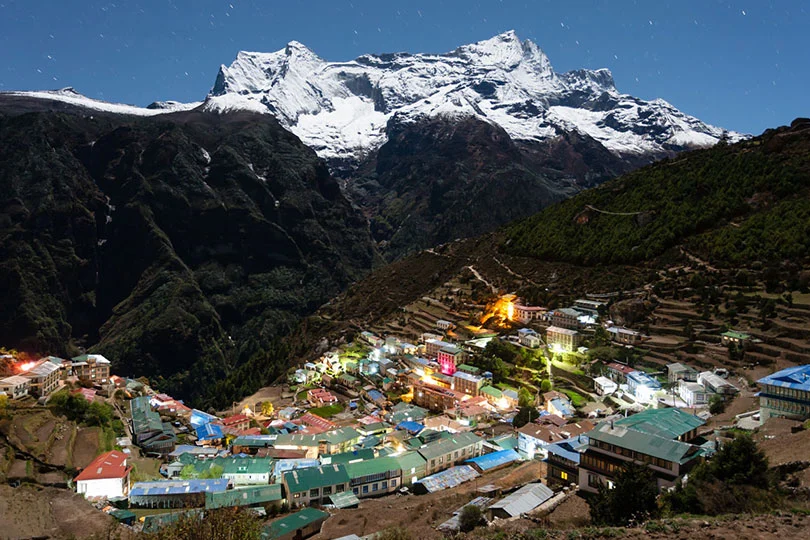
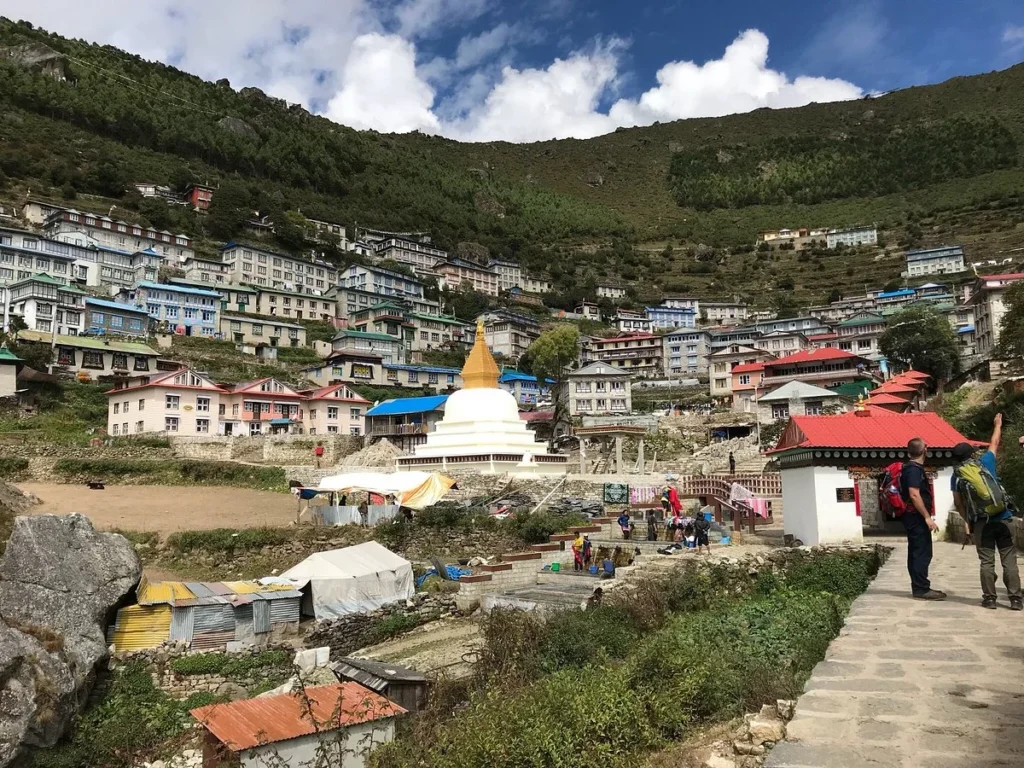
    The final two-hour climb to Namche is steep and feels long, but Namche reveals itself as a full town carved into a horseshoe valley, bakeries, cafes, gear shops, and, on a clear day, a first glimpse of Everest above the ridge to the north.

    Day 4: Acclimatization at Namche Bazaar (3,440 m) 

    Do not stay in bed. The Himalayan principle is “climb high, sleep low.” Take a morning hike to the Everest View Hotel at 3,880 m for your first proper view of the Everest massif, then return to Namche for lunch. Optional visits: the Sherpa Museum, Khumjung Village, or Hillary School. Drink two to three liters of water. Avoid alcohol. Sleep well.

    Day 5: Namche Bazaar to Dole (3,680 m) | 6 hours 

    Here, the route diverges from the EBC trail and enters the Gokyo Valley, quieter, greener, and increasingly wild. The trail climbs through rhododendron and pine forest with views of Thamserku and Kangtega. Dole is a small cluster of teahouses at the edge of the treeline.

    Day 6: Dole to Machhermo (3,870 m) | 4 hours 

    A shorter but steep day. The trail gains altitude quickly in the first section before levelling into a high ridge walk with panoramic views of Thamserku (6,623 m), Kangtega (6,779 m), m), and ahead, the first hints of the high peaks to come. Machhermo is the last settlement before the lakes; stock up on snacks here.

    Day 7: Machhermo to Gokyo (4,800 m) | 4 hours 

    One of the most spectacular days of the trek. The trail crosses the Ngozumpa Glacier’s terminal moraine, Nepal’s largest glacier, a vast highway of dirty ice stretching 36 kilometers north into Tibet. The first Gokyo Lake appears suddenly, shockingly blue against gray rock and white snow. The second lake follows, then the third, and Gokyo village sits on its eastern bank. Rest well; tomorrow is summit day.

    Day 8: Gokyo Ri Summit + Fifth Lake (5,357 m summit) | 4–5 hours 

    Start before dawn (around 4–5 AM) to reach the summit for sunrise. The ascent is steep, roughly 550 vertical meters from the village, on a switchbacked trail that can be icy in spring and autumn. 

    Take it slowly. At the top, the panorama opens: Everest (8,848.86 m), Lhotse (8,516 m), Makalu (8,463 m), and Cho Oyu (8,201 m), four of the world’s six highest mountains, visible simultaneously, along with the full sweep of the Ngozumpa Glacier below and the Gokyo Lakes glittering like jewels. 

    No other readily accessible summit in Nepal offers this view. Descend to Gokyo for breakfast, then continue to the Fifth Lake (4,980 m) in the afternoon.

    Day 9: Gokyo to Dole (3,680 m) | 5 hours 

    Begin the descent. The valley feels different on the way down, familiar, but seen from a new perspective. Stop at the second and first lakes again in the morning light. Reach Dole by early afternoon.

    Day 10: Dole to Namche Bazaar (3,440 m) | 5 hours 

    The forest returns. Rhododendrons and birdsong replace rock and glacier. Namche welcomes returning trekkers with warm showers, pizza, and fresh coffee. Well earned.

    Day 11: Namche to Lukla (2,860 m) | 7–8 hours 

    A long final trekking day retracing the lower Dudh Koshi valley. The suspension bridges feel easier on the way back. Reach Lukla by evening for a celebratory dinner with your guide.

    Day 12: Lukla to Kathmandu (flight) | 40 minutes 

    Early morning flight back to Kathmandu. A day free to explore the city, visit Pashupatinath Temple or Boudhanath Stupa, or shop for souvenirs.

    Day 13: Departure from Kathmandu 

    Transfer to Tribhuvan International Airport for your international flight home.

    Gokyo Lakes Trek Cost 2026: What Does It Actually Cost?

    Gokyo Village with Gokyo Ri & Cho Oyu Peak in the Himalayas in nepal

    This is the question every planner asks first, and the honest answer is that costs vary significantly based on group size, guide experience, accommodation preferences, and the season. Here is a practical breakdown.

    Package Cost: Booking with a local agency, a reputable local Nepalese agency like Hi Nepal Treks, is both cheaper and more reliable than booking through international operators. 

    A full 13-day guided Gokyo Lakes Trek package, including airport transfers, Lukla flights (round-trip), all meals on trek, teahouse accommodation, a licensed guide, porters (one porter per two trekkers), all permits, and a first-aid kit, typically runs in the range of USD 1,200 to USD 1,800 per person, depending on group size and time of year. Small groups (2–4 people) usually fall toward the middle to upper end of that range.

    Ask for a personalised quote here

    Permit Costs (2026) 

    Two permits are mandatory for the Gokyo Lakes Trek:

    Sagarmatha National Park Entry Permit: NPR 3,000 per person (approximately USD 22–25). Obtained at the Nepal Tourism Board office in Kathmandu or at the Monjo checkpoint on the trail.

    Khumbu Pasang Lhamu Rural Municipality Permit: NPR 2,000 per person (approximately USD 15–20). This has replaced the TIMS card in the Khumbu region. Obtained at Lukla or in Kathmandu.

    Note: Hi Nepal Treks handles all permit arrangements as part of your trek package. You do not need to queue at government offices yourself.

    Domestic Flights: Kathmandu ↔ Lukla 

    Round-trip Lukla flights cost approximately USD 300–340 per person (dependent on the season and operator). These are typically included in reputable package prices. 

    Note: when Kathmandu’s Tribhuvan International Airport is congested, flights may operate from Ramechhap Airport (a 4–5 hour drive from Kathmandu), so an early start on Day 2 may be required.

    Guide and Porter 

    A licensed English-speaking guide costs approximately USD 25–35 per day. Porters cost approximately USD 18–25 per day. Their food, accommodation, equipment, and insurance are additional costs typically covered by the agency. Never trek the Khumbu without a licensed guide, it is both a safety requirement and a matter of ethical tourism practice supporting Sherpa livelihoods.

    Personal and Additional Expenses 

    Budget approximately USD 15–25 per day for personal expenses on the trail: hot drinks, snacks, battery charging (teahouses typically charge NPR 200–400 per charge above Namche), wi-fi, laundry, and tips. Tips for guides and porters are customary and appreciated: roughly USD 10–15 per day for guides and USD 5–8 per day for porters is considered fair.

    Total Budget Estimate 

    • Solo trekker, 13 days, mid-range budget: USD 1,500–2,200 all-in (excluding international airfare) 
    • Couple or small group: USD 1,300–1,900 per person all-in 
    • Budget trekker sharing costs in a group of 4+: USD 1,200–1,500 per person all-in

    Gokyo Lakes Trek vs. Everest Base Camp: Which Is Better for Views?

    This is the debate that defines Khumbu trekking decisions. Here is the honest, experience-based case.

    The View Argument for Gokyo Ri 

    Kala Patthar (5,545 m) – the famous viewpoint at the end of the EBC trek, gives you the best close-up ground-level view of Everest’s summit ridge and the Khumbu Icefall. It is spectacular. But it is a view of one peak, primarily.

    Gokyo Ri (5,357 m) gives you Everest, Lhotse, Makalu, and Cho Oyu simultaneously. Below you: the Ngozumpa Glacier stretches 36 km into Tibet. In front of you: the Gokyo Lakes. Around you: near-total silence and, outside of peak weeks, very few other trekkers. 

    The panoramic scope is simply broader, and the foreground interest, glacier, lakes, valley, is richer. Most trekkers who have done both say Gokyo Ri is the better sunrise viewpoint. Bradwell Mayhew, author of Lonely Planet Nepal, notes that the Gokyo Valley is the preferred option for trekkers who want something more than the classic EBC route.

    The Trade-Off 

    EBC has the emotional weight of history; you are walking in the footsteps of Hillary, Tenzing, Messner. You see the Khumbu Icefall up close, which is genuinely awe-inspiring. Namche and Tengboche Monastery are more developed and culturally rich on the EBC trail. If the symbolic destination matters to you as much as the views, EBC may win on those grounds alone.

    But if the question is specifically about views? Gokyo Ri wins.

    The Good News: You Don’t Have to Choose The 16-Day Cho La Pass Gokyo Trek combines both routes – Gokyo Lakes and Everest Base Camp—crossing the Cho La Pass (5,420 m) between the two valleys. For experienced trekkers with more time, this is the definitive Khumbu experience: https://hinepaltreks.com/chola-pass-gokyo-trekFor those wanting to push even further, the 19-Day Three Passes Trek crosses Kongma La, Cho La, and Renjo La passes and is considered one of the finest multi-day treks in the world.

    Comparison Table: Gokyo Lakes Trek vs. Everest Base Camp Trek

    Feature Gokyo Lakes Trek Everest Base Camp Trek
    Duration 13 days 14 days
    Maximum Altitude 5,357 m (Gokyo Ri) 5,545 m (Kala Patthar)
    Maximum Sleeping Altitude 4,800 m (Gokyo Village) 5,140 m (Gorak Shep)
    Trail Traffic Quiet to moderate Busy during peak season
    View from Summit Everest, Lhotse, Makalu & Cho Oyu Primarily Everest, Nuptse & Lhotse
    Iconic Sight Six Gokyo Lakes & Ngozumpa Glacier Khumbu Icefall & Everest Base Camp
    Difficulty Moderate–Hard Moderate–Hard
    Best For Panoramic views, photography & quieter trails History, symbolism & first-time Everest trekkers
    Can Be Combined With Cho La Pass to Everest Base Camp Gokyo Lakes via Cho La Pass return route

    How Difficult Is the Gokyo Lakes Trek?

    Trekking route of Gokyo Lake Trek in Everest Region with beautiful mountain view

    The Gokyo Lakes Trek is rated moderate to challenging. The challenge comes not from technical terrain but from altitude, daily elevation gain, and multi-hour trekking days. Expect 4–8 hours of walking each day. The steepest sections are the final push into Namche on Day 3 and the Gokyo Ri summit climb on Day 8.

    Who Is This Trek Suitable For? 

    The Gokyo Lakes Trek is suitable for trekkers who are reasonably fit and do not have a medical history of serious altitude illness. Prior hiking experience is helpful but not mandatory. If you can walk 4–6 hours on consecutive days with a light daypack, and you commit to the acclimatization schedule without rushing, this trek is achievable for motivated beginners.

    What Is Not Suitable? 

    This trek is not suitable for trekkers with untreated heart or lung conditions. Trekkers with a previous history of severe AMS should consult a physician and discuss the itinerary with their guide before confirming dates. Children under 10 are generally not recommended for altitudes above 4,000 m.

    Physical Preparation 

    Begin cardiovascular training (running, cycling, stair climbing) at least 8–10 weeks before departure. Hill walking with a loaded pack is the most specific preparation. Yoga or breathing exercises can help with the psychological adjustment to thinner air. You do not need to be an athlete, but you should arrive fit enough that altitude, not fitness, is the only limiting factor.

    Best Time to Do the Gokyo Lakes Trek in 2026

    Beautiful view of Gokyo Ri Lake from top in Everest region - Himalaya in Nepal

    Spring (March–May): The most popular season and widely considered the best. Temperatures are mild, skies are clear, rhododendrons are in bloom, and trails are well-maintained. April and early May are the sweet spot before the pre-monsoon buildup. Note that spring 2026 sees increasing booking demand; plan early.

    Autumn (September–November): The second peak season and equally excellent. Post-monsoon skies are crystal clear, producing the sharpest mountain views of any time of year. October is the busiest month on the trail; September and early November offer quieter conditions with almost equivalent clarity.

    Winter (December–February): Possible but demanding. The trail is cold, temperatures at Gokyo Village can drop to -15°C or below at night, and some higher sections may be snow-covered. The significant benefit is that you will have the trail almost entirely to yourself. Experienced trekkers with proper cold-weather gear can have extraordinary winter experiences in the Khumbu.

    Monsoon (June–August): Not recommended for the Gokyo Valley Trek. Heavy rain, leeches on lower sections, frequent flight cancellations into Lukla, and significantly reduced mountain visibility make this a poor choice unless you specifically want a challenge and are prepared for it.

    For a broader picture of Nepal trekking seasons, read Hi Nepal’s full guide.

    Gokyo Lakes Trek Permits: Complete 2026 Guide

    Two permits are required. No TIMS card is needed for the Khumbu region.

    • Sagarmatha National Park Entry Permit Cost: NPR 3,000 per person (approximately USD 22–25). Where to obtain it: Nepal Tourism Board office in Kathmandu (Bhrikutimandap), or at the Monjo checkpoint on the trail. What it covers: Legal entry into the Sagarmatha National Park, a UNESCO World Heritage Site protecting glaciers, forests, and wildlife including snow leopards and red pandas
    • Khumbu Pasang Lhamu Rural Municipality Permit Cost: NPR 2,000 per person (approximately USD 15–20) Where to obtain: Lukla arrival hall or at the tourism board office in Kathmandu What it covers: Trail infrastructure, waste management, and Sherpa community development across the Khumbu region

    Both permits are checked at multiple points on the trail. Carry your original passport, photocopies are sometimes accepted, but originals are always preferred. Hi Nepal Treks processes all permits on your behalf as part of your package.

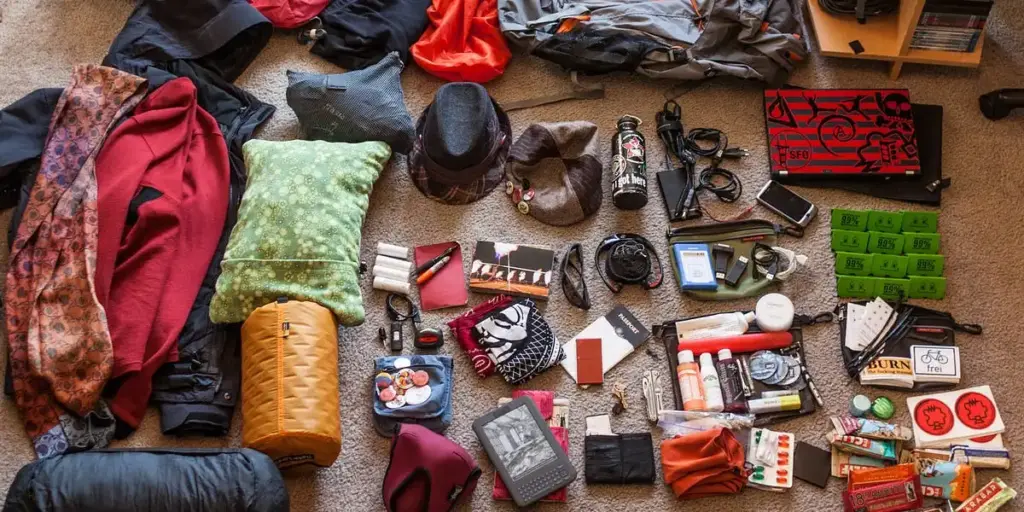
    What to Pack for the Gokyo Lakes Trek

    You do not need to buy everything new. The most important items:

    • Footwear: Waterproof, ankle-supporting trekking boots broken in before the trek. Not trail runners. Gokyo Ri can be icy and uneven. Bring warm hiking socks (merino wool preferred) and gaiters if trekking in spring or autumn.
    • Layering System: The temperature range across 13 days spans roughly 20°C at Namche to -5°C or colder on Gokyo Ri at dawn. Pack a moisture-wicking base layer, a mid-layer fleece, and a down jacket or equivalent insulated outer layer. A waterproof shell is essential.
    • Head and Hands: Sunhat and sunglasses with full UV protection for the daytime glare on glaciers and lakes. Warm beanie, balaclava or buff, and insulated gloves for mornings and summit day.
    • Sleeping Bag: A 3-season down sleeping bag rated to -10°C is appropriate. Many teahouses provide blankets but not duvets above 4,500 m. Hi Nepal Treks can arrange sleeping bag rental in Kathmandu if needed.
    • Trekking Poles: Strongly recommended. They significantly reduce knee stress on descent, particularly on the long Day 9 descent from Gokyo, and provide stability on the icy Gokyo Ri approach.
    • Other Essentials: Headlamp (essential for the 4 AM Gokyo Ri start), water purification tablets or filter, high-calorie snacks (nuts, energy bars, chocolate) for between meals, personal first aid, including blister treatment and basic AMS medication (discuss Diamox with your doctor before travel), sun cream SPF 50+, and a dry bag or pack liner for electronics and passports.

    Gear can be rented or purchased in Kathmandu’s Thamel district. Quality varies widely; inspect rentals carefully.

    Sherpa Culture and the Communities You’ll Pass Through

    Sherap village - teahouses in Gokyo Lake Trek

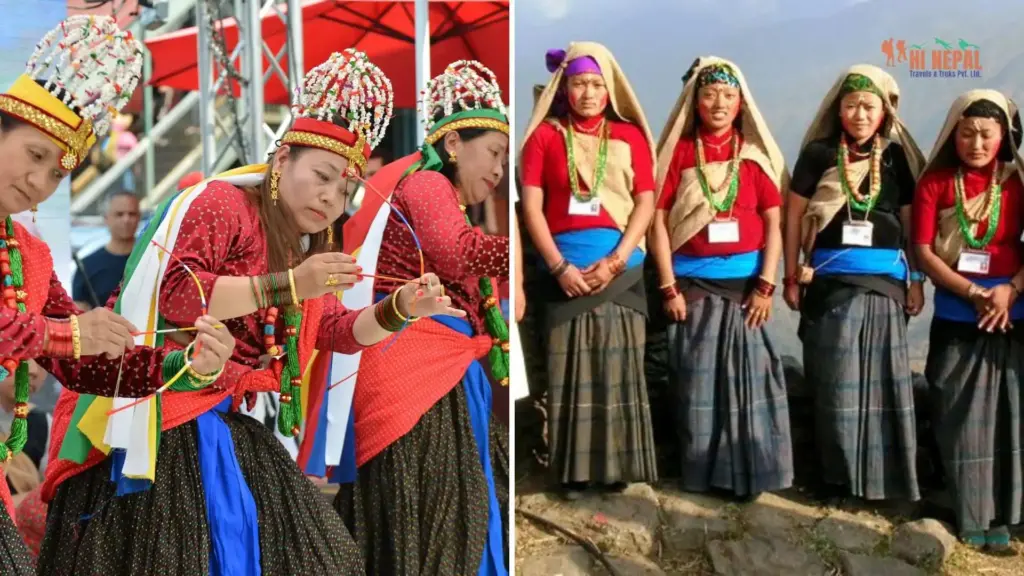
    The Khumbu region is the homeland of the Sherpa people, a Tibetan-origin ethnic group whose name translates roughly to “people of the east.” Their relationship with the Himalayas is not merely geographic; it is deeply spiritual. Buddhist beliefs shape every element of daily life: prayer flags flutter from peaks and passes to carry blessings on the wind, mani walls inscribed with sacred texts line every trail, and chortens mark boundaries between the human world and the mountains.

    On the Gokyo route, you pass through or near several significant communities:

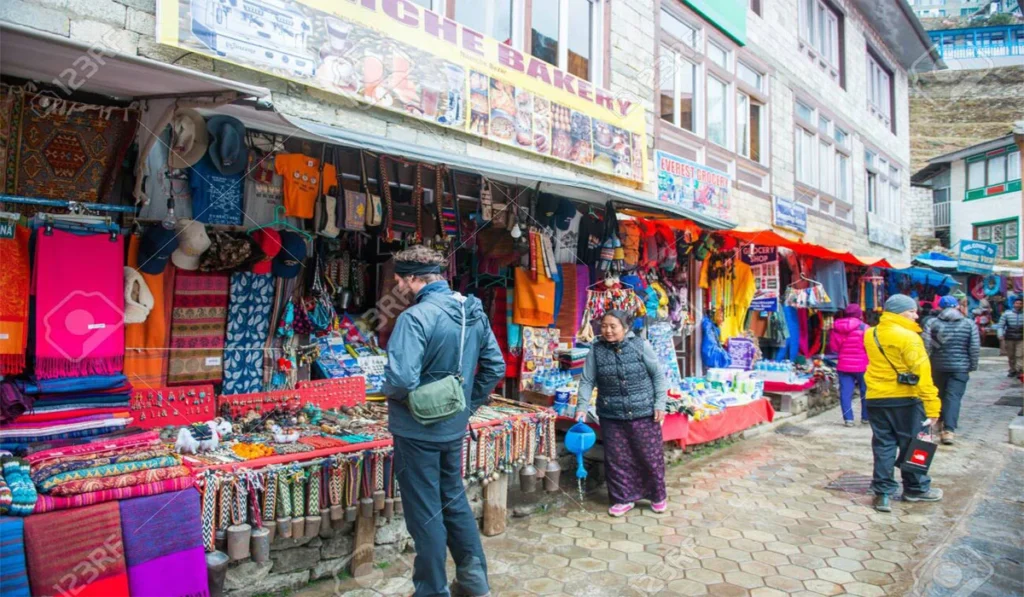
    • Namche Bazaar: The largest town in the Khumbu, sitting at 3,440 m in a natural horseshoe valley. It has been a trading hub for centuries, historically between Tibet and the lower valleys. Today it has the best infrastructure in the region: solid teahouses, medical facilities, a bank, gear shops, and surprisingly good espresso.
    • Dole and Machhermo: Smaller, quieter villages above the treeline where yak herding remains central to the local economy. The teahouses here are family-run; meals are simpler, and the atmosphere is more authentically remote.
    • Gokyo Village: A tiny settlement on the shore of the Third Lake. During peak season, it fills with trekkers; outside those windows, it is nearly empty. The lake itself is considered sacred, bathing or washing in it is prohibited, and trekkers should respect this.
    • Cultural Protocol: Remove boots before entering monastery buildings. Ask before photographing local people. Do not point your feet at sacred objects or people. Carry small-denomination Nepalese rupees for donations at shrines and monasteries.

    To read more about Sherpa culture and heritage, click here!

    Altitude Sickness on the Gokyo Trek: Prevention and Response

    Acute Mountain Sickness (AMS) affects a significant percentage of trekkers above 3,000 m. It is not a sign of weakness or poor fitness, it is a physiological response to reduced oxygen availability that can affect anyone. Understanding it before you go is part of being a responsible trekker.

    Symptoms: Headache, nausea, loss of appetite, fatigue, disturbed sleep, and dizziness. These symptoms appearing at altitude are always AMS until proven otherwise.

    The Rule: Never ascend with AMS symptoms. Mild symptoms at a given altitude = rest at that altitude. Worsening symptoms = descend immediately.

    The Three Commandments of Altitude:

    1. Climb high, sleep low.
    2. Ascend no more than 300–500 vertical meters per day above 3,000 m (the standard itinerary respects this).
    3. If in doubt, go down.

    Prevention: The structured itinerary with the Namche acclimatization day and the moderate daily elevation gains above 3,000 m is designed specifically to minimize AMS risk. Drink 3–4 liters of water daily. Avoid alcohol in the first several days at altitude. Eat carbohydrate-rich meals. Sleep enough.

    Diamox (acetazolamide) is sometimes prescribed prophylactically. Consult your physician before travel, as it requires a prescription in most countries and has contraindications. Your Hi Nepal guide carries a first aid kit and is trained to recognize AMS symptoms. In serious cases, helicopter rescue is available from the Khumbu Valley, but prevention is always the better strategy. For emergency evacuation support, see: https://hinepaltreks.com/helicopter-rescue-flights-nepal

    Clinical reference for altitude sickness.

    Other Everest Region Treks Worth Considering

    The Gokyo Lakes Trek sits in a network of Khumbu routes that can be combined or substituted depending on your time, fitness, and interests.

    Everest Base Camp Trek (14 Days): The classic route. If Everest Base Camp itself is the dream, there is no substitute. Read more: https://hinepaltreks.com/everest-base-camp-trek-14-days

    Cho La Pass Gokyo Trek (16 Days): Combines Gokyo Lakes with EBC via the 5,420 m Cho La Pass. The definitive Khumbu experience for trekkers with more time. Read more about Cho La Pass Gokyo Lake Trek.

    Renjo La Pass Trek (12 Days): A beautiful high-altitude alternative crossing the 5,360 m Renjo La pass into the Gokyo Valley from the west. Less crowded than either the EBC or standard Gokyo routes. Read more about the Renjo La Pass Trek

    Three Passes Trek (19 Days): The ultimate Khumbu loop, crossing Kongma La, Cho La, and Renjo La. Rated one of the world’s great multi-day treks. 

    Pikey Peak Trek (9 Days): A shorter, lower-altitude alternative in the Solu-Khumbu region is Pikey Peak Trek, offering extraordinary Everest views without the extreme altitude.

    Exploring another region entirely? Consider the Manaslu Circuit Trek for a restricted-area wilderness experience, or browse all trekking options across Nepal.

    Why Book the Gokyo Lakes Trek with Hi Nepal Treks?

    Hi Nepal Travels and Treks Pvt. Ltd. is a government-registered, locally owned trekking company based in Pokhara with over 20 years of experience guiding trekkers through Nepal’s Himalayan regions. The team handles all logistics, permits, domestic flights, transfers, accommodations, guides, and porters, so your focus stays on the mountains.

    The company has a 4.9/5 rating on Google (62+ reviews) and a 5/5 rating on TripAdvisor (125+ reviews). Every guide is government-licensed, first-aid trained, and deeply knowledgeable about the Khumbu region. Porter welfare standards follow ethical industry guidelines.

    Booking through a local Nepalese agency rather than an international operator keeps more of your trekking spend in Nepal’s mountain communities, exactly where it belongs.

    Plan your trip: Book your Gokyo Valley Trek.

    Final Word: Should You Do the Gokyo Lakes Trek in 2026?

    If you are weighing the Gokyo Lakes Trek against Everest Base Camp, here is the short version: EBC gives you history and the Khumbu Icefall. Gokyo gives you silence, turquoise lakes, Nepal’s largest glacier, and the best panoramic sunrise view in the entire Everest region. You can see Everest from Gokyo Ri. You cannot see the Gokyo Lakes from EBC.

    The Gokyo Valley is also less crowded, more wildlife-rich, and marginally less demanding in terms of maximum sleeping altitude, all of which matters at 5,000 meters. For photographers, for nature lovers, for trekkers on their second or third Nepal trip, and frankly for first-timers who want the best views the Khumbu offers, the Gokyo Lakes Trek in 2026 is the answer.

    Start planning today at Hi Nepal Travels & Treks, or use the trip planner at https://hinepaltreks.com/trip-planner to get a personalized itinerary and quote from the Hi Nepal Treks team.

    Gokyo Lakes Trek 2026: Frequently Asked Questions

    1. How high is Gokyo Ri? 

      Gokyo Ri stands at 5,357 meters (17,575 feet) above sea level.

    2. How many lakes are in Gokyo Valley? 

      There are six Gokyo Lakes. The most visited is the Third Lake (Gokyo Cho / Dudh Pokhari) at 4,790 m, beside which Gokyo village sits.

    3. Do I need a permit for the Gokyo Lakes Trek? 

      Yes. Two permits are required: the Sagarmatha National Park Entry Permit (NPR 3,000) and the Khumbu Pasang Lhamu Rural Municipality Permit (NPR 2,000). No TIMS card is needed for the Khumbu region. Hi Nepal Treks arranges these for you.

    4. Is the Gokyo Lakes Trek harder than EBC? 

      They are comparable in difficulty. The Gokyo route has a slightly lower maximum sleeping altitude (4,800 m vs 5,140 m), which some trekkers find more manageable, but the summit climb on Gokyo Ri is steep. Neither route requires technical climbing.

    5. Can I do the Gokyo Lakes Trek without a guide? 

      Technically, you can, solo trekking in the Khumbu is not legally restricted, as it is in some other areas like Manaslu. However, going without a licensed guide is strongly discouraged for safety, navigation in poor visibility, and AMS response reasons. It also removes income from the Sherpa communities whose knowledge and infrastructure make the trek possible.

    6. What is the best season for the Gokyo Lakes Trek in 2026? 

      Spring (April–May) and Autumn (October–November). Spring 2026 is booking up quickly; contact Hi Nepal Treks early if those are your preferred months.

    7. Can I see Everest from Gokyo Ri? 

      Yes, clearly. From Gokyo Ri you have an unobstructed view of Everest (8,848.86 m) along with Lhotse, Makalu, and Cho Oyu. The full panorama of four 8,000-meter peaks is one of the finest mountain views on earth.

    8. How long does the Gokyo Lakes Trek take? 

      The standard Hi Nepal itinerary runs 13 days from Kathmandu to Kathmandu. It can be extended by combining with the Cho La Pass route to EBC (16 days) or the full Three Passes circuit (19 days).

    9. What accommodation is available on the trek? 

      Teahouses (mountain lodges) throughout the route. Below Namche, facilities are more developed with private rooms and attached bathrooms. Above Machhermo, expect simpler shared facilities. All teahouses serve hot food. Hi Nepal Treks books the best available accommodation on your itinerary.

    10. Is it worth combining Gokyo with Everest Base Camp? 

      If you have 16 days and adequate fitness and acclimatization time, the Cho La Pass Gokyo Trek, combining both valleys, is absolutely worth it. It is the most complete way to experience the Khumbu.

  • Top 8 Helicopter Tour Packages in Nepal for 2026: Prices, Routes & Expert Booking Guide

    Top 8 Helicopter Tour Packages in Nepal for 2026: Prices, Routes & Expert Booking Guide

    Nepal is home to eight of the world’s fourteen highest peaks, and you don’t have to spend two grueling weeks on the trail to see them up close. Helicopter tour packages in Nepal have exploded in popularity for 2026, offering travellers, senior citizens, families, and adventure seekers an unforgettable aerial experience of the Himalayas in just a few hours. Whether you’re hovering over the legendary Everest Base Camp, touching down beside the turquoise waters of Rara Lake, or completing a sacred Muktinath Yatra by air, Nepal’s helicopter tours deliver once-in-a-lifetime moments without the physical demands of trekking.

    In this definitive guide, we break down the top helicopter tour packages in Nepal for 2026, covering destinations, prices, itineraries, best season, and insider tips to help you book with confidence. Ready to fly? Let’s get started.

    Why Choose a Helicopter Tour in Nepal?

    “The mountains are calling, and now you can answer in hours, not days.”

    Nepal helicopter tours aren’t just for the physically challenged or those short on time, they’re a premium experience for anyone who wants an unobstructed, bird’s-eye perspective of the Himalayas that ground trekkers simply cannot get. Here’s why thousands of travellers choose the aerial route every year:

    • No trekking fitness required. Anyone from age 5 to 80 can participate.
    • Time-efficient. See what trekkers take 14 days to reach, in 4 to 5 hours.
    • 360° panoramic views. Window seats for every passenger – no obstructed angles.
    • Luxury add-ons. Breakfast at Hotel Everest View (the world’s highest hotel), landing at Kala Patthar, and more.
    • Ideal for families and seniors. No altitude acclimatisation required for most tours.
    • Multiple destinations. From Everest to Mustang to Rara, Nepal offers more heli routes than almost any other country.

    You can also combine helicopter tours with popular trekking packages in Nepal, fly in for the view, then trek back for the full experience.

    Quick Comparison: Nepal Helicopter Tour Packages 2026

    Helicopter Tour Duration Starting Price (USD) Group/Private Best For
    Everest Base Camp Heli Tour 4–5 Hours $1,200 / person Both Bucket-list seekers
    Annapurna Base Camp Heli Tour 3–4 Hours $800 / person Both Families & seniors
    Muktinath Yatra Heli Tour Full Day $700 / person Both Pilgrims & spiritual tourists
    Rara Lake Heli Tour Full Day $1,400 / person Private preferred Nature & photography lovers
    Tilicho Lake Heli Tour Half Day $600 / person Both High-altitude explorers
    Langtang Heli Tour 3–4 Hours $550 / person Both Off-the-beaten-path travelers
    Kapuche Lake Heli Tour Half Day $500 / person Group Budget-conscious adventurers
    Mardi Himal Heli Tour 3 Hours $550 / person Both Photographers & trekkers

    Prices are indicative for 2026. Actual costs vary by operator, season, group size, and inclusions. Contact Hi Nepal Treks for the latest rates and custom quotes.

    1. Everest Base Camp Helicopter Tour – The Crown Jewel

    Everest base camp helicopter tour in Nepal

    No helicopter tour in Nepal generates as much excitement, or as many Google searches, as the Everest Base Camp Helicopter Tour. This is the pinnacle of aerial Himalayan adventures: a 4 to 5-hour round trip from Kathmandu that takes you over Lukla, past Namche Bazaar and Tengboche Monastery, and right to the foot of the world’s highest mountain.

    Highlights of the Everest Helicopter Tour

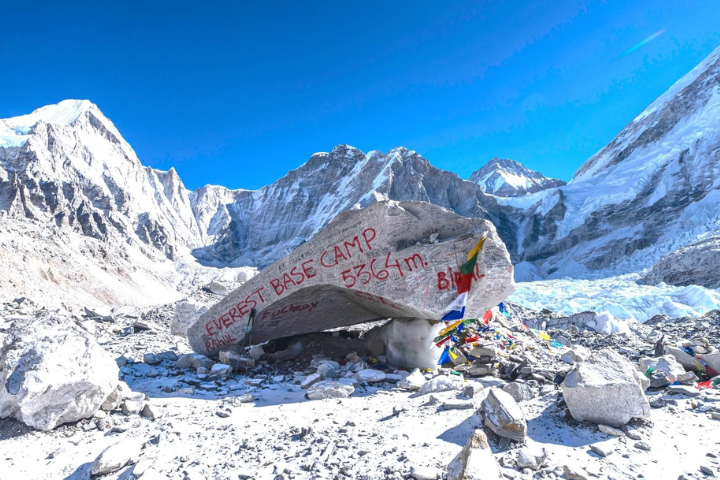
    • Fly over Khumbu Icefall and Everest Base Camp at 5,364 metres
    • Land at Kala Patthar (5,545 m), the best photography vantage point on Earth
    •  Luxury breakfast at Hotel Everest View, the world’s highest hotel
    • Guaranteed panoramic window seats for all passengers
    • Total experience: 4–5 hours return from Kathmandu

    Everest Helicopter Tour Price 2026

    • Sharing basis: from USD $1,200 per person (4–5 people per helicopter)
    • Private charter: from USD $4,500–$5,500 for the entire helicopter
    • Inclusions: airport transfers, fuel surcharges, CAAN permit, Hotel Everest View breakfast
    Pro Tip: Book the Everest helicopter tour for early morning departures (6:00–7:00 AM) to guarantee the clearest skies and most dramatic mountain views.

    Don’t want to fly back? Combine the heli tour with our Everest Base Camp Trek for the ultimate Himalayan adventure.

    2. Annapurna Base Camp Helicopter Tour – Scenic & Family-Friendly

    Annapurna Base Camp Trek - ABC Heli Tour

    For those based in or visiting Pokhara, the Annapurna Base Camp Helicopter Tour is the most accessible and visually stunning aerial experience in Nepal. Flying from Pokhara’s airport, you’ll ascend through the Modi Khola valley with jaw-dropping views of Machhapuchhre (Fishtail Mountain) and Hiunchuli before landing at Annapurna Base Camp (4,130 m).

    Highlights

    • Fly directly from Pokhara, no need to travel to Kathmandu
    • Land at Annapurna Base Camp (4,130 m) surrounded by a natural amphitheatre of peaks
    • Views of Annapurna I (8,091 m), Machapuchre, Hiunchuli, and Gangapurna
    • Ideal for families, senior citizens, and those with limited time
    • Total trip: 3–4 hours from Pokhara

    If you’re already exploring the Annapurna region on foot, consider pairing this with the Annapurna Circuit Trek or the Ghorepani Poon Hill Trek for a complete Himalayan experience.

    3. Muktinath Yatra Helicopter Tour – Sacred & Spectacular

    Muktinath Nepal - Muktinath Helicopter Tour

    The Muktinath Yatra by helicopter is one of Nepal’s most unique offerings, blending spiritual pilgrimage with aerial adventure. Muktinath Temple, at 3,710 m in the Mustang district, is one of the most sacred sites for both Hindus and Buddhists. A helicopter tour lets pilgrims, including the elderly and those with health restrictions, complete this sacred journey in a single day.

    Why This Tour Is Special

    • Visit one of Nepal’s holiest sites: Muktinath Temple (3,710 m)
    • Fly over the dramatic Kali Gandaki Gorge, the world’s deepest gorge
    • Views of Dhaulagiri (8,167 m) and Annapurna (8,091 m) from the air
    • Perfect for senior citizens, pilgrims, and spiritual travellers
    • Combine with a visit to Jomsom and the Upper Mustang wind-sculpted landscape

    For those who prefer to trek this sacred route, explore the Jomsom Muktinath Trek, a fantastic 8–10 day journey through Mustang’s ancient landscapes.

    4. Rara Lake Helicopter Tour – Nepal’s Hidden Paradise

    Rara lake helicopter tour Nepal

    Rara Lake is Nepal’s largest and most pristine alpine lake, located at 2,990 m in the remote Karnali Province. Getting there by road takes nearly two days from Kathmandu, but by helicopter, you can be standing on the shores of this turquoise Himalayan jewel in just over an hour. Surrounded by dense forests and rarely visited, Rara is a nature photographer’s dream.

    Highlights

    • Nepal’s largest lake at 10.8 sq km, utterly pristine and remote
    • Surrounded by Rara National Park’s dense pine forests
    • Views of the Kanjiroba Himal and Mugu Karnali River valley from the air
    • Best for wildlife spotting: red pandas, musk deer, and over 200 bird species
    • Exclusive experience, very few tourists visit Rara compared to the Everest and Annapurna regions

    5. Tilicho Lake Helicopter Tour – World’s Highest Lake

    Tilicho lake nepal helicopter tour

    At 4,919 m above sea level, Tilicho Lake is one of the highest lakes in the world, and reaching it by helicopter is an extraordinary experience. The aerial approach over the Annapurna massif is absolutely breathtaking, revealing hidden glaciers, moraines, and vertical walls of snow-capped rock.

    Highlights

    • One of the world’s highest lakes at 4,919 m, accessible by air in under 30 minutes from Pokhara
    • Surreal views of Tilicho Peak (7,134 m), Annapurna III, and the Mesokanto La
    • Ideal for those who’ve already trekked to Annapurna BC and want a new aerial perspective
    • Photography paradise: reflections of snow peaks in a still high-altitude lake

    You can complement this with a land-based Pokhara Valley Tour for a complete Nepal adventure.

    6. Langtang Valley Helicopter Tour – Close to Kathmandu

    Nepal base camp helicopter tour

    Target Keywords: Langtang helicopter tour Nepal, Langtang heli tour price 2026, helicopter tour near Kathmandu

    For travellers based in Kathmandu who want a shorter helicopter excursion, the Langtang Valley Helicopter Tour is the perfect option. Just 60 km north of the capital, Langtang offers stunning views of Langtang Lirung (7,227 m), Dorje Lakpa, and the Tibetan Plateau, all accessible in a 3–4 hour round trip.

    Highlights

    • Closest major heli tour destination to Kathmandu
    • Views of Langtang Lirung (7,227 m) and Dorje Lakpa
    • Fly over the Langtang National Park, Nepal’s third-largest national park
    • Visit Kyanjin Gompa (3,870 m) from the air, a stunning Buddhist monastery
    • Great value option at starting from ~$550/person on a sharing basis

    7. Kapuche Lake Helicopter Tour – Nepal’s Lowest Glacier Lake

    Kapuche Lake Helicopter Tour from Pokhara

    Target Keywords: Kapuche Lake helicopter tour, Pokhara helicopter tour Kapuche, Kapuche heli tour Nepal

    Nepal’s lowest glacier lake, Kapuche Lake (2,546 m), is a hidden treasure in the Annapurna Range, and one of the best budget helicopter tour options departing from Pokhara. The aerial route passes over traditional Gurung villages, dense rhododendron forests, and the mighty Annapurna II.

    Highlights

    • Perfect half-day heli tour from Pokhara
    • Views of Annapurna II, Lamjung Himal, and Machhapuchhre (Fishtail)
    • Nepal’s lowest glacier lake, pristine and untouched
    • Great option for families and first-time helicopter riders
    •   Affordable starting price around USD $500/person

    8. Mardi Himal Helicopter Tour – Hidden Gem of the Annapurnas

    Mardi Himal Base Camp Helicopter Tour from Pokhara

    Target Keywords: Mardi Himal helicopter tour 2026, Mardi Himal heli tour from Pokhara, Nepal helicopter photography tour

    The Mardi Himal Trek is one of Nepal’s best-kept trekking secrets, and the helicopter version offers the same epic views in a fraction of the time. Flying over the Mardi Himal ridge at 5,587 m, you’ll get an unobstructed aerial panorama of the entire Annapurna range with Machhapuchhre (Fishtail) right in the foreground.

    Highlights

    • Dramatic close-up views of Machhapuchhre (6,993 m), Nepal’s iconic Fishtail Mountain
    • Full Annapurna massif panorama from Annapurna I to IV plus Hiunchuli and Gangapurna
    • Excellent for aerial photography, clearest views with least tourist traffic
    • Departing from Pokhara, quick, efficient, and spectacular

    Best Time to Book a Helicopter Tour in Nepal

    Timing is everything with Nepal helicopter tours. Weather windows determine flight safety and visibility, so choosing the right season is critical for getting those crystal-clear Himalayan views you came for.

    Season Months Weather Recommended?
    Spring Mar – May Clear skies, blooming rhododendrons, mild cold Best
    Summer / Monsoon Jun – Aug Heavy rain, poor visibility, flight cancellations likely Avoid
    Autumn Sep – Nov Crystal-clear skies, post-monsoon freshness, peak visibility Best
    Winter Dec – Feb Cold but clear; some high routes may close Possible

    Best Months Overall: October, November, March, April – these four months offer the clearest skies, most stable weather, and the highest chance of an uninterrupted flight.

    For the latest weather updates and real-time booking availability, visit Hi Nepal Treks’ trip planner, designed specifically for Himalayan travel planning.

    What’s Typically Included in Nepal Helicopter Tour Packages?

    Understanding what’s included (and what isn’t) is essential before booking. Here’s a standard breakdown for reputable Nepal helicopter tour operators:

    Usually Included

    • Round-trip helicopter flight from the departure city (Kathmandu or Pokhara)
    • Hotel/guesthouse airport transfers (private vehicle)
    • CAAN (Civil Aviation Authority of Nepal) landing permits
    • Fuel surcharges
    • Experienced, licensed pilot
    • Breakfast at Hotel Everest View (for EBC tours)
    • Guaranteed window seats for every passenger

    Usually NOT Included

    • Travel insurance (strongly recommended, including helicopter evacuation cover)
    • Personal expenses and gratuities
    • Additional meals beyond what’s specified
    • Accommodation before/after the tour

    For emergency situations, Hi Nepal’s helicopter rescue and evacuation service operates 24/7 across Annapurna, Everest, Langtang, Mustang, and all remote Himalayan areas.

    7 Expert Tips for Booking Nepal Helicopter Tours in 2026

    • Book early, especially for autumn. October and November are peak season, helicopters fill up fast. Book at least 4–8 weeks in advance.
    • Always fly in the morning. Afternoon clouds and thermals build quickly in the mountains. Departures between 6:00 and 8:00 AM give the clearest conditions.
    • Choose private over sharing if budget allows. You control timing, photo stops, and don’t wait for other passengers.
    • Get comprehensive travel insurance. Ensure your policy explicitly covers helicopter rescue and evacuation from altitude.
    • Dress in layers. High-altitude landings can be significantly colder than Kathmandu or Pokhara. Bring a warm jacket even on sunny days.
    • Charge all camera equipment the night before. Cold temperatures drain batteries faster at altitude.
    • Book with a licensed, experienced local operator. Verify your operator’s CAAN registration and pilot credentials before paying any deposit.

    Why Book Your Nepal Helicopter Tour with Hi Nepal Treks?

    Hi Nepal Travels & Treks is one of Nepal’s most trusted adventure travel companies, with over 20 years of experience in Himalayan expeditions, trekking, and aerial tours. Here’s why hundreds of satisfied travellers choose us for their helicopter adventures:

    • CAAN-licensed operations: All helicopter tours comply fully with Nepal’s Civil Aviation Authority regulations.
    • Experienced local pilots: Our pilots have thousands of flight hours in Himalayan terrain, experience that matters when conditions change rapidly.
    • Transparent pricing: No hidden fees. What you see is what you pay.
    • Flexible booking: We accommodate last-minute changes and weather-related rescheduling at no extra cost.
    •  24/7 emergency support: Our team is available around the clock for any in-trip needs, including emergency coordination.
    • Custom itineraries: Want to combine your heli tour with a trek, cultural tour, or luxury stay? We design it for you.

    Ready to fly? Book your Nepal helicopter tour now – or plan your full Nepal trip with our trip planner.

    Explore More Nepal Adventures

    Pokhara city with Annapurna range and Machapuchare peak under clear sky during the best time to visit Nepal.

    Looking for more than just a helicopter tour? Nepal offers some of the world’s greatest trekking routes, cultural tours, and off-the-beaten-path adventures. Here are some top picks from Hi Nepal Treks:

    Final Verdict: Which Nepal Helicopter Tour Is Right for You?

    Nepal’s helicopter tour packages in 2026 cater to every type of traveller:

    • For bucket-list seekers: Everest Base Camp Helicopter Tour – the world’s most iconic aerial adventure
    • For families and seniors: Annapurna Base Camp or Muktinath Yatra helicopter tours – spectacular views with minimal physical exertion
    • For photographers: Rara Lake or Mardi Himal helicopter tours – Nepal’s most dramatic aerial photography routes
    • For spiritual travellers: Muktinath Yatra Helicopter Tour – complete a sacred pilgrimage in a single day
    • For budget-conscious travellers: Kapuche Lake or Langtang helicopter tours – great value without compromising on scenery

    No matter which route you choose, a helicopter tour in Nepal will be one of the most breathtaking, memorable, and awe-inspiring experiences of your life. The Himalayas from 5,000 metres are something words can barely capture, and photographs, however good, don’t do them justice.

    Don’t wait – the Himalayas are calling. Book your Nepal helicopter tour with Hi Nepal Treks today and claim your seat above the clouds.

    Frequently Asked Questions About Nepal Helicopter Tours

    1. How much does a helicopter tour in Nepal cost?

      Nepal helicopter tour prices range from approximately USD $500 (Kapuche Lake, sharing basis) to over $5,500 (private EBC charter). The most popular tours, Everest Base Camp and Annapurna Base Camp, cost between $800 and $1,400 per person on a sharing basis. Private charters cost significantly more but offer greater flexibility.

    2. Is a Nepal helicopter tour safe?

      Yes, when booked through reputable, CAAN-licensed operators. Nepal’s aviation authority strictly regulates helicopter operations. Tours are cancelled or delayed whenever weather conditions create risk, which is why booking with an experienced local operator matters. For additional peace of mind, ensure your travel insurance covers helicopter evacuation.

    3. Can senior citizens and children do a helicopter tour?

      Absolutely. Helicopter tours are specifically ideal for senior citizens, young children, and anyone unable to undertake high-altitude trekking. There are no fitness requirements, and most tours involve very short walks after landing (typically under 15 minutes).

    4. What is the best helicopter tour in Nepal?

      The Everest Base Camp Helicopter Tour is considered the best and most popular, offering the most iconic Himalayan views. For those based in Pokhara, the Annapurna Base Camp Helicopter Tour is equally spectacular and more convenient. The Muktinath Yatra helicopter tour is unbeatable for spiritual travellers.

    5. Can I combine a helicopter tour with a trek?

      Yes, many travellers fly in by helicopter for the aerial views and then trek back, or combine a short heli flight with a multi-day trek in Nepal. Popular combos include EBC helicopter + Kanchenjunga Circuit Trek, and Annapurna Base Camp heli + Ghorepani Poon Hill Trek.

  • Pokhara to Muktinath Tour by Jeep

    Pokhara to Muktinath Tour by Jeep

    Planning a Pokhara to Muktinath tour by Jeep? You are about to embark on one of Nepal’s most iconic pilgrimage and adventure road journeys. Muktinath, the sacred Hindu and Buddhist temple nestled in the high Mustang region at 3,710 m, draws thousands of devotees and Himalayan adventurers every year. At Hi Nepal Treks & Expedition, we offer the most comprehensive and affordable Muktinath tour package from Pokhara, with guaranteed departures, experienced guides, and transparent pricing.

    Whether you are a Hindu pilgrim seeking moksha (liberation), a couple on a scenic road trip, or an adventurer chasing the raw beauty of the Mustang valley, our Pokhara to Muktinath package has everything you need. Explore all Nepal tour packages or jump straight to our Jomsom Muktinath Trek page for the full trekking version of this journey.

    Pokhara to Muktinath by Jeep – Why It’s the Best Way to Reach Muktinath Temple

    The Pokhara to Muktinath by jeep route stands out among all travel options for its stunning scenery, cost-efficiency, and flexibility. Here is why thousands of travelers choose the jeep route every season:

    • Jaw-Dropping Scenery: Drive through the Kali Gandaki Gorge (the world’s deepest gorge), Thakali villages, apple orchards of Marpha, and the arid Mustang plateau, landscapes you simply cannot experience from a plane or helicopter.
    • No Flight Delays: Flights from Pokhara to Jomsom are notoriously unreliable due to strong afternoon winds. The jeep route operates on a reliable daily schedule with no weather cancellations.
    • Best Value for Money: The Pokhara to Muktinath jeep fare is a fraction of helicopter costs, yet far more comfortable and scenic than the overnight bus.
    • Flexible Stopovers: Private jeeps allow you to stop at Tatopani Hot Springs, Marpha village, Kagbeni, and other hidden gems along the route at your own pace.
    • Cultural Depth: Pass through living museum villages – Beni, Dana, Ghasa, Lete, Marpha, where Thakali and Tibetan cultures blend seamlessly in daily life.

    Browse our full range of Nepal multi-day tour packages to combine your Muktinath journey with other iconic Nepal destinations.

    Pokhara to Muktinath Distance by Road – Complete Route Breakdown

    Understanding the exact Pokhara to Muktinath distance is essential for planning your itinerary. The total distance from Pokhara to Muktinath by road is approximately 210 km, traversing mixed terrain from city highways to high-altitude gravel mountain roads.

    Route Segment Distance Road Condition Duration
    Pokhara → Beni ~66 km Paved Highway ~1.5 hrs
    Beni → Tatopani ~44 km Partially Paved ~1.5 hrs
    Tatopani → Ghasa ~28 km Gravel / Mountain Road ~1 hr
    Ghasa → Jomsom ~44 km Gravel / Off-road ~2 hrs
    Jomsom → Kagbeni ~18 km Gravel / Flat ~30 min
    Kagbeni → Muktinath ~10 km Steep Gravel Road ~30–40 min
    TOTAL: Pokhara → Muktinath ~210 km Mixed Road Types 7–9 Hours

    The distance between Pokhara to Muktinath by jeep is the same for both shared and private vehicles. Road conditions above Tatopani require a proper 4WD high-clearance vehicle, which is why all Hi Nepal Treks jeeps are fully equipped 4WD air-suspension vehicles. For the trekking version of this route, visit our Jomsom Muktinath Trek package.

    Pokhara to Muktinath by Jeep Timings – Best Departure Schedule for 2025

    Travelers enjoying their time while traveling

    Knowing the correct Pokhara to Muktinath by jeep timings is critical for a safe and enjoyable journey. Strong afternoon winds (called the ‘Mustang Wind’) build up in the Kali Gandaki valley from midday, making an early morning departure non-negotiable.

    Departure Option Departure Time Arrival at Muktinath Total Drive Time
    Private Jeep (Hi Nepal Treks) 5:00 AM – 5:30 AM 12:00 PM – 2:00 PM 7–8 Hours
    Shared Jeep (Local Service) 6:00 AM – 7:00 AM 2:00 PM – 4:00 PM 8–10 Hours
    Jomsom → Muktinath Jeep Flexible +1 hr 30 min ~1.5 Hours
    Kagbeni → Muktinath Jeep Flexible +30–40 min ~40 Minutes

    Pro Tip: Always depart Pokhara by 5:30 AM at the latest. Our Hi Nepal Treks private jeep packages include hotel pickup at 5:00 AM to ensure you beat the afternoon winds and arrive at Muktinath with ample time to explore the temple before sunset.

    Pokhara to Muktinath by Jeep Price & Fare – 2025 Updated Rates

    The Pokhara to Muktinath by jeep price varies depending on vehicle type (shared vs. private), season, and inclusions. Below is our comprehensive 2025 pricing guide, covering the Pokhara to Muktinath by jeep fare for all options:

    Pokhara to Muktinath Shared Jeep Ticket Price

    Route Service Type Price Per Person (NPR) Price Per Person (USD)
    Pokhara → Muktinath Shared Jeep (One Way) NPR 2,500 – 3,500 USD 19 – 27
    Muktinath → Pokhara Shared Jeep (One Way) NPR 2,500 – 3,500 USD 19 – 27
    Pokhara → Jomsom Shared Jeep (One Way) NPR 2,000 – 2,800 USD 15 – 21
    Jomsom → Muktinath Shared Jeep (One Way) NPR 800 – 1,200 USD 6 – 9

    Pokhara to Muktinath by Jeep Rent — Private Vehicle Price

    Service Vehicle Type Price (NPR) Price (USD) Capacity
    Pokhara → Muktinath (One Way) 4WD Jeep NPR 35,000 – 50,000 USD 265 – 380 Up to 7 pax
    Pokhara → Muktinath → Pokhara 4WD Jeep NPR 60,000 – 85,000 USD 450 – 640 Up to 7 pax
    Pokhara → Muktinath (Jeep by Car) SUV / Sedan NPR 45,000 – 70,000 USD 340 – 530 Up to 4 pax
    Jomsom → Muktinath Jeep Fare Local Jeep NPR 5,000 – 8,000 USD 38 – 60 Per vehicle
    Kathmandu → Muktinath Jeep Fare 4WD Jeep NPR 80,000 – 1,20,000 USD 600 – 905 Up to 7 pax

    The Pokhara to Muktinath by jeep rent price peaks during spring (March–May) and autumn (October–November). Early booking via our Trip Planner guarantees the best Pokhara to Muktinath jeep fare with no last-minute surge pricing. The above rates are NOT included in a full tour package, see the package section below for all-inclusive pricing.

    Pokhara to Muktinath Bus, Flight & Helicopter – All Transport Options Compared

    Muktinath temple Nepal - Dharsan

    Can’t decide between the jeep, bus, flight, or helicopter? Here is the definitive comparison of every way to travel from Pokhara to Muktinath, including the Pokhara to Muktinath bus ticket price, Pokhara to Muktinath flight price, and Pokhara to Muktinath helicopter price:

    Transport Mode Duration Approx. Cost / Person Comfort Best For
    Private Jeep (Hi Nepal Treks) 7–8 hrs USD 50–80 (shared cost) ⭐⭐⭐⭐⭐ Families, couples, groups
    Shared Jeep 8–10 hrs USD 19–27 ⭐⭐⭐ Solo, budget travelers
    Pokhara–Muktinath Bus 10–12 hrs USD 8–12 (NPR 1,000–1,500) ⭐⭐ Ultra-budget only
    Flight (Pokhara–Jomsom) ~25 min USD 100–180 + jeep to Muktinath ⭐⭐⭐⭐ Time-limited travelers
    Helicopter (Direct) ~45 min USD 350–500 ⭐⭐⭐⭐⭐ Premium / elderly / pilgrims

    Bus Note: The Pokhara to Muktinath bus (local service) departs from Baglung Bus Park. The Pokhara to Muktinath bus ticket price is NPR 1,000–1,500 (USD 8–12) per seat. The journey takes 10–12 hours on uncomfortable seats with limited leg room, not recommended for elderly or mobility-impaired travelers.

    Flight Note: The Pokhara to Muktinath flight price refers to the Pokhara–Jomsom flight (USD 100–180). From Jomsom, you still need a jeep to Muktinath (NPR 5,000–8,000 per vehicle). Flights are frequently cancelled due to afternoon winds, check our Helicopter Tour Nepal page for direct Muktinath heli options.

    Pokhara to Muktinath Tour Package 2025 – Complete Package Overview

    Our Pokhara to Muktinath tour package from Hi Nepal Treks is the most complete, value-for-money option for visiting Muktinath Temple from Pokhara. Here is a snapshot of our flagship 3 Nights / 4 Days Muktinath jeep tour package:

    Hi Nepal Treks — Flagship Pokhara to Muktinath Jeep Tour Package (3N / 4D)

    Package Component Details
    Duration 3 Nights / 4 Days
    Transport Private 4WD Air-Suspension Jeep (Full AC)
    Accommodation 3-Star Hotel / Comfortable Lodge (Twin-Sharing)
    Meals Breakfast + Dinner Daily (Half Board — 3B + 3D)
    Guide Licensed English-Speaking Guide (NTB Certified)
    Permits Included ACAP Permit + TIMS Card
    Insurance Trip Insurance (Medical + Emergency Evacuation)
    Emergency Support 24/7 On-Trip Emergency Assistance
    Pickup / Drop Hotel Pickup & Drop in Pokhara (Included)
    Group Size 2 – 12 Persons (Custom quotes for larger groups)

    Ready to book? Visit our Booking Page or use the Trip Planner to customize your Pokhara to Muktinath jeep tour itinerary.

    Pokhara to Muktinath Jeep Tour – 4-Day Detailed Itinerary

    Day 1: Pokhara to Tatopani / Ghasa by Jeep – Kali Gandaki Valley Drive

    Depart Pokhara at 5:00–5:30 AM in our comfortable 4WD jeep. Drive through Beni (66 km, ~1.5 hrs) – the administrative hub of Myagdi district, and continue along the roaring Kali Gandaki River. Arrive at Tatopani (1,190 m), famous for its natural geothermal hot springs, for a short soak or lunch stop. Continue to Ghasa (2,010 m) for the night. Dinner and an overnight stay at a comfortable lodge.

    • Distance: Pokhara to Ghasa ~138 km | ~5–6 hours drive
    • Highlights: Beni Bazaar, Kali Gandaki Gorge (world’s deepest), Tatopani Hot Springs, Dana waterfall
    • Altitude Gain: Pokhara 822 m → Ghasa 2,010 m

    Day 2: Ghasa to Muktinath by Jeep – The Heart of Mustang

    Early departure from Ghasa through the dramatic upper Mustang landscape. Drive through Lete, Kalopani, and Marpha, the ‘apple capital of Nepal’, where you can sample fresh apple juice, brandy, and dried apples. Continue through Jomsom (district headquarters, lunch stop and permit check) and the medieval walled city of Kagbeni. Final ascent to Muktinath (3,710 m). Arrive by early afternoon. Visit the sacred Muktinath Temple, all 108 Dharas (holy waterspouts), the Jwala Mai flame, and the adjacent Buddhist monastery. Overnight near the temple.

    • Distance: Ghasa to Muktinath ~72 km | ~3–4 hours drive
    • Highlights: Marpha apple orchards, Jomsom town, Kagbeni walled city, Muktinath Temple 108 Dhara, Jwala Mai, Buddhist Gompa
    • Altitude: Muktinath 3,710 m (acclimatization night recommended)

    Interested in a longer exploration of this region? Check out our Upper Mustang Tour Package to extend your journey to Lo Manthang (the Forbidden Kingdom).

    Day 3: Muktinath Full Exploration & Pilgrimage Day

    Enjoy a full day at Muktinath, one of the most sacred sites in both Hinduism and Buddhism. Start with a sunrise puja at the temple (5:00 AM darshan is most auspicious). Take a holy dip in Rani Pauwa (sacred pond). Explore the 108 bull-headed waterspouts, Shaligram stone fields near Kagbeni, and the Muktinath Monastery (Chumig Gyatsa). Optional activities include horseback riding to the temple or a short hike to Khinga village for panoramic Dhaulagiri and Annapurna views. Return to Jomsom or Marpha for the night.

    • Spiritual Highlight: Early morning 5:00 AM puja, the most spiritually auspicious time at Muktinath Temple
    • Optional: Horse riding (NPR 1,500–2,000 per person), Khinga village hike, Upper Mustang day excursion

    Day 4: Jomsom / Marpha to Pokhara by Jeep – Return Drive

    Depart early morning (5:00–5:30 AM) for the return drive to Pokhara via the same scenic Kali Gandaki Valley route. Stop at Tatopani for hot springs (if not visited Day 1) and at Beni for lunch. Arrive in Pokhara by late afternoon. Hotel drop-off marks the end of your unforgettable Pokhara to Muktinath jeep tour.

    • Drive Duration: ~7–8 hours (Jomsom to Pokhara)
    • Highlights: Tatopani hot springs stop, Kali Gandaki river views, Beni lunch break

    Muktinath Tour Package from Pokhara with Price – 2025 Cost Breakdown

    Below is the complete Pokhara to Muktinath tour package price guide for 2025. All packages are fully inclusive of transport, accommodation, meals, permits, and guide:

    Package Tier Duration Group Size Price / Person (USD) Price / Person (NPR)
    Budget Package 3N / 4D 5–7 Persons USD 180 – 220 NPR 23,000 – 28,000
    Standard Package 3N / 4D 3–4 Persons USD 250 – 320 NPR 32,000 – 42,000
    Premium Package 3N / 4D 2 Persons USD 350 – 450 NPR 45,000 – 58,000
    Solo Traveler Package 3N / 4D 1 Person USD 450 – 550 NPR 58,000 – 71,000
    Group Package (8+) 3N / 4D 8+ Persons Custom Quote Contact Us
    Extended (+ Upper Mustang) 5N / 6D 2–6 Persons USD 500 – 700 NPR 64,000 – 90,000

    The above Pokhara to Muktinath package cost is all-inclusive with no hidden fees. Prices may vary by season. For an exact quote, use our Trip Planner tool or Book directly here. You can also combine this package with our Kathmandu Tour Package for a complete Nepal holiday.

    What’s Included & Excluded in the Pokhara to Muktinath Package

    What’s Included in the Muktinath Package from Pokhara

    • Private 4WD jeep transport – Pokhara to Muktinath and return
    • Accommodation: 3 nights in comfortable twin/double-sharing hotels or lodges
    • Meals: Breakfast and dinner daily (3 breakfasts + 3 dinners)
    • ACAP (Annapurna Conservation Area Permit) and TIMS Card fees
    • NTB-licensed English-speaking tour guide for all 4 days
    • Hotel pickup and drop in Pokhara (Lakeside area included)
    • All government taxes, service charges, and VAT
    • 24/7 emergency on-trip support and coordination
    • Muktinath Temple puja guidance and spiritual itinerary planning

    What’s Not Included (Exclusions)

    • International airfare to/from Nepal
    • Personal travel insurance (we strongly recommend purchasing your own)
    • Lunch during the tour (available at local restaurants, ~USD 5–10/meal)
    • Optional activities: horse riding, Upper Mustang excursion, helicopter rides
    • Personal expenses, alcohol, bottled water, phone calls
    • Tips and gratuities for guides and drivers (discretionary)
    • Emergency evacuation costs beyond standard first aid

    Muktinath Temple from Pokhara – Sacred Significance & What to Expect

    Beautiful Muktinath temple in Mustang

    Muktinath Temple, the ultimate destination of every Pokhara to Muktinath tour, is one of the 108 Divya Desam (sacred Vishnu temples) in the Hindu world and simultaneously one of the 24 Tantric places (Siddha Peethas) in Tibetan Buddhism. Located at 3,710 m in the Mustang district, it is simultaneously one of the highest and most revered temples on Earth.

    Muktinath Highlight Description
    Muktinath Temple (Main Shrine) Dedicated to Lord Vishnu; known as “Mukti Kshetra” — the place of liberation
    108 Holy Waterspouts (Dhara) 108 bull-headed brass waterspouts; bathing in all 108 is believed to grant moksha (salvation)
    Jwala Mai (Eternal Flame) Natural methane gas flame burns above a water spring — fire and water coexisting; sacred to both Hindus and Buddhists
    Rani Pauwa (Sacred Pond) Twin sacred ponds; devotees take ritual dips despite temperatures near freezing
    Buddhist Monastery (Chumig Gyatsa) Ancient Tibetan Buddhist monastery with 108 water springs; visited by Buddhist pilgrims from Nepal, Tibet & Bhutan
    Shaligram Stones Sacred black ammonite fossils from Kali Gandaki River; considered sacred icons of Lord Vishnu

    Looking for the trekking approach to Muktinath? Explore our Jomsom Muktinath Trek package, a scenic 7–10 day trekking route through the Annapurna Conservation Area. Alternatively, combine Muktinath with the legendary Annapurna Circuit Trek for the ultimate Himalayan experience.

    How to Go to Muktinath from Pokhara – Step-by-Step Guide for First-Time Visitors

    Never been to Muktinath? Here is your complete, step-by-step guide on how to go to Muktinath from Pokhara by jeep:

    1. Step 1 – Book Your Pokhara to Muktinath Package: Visit hinepaltreks.com or use our Trip Planner to select your preferred package (private jeep, shared jeep, or full guided tour). Confirm your booking at least 2–3 weeks in advance during peak season.
    2. Step 2 – Obtain Required Permits: You need an ACAP (Annapurna Conservation Area Permit – NPR 3,000 for foreigners) and a TIMS Card (NPR 2,000). Hi Nepal Treks handles both permits on your behalf when you book a full package.
    3. Step 3 – Pokhara Departure (Baglung Bus Park): Shared jeeps depart from Pokhara Baglung Bus Park daily (6:00–7:00 AM). Hi Nepal Treks private packages include hotel pickup at 5:00–5:30 AM.
    4. Step 4 – Drive via Beni and Tatopani: First major stretch (66 km to Beni, then on to Tatopani) takes ~3–4 hours along the Kali Gandaki valley. Stop at Tatopani for hot springs or a quick stretch.
    5. Step 5 – Pass through Marpha and Jomsom: Drive through Marpha (apple orchards) and Jomsom (permit checkpoint + lunch). The Jomsom to Muktinath jeep fare is settled here for onward journeys.
    6. Step 6 – Kagbeni to Muktinath (Final Ascent): From Kagbeni, the jeep climbs a steep 10-km gravel road to Muktinath (3,710 m). Arrive at the temple zone by early afternoon for your pilgrimage.

    Best Time for Pokhara to Muktinath Jeep Tour – Season-by-Season Guide

    108 waterspouts in Muktinath Temple Nepal

    Timing is everything for a successful Muktinath tour. Here is a season-by-season breakdown:

    Season Months Conditions at Muktinath Recommendation
    Spring March – May Clear blue skies, blooming rhododendrons, pleasant temperatures (8–15°C at Muktinath), best mountain visibility Best Season
    Pre-Monsoon June Increasingly warm, dusty roads, and occasional early monsoon rain in lower valleys Good
    Monsoon July – August Mustang lies in a rain-shadow area (drier), but Tatopani–Ghasa roads may face landslide risks with fewer tourists Moderate
    Autumn September – November Post-monsoon clarity, stable weather, and ideal Himalayan views – considered the best overall trekking season Best Season
    Winter December – February Heavy snowfall above Jomsom, possible road closures, and freezing temperatures at Muktinath (up to −15°C at night) Not Recommended

    Insider Tip: The Muktinath area sits in the rain shadow of the Annapurna and Dhaulagiri ranges, making it significantly drier than the rest of Nepal even during monsoon season. However, the road between Tatopani and Ghasa passes through high-rainfall zones with landslide risk in July–August. Book a spring or autumn Pokhara to Muktinath package for the safest, most scenic experience.

    Essential Travel Tips for Pokhara to Muktinath by Road – What You Must Know

    • Depart at Dawn: Always leave Pokhara before 5:30 AM. Afternoon winds in Mustang (from noon onwards) create dusty, difficult driving conditions. Our Hi Nepal private jeep packages guarantee 5:00 AM hotel pickup.
    • Layer Up for Altitude: Muktinath sits at 3,710 m. Pack fleece jackets, thermal base layers, and a windproof outer layer even in summer. Morning and evening temperatures can drop sharply.
    • Hydrate Aggressively: High altitude causes faster dehydration. Carry minimum 2 litres of water per person. Avoid alcohol the night before and during the ascent.
    • Acclimatize Wisely: If you are ascending directly from Pokhara (822 m) to Muktinath (3,710 m) in one day, spend at least one night in Jomsom (2,720 m) or Kagbeni (2,810 m) before proceeding. Watch for signs of AMS (altitude mountain sickness).
    • Carry Nepali Rupees: ATMs are available only in Beni and Jomsom. Carry sufficient cash in NPR for meals, local purchases, and any unplanned expenses above Beni.
    • Keep Permits Accessible: There are multiple permit checkpoints en route (Beni, Ghasa, Jomsom). Keep your ACAP permit and TIMS card in an easily accessible pocket.
    • Photography Golden Hours: The Kali Gandaki gorge, Kagbeni, and Muktinath offer stunning photography from 7:00–9:00 AM and 4:00–6:00 PM. Carry charged batteries — cold temperatures drain battery life faster at altitude.
    • Temple Etiquette: Muktinath is a living sacred site. Remove shoes before entering the temple, dress modestly (shoulders and knees covered), maintain silence in the inner sanctum, and avoid photography during active puja ceremonies.

    Extend Your Pokhara Muktinath Tour – Best Nearby Destinations to Visit

    Muktinath Valley Village for sidetrip

    Your Pokhara to Muktinath jeep tour can be easily extended to include these incredible nearby destinations. Hi Nepal Treks offers combined packages for all of the following:

    Destination Distance from Muktinath Key Highlights Hi Nepal Package
    Upper Mustang (Lo Manthang) ~70 km north Ancient walled kingdom, cave monasteries, Tibetan culture, and restricted Himalayan landscapes Upper Mustang Tour →
    Kagbeni Village ~20 km south Medieval walled village, Kali Gandaki confluence, and the famous Red Gompa monastery Part of Muktinath Package
    Marpha ~30 km south Apple orchards, traditional Thakali architecture, and local apple brandy distilleries Part of Muktinath Package
    Tatopani Hot Springs ~110 km south Natural geothermal hot springs with relaxing riverside bathing pools Part of Muktinath Package
    Tilicho Lake Trek ~70 km (access via Manang) Home to Tilicho Lake, one of the world’s highest lakes at 4,919 meters Tilicho Lake Tour →
    Annapurna Circuit Encircles the region Classic 14–21 day Himalayan circuit trek with diverse landscapes and mountain passes Annapurna Circuit Trek →

    Explore all related packages:

    Kathmandu to Muktinath Jeep Fare & Route – Traveling from Nepal’s Capital

    Many pilgrims begin their Muktinath journey from Kathmandu. Below is the complete guide to the Kathmandu to Muktinath jeep fare and recommended routes:

    Route Option Distance Duration Approx. Cost
    Kathmandu → Pokhara (Bus / Car) ~200 km 6–7 hrs NPR 1,000 – 18,000
    Kathmandu → Pokhara (Flight) ~165 km ~30 min USD 80 – 120
    Kathmandu → Muktinath (Full Drive) ~410 km 2 Days NPR 80,000 – 1,20,000 (Private Jeep)
    Kathmandu → Jomsom (Flight) + Jeep 2 Flights ~2.5 hrs total USD 200 – 300 all-in

    Our Recommendation: Fly from Kathmandu to Pokhara (30 minutes, USD 80–120) and then proceed with our Pokhara to Muktinath jeep tour package. This combines a comfortable flight with a breathtaking scenic jeep adventure. Pair this with a Kathmandu city tour package for a full Nepal experience. Check all our Nepal tour packages to plan the perfect itinerary.

    Why Book Your Pokhara to Muktinath Jeep Tour with Hi Nepal Treks?

    beautiful hill scenery while traveling to Muktinath by Jeep

    Hi Nepal Treks & Expedition is a Nepal Tourism Board (NTB) certified, government-registered travel company with 20+ years of experience operating Muktinath and Mustang tours from Pokhara. Here is why we are Nepal’s most trusted Muktinath tour package provider:

    Our Commitment What It Means for You
    20+ Years of Experience Decades of Muktinath and Mustang expertise with a strong safety record
    NTB-Certified Guides Every guide is licensed by the Nepal Tourism Board and trained in first aid
    Safe, Well-Maintained Jeeps Fully insured, GPS-tracked 4WD air-suspension jeeps serviced regularly
    Transparent All-Inclusive Pricing No hidden costs — the quoted price is the final price you pay
    24/7 Emergency Support Round-the-clock assistance and direct emergency coordination during your trip
    Fully Customizable Itineraries Flexible travel plans with adjustable stops, pace, and accommodation options
    5-Star Verified Reviews Highly rated by travelers on Google and TripAdvisor with hundreds of positive reviews
    Sustainable Tourism Practice Supporting local Thakali and Tibetan communities along the Muktinath route

    Book Your Pokhara to Muktinath Tour by Jeep Today – Start Your Sacred Journey

    The Pokhara to Muktinath by jeep is more than a road trip, it is a spiritual quest through some of the most dramatic Himalayan landscapes on Earth. Whether you come as a devout pilgrim, a Himalayan explorer, or a curious traveler, Muktinath will leave an indelible mark on your soul.

    At Hi Nepal Treks & Expedition, we are passionate about crafting meaningful Himalayan journeys. Our Muktinath tour package from Pokhara combines the best jeep route, most experienced guides, most comfortable accommodations, and the most competitive Pokhara to Muktinath package cost, all in one seamlessly organized journey.

    Frequently Asked Questions – Pokhara to Muktinath Tour by Jeep

    What is the exact Pokhara to Muktinath distance by jeep?

    The Pokhara to Muktinath distance by jeep is approximately 210 km by road, covering mixed terrain from paved highway (Pokhara–Beni) to gravel mountain roads (Tatopani–Muktinath). The drive takes 7–9 hours one way in a 4WD jeep.

    What is the Pokhara to Muktinath by jeep ticket price in 2025?

    For a shared jeep, the Pokhara to Muktinath by jeep ticket price is NPR 2,500–3,500 (USD 19–27) per person one way. For a private 4WD jeep, the Pokhara to Muktinath by jeep rent price ranges from NPR 35,000–50,000 (USD 265–380) for the entire vehicle one way. Book now for confirmed pricing.

    What is the Pokhara to Muktinath flight price?

    The Pokhara to Muktinath flight price (Pokhara to Jomsom leg) ranges from USD 100–180 per person depending on the airline and season. Note: You still need a separate Jomsom to Muktinath jeep fare (NPR 5,000–8,000 per vehicle) after landing in Jomsom. For a direct flight option, see our Helicopter Tour packages.

    How much is the Pokhara to Muktinath helicopter price?

    The direct Pokhara to Muktinath helicopter price ranges from USD 350–500 per person for a scenic heli-tour. Group helicopter charters are available at fixed rates. Visit our Helicopter Tour Nepal page for current pricing and seat availability.

    What is the Jomsom to Muktinath jeep fare?

    The Jomsom to Muktinath jeep fare is approximately NPR 5,000–8,000 per vehicle (shared among passengers). This short but steep 28-km segment takes about 1–1.5 hours on a gravel mountain road. Explore the full Jomsom Muktinath package for a trekking-based version of this route.

    Is the Pokhara to Muktinath road safe for travel?

    Yes — the Pokhara to Muktinath by road journey is safe when conducted in a proper 4WD jeep with an experienced local driver. Hi Nepal Treks uses well-maintained, fully insured 4WD air-suspension jeeps on all our Pokhara to Muktinath jeep tours. Road sections above Tatopani require high-clearance 4WD vehicles — standard sedans and taxis are not recommended past Tatopani.

    What permits are required for the Pokhara to Muktinath tour?

    Two permits are required: (1) ACAP — Annapurna Conservation Area Permit (NPR 3,000 for foreigners, free for SAARC nationals), and (2) TIMS Card — Trekkers’ Information Management System card (NPR 2,000). Both are automatically included in all Hi Nepal Treks Muktinath tour packages from Pokhara. Use our Trip Planner to get started.

    What is the best way to book a Muktinath tour package from Pokhara?

    The easiest way to book your Pokhara to Muktinath package is to visit hinepaltreks.com/booking, use our interactive Trip Planner, or contact us via WhatsApp or email. We recommend booking 2–3 weeks in advance during peak seasons (March–May, October–November). We offer instant confirmation and a flexible cancellation policy.

  • Upper Mustang Trek Cost 2026: Full Budget Breakdown (Permits, Guide, Food & Transport) 

    Upper Mustang Trek Cost 2026: Full Budget Breakdown (Permits, Guide, Food & Transport) 

    If you are planning a trek to Upper Mustang in 2026, one of your first questions is probably about the cost. And that is fair, this is not a cheap trek. The Upper Mustang trek cost is higher than most other treks in Nepal, and it can be confusing when you see different numbers on different websites.

    In this guide, we are going to break down every expense clearly so you know exactly what to expect. No vague ranges, no hidden surprises. Just an honest look at what this trek actually costs in 2026, based on our experience organizing trips to this region at Hi Nepal Treks.

    Overview of Upper Mustang Trek Cost in 2026

    The total Upper Mustang trek cost in 2026 ranges from approximately USD 1,300 to USD 3,500 per person for a 12 to 17-day itinerary. That is a wide range, and where you land on it depends on your trek style, group size, how you get to Jomsom, and which agency you go with.

    A standard trek package with a local agency including permits, a licensed guide, meals, accommodation, and ground transport from Pokhara typically falls between USD 1,500 and USD 2,200 per person. Solo trekkers or those wanting private luxury arrangements will pay toward the higher end.

    What matters is understanding where that money goes. So let us break it down piece by piece.

    Why Is the Upper Mustang Trek So Expensive Compared to Other Treks? 

    People are sometimes surprised when they compare the Upper Mustang trekking cost with treks like Annapurna Base Camp or Langtang. Those treks can cost under USD 800 with a guide. So why does Upper Mustang cost two or three times more?

    A few reasons. First, Upper Mustang is a government-designated restricted area. Entry requires an expensive special permit that does not apply to open trekking regions. Second, you cannot trek here independently, a licensed guide arranged through a registered trekking agency is mandatory by law. Third, the region is remote. Getting to the trailhead at Jomsom involves either a mountain flight or a long jeep ride from Pokhara. And once you are past Kagbeni, Nepal, everything from food to fuel has to be carried or driven in on rough roads, so teahouse prices are higher than in more accessible areas.

    The restricted area permit alone can cost more than some entire treks elsewhere in Nepal. Add mandatory guide fees, remote-area food costs, and transport logistics, and the numbers add up quickly.

    Upper Mustang Restricted Area Permit Cost (Updated 2026 Rules) 

    Upper Mustang Sky cave

    This is the single biggest permit expense and the one that changed significantly in 2026.

    Previously, the Upper Mustang Restricted Area Permit cost a flat USD 500 for 10 days, with an additional USD 50 charged per extra day. Whether you spent 3 days or 10 days in the restricted zone, you paid the same flat fee. That system discouraged shorter itineraries and penalized budget travelers.

    Starting in 2025, Nepal’s Department of Immigration switched to a daily rate system. The restricted area permit now costs USD 50 per person per day. You pay only for the actual number of days you spend inside the restricted zone, which begins from Kagbeni onward.

    Here is what that means for common itineraries:

    • 8 days inside the restricted zone: USD 400
    • 10 days inside the restricted zone: USD 500
    • 12 days inside the restricted zone: USD 600
    • 15 days inside the restricted zone: USD 750

    Another major update for 2026: the old rule requiring a minimum group of two foreign trekkers has been officially removed as of March 2026. Solo trekkers can now obtain the restricted area permit on their own, though a licensed guide is still mandatory. This is a welcome change that eliminates the old practice of paying for a “ghost permit” for a second person who did not exist.

    The permit can only be obtained through a registered trekking agency. An online application system launched in 2026 allows agencies to start the process before you arrive in Nepal, with processing typically taking 3 to 7 working days.

    ACAP Permit & TIMS Card Cost for Upper Mustang Trek 

    Since Upper Mustang falls within the Annapurna Conservation Area, you also need the ACAP permit. This is the same permit required for any trek in the Annapurna region, including treks to Annapurna Base Camp and the Annapurna Circuit.

    So your total permit costs for a 10-day Upper Mustang trek add up to roughly USD 550, the restricted area permit plus ACAP plus TIMS.

    Guide and Porter Cost in Upper Mustang (Mandatory Fees Explained) 

    Beautiful mountain and landscape view from upper mustang

    Hiring a guide is not optional in Upper Mustang, it is a legal requirement for this restricted area. Checkpoints at Kagbeni and Lo Manthang verify permits and guide documentation before letting you pass.

    • Licensed trekking guide: USD 30–50/day. Covers salary, food, accommodation, and insurance. Higher end for experienced English-speaking guides with local cultural knowledge.
    • Porter: USD 20–30/day. Includes salary, food, lodging, and insurance. One porter carries bags for two trekkers (up to 20–25 kg). Not mandatory, but highly recommended at this altitude.
    • Total staff cost (14-day trek): USD 700–1,120 for one guide and one porter. In a group of four, that drops to roughly USD 175–280 per person.
    • Tips: USD 10–15/day for guides and USD 8–10/day for porters. Customary and appreciated, these folks work hard at high altitude.

    A good Upper Mustang guide is more than a navigator. They explain the monasteries in Lo Manthang, the meaning behind prayer walls, and help you connect with the Loba people’s way of life.

    Trekking Gear & Equipment Cost: Rent vs Buy in Nepal 

    You do not need to buy everything new. Most essential gear can be rented cheaply in Kathmandu or Pokhara, and some agencies lend items like sleeping bags and down jackets for free.

    • Down jacket rental: USD 1–2/day. Essential for cold mornings and evenings above 3,500m.
    • Sleeping bag rental: USD 1–2/day. Teahouse blankets are not always warm enough, especially near Lo Manthang.
    • Trekking poles rental: USD 1/day. Helpful on the rocky, uneven terrain of Upper Mustang.
    • Good trekking boots: USD 80–200 if buying new. This is the one item worth investing in — rent everything else, but wear boots that fit well and are already broken in.
    • Daypack (25–35L): USD 30–60 if buying. You will carry this daily while your porter handles the main bag.
    • Power bank: USD 15–30. Saves you USD 2–4 per charge on the trail which pays for itself within a week.
    • Water purifier or SteriPen: USD 20–40. Reduces bottled water costs and plastic waste.

    If you are on a tight budget, renting gear in Thamel (Kathmandu) or Lakeside (Pokhara) keeps this expense under USD 50 for the entire trek. Buying everything new could cost USD 200–400, but most trekkers only need to buy boots and a power bank.

    Food and Accommodation Cost in Upper Mustang Teahouses 

    Accommodation on this trek is in teahouses and lodges run by local families. Standards have improved in recent years, but expect basic twin rooms, shared bathrooms, and limited hot water.

    • Teahouse room: USD 5–10/night (twin sharing). Rooms are often cheap or free if you eat all meals there, that is the standard system across Nepal trekking lodges.
    • Food: USD 20–30/person/day for three meals. Menus include dal bhat, noodle soups, momos, fried rice, pancakes, and basic pasta. Variety reduces the further north you go past Lo Manthang.
    • Combined daily budget: USD 25–40/person/day for food and accommodation together.

    One thing to know: everything past Kagbeni costs more than the lower Kali Gandaki Valley or the Annapurna region. Supplies are transported by jeep or mule on rough roads, and that cost gets passed on. A dal bhat that costs NPR 400 in Pokhara might be NPR 700 near Lo Manthang.

    Transportation Cost: Kathmandu to Pokhara to Jomsom Breakdown 

    Upper mustang beautiful landscape structure

    Getting to the Upper Mustang trailhead involves a few legs of travel, and costs vary depending on how you choose to travel.

    Kathmandu to Pokhara:

    • Tourist bus: USD 10 to 30 (6 to 7 hours)
    • Domestic flight: USD 80 to 120 (25 minutes)
    • Private jeep: USD 150 to 200

    Pokhara to Jomsom:

    • Flight: USD 120 to 180 one way (20 minutes, weather-dependent)
    • Jeep: USD 30 to 70 one way (8 to 10 hours on rough roads)

    Most trekkers either fly one way and take the jeep the other, or jeep both ways to save money. Flights to Jomsom are scenic but notoriously unreliable, wind cancellations are common, especially in the afternoon. If you fly, always keep a buffer day in your schedule.

    From Jomsom, you walk to Kagbeni on the first trekking day. That is where the restricted zone and the real Upper Mustang trail begins, following the ancient trade route along the Kali Gandaki Valley toward Lo Manthang.

    Upper Mustang Trek Cost Breakdown Table (Real Example 2026) 

    Here is a practical cost breakdown for a standard 14-day Upper Mustang trek in 2026, assuming two trekkers sharing costs where applicable:

    Expense Estimated Cost (USD per person)
    Restricted Area Permit (10 days × $50/day) $500
    ACAP Permit $25–30
    TIMS Card $20
    Licensed Guide (14 days × $35/day, split by 2) $245
    Porter (14 days × $25/day, split by 2) $175
    Accommodation (14 nights × $7/night) $100
    Food (14 days × $25/day) $350
    Kathmandu to Pokhara (bus) $15–30
    Pokhara to Jomsom (jeep one way) $40–70
    Jomsom to Pokhara (flight return) $120–180
    Tips for guide and porter $100–150
    Extras (hot showers, charging, snacks) $100–200
    Estimated Total $1,790–$1,950

    This is a mid-range estimate for two trekkers. Solo trekkers will pay more because guide and porter fees are not shared. Groups of four or more will pay less per person. Fees may vary according to seasons and places.

    Key Factors That Affect Your Total Upper Mustang Trek Cost 

    Not every trekker pays the same price for Upper Mustang. Here are the main things that move the number up or down:

    • Group size: The single biggest factor. Guide, porter, and jeep costs split across more people. A group of four can save 20–30% per person compared to going solo.
    • Trek duration: With the new daily permit rate (USD 50/day), fewer days in the restricted zone means lower permit fees. A 10-day trek saves USD 200 over a 14-day trek in permits alone.
    • Transport choice: Flying to Jomsom costs USD 120–180 one way. The jeep costs USD 30–70. Choosing jeep both ways saves USD 150–250 per person.
    • Season: Peak season (April–May, September–November) has the highest prices. Shoulder months like late March or late November can bring 10–15% discounts on packages.
    • Agency choice: International operators often mark up prices because they outsource to local agencies. Booking directly with a reputable local Nepal trekking agency usually gives the same service at a lower cost.
    • Trek style: Budget group treks, standard packages, and private luxury treks all have very different price points, from USD 950 to USD 2,500+.

    Budget vs Standard vs Luxury Upper Mustang Trek (Price Comparison) 

    Not everyone has the same budget, and that is fine. Here is how the three main trekking styles compare for Upper Mustang.

    • Budget Trek (USD 1,200–1,500 per person) This works best for groups of four or more trekkers. You take the jeep both ways between Pokhara and Jomsom, share a single guide, eat simple meals, and stay in basic teahouses. You still pay the same permit fees, but you save on transport and staff costs. Expect a 12 to 14-day itinerary with fewer rest or exploration days.
    • Standard Trek (USD 1,500–2,200 per person) The most common option. You get a private guide, a porter, comfortable teahouse accommodation, three meals a day, and usually one flight leg to Jomsom. Most agency packages fall in this range and include all permits, meals, and ground transport. This is what most trekkers choose and it gives a good balance of comfort and value.
    • Private or Luxury Trek (USD 2,500–3,500+ per person) This includes a private guide, a porter, the best available teahouses, flights both ways to Jomsom (or even a helicopter segment), and extra exploration days around Lo Manthang, Choser Cave, and Dhakmar. Some luxury options include a jeep tour for part of the route. This is ideal for trekkers who want maximum comfort and flexibility.

    Here a quick summary glance: 

    Trek Style Estimated Cost (USD per person)
    Budget group trek USD 1,200 – 1,500
    Standard package USD 1,500 – 2,200
    Private luxury trek USD 2,500 – 3,500+

    Hidden & Extra Costs in Upper Mustang Trek You Should Know 

    Upper mustang landscape like dessert - upper mustang trek cost

    Even on an all-inclusive package, there are expenses that show up on the trail. Budget an extra USD 15 to 25 per day for these:

    • Hot showers are not free in most teahouses. Expect to pay NPR 300 to 500 (USD 2 to 4) per shower, and they are not available everywhere beyond Lo Manthang.
    • Charging your phone or camera costs NPR 200 to 500 (USD 1.50 to 3.50) per charge. Bring a power bank, it pays for itself in two days.
    • Hot drinks add up. A cup of tea or coffee runs NPR 150 to 300 (USD 1 to 2), and you will drink a lot of tea at altitude.
    • Wi-Fi is spotty and costs NPR 200 to 400 where available. Do not count on stable connectivity once you pass Kagbeni
    • Travel insurance is essential and not usually included in trek packages. A policy covering high altitude trekking and helicopter evacuation costs USD 100 to 200 for a 15 to 20-day trip. Do not skip this, a helicopter evacuation  from Upper Mustang without insurance can cost thousands of dollars.
    • Monastery donations are customary though voluntary. Tours of the monasteries in Lo Manthang and along the trail are typically free, but small donations are appreciated and go toward preservation.
    • Gear rental in Kathmandu or Pokhara runs USD 1 to 2 per item per day for things like down jackets, sleeping bags, and trekking poles.
    • Nepal visa on arrival costs USD 30 for 15 days or USD 50 for 30 days.

    Smart Tips to Reduce Your Upper Mustang Trek Budget 

    A few practical ways to keep your costs reasonable without cutting corners on safety or experience.

    • Travel in a group. This is the single most effective way to reduce your per-person cost. Permit fees are fixed and individual, but guide fees, porter fees, and jeep costs split across more people. A group of four can save 20 to 30 percent compared to solo travelers.
    • Take the jeep instead of flying. The jeep ride from Pokhara to Jomsom saves USD 80 to 130 per person each way compared to the flight. It is longer and rougher, but reliable, and many trekkers actually enjoy the drive through the Kali Gandaki Valley.
    • Trek in shoulder season. Late March or late November can bring package discounts of 10 to 15 percent, though weather becomes less predictable. The main season runs from April to May and September to November.
    • Book with a local Nepal trekking agency. International operators often mark up prices significantly because they outsource to local agencies anyway. Booking directly with a reputable local company often gives you the same (or better) service at a lower price.
    • Bring a power bank and water purifier. These two items will save you daily charging fees and bottled water costs on the trail, and reduce plastic waste too.
    • Keep your itinerary realistic. With the new daily permit rate, you only pay for the days you actually spend in the restricted zone. If you can complete your trek in 10 days instead of 14, you save USD 200 in permit fees alone.

    What’s Included vs Excluded in Upper Mustang Trek Packages

    This is where a lot of confusion happens. Two agencies might quote you very different prices, and it often comes down to what is actually covered. Before comparing numbers, make sure you are comparing the same things.

    What most standard packages include:

    • Upper Mustang Restricted Area Permit
    • ACAP permit and TIMS card
    • Licensed trekking guide for the full duration
    • Teahouse accommodation (twin sharing) during the trek
    • Three meals a day on the trail (breakfast, lunch, dinner)
    • Ground transport from Pokhara to Jomsom (usually jeep one way)
    • Airport or hotel pickup in Kathmandu or Pokhara
    • Necessary permits paperwork and trek arrangements

    What most packages do NOT include:

    • International flights to and from Nepal
    • Nepal visa fee (USD 30 for 15 days or USD 50 for 30 days)
    • Hotel stays in Kathmandu and Pokhara
    • Travel insurance (essential, must cover high-altitude trekking and helicopter evacuation)
    • Personal trekking gear and clothing
    • Hot showers, device charging, and Wi-Fi on the trail
    • Drinks beyond basic water and meal-included tea
    • Snacks, bottled drinks, and alcoholic beverages
    • Porter service (included in some packages, extra in others)
    • Flight from Pokhara to Jomsom (if you want to fly instead of jeep)
    • Tips for guide and porter
    • Personal expenses and monastery donations
    • Emergency evacuation costs (covered by insurance)

    Is the Upper Mustang Trek Worth the Cost in 2026? 

    This is the question everyone eventually asks. And the honest answer is: yes, but only if you know what you are going for.

    Upper Mustang is not the trek for people chasing mountain views alone. You will see Dhaulagiri, Nilgiri, and the Annapurna range, but the real draw is the landscape and culture beyond Kagbeni. The terrain shifts from green river valleys to a high-altitude desert that looks more like Tibet than Nepal. 

    Lo Manthang, the walled capital of the former Kingdom of Lo, is unlike any other place on a Nepal trek. You will walk through 15th-century monasteries, see Buddhist murals being restored by hand, and meet people living a way of life that has barely changed in centuries. The Tiji Festival, if you time your trek right, is one of the most extraordinary cultural events in the Himalayas.

    The permit fee keeps visitor numbers low. On most days during your trek, you will see very few other trekkers. That kind of solitude is rare in Nepal and increasingly hard to find anywhere in the world.

    If you have done the Everest Base Camp trek or the Annapurna Circuit and want something completely different, something quieter, stranger, and more culturally immersive, Upper Mustang is perfect for you. The Upper Mustang trek cost is higher, but so is the reward.

    Final Thoughts: How Much Should You Budget for Upper Mustang? 

    The Upper Mustang trek cost in 2026 is not small, but it is more transparent and flexible than it has ever been. For a standard 14-day trek with a local agency, most trekkers should budget between USD 1,500 and USD 2,200 per person, including permits, guide, food, accommodation, and ground transport. Add another USD 200 to 400 for extras, tips, and insurance.

    If you are looking for help planning your Upper Mustang trek, feel free to reach out to us at Hi Nepal Treks. We have been organizing treks to this region for years, and we are always happy to answer questions and help you plan a trip that fits your budget and interests.

    Upper Mustang Trek Cost FAQs (2026 Updated Guide) 

    1. How much does the Upper Mustang trek cost in total?

      The total Upper Mustang trek cost in 2026 ranges from USD 1,300 to USD 3,500 per person depending on your group size, trek style, and duration. A standard 14-day trek with a local agency typically costs between USD 1,500 and USD 2,200 per person, including permits, guide, food, accommodation, and transport from Pokhara.

    2. How much is the Upper Mustang Restricted Area Permit in 2026?

      The restricted area permit now costs USD 50 per person per day. You pay only for the days you spend inside the restricted zone, which starts from Kagbeni. For a 10-day trek in the restricted area, the permit costs USD 500. This replaced the old flat USD 500 fee for 10 days.

    3. Can I trek Upper Mustang solo in 2026?

      Yes. As of March 2026, the old two-person minimum rule has been officially removed. Solo trekkers can now obtain the restricted area permit individually. However, you still must hire a licensed trekking guide through a registered agency, independent trekking without a guide is not permitted in this restricted area.

    4. What is the ACAP permit cost for Upper Mustang?

      The ACAP permit costs NPR 3,000, which is approximately USD 23 to 30 for foreign nationals. You will also need a TIMS card for USD 20. Both are required in addition to the restricted area permit.

    5. Is Upper Mustang more expensive than the Annapurna Circuit?

      Yes, significantly. The Annapurna Circuit does not require a restricted area permit, and you can trek it independently without a guide if you choose. The Upper Mustang trek cost is higher mainly because of the expensive restricted area permit, mandatory guide requirement, and the remote logistics of getting supplies to teahouses beyond Kagbeni

    6. What is the cheapest way to do the Upper Mustang trek?

      The most affordable approach is to join a group of four or more trekkers, take the jeep both ways between Pokhara and Jomsom instead of flying, eat simple meals, and trek during shoulder season. A budget group trek can bring the cost down to around USD 1,200 to 1,500 per person.

    7. How much should I budget for food and drinks on the Upper Mustang trail?

      Plan for roughly USD 20 to 30 per person per day for three meals. Add another USD 5 to 10 per day for tea, coffee, snacks, and bottled water. Food prices increase the further north you go from Kagbeni toward Lo Manthang because of transportation costs in this remote area.

    8. What extra costs should I prepare for beyond the trek package?

      Common extra expenses include hot showers (USD 2 to 4), device charging (USD 1.50 to 3.50), Wi-Fi, snacks, monastery donations, gear rental, travel insurance (USD 100 to 200), Nepal visa fees, and tips for your guide and porter. Budget an additional USD 15 to 25 per day for these on-trail extras.

  • Best Treks from Pokhara: Top Short & Long Trekking Routes in Nepal

    Best Treks from Pokhara: Top Short & Long Trekking Routes in Nepal

    Pokhara is one of the best places to start trekking in Nepal. This beautiful lakeside city is close to the Annapurna region , so many popular trails are easy to reach from here. If you are looking for the best treks from Pokhara, you will find both short and long routes that fit different time, budget, and fitness levels.

    One reason travelers love Pokhara is that it feels easy and relaxed. Before your trek, you can stay near Phewa Lake, prepare your gear, meet your guide, and enjoy the peaceful city atmosphere. After the trek, Pokhara is also a perfect place to rest. This makes it a great base for many trekking routes from Pokhara, especially for travelers who want a smooth and comfortable start.

    For beginners or travelers with limited time, there are many short treks from Pokhara. Dhampus Australian Camp, Ghandruk, and Poon Hill are some of the most popular choices. These treks are not too long, but they still offer beautiful mountain views, village walks, green hills, and local culture. On clear days, you can see peaks like Annapurna, Machhapuchhre, Hiunchuli, and Dhaulagiri.

    If you want a bigger mountain journey, there are also many long treks from Pokhara. Mardi Himal, Annapurna Base Camp, Annapurna Circuit, Jomsom Muktinath , and Upper Mustang are great options for trekkers who want more days on the trail. These routes take you deeper into the Himalayas, with changing landscapes, peaceful villages, high viewpoints, and rich local culture.

    Whether you want an easy 2-day hike or a long adventure in the mountains, Pokhara trekking packages can be planned around your travel style. The best treks from Pokhara are popular because they are scenic, flexible, and full of real Nepal experiences. From short village trails to famous Himalayan routes, Pokhara is the perfect starting point for your next trek.

    Why Pokhara Is the Best Starting Point for Trekking in Nepal?

    Pokhara city with Annapurna range and Machapuchare peak under clear sky during the best time to visit Nepal.

    If you are planning a trek in Nepal, Pokhara is one of the easiest and most enjoyable places to begin. It is close to the Annapurna region, so many popular trekking routes from Pokhara start with only a short drive to nearby trailheads like Nayapul, Phedi, Kande, and Ghandruk.

    This is why Pokhara trekking is loved by both beginners and experienced trekkers. Short treks like Poon Hill, Dhampus, Australian Camp, and Ghandruk are great for first-time trekkers, while longer routes like Annapurna Base Camp, Mardi Himal, Annapurna Circuit, Jomsom Muktinath, and Upper Mustang are perfect for bigger adventures.

    Pokhara also makes trek preparation simple. Around Lakeside, you can find hotels, cafés, restaurants, trekking shops, guides, transport services, and travel agencies. You can relax by Phewa Lake, check your gear, arrange permits, and get ready for the mountains without feeling rushed. This comfort is one reason Pokhara is known as the best trekking hub in Nepal.

    Another great thing about trekking from Pokhara is that the city itself is part of the experience. Before or after your trek, you can enjoy activities in Pokhara like boating on Phewa Lake, paragliding, watching sunrise from Sarangkot, visiting the World Peace Pagoda, exploring Davis Falls, or simply relaxing in the Lakeside area.

    With easy access, peaceful lakeside vibes, good transport, many hotels, and some of the best Annapurna treks from Pokhara, this city is more than just a starting point. It is the perfect place to begin and end your Himalayan trekking journey.

    Short Treks from Pokhara for Beginners

    You don’t need weeks of free time or serious mountain experience to trek in Nepal. Some of the best short treks from Pokhara take just two to five days and still reward you with incredible views, warm village stays, and a real feel of the Himalayas. These easy treks from Pokhara are ideal for first-time trekkers, families with kids, students, couples, and anyone traveling on a tight schedule.

    Here are the most popular beginner-friendly treks in Nepal that start from Pokhara:

    • Dhampus Australian Camp Trek (1–2 days) – The easiest option on this list. A gentle walk through rice paddies and small Gurung villages with close-up views of Annapurna South and Fishtail Peak. Perfect for families or anyone who wants a quick mountain escape without too much effort.
    • Ghandruk Trek (2–3 days) – Takes you to one of the most beautiful hill villages in the Annapurna region. You walk through rhododendron forests, cross suspension bridges, and stay in traditional stone houses. Short but feels like a proper mountain experience.
    • Ghorepani Poon Hill Trek (4–5 days) – The classic beginner trek in Nepal. The sunrise from Poon Hill, with over 20 Himalayan peaks glowing in front of you, is one of the most unforgettable moments you can have on a short trek. Well-marked trail, comfortable teahouses, and manageable for most fitness levels.
    • Mohare Danda Trek (3–4 days) – A quieter, less crowded alternative to Poon Hill with equally stunning panoramic views. Feels more off the beaten path and is quickly becoming a favorite among trekkers who prefer peace over popularity.

    All these short treks from Pokhara can be done year-round, with autumn and spring being the best seasons. Trailheads are just a short drive from Pokhara’s lakeside, so you’re never far from comfort.

    Long Treks from Pokhara for Experienced Trekkers

    If short treks aren’t enough and you want to go deeper into the Himalayas, the long treks from Pokhara are where the real adventure begins. These routes take you through high passes, remote valleys, ancient villages, and landscapes that change completely from one day to the next.

    Here are the top Annapurna trekking routes and adventure treks from Pokhara for experienced hikers:

    • Annapurna Base Camp Trek  (7–12 days) – The most iconic trek in the region. You walk through bamboo forests, terraced farmland, and alpine meadows before reaching the base camp, which sits in a massive natural amphitheater surrounded by towering peaks. Challenging but doable for anyone who’s reasonably fit.
    • Annapurna Circuit Trek (12–21 days) – The big one. A full loop around the Annapurna massif, crossing the Thorong La Pass at 5,416 meters. The landscape shifts from lush green valleys to dry high-altitude desert, and the culture changes from Hindu lowlands to Tibetan Buddhist highlands. Widely considered one of the greatest long-distance treks in the world.
    • Jomsom Muktinath Trek (7–10 days) – Follows the Kali Gandaki gorge, the deepest gorge on earth, into a dry and dramatic landscape that feels like a different country. Muktinath is a sacred site for both Hindus and Buddhists, adding a spiritual dimension to the trek.
    • Upper Mustang Trek (10–14 days) – A restricted area that was closed to outsiders until 1992. Think desert landscapes, ancient cave monasteries, walled towns, and Tibetan culture that’s barely changed in centuries. Requires a special permit but worth every bit of the effort and cost.
    • Khopra Danda Trek (5–7 days) – A newer route that’s gaining serious popularity among experienced trekkers who want fewer crowds. Offers panoramic views of Dhaulagiri, Annapurna, and Nilgiri, plus a side trip to the sacred Khayer Lake sitting above 4,500 meters.

    These adventure treks from Pokhara each offer something different, high altitude, deep culture, wild terrain but they all go far beyond the ordinary. If you’re exploring long trekking packages in Nepal and want a trip that truly stays with you, these are the routes to consider.

    Best Trekking Routes from Pokhara – Quick Comparison

    A simple side-by-side look at the most popular short and long treks from Pokhara, Nepal. This table helps you choose the right route based on your time, fitness level, trekking experience, and travel interest.

    Short Treks from Pokhara – Beginner-Friendly

    Trek Name Duration Difficulty Max Elevation Best For Main Highlights
    Dhampus Australian Camp Trek 1–2 days Easy 2,060 m Families, beginners Rice terraces, Gurung villages, Annapurna and Machhapuchhre views
    Ghandruk Trek 2–3 days Easy 1,940 m Couples, culture lovers Stone village, rhododendron forest, suspension bridges
    Mohare Danda Trek 3–4 days Easy to Moderate 3,300 m Solo trekkers, peace seekers Panoramic sunrise, fewer crowds, off-the-beaten-path feel
    Ghorepani Poon Hill Trek 4–5 days Moderate 3,210 m Beginners, students Famous sunrise view, Annapurna and Dhaulagiri panorama
    Mardi Himal Trek 4–6 days Moderate 4,500 m Young trekkers, photographers Close Machhapuchhre views, ridge walk, quiet trail

    Long Treks from Pokhara – Experienced Trekkers

    Trek Name Duration Difficulty Max Elevation Best For Main Highlights
    Khopra Danda Trek 5–7 days Moderate 4,660 m Experienced hikers, nature lovers Khayer Lake, Dhaulagiri and Nilgiri panorama, community lodges
    Annapurna Base Camp Trek 7–12 days Moderate 4,130 m First serious trekkers Annapurna Sanctuary, bamboo forest, alpine meadows
    Jomsom Muktinath Trek 7–10 days Moderate 3,800 m Spiritual travelers, culture seekers Kali Gandaki Gorge, Muktinath Temple, Mustang landscape
    Upper Mustang Trek 10–14 days Challenging 3,840 m Adventure seekers, history lovers Restricted area, cave monasteries, Lo Manthang, desert valleys
    Annapurna Circuit Trek 12–21 days Challenging 5,416 m Long-distance trekkers Thorong La Pass, diverse landscapes, Hindu and Buddhist culture

    Easy Treks from Pokhara for Families and First-Time Trekkers

    These family-friendly treks in Nepal share a few things in common, short walking hours (usually 4 to 5 hours a day), lower altitude so there’s no serious risk of altitude sickness, warm teahouse accommodation with beds and hot meals, and stunning mountain views without the extreme physical challenge.

    Here are the best options for first-time trekking in Nepal:

    • Dhampus Australian Camp Trek (1–2 days) – The gentlest trek you can do from Pokhara. The trail passes through terraced rice fields and small Gurung settlements with direct views of Annapurna South and Machhapuchhre. Walking hours are short, the path is easy to follow, and kids enjoy it just as much as adults. A great choice if you only have a day or two to spare.
    • Ghandruk Trek  (2–3 days) – A slightly longer walk that takes you to one of the prettiest hilltop villages in the Annapurna region. The trail goes through rhododendron forests and across suspension bridges, and the village itself has traditional stone houses, local museums, and incredible mountain views from every angle. Comfortable for families and older travelers.
    • Ghorepani Poon Hill Trek (4–5 days) – The most popular easy trek from Pokhara and a classic first-time trekking experience. The sunrise from Poon Hill, with a panorama of over 20 Himalayan peaks, is something you’ll remember forever. The trail has well-spaced teahouses, so you’re never far from a rest stop, a warm drink, or a place to sleep. Moderate fitness is enough.

    Ghorepani Poon Hill Trek from Pokhara

    Sunrise view from Poon hill - Short trek from Pokhara

    If there’s one trek that defines first-time trekking in Nepal, it’s this one. The Ghorepani Poon Hill Trek from Pokhara is one of the most popular short treks in the country and once you see the sunrise from Poon Hill, you’ll understand why.

    The trek usually takes 4 to 5 days and is suitable for beginners with a decent level of fitness. Here’s what makes it special:

    • Poon Hill Sunrise – You wake up early, climb a short hill in the dark, and watch over 20 Himalayan peaks light up as the sun rises. Annapurna, Dhaulagiri, Machhapuchhre, Nilgiri — all of them, stretched across the horizon. It’s one of those moments that stays with you.
    • Rhododendron Forests — During spring, the trail passes through forests full of blooming red and pink rhododendrons. Even outside spring, the dense forest sections are peaceful and beautiful.
    • Gurung and Magar Villages – You walk through traditional hill villages where daily life hasn’t changed much in decades. Stone houses, prayer flags, terraced fields, and friendly locals who greet you along the way.
    • Panoramic Mountain Views – Beyond Poon Hill, you get views of the Annapurna and Dhaulagiri ranges from multiple points along the trail. The scenery changes with every hour of walking.

    Teahouses are well-spaced, the trail is clearly marked, and you don’t need any prior trekking experience. For a short trek that delivers big, this one is hard to beat.

    Mardi Himal Trek from Pokhara

    View of Mount Fishtail with fluttering fla od Nepal from Mardi Trek Route in Nepal

    The Mardi Himal Trek from Pokhara is one of those routes that quietly became a favorite among trekkers who want big mountain views without the crowds. It’s a short trek in Annapurna that packs in more than you’d expect for a 4 to 6 day walk.

    Here’s why it stands out:

    • Close Mountain Views – You get incredibly close views of Machhapuchhre (Fishtail Peak), Mardi Himal, and Annapurna South. At the high camp, the mountains feel like they’re right in front of you, no telephoto lens needed.
    • Ridgeline Walk – The final section of the trek follows a narrow ridge with open views on both sides. It’s one of the most scenic stretches of trail you’ll find anywhere in the Annapurna region.
    • Peaceful Forest Trails – The lower sections pass through quiet rhododendron and bamboo forests with very few other trekkers around. If you like walking in silence, this trail delivers.
    • Less Crowded – Unlike Poon Hill or ABC, the Mardi Himal route still feels uncrowded. You’ll share teahouses with a handful of people instead of a crowd.

    It’s the best Himalayan view trek from Pokhara for anyone who wants something short, scenic, and a little off the main trail. Moderate fitness is recommended for the steeper sections near the top.

    Dhampus Australian Camp Trek from Pokhara

    Australian Camp Trek from Pokhara

    Looking for the shortest and easiest trek near Pokhara? The Dhampus Australian Camp Trek is it. This is a 1 to 2 day walk that’s perfect for beginners, families with kids, older travelers, and anyone who only has a day or two to spare but still wants a taste of the Himalayas.

    What you can expect:

    • Beautiful Annapurna Views – From Australian Camp, you get clear views of Annapurna South, Machhapuchhre, and Hiunchuli. The mountain panorama is surprisingly impressive for such a short trek.
    • Peaceful Villages – The trail passes through Dhampus and surrounding settlements where life moves slowly. Stone houses, kitchen gardens, chickens wandering around, it’s a glimpse of rural Nepal at its simplest.
    • Forest Trails – Easy walking through shaded forest paths with birds and butterflies. Nothing strenuous, nothing technical, just a pleasant walk in the hills.
    • Comfortable Walking – Total walking time is around 3 to 4 hours each way. The altitude stays low, and the path is wide and well-maintained. You don’t need special gear or experience.

    If you’re in Pokhara and want to get into the mountains without committing to a longer trek, this is the perfect option. You can leave in the morning and be back by the next afternoon.

    Ghandruk Trek from Pokhara

    Ghandruk village trek from Pokhara

    The Ghandruk Trek from Pokhara takes you to one of the most charming hilltop villages in the Annapurna region. Ghandruk is a traditional Gurung village perched on a ridge with sweeping views of Annapurna South, Machhapuchhre, and Hiunchuli. It’s a short Annapurna trek that’s as much about culture as it is about mountains.

    Here’s what makes this cultural trek in Nepal worth doing:

    • Traditional Gurung Village – Ghandruk has stone-paved streets, slate-roofed houses, a small museum showcasing Gurung history, and a warm community feel. Walking through the village is like stepping back in time.
    • Mountain Views – The views from Ghandruk are some of the best you’ll get on a 2 to 3 day trek. Machhapuchhre looks enormous from here, and the sunsets over the Annapurna range are unforgettable.
    • Easy Trekking Trail – The trail is well-marked and manageable for most fitness levels. You cross suspension bridges, walk through terraced farmland, and pass through forests full of rhododendrons and oaks.
    • Good for Everyone – Beginners, families, couples, and culture lovers all enjoy this trek. The walking hours are short, the teahouses are comfortable, and the village has a warmth that makes you want to stay longer.

    If you want a short trek that combines real mountain views with genuine cultural experience, Ghandruk is one of the best choices near Pokhara.

    Khopra Danda Trek from Pokhara

    Khopra Danda Trek in Nepal - SHort Trek from Pokhara with beautiful mountain view

    The Khopra Danda Trek from Pokhara is one of the best offbeat treks from Pokhara for anyone who wants mountain views without the crowds. While most trekkers head to Poon Hill or ABC, this route takes you to Khopra Ridgequieter, less commercialized, and equally stunning.

    What makes it worth choosing:

    • Khopra Ridge Views – From the ridge, you get a wide panorama of Dhaulagiri, Annapurna South, Nilgiri, and the surrounding peaks. The viewpoint is open and uncrowded, often you’ll have it to yourself.
    • Khayer Lake Side Trip – An optional hike from Khopra takes you to Khayer Lake, a sacred high-altitude lake sitting above 4,500 meters. It’s a challenging but rewarding add-on for those with the energy and time.
    • Community Lodges – The trek is run through community-based tourism, meaning your stay directly supports local villages. The lodges are simple but clean, and the food is home-cooked.
    • Local Villages and Forests – The trail passes through traditional settlements, dense oak and rhododendron forests, and open meadows. The landscape changes constantly and keeps things interesting.
    • Fewer Trekkers – This is the big draw. If you’ve done the popular routes and want something quieter, or if you just prefer trekking without crowds, Khopra Danda delivers that experience.

    It’s a 5 to 7 day trek that suits experienced hikers and anyone looking for a peaceful, community-supported trekking experience in the Annapurna region.

    Annapurna Base Camp Trek from Pokhara

    Annapurna Base Camp Trek covered in snow - Best Long Treks from Pokhara

    The Annapurna Base Camp Trek from Pokhara is one of the most famous treks in Nepal and for good reason. The ABC Trek takes you straight into the heart of the Annapurna Sanctuary, a natural amphitheater surrounded by some of the highest peaks in the world. It’s a classic Annapurna trek that belongs on every serious trekker’s list.

    Here’s what you’ll experience on the trail:

    • The Annapurna Sanctuary – The base camp sits at 4,130 meters inside a massive glacial basin. You’re surrounded on all sides by Annapurna I, Annapurna South, Hiunchuli, Machhapuchhre, and Gangapurna. The scale of it is hard to describe until you’re standing there.
    • Machhapuchhre Base Camp – Before reaching ABC, you stop at MBC, a beautiful campsite with jaw-dropping views of Fishtail Peak. Many trekkers say this spot is just as memorable as base camp itself.
    • Changing Landscapes – The trail takes you through lowland rice paddies, dense bamboo forests, rhododendron groves, and finally into the alpine zone above the tree line. Every day looks different from the last.
    • Mountain Villages and Hot Springs – Along the way, you pass through Gurung villages, cross rivers on suspension bridges, and can stop at natural hot springs in Jhinu Danda to soak tired legs.
    • Rivers and Waterfalls – The Modi Khola river follows much of the trail, and waterfalls tumble down from the cliffs during the wetter months.

    The trek takes 7 to 12 days depending on your pace and route. Moderate fitness is needed, but you don’t need technical climbing skills. Teahouse accommodation is available the entire way.

    Annapurna Circuit Trek from Pokhara

    Yak Kharka route of Annapurna Circuit Trek

    The Annapurna Circuit Trek from Pokhara is one of Nepal’s greatest long trekking routes, a full loop around the Annapurna massif that takes you through landscapes so different from each other it feels like crossing multiple countries in a single trek.

    Here’s what to expect:

    • Thorong La Pass (5,416 m) – The highest point of the trek and the moment everything builds toward. Crossing Thorong La is physically demanding but deeply rewarding. On a clear day, the views from the top are extraordinary.
    • Diverse Landscapes – You start in lush subtropical valleys with rice paddies and waterfalls, climb through temperate forests and alpine meadows, cross the high pass, and descend into the dry, desert-like terrain of Mustang. No other trek in Nepal gives you this much variety.
    • Cultural Shift — The lower villages are Hindu, with colorful temples and busy market towns. As you climb higher, the culture shifts to Tibetan Buddhist, monasteries, prayer wheels, chortens, and wind-swept villages with flat-roofed stone houses.
    • Villages and Valleys – Manang, Pisang, Jomsom, Marpha, each stop along the circuit has its own character. Marpha is famous for apple orchards and apple brandy. Manang is a popular acclimatization stop with stunning surroundings.
    • Mountain Viewpoints – Views of Annapurna, Dhaulagiri, Manaslu, Nilgiri, Tilicho Peak, and many others appear at different points throughout the trek.

    The full circuit takes 12 to 21 days depending on side trips and pace. It’s best suited for experienced trekkers with good fitness. Planning and acclimatization are key, especially around the Thorong La crossing.

    Jomsom Muktinath Trek from Pokhara

    Muktinath Temple in Jomsom - Best Tour from Pokhara

    The Jomsom Muktinath Trek from Pokhara is a Mustang trekking route that combines dramatic mountain scenery with deep cultural significance. It follows the Kali Gandaki Valley, the deepest gorge in the world into a landscape that shifts from green hills to dry, windswept desert.

    What makes this cultural trek in Nepal stand out:

    • Kali Gandaki Valley – Walking through the gorge is an experience in itself. The valley sits between the Annapurna and Dhaulagiri massifs, and the scale of the surrounding mountains is enormous.
    • Muktinath Temple – The trek ends at Muktinath, a sacred site for both Hindus and Buddhists. Pilgrims travel here from across South Asia to visit the temple, the eternal flames, and the 108 water spouts. It adds a spiritual layer to the whole journey.
    • Jomsom and Marpha – Jomsom is the administrative center of Mustang with a small airstrip and a windy, high-altitude feel. Marpha, just a short walk away, is one of the prettiest villages on the trail, whitewashed houses, narrow stone alleys, and some of the best apple pie in Nepal.
    • Desert-Like Scenery – As you move north, the greenery fades and the landscape turns dry and dramatic. It feels like a completely different country from the Pokhara side.
    • Trekking and Culture Combined – This route suits travelers who want both physical activity and cultural immersion. The villages, monasteries, and sacred sites along the way give the trek meaning beyond the scenery.

    The trek takes around 7 to 10 days and is moderate in difficulty. It’s a great choice for anyone who wants to explore the Mustang region without committing to the longer Upper Mustang route.

    Upper Mustang Trek from Pokhara

    Beautiful upper mustang view with the mountain range in the back

    The Upper Mustang Trek from Pokhara takes you into one of Nepal’s most restricted and least visited trekking regions. Upper Mustang was closed to outsiders until 1992, and it still feels like stepping into a different world, a high-altitude desert with Tibetan culture, ancient monasteries, and landscapes you won’t find anywhere else in Nepal.

    Here’s what to know:

    • Lo Manthang – The highlight of the trek is reaching Lo Manthang, a walled medieval city that served as the capital of the former Kingdom of Lo. Inside the walls you’ll find royal palaces, old monasteries, and narrow lanes where life has changed very little over the centuries.
    • Desert-Like Landscapes – Forget green valleys and forests. Upper Mustang is dry, rugged, and wind-carved, red and ochre cliffs, deep canyons, barren plateaus, and cave systems carved into cliff faces. It looks more like the high deserts of Tibet than anything you’d expect in Nepal.
    • Tibetan-Influenced Culture – The people, language, food, and religion here are strongly Tibetan. You’ll see prayer flags everywhere, visit centuries-old gompas, and eat Tibetan bread and butter tea in local homes.
    • Ancient Caves and Monasteries – The region is full of sky caves, some thousands of years old and remote monasteries with original murals and artwork still intact.
    • Restricted Area Permit Required – Upper Mustang is a restricted area, and you need a special permit (currently $500 for 10 days) to enter. You must trek with a licensed agency and guide. This keeps visitor numbers low and the experience exclusive.

    The trek takes 10 to 14 days and is best for experienced trekkers and cultural explorers. The altitude isn’t extreme by Himalayan standards (max around 3,840 m), but the terrain is rugged and remote.

    Mohare Danda Trek from Pokhara

    Mohare Danda trek from Pokhara

    The Mohare Danda Trek from Pokhara is a quiet, community-based trek in the Annapurna region that’s quickly gaining attention among trekkers who want to skip the crowds. It’s an offbeat trek from Pokhara that offers stunning views, warm local hospitality, and a peaceful trail with very few other trekkers.

    Why it’s worth considering:

    • Sunrise Views – The sunrise from Mohare Danda viewpoint is spectacular, a wide panorama stretching from Dhaulagiri to Annapurna to Machhapuchhre. Some trekkers say it rivals Poon Hill, but without the crowd.
    • Community Lodges – This is a community trek in Nepal, meaning the lodges are locally owned and operated. Your stay directly supports the villages along the route. The lodges are simple, clean, and the home-cooked food is excellent.
    • Local Villages – The trail passes through small hill settlements where you can see everyday rural life up close, farming, weaving, cooking over wood fires. The people are warm and genuinely happy to see visitors.
    • Forest Trails – You walk through dense rhododendron, oak, and pine forests that feel untouched and quiet. In spring the flowers are incredible. The rest of the year the shaded paths offer cool, pleasant walking.
    • A Real Alternative – If you’ve already done Poon Hill or just prefer a less-trodden trail, Mohare Danda gives you a similar experience with more solitude. It’s a 3 to 4 day trek that’s suitable for most fitness levels.

    For trekkers who value peace over popularity, this is one of the best short treks near Pokhara.

    Best Time for Treks from Pokhara

    Timing matters when it comes to trekking in Nepal. The mountains don’t change, but the weather, visibility, and trail conditions shift dramatically with the seasons. Picking the right time can mean the difference between clear Himalayan panoramas and days of walking through fog and rain.

    • Autumn (September – November) – This is the best time for trekking from Pokhara, and most experienced trekkers will tell you the same. The monsoon has just ended, so the air is clean, the skies are clear, and the mountains look sharp and close. Temperatures are comfortable during the day, trails are dry, and the hillsides are still green from the rains. October and November are the peak months expect more trekkers on popular routes, but the conditions are hard to beat.
    • Spring (March – May) – The second-best season for Annapurna treks and a favorite for many. The weather is warm and stable, and the rhododendron forests along trails like Poon Hill and Ghandruk explode with red and pink blooms. March and April are ideal. May gets warmer at lower altitudes, but higher trails stay pleasant. Visibility is generally good, though occasional afternoon haze can roll in.
    • Winter (December – February) – Good for short, low-altitude treks like Dhampus, Australian Camp, and Ghandruk. The skies are often crystal clear and the mountain views can be the best of the year. But higher routes get seriously cold, some teahouses close, and snow can block passes like Thorong La. If you stick below 3,000 meters and pack warm layers, winter trekking from Pokhara can be surprisingly rewarding.
    • Monsoon (June – August) – The toughest season. Heavy rain, leeches on the trail, slippery paths, clouds blocking mountain views for days at a time. Most trekkers avoid this period. Some rain-shadow areas like Upper Mustang and Jomsom are still doable during monsoon since they sit behind the Himalayan rain barrier, but everywhere else gets wet and difficult.

    If you have the flexibility to choose, aim for October–November or March–April. That’s when Pokhara trekking is at its absolute best, clear skies, comfortable temperatures, and the Himalayas on full display.

    Trek Difficulty – Easy, Moderate, and Challenging Routes

    Not every trek from Pokhara demands the same level of fitness or experience. Some are gentle walks through villages with mountain views. Others take you above 5,000 meters across high passes. Knowing what you’re signing up for helps you pick the right route and enjoy it properly.

    Here’s how the main treks from Pokhara break down by difficulty:

    Easy – Great for beginners, families, and first-time trekkers

    • Dhampus Trek (1–2 days) – Flat to gentle uphill, short walking hours, low altitude. Feels more like a countryside walk with Himalayan views than a serious trek.
    • Australian Camp (1–2 days) – Similar to Dhampus, easy trail through farmland and forest. You can do it in a single day if you start early.
    • Ghandruk Trek (2–3 days) – Slightly longer with some uphill sections, but nothing that requires trekking experience. The trail is well-maintained and the village is beautiful.

    Moderate — Needs basic fitness but no technical skills

    • Ghorepani Poon Hill Trek (4–5 days) – The most popular moderate trek. Some steep uphill sections, especially the climb to Ghorepani, but teahouses are well-spaced and the pace is manageable.
    • Mardi Himal Trek (4–6 days) – Steeper than Poon Hill in the upper sections with a ridge walk that requires steady footing. The altitude reaches around 4,500 meters, so you’ll feel it.
    • Mohare Danda Trek (3–4 days) – Moderate effort with forest trails and gradual climbs. Less demanding than Mardi Himal but still a proper trek.
    • Khopra Danda Trek (5–7 days) – The Khayer Lake side trip pushes this into the harder end of moderate. The main route is steady, but the lake sits above 4,500 meters and the path is steep.

    Challenging — For experienced trekkers with good fitness

    • Annapurna Base Camp Trek (7–12 days) – Long days of walking, steep stone staircases, and altitude up to 4,130 meters. Not technical, but you need endurance and the ability to handle altitude.
    • Annapurna Circuit Trek (12–21 days) – The full circuit is a serious commitment. Crossing Thorong La Pass at 5,416 meters is physically demanding, and the trek covers a huge range of terrain and altitude over two to three weeks.
    • Upper Mustang Trek (10–14 days) – The altitude isn’t extreme, but the terrain is rugged, the region is remote, and the distances between stops can be long. It also requires a restricted area permit and a licensed guide.

    A simple rule: if you’ve never trekked before, start with something easy and work your way up. If you’re fit and have some hiking experience, the moderate routes will challenge you just enough. And if you want the full Himalayan experience with high passes and long days, the challenging routes are where the real adventure lives.

    Accommodation and Meals on Pokhara Trekking Routes

    You do not need to carry a tent, cooking gear, or heavy food supplies on most trekking routes from Pokhara. Popular treks like Ghorepani Poon Hill, Ghandruk, Mardi Himal, Annapurna Base Camp, and many parts of the Annapurna region have teahouses along the trail where trekkers can sleep, eat, and rest.

    Teahouse trekking in Nepal is simple, comfortable, and one of the best parts of the journey. It gives you a chance to enjoy local hospitality, warm meals, and a friendly mountain atmosphere after a full day of walking.

    What Is Teahouse Trekking in Nepal?

    Teahouses are small mountain guesthouses run by local families. They provide basic accommodation, simple meals, hot drinks, and a place to relax after a long day on the trail.

    For most Pokhara trekking routes, teahouse accommodation is the standard option. It is not luxurious, but it is practical, affordable, and gives trekkers a closer look at local mountain life.

    Accommodation on Pokhara Trekking Routes

    Most teahouse rooms are simple and clean. You usually get a private twin-sharing room with a bed, pillow, mattress, and blanket. Some teahouses have attached bathrooms, while others have shared toilets and washing areas.

    The rooms are basic, and the walls can be thin. Heating is usually not available inside the bedrooms. Most trekkers spend the evening in the dining hall, where there is often a stove to keep the room warm.

    On popular routes like Poon Hill Trek, Ghandruk Trek, Mardi Himal Trek, and Annapurna Base Camp Trek, teahouses are found regularly along the trail. This makes it easier to plan each night’s stop without carrying camping equipment.

    Meals on the Trek

    Food on Pokhara trekking routes is simple, filling, and made for trekkers. Most teahouses have similar menus, so you will quickly know what to expect.

    Dal Bhat

    Dal bhat is the most popular meal on the trail. It usually includes rice, lentil soup, vegetables, curry, and pickle. Many teahouses offer free refills, which makes it a great option for long trekking days.

    It is filling, affordable, and gives you the energy you need to keep walking. Trekkers often say, “Dal bhat power, 24 hour,” and after a few days on the trail, you will understand why.

    Other Food Options

    Teahouse menus usually include:

    • Noodle soup
    • Fried rice
    • Fried noodles
    • Pasta
    • Momos
    • Potatoes
    • Pancakes
    • Eggs
    • Toast
    • Chapati
    • Tibetan bread
    • Spring rolls

    Lower-altitude villages usually have more choices. As you climb higher, the menu becomes smaller because food supplies are harder to carry up the trail.

    Breakfast

    Breakfast is usually simple but enough to start the day. Common options include toast with eggs, pancakes, porridge, Tibetan bread, chapati with honey or jam, tea, and coffee.

    Most trekkers eat breakfast early before starting the walk. A hot drink in the morning feels especially good when the weather is cold.

    • Tea, Coffee, and Drinking Water

    Tea and coffee are available in almost every teahouse. You can usually order black tea, milk tea, lemon tea, ginger tea, mint tea, hot lemon, or coffee.

    Bottled water is sold along the trail, but the price increases as you go higher. To save money and reduce plastic waste, carry a reusable water bottle and use purification tablets, drops, or a water filter.

    Permits Required for Trekking from Pokhara

    You can’t just show up and start walking, you’ll need a couple of permits first. Don’t worry, it’s not complicated. If you’re booking with Hi Nepal Treks, we sort out all the permits for you. But it’s still good to know what you’re carrying and what it costs.

    Here’s what most permits required:

    • ACAP Permit – This is the Annapurna Conservation Area Permit, and you need it for pretty much every trek in the region, Poon Hill, ABC, Annapurna Circuit, Mardi Himal, Ghandruk, Khopra Danda, Mohare Danda, all of them. It costs NPR 3,000 (about USD 20–23) for foreign trekkers and NPR 1,000 for SAARC nationals. The money goes toward trail upkeep and conservation.
    • TIMS / e-TIMS Card – This is a trekker registration system. Nepal has been shifting to an electronic version with QR codes that get scanned at checkpoints. It costs around NPR 2,000–3,000 (USD 15–23). The rules around TIMS have changed a few times on some routes it’s strictly checked, on others not so much. We keep track of what’s needed so you don’t have to figure it out yourself.
    • Upper Mustang Restricted Area Permit – This one’s different. Upper Mustang is a restricted zone, so you need a special permit on top of ACAP. It costs USD 50 per day, that’s USD 500 for 10 days. You also need to trek with a licensed agency and a minimum of two trekkers. It’s the priciest permit in Nepal, but that’s part of what keeps Upper Mustang uncrowded and special.
    • Mandatory Guide – Since 2023, every foreign trekker in Nepal needs a licensed guide. No exceptions, no solo trekking allowed. All our packages at Hi Nepal Treks come with a government-licensed guide, so this is already covered when you book with us.
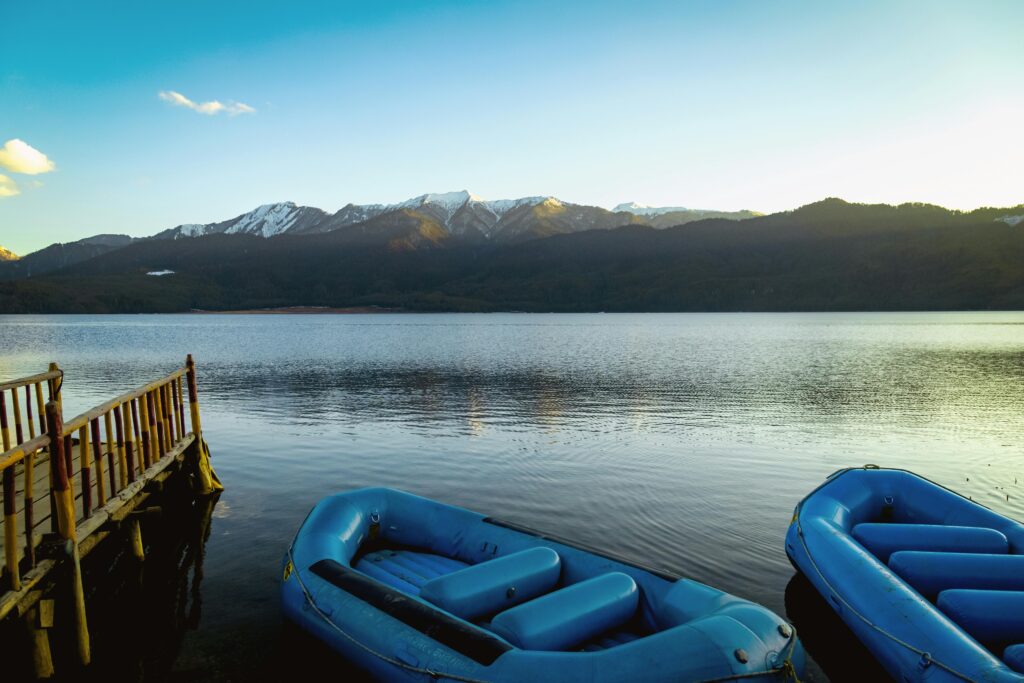
    Roughly what you’ll spend on permits:

    • Standard Annapurna treks (Poon Hill, ABC, Mardi Himal, etc.)  around USD 35–45 per person total
    • Upper Mustang around USD 535–545+ per person for 10 days

    A few things worth knowing:

    • Carry printed copies. Checkpoints along the trail will ask to see your permits. Some remote spots don’t have internet to scan QR codes, so paper copies save you trouble.
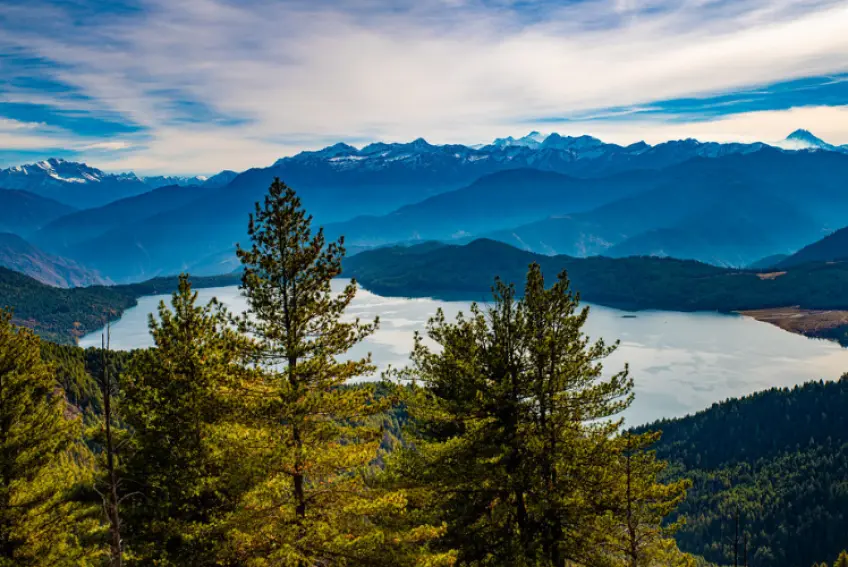
    • Don’t trust old info. Nepal’s permit rules have changed multiple times in recent years. A blog post from 2022 might tell you something completely different from what’s required now. We stay updated on the latest rules so your trek is sorted from the start.
    • We handle everything. When you book with Hi Nepal Treks, permits are included in your package. You send us your passport copy and photos, we do the rest. No office visits, no queues, no confusion.

    That’s basically it. A small bit of admin that takes a few hours in Pokhara, or zero hours if you let us do it for you.

    Guide and Porter for Treks from Pokhara

    beautiful fewa lake view with fishtail mountain in the back

    Having the right people with you on the trail makes a big difference. A good guide for trekking doesn’t just show you the way, they make the whole experience better.

    Here’s why most trekkers hire a guide and porter:

    • Navigation: Trails in the Annapurna region are mostly well-marked, but junctions can be confusing, especially in fog or rain. A local guide knows every turn, every shortcut, and every backup route. You won’t waste time guessing which path to take.
    • Safety: Your guide watches for signs of altitude sickness, keeps track of weather changes, and knows what to do if something goes wrong. On longer treks like ABC or the Annapurna Circuit, that kind of experience matters. Since 2023, hiring a licensed guide is mandatory for all foreign trekkers in Nepal.
    • Local Culture: A guide who grew up in the mountains can tell you things no guidebook will, stories behind the villages, meaning of the prayer flags, why certain festivals are happening, what that plant on the trail is used for. It turns a walk into something much deeper.
    • Permits and Logistics: Your guide helps with checkpoint registration, teahouse bookings, and any communication with locals along the way. If there’s a language gap, they bridge it. Less hassle for you.
    • Porters: Walking 5 to 7 hours a day is tough enough without a 15 kg bag on your back. A porter carries your heavy luggage so you can trek with just a daypack. You walk lighter, enjoy more, and your knees will thank you at the end of the trip.
    • Supporting Local Jobs: When you hire a local guide or porter, that money goes straight into the community. Many guides and porters come from the same mountain villages you’ll be walking through. It’s one of the most direct ways tourism helps people in rural Nepal.

    At Hi Nepal Treks, all our guided treks from Pokhara come with experienced, government-licensed guides who speak English and know the Annapurna region inside out. Porter service in Nepal can be added to any package, we make sure our porters are fairly paid, properly equipped, and treated well.

    Packing List for Trekking from Pokhara

    Whether you are heading out for a quick day hike to Sarangkot or a multi-week expedition on the Annapurna Circuit, having the right gear can make or break your experience. This packing list for trekking from Pokhara covers everything a beginner or seasoned trekker needs to stay comfortable, safe, and prepared on the trail.

    Clothing

    • Moisture-wicking base layers (t-shirts and long-sleeve tops)
    • Lightweight trekking pants (convertible zip-off pants work great)
    • Warm fleece or down jacket for cold mornings and higher elevations
    • Waterproof rain jacket with a hood
    • Thermal underwear for treks above 3,000 meters
    • Comfortable underwear and hiking socks (merino wool recommended)
    • Wide-brimmed hat or cap for sun protection
    • Warm beanie and lightweight gloves for higher altitude treks

    Footwear

    • Sturdy, broken-in trekking shoes or boots with ankle support
    • Lightweight sandals or flip-flops for teahouse evenings
    • Extra pairs of dry socks

    Sun and Skin Protection

    • Sunscreen with SPF 50 or higher (UV rays are strong at altitude)
    • UV-protective sunglasses with side coverage
    • Lip balm with sun protection

    Hydration and Nutrition

    • Reusable water bottle (at least one liter capacity)
    • Water purification tablets or a portable filter
    • Trail snacks such as energy bars, dried fruits, nuts, and chocolate
    • Electrolyte powder or oral rehydration salts

    Health and First Aid

    • Personal prescription medicines (carry enough for the full trek plus extra days)
    • Basic first aid kit: adhesive bandages, antiseptic cream, blister plasters, gauze, and medical tape
    • Altitude sickness medicine (Diamox, consult a doctor before taking)
    • Pain relievers such as ibuprofen or paracetamol
    • Anti-diarrhea tablets and rehydration salts
    • Insect repellent

    Toiletries

    • Biodegradable soap and shampoo
    • Toothbrush and toothpaste
    • Quick-dry travel towel
    • Toilet paper and hand sanitizer
    • Wet wipes

    Electronics and Documents

    • Power bank (at least 10,000 mAh charging points are limited on the trail)
    • Headlamp or torch with spare batteries
    • Phone with offline maps downloaded
    • Photocopy of your passport (keep the original safe in a waterproof pouch)
    • Trekking permits: TIMS card and Annapurna Conservation Area Permit (ACAP)
    • Travel insurance documents

    Extras Worth Carrying

    • Lightweight daypack (20–30 liters for short treks, 50–65 liters for longer ones)
    • Trekking poles (reduce strain on knees, especially on descents)
    • Dry bags or zip-lock pouches for keeping electronics and documents dry
    • Notebook and pen for journaling

    Tip for beginners: You do not need to buy everything before you arrive. Pokhara’s Lakeside area is packed with trekking gear shops where you can buy or rent jackets, sleeping bags, trekking poles, and backpacks at reasonable prices.

    Safety Tips for Trekking from Pokhara

    • Walk at a steady pace: Whether you are doing short treks from Pokhara or longer routes, walk slowly and avoid rushing on uphill trails.
    • Drink enough water: Staying hydrated is important during trekking in Nepal, especially on warm days and higher altitude routes.
    • Be careful with altitude: Some Pokhara trekking routes reach high elevations, so rest properly and tell your guide if you feel headache, dizziness, nausea, or unusual tiredness.
    • Check the weather daily: Weather in the mountains can change quickly, so always carry a rain jacket, warm layers, and a windproof jacket.
    • Follow your trekking guide: A licensed guide for trekking from Pokhara helps with trail safety, permits, route planning, weather updates, and emergency support.
    • Wear proper trekking shoes: Good trekking shoes are important for stone steps, forest trails, muddy paths, and downhill sections.
    • Carry warm clothing: Even easy treks from Pokhara can feel cold in the morning, evening, and higher viewpoints.
    • Get travel insurance: For longer trekking routes from Pokhara, choose insurance that covers high-altitude trekking and emergency helicopter rescue.
    • Pack basic first aid: Carry personal medicine, plasters, pain relief, water purification tablets, and altitude medicine if advised by a doctor.
    • Stay on marked trails: Avoid shortcuts and do not walk alone in unfamiliar areas, especially on remote trekking trails in Nepal.

    Following these simple trekking safety tips from Pokhara helps make your journey safer, easier, and more enjoyable. Whether you choose an easy beginner trek or a longer Himalayan route, good preparation makes your Pokhara trekking experience better.

    How to Choose the Best Trek from Pokhara

    Choosing the best trek from Pokhara depends on your time, budget, fitness level, and travel season. Pokhara has trekking routes for everyone, from easy beginner hikes to longer Himalayan adventures.

    • Check your available time: For 1–2 days, choose easy treks from Pokhara like Dhampus, Australian Camp, or Sarangkot. For 3–5 days, Ghorepani Poon Hill and Ghandruk are great options.
    • Know your fitness level: If you are a beginner, start with short and easy trekking routes. If you want more adventure, Mardi Himal, Annapurna Base Camp, or Khopra Danda are better choices.
    • Plan your budget: Short treks are more affordable because they need fewer days, meals, and accommodation. Longer treks cost more because of extra trekking days, permits, guides, and porter services.
    • Choose the right season: Spring and autumn are the best seasons for trekking from Pokhara because the weather is clearer and mountain views are better. Winter is good for lower routes, while Upper Mustang is suitable even during monsoon.
    • Decide your travel style: You can choose a guided trek from Pokhara for safety and comfort, or a simple teahouse trek if you want a more flexible and budget-friendly experience.

    The best Pokhara trekking route is the one that matches your time, comfort, and interest. Whether you want a short scenic hike or a longer Himalayan journey, Pokhara has a trek that fits your travel plan.

    Follow Your Interests

    What excites you most about trekking? Your answer points to the right trail.

    • Mountain views: Poon Hill for a classic Annapurna sunrise, Mardi Himal for an intimate high-camp experience, or Annapurna Base Camp for an amphitheater of towering peaks.
    • Cultural immersion: Ghandruk and the Annapurna Circuit pass through Gurung and Thakali villages where you can experience local hospitality, traditional food, and centuries-old customs.
    • Off-the-beaten-path adventure: Khopra Danda offers solitude and a sacred glacial lake, while Upper Mustang feels like stepping into a different world entirely with its Tibetan-influenced landscape and ancient cave monasteries.
    • Quick escape from the city: Dhampus, Australian Camp, and Sarangkot are all reachable within a few hours from Pokhara and give you a taste of the mountains without a major time commitment.

    Final Thoughts

    Pokhara is one of the best starting points for trekking in Nepal, with routes for every type of traveler. From short treks from Pokhara like Dhampus Australian Camp, and Ghandruk to longer Himalayan adventures such as Mardi Himal, Annapurna Base Camp, and Annapurna Circuit, there is a trail for every time, budget, and comfort level.

    With the right planning, trekking from Pokhara can be safe, scenic, and truly memorable. For a smooth and well-organized trip, plan your trek with Hi Nepal Treks and let our team help you choose the right route, arrange guides, permits, transport, accommodation, and customize the itinerary based on your travel style.

    Ready to Book Your Trek from Pokhara?

    Plan your perfect trek from Pokhara with Hi Nepal Treks. We arrange short and long trekking routes with guide, porter, permits, transport, accommodation, and customized itinerary support.

    Contact us:

    Phone / WhatsApp: +9779846748548

    Email: mytrippokhara@gmail.com

    Website: www.trippokhara.com 

    Book your best trek from Pokhara with Hi Nepal Treks and let us help you choose the right route based on your time, budget, and travel style.

    Frequently Asked Questions – Best Treks from Pokhara

    What are the best treks from Pokhara?

    The best treks from Pokhara include Ghorepani Poon Hill, Ghandruk Trek, Mardi Himal Trek, Annapurna Base Camp Trek, Khopra Danda Trek, and Annapurna Circuit. These routes offer beautiful mountain views, local villages, and classic Annapurna trekking experiences.

    What is the best short trek from Pokhara?

    The best short trek from Pokhara is usually the Ghorepani Poon Hill Trek or Ghandruk Trek. Both are beginner-friendly and offer amazing views of Annapurna, Machhapuchhre, and Dhaulagiri.

    What is the easiest trek from Pokhara?

    Dhampus, Australian Camp, and Ghandruk are some of the easiest treks from Pokhara. These routes are perfect for beginners, families, and travelers with limited time.

    What is the best long trek from Pokhara?

    The best long treks from Pokhara include Annapurna Base Camp, Annapurna Circuit, Khopra Danda, and Upper Mustang. These treks are better for travelers who want deeper Himalayan scenery, culture, and adventure.

    How much does trekking from Pokhara cost?

    The cost of trekking from Pokhara depends on the route, duration, permits, guide, porter, transport, meals, and accommodation. Short treks are more budget-friendly, while longer treks and restricted-area routes cost more.

    Do I need permits for treks from Pokhara?

    Yes, most Annapurna trekking from Pokhara requires permits such as the Annapurna Conservation Area Permit. Some routes may also need extra permits depending on the area, especially restricted regions like Upper Mustang.

    Do I need a guide for trekking from Pokhara?

    A guide is highly recommended for safety, navigation, permits, local culture, and emergency support. For longer or remote trekking routes from Pokhara, hiring a licensed guide is a smart choice.

    Can beginners do treks from Pokhara?

    Yes, beginners can enjoy many short treks from Pokhara, including Dhampus, Australian Camp, Ghandruk, and Ghorepani Poon Hill. These routes are scenic, manageable, and suitable for first-time trekkers.

  • Nepal Trek Packing List 2026: The Ultimate Guide for Every Trail

    Nepal Trek Packing List 2026: The Ultimate Guide for Every Trail

    So, you have finally booked that dream Nepal trek, congratulations! Whether you are heading to Everest Base Camp, tracing the golden rhododendron forests on the Annapurna Circuit, or tackling the remote Manaslu Circuit, what you pack can make or break the entire adventure.

    Trekking in Nepal in 2026 demands smart, lightweight, weather-proof packing. You will face scorching valley heat one morning and sub-zero ridge winds the next. Forget something critical and you could find yourself in a remote teahouse paying five times the price for a spare headlamp, or worse, cutting your trek short due to a preventable altitude-related issue.

    This expert-crafted Nepal Trek Packing List 2026 covers everything: clothing layers, trekking gear, permits, medications, electronics, and proven money-saving tips, all backed by over 20 years of Himalayan guiding experience from our team at Hi Nepal Travels & Treks.

    Pro Tip: Bookmark this page and print each section checklist as you pack. Ticking items off section by section is the most reliable way to ensure nothing gets left behind.

    Why Your Packing List Matters More Than You Think?

    Nepal’s trekking trails span elevations from sub-tropical jungles at 800 m to glacial passes above 5,400 m. There are no online deliveries at Namche Bazaar. Forget a quality rain cover and you are in serious trouble when the afternoon monsoon rolls in over the Khumbu Valley.

    The right gear does more than keep you comfortable, it keeps you safe. Altitude sickness, hypothermia, and dehydration are the most common reasons trekkers are evacuated from Himalayan trails, and all three are largely preventable with proper preparation.

    At Hi Nepal Travels & Treks, our certified Pokhara-based mountain guides have prepared thousands of trekkers since 2004. The framework below is precisely what we share with every client before departure.

    Nepal Trekking Seasons 2026 – How Season Affects Your Kit

    Porters carrying trekkers bag - trekking packing bag
    Img Src: Mountain Mart Treks

    Your season determines your entire kit strategy. Pack for the conditions you will face, not just the trail name.

    Season Months Packing Focus
    Spring (Prime) March – May Light layers, full rain gear, SPF 50+
    Summer / Monsoon June – August Heavy waterproofs, gaiters, leech socks
    Autumn (Prime) September – November Layering system, windproof jacket
    Winter December – February Expedition sleeping bag, heavy down jacket

    Spring (March–May) and autumn (September–November) are the twin prime windows for Nepal trekking in 2026. Stable skies, clear mountain views, and moderate temperatures make these the most popular seasons. Winter trekkers should treat kit requirements as expedition-level — temperatures at Everest Base Camp can drop to -20°C overnight.

    Browse our full range of Nepal Trekking Packages to find a departure that aligns with your 2026 travel window.

    The Complete Clothing Packing Checklist

    Essential clothing packing checklist for Nepal Trekking

    Clothing is the most critical component of your Nepal trek packing list. The golden rule is the three-layer system: base layer (moisture management), mid-layer (insulation), and outer layer (wind and waterproof protection). Never use cotton, wet cotton is dangerously cold and extremely slow to dry.

    Base Layers

    • Moisture-wicking trekking shirts — 3x (merino wool or synthetic; cotton is strictly off the list)
    • Long-sleeve thermal base top — 2x (merino wool excels: odour-resistant and warm even when damp)
    • Trekking trousers / zip-off pants — 2x (zip-off versions are ideal for variable valley-to-ridge temperatures)
    • Lightweight shorts — 1x (for lower elevation days and teahouse downtime)
    • Trekking base-layer leggings — 1x (merino or synthetic)
    • Trekking underwear — 4–5x (merino or synthetic quick-dry)
    • Warm trekking socks — 4x (merino wool; Darn Tough and Smartwool are consistently top-rated)
    • Thin liner socks — 2x (worn under thick socks to prevent blisters)

    Insulation & Mid-Layers

    • Fleece jacket — 1x (250-weight fleece recommended for high-altitude nights)
    • Down or synthetic insulated jacket — 1x (critical above 3,500 m; goose down is lightest but loses warmth when wet)
    • Warm fleece or thermal trousers — 1x (for cold camp evenings and early-morning summit starts)

    Outer / Shell Layers

    • Waterproof hardshell jacket with hood — 1x (Gore-Tex or equivalent; non-negotiable for monsoon season or high-pass crossings)
    • Waterproof hardshell trousers — 1x

    Head, Hands & Feet

    • Warm beanie hat — 1x (wool or fleece)
    • Sun hat / wide-brim hat — 1x (UV radiation increases ~4% for every 300 m of altitude)
    • Lightweight balaclava — 1x (essential for passes above 5,000 m)
    • Neck gaiter / buff — 1x
    • Lightweight gloves — 1x pair
    • Warm insulated gloves or mittens — 1x pair (for high camps and sub-zero morning starts)
    • Waterproof trekking boots — 1 pair (ankle support essential; break them in for 3–4 weeks before travel)
    • Camp sandals or Crocs — 1 pair (essential foot recovery after long summit days)
    • Gaiters — 1 pair (highly recommended for monsoon routes and snowy high passes)

    Critical Boot Rule: NEVER break in new trekking boots on the Himalayan trail. Blisters are the most common complaint on all Nepal treks and are 100% preventable. Walk in your boots for at least 3–4 weeks before departure.

    Trekking Gear & Equipment

    Essential gears while trekking in Nepal

    Backpacks

    • Day pack — 25–35 L (what you carry each day; your porter carries your main duffel)
    • Main duffel bag — 60–80 L (soft-sided only — hard cases cannot be loaded on pack animals or porters)
    • Rain cover for day pack — 1x (verify inclusion; aftermarket covers fit most packs perfectly)

    Trekking Poles

    Trekking poles are non-optional above 4,000 m. Research shows they reduce knee-joint loading by up to 25% on steep descents, provide critical balance on slippery moraine, and help regulate breathing pace on long climbs. Choose lightweight collapsible aluminium or carbon-fibre models with anti-shock tips.

    Headlamp & Navigation

    • Headlamp — 1x minimum (300+ lumens; Black Diamond Spot and Petzl Actik are trail-proven)
    • Spare batteries or USB-rechargeable model — pair with a fully charged power bank
    • Offline trail maps — download Maps.me or Gaia GPS with Nepal trail overlays before departure

    Other Essential Gear

    • Trekking watch with altimeter and barometer — altitude tracking aids AMS prevention
    • Lightweight dry bags — 2–3x (protect electronics and documents inside your pack on wet days)
    • Carabiner clips — 2x (gear attachment, clothesline rigging, emergency fixes)
    • Duct tape — small roll (repairs boots, poles, backpacks, and treats blisters in emergencies)
    • Lightweight multi-tool or pocket knife — 1x
    • Padlocks — 2x (for teahouse rooms and main duffel luggage)

    Sleeping Bag & Shelter Guide

    Most Nepal teahouse treks provide blankets, but always carry your own sleeping bag for hygiene and warmth security. The guide below applies to spring and autumn 2026 trekking:

    Trek Max Altitude Sleeping Bag Rating
    Ghorepani Poon Hill 3,210 m -5°C comfort
    Mardi Himal Trek 4,500 m -10°C comfort
    Annapurna Base Camp 4,130 m -10°C comfort
    Annapurna Circuit 5,416 m (Thorong La) -15°C comfort
    Manaslu Circuit 5,160 m (Larkya La) -15°C comfort
    Everest Base Camp 5,364 m -20°C comfort
    • Sleeping bag liner — 1x (adds 5-8 deg C warmth and maintains bag hygiene; great lightweight option for summer treks)
    • Inflatable camping pillow — 1x (optional but a genuine comfort upgrade on multi-week routes)
    • Compression sack — always compress your sleeping bag to maximise pack space

    Documents, Permits & Money

    Missing permits result in checkpoint turnarounds. Getting this section right is non-negotiable.

    Travel Documents

    • Passport — valid for at least 6 months beyond your return date
    • Nepal visa — available on arrival at Kathmandu’s Tribhuvan International Airport or via the Nepal e-Visa portal
    • Travel insurance documents — printed and digital copies; mountain rescue helicopter coverage is essential
    • 2x spare passport-size photos — permit offices frequently request these
    • Emergency contact card — printed and stored separately from your passport

    Nepal Trekking Permits 2026

    Permit requirements that updated in 2024-2025 remain in effect for 2026. Your registered trekking agency arranges all permits, but here is a quick reference:

    Our team at Hi Nepal Travels & Treks handles all permit coordination as part of every booked package. Use our Trip Planner to receive a full permit breakdown for your chosen trail.

    Money & Budget on the Trail

    • Currency: Nepalese Rupee (NPR) — approximately 1 USD = 135 NPR in 2026
    • ATMs: Available in Lukla, Namche Bazaar, Pokhara, and Kathmandu; unreliable on remote routes
    • Carry minimum USD 500–800 cash for a 2-week trek (permits, tips, meals, emergencies)
    • Credit cards are rarely accepted beyond Kathmandu and Pokhara city centres
    • Divide your cash — keep emergency funds in a different location from your main wallet at all times

    Health, First Aid & Altitude Sickness Kit

    First Aid Box for trekking in Nepal

    This section is the most underestimated by first-time Himalayan trekkers. Health preparedness is the single greatest factor separating a transformative trek from an emergency evacuation.

    Altitude Sickness Prevention Kit

    Acute Mountain Sickness (AMS) affects approximately 50% of trekkers at Everest Base Camp altitude. It is caused by ascending too rapidly, not by fitness level. Preparation is the solution:

    • Diamox (Acetazolamide) 250 mg — discuss with your doctor before departure as preventative and treatment; not suitable for everyone
    • Pulse oximeter — small finger-clip device measuring blood-oxygen saturation; a reading below 85% at altitude is a medical warning
    • Ibuprofen or Paracetamol — for altitude-related headaches and fever management
    • Dexamethasone — emergency AMS escalation medication; carry only on medical advice; your guide manages deployment

    Golden Rule: The most important altitude sickness tool is not medication — it is the rule ‘Climb high, sleep low.’ Never increase sleeping altitude by more than 500 m per day above 3,500 m. Every Hi Nepal Treks itinerary is specifically designed around this principle with built-in acclimatisation days.

    First Aid Kit Essentials

    • Blister treatment — Compeed hydrocolloid patches or moleskin (non-negotiable; purchase before leaving home)
    • Wound care — antiseptic wipes, betadine solution, antibiotic cream such as Neosporin
    • Bandages — assorted sizes plus elastic bandage for ankle sprain management
    • Oral Rehydration Salts (ORS) — critical for altitude and diarrhoea recovery; carry 10+ sachets minimum
    • Water purification — SteriPen UV purifier or iodine tablets; never drink untreated stream water
    • Loperamide (Imodium) — traveller’s diarrhoea management; essential in teahouse environments
    • Antihistamines — Cetirizine (non-drowsy) for allergic reactions
    • Sunscreen — SPF 50+ minimum; UV intensity increases significantly with altitude
    • Lip balm with SPF — high-altitude lips crack and bleed rapidly without consistent protection
    • Eye drops — dust and high-UV exposure dry eyes significantly on exposed ridges and passes
    • Medical tape and scissors
    • Digital thermometer

    For serious mountain emergencies, Hi Nepal Treks provides helicopter rescue flight coordination. Confirm your travel insurance explicitly covers helicopter evacuation from altitude, costs can reach USD 3,000–6,000 without coverage.

    Electronics & Communication

    • Smartphone — downloaded offline maps, emergency contacts, camera; store in a dry bag inside your pack
    • Power bank — 20,000 mAh minimum (teahouses charge NPR 200–400 per device; power cuts common above Namche Bazaar)
    • Universal travel adapter — Nepal uses Type C and Type D sockets
    • Camera or action camera — GoPro is ideal for trail footage; protect from dust with a hard case
    • Spare memory cards — 2x 128 GB minimum
    • Noise-cancelling earphones — long teahouse evenings and acclimatisation rest days are far more enjoyable with them
    • Satellite communicator — Garmin inReach Mini recommended for Manaslu Circuit, Kanchenjunga, and all remote routes
    • Local SIM card — NTC or Ncell; purchase at Kathmandu or Pokhara airport for affordable data and calls

    Charging AlertAbove Namche Bazaar on the Everest trail and above Chomrong on the Annapurna route, reliable electricity becomes scarce. Pre-charge all devices in Kathmandu or Pokhara the evening before you set out, and ensure your power bank is fully charged.

    Food, Water & Hygiene

    A women drinking clean water while hiking

    Trail Snacks

    Nepal’s teahouses serve three meals per day. However, high-energy snacks are essential for long summit-push mornings when teahouses are hours apart:

    • Energy bars — Clif Bars or locally available Tibetan bread with peanut butter
    • Nuts and dried fruit mix — excellent calorie-to-weight ratio for high-altitude snacking
    • Dark chocolate — rapid energy source and a genuine morale booster above 5,000 m
    • Instant oatmeal sachets — ideal for very cold early starts on high passes
    • Electrolyte drink tablets — Nuun or High5; rehydration at altitude is critically important and often overlooked

    Water Safety

    Never drink untreated water on any Nepal trail. Even clear-looking mountain streams can carry Giardia and other serious waterborne pathogens:

    • Reusable 1 L water bottle — Nalgene or Hydrapak (BPA-free and trail-durable)
    • Collapsible water bottle — 0.5 L extra for long ridge days without water sources
    • SteriPen UV purifier or Sawyer Squeeze filter — primary purification; iodine tablets as backup
    • Insulated water bottle — prevents water from freezing at altitude during winter and early spring

    Hygiene & Toiletries

    • Biodegradable soap and shampoo (leave-no-trace principle applies throughout all Nepal trekking areas)
    • Hand sanitiser — 2x 100 ml bottles; use before every meal and after every toilet stop on the trail
    • Wet wipes / baby wipes — 2 packs minimum (your shower substitute on remote routes without hot water)
    • Microfibre towel — quick-drying, ultralight, and compact
    • Toilet paper — carry your own supply; teahouses charge per sheet above Namche Bazaar
    • Feminine hygiene products — bring a complete supply as these are not reliably available above major trail hubs

    Trail-Specific Packing Guides

    Everest Base Camp Trek Packing List 2026

    The Everest Base Camp Trek (14 days) reaches 5,364 m and is the coldest standard teahouse trek in Nepal. Kit requirements are near-expedition standard.

    • Sleeping bag rated to -20 deg C comfort (non-negotiable for the Khumbu region)
    • Expedition-weight down jacket — essential from Namche Bazaar onwards
    • Heavyweight insulated gloves and balaclava
    • Pulse oximeter — monitor blood oxygen daily above Dingboche (4,410 m)
    • Diamox prescription — discuss with your GP at least 4 weeks before departure
    • Trekking poles with snow baskets
    • Gaiters — for snowy sections above Lobuche and on the Kala Patthar (5,644 m) ascent

    Annapurna Base Camp Trek Packing List 2026

    The Annapurna Base Camp Trek (10–12 days) peaks at 4,130 m in a spectacular glacial amphitheatre surrounded by 8,000 m giants.

    • Sleeping bag rated to -10 deg C comfort
    • Waterproof jacket and trousers — rain on lower forested sections is frequent year-round
    • Gaiters — for the Machapuchare Base Camp snow section
    • Merino base layers — 2x minimum
    • Camp sandals for warm Chhomrong village evenings

    Annapurna Circuit Trek Packing List 2026

    The iconic Annapurna Circuit Trek (19 days) crosses Thorong La Pass at 5,416 m. Kit requirements parallel EBC-level.

    • All EBC-level cold-weather kit applies above Manang
    • Zip-off trousers — essential; sub-tropical valleys one day, high-alpine snow the next
    • Extra cash for Manang acclimatisation day activities and Muktinath temple visits

    Manaslu Circuit Trek Packing List 2026

    The Manaslu Circuit Trek (14 days) is Nepal’s most remote teahouse circuit, crossing Larkya La Pass (5,160 m). Satellite communication is essential here.

    • Garmin inReach satellite communicator — strongly recommended for all trekkers on this route
    • Full cold-weather kit equivalent to EBC requirements
    • Extra trail snacks — teahouse food quality and selection drops significantly above Samdo

    Ghorepani Poon Hill & Mardi Himal Packing List

    For shorter, lower-altitude trails like Ghorepani Poon Hill and Mardi Himal Trek, your kit is significantly lighter and more flexible:

    • Sleeping bag to -5 to -10 deg C is sufficient
    • Light down jacket is adequate; no expedition-weight gear required
    • Day pack only for Poon Hill — porter not required on this popular short route, Rain jacket — afternoon showers are common year-round in the Annapurna foothills

    What NOT to Pack for Nepal Trekking?

    Overpacking is one of the most common and costly mistakes on Himalayan trails. Every unnecessary kilogram compounds with every step at altitude. Leave these at home:

    • Cotton clothing of any kind — wet cotton causes rapid heat loss and takes hours to dry; genuinely dangerous at altitude
    • Hard-shell suitcases or wheeled luggage — impossible to load on porters or pack animals on Himalayan trails
    • Expensive jewellery or valuables — leave in your hotel safe in Kathmandu or Pokhara
    • Full-size toiletry bottles — always decant into 100 ml travel-size containers
    • Hardback books — download Kindle versions; every gram compounds at high altitude
    • Drone without CAAN permits — strict no-fly zones exist throughout Nepal’s National Park areas
    • More than two pairs of footwear — trekking boots and camp sandals is the optimum combination
    • Laptop — a lightweight tablet is sufficient unless you are a digital nomad with specific work requirements

    Expert Packing Tips from Our Himalayan Guides

    • Weigh your pack before departure. Day pack target: 7–10 kg. If over 10 kg, something must be removed.
    • Organise by section using colour-coded stuff sacks or dry bags — one for clothing, one for medical, one for electronics. You will locate items in seconds on the trail.
    • Rent what you can in Kathmandu or Pokhara. Sleeping bags (NPR 300–500/day), trekking poles (NPR 200/day), and down jackets are available in Thamel and Lakeside — far cheaper than flying bulky gear internationally.
    • Test all electronics the evening before departure. Power bank fully charged, headlamp with fresh batteries, camera memory cards cleared and formatted.
    • Label everything with your full name and emergency contact number in case of loss on the trail.
    • Keep your passport, permits, and emergency cash in a waterproof neck wallet worn under your base layer at all times. This is the single most important security measure on any Nepal trek.

    Ready to turn this packing list into a real adventure? Use our free Nepal Trip Planner or Book your Nepal trek now – we handle permits, certified guides, porters, accommodation, and airport transfers so you focus entirely on the mountains.

    Useful External Resources

    Ready to Pack? Let Hi Nepal Treks Handle the Rest

    Your Nepal Trek Packing List 2026 is complete. Every item you need for a safe, comfortable, and truly extraordinary Himalayan adventure is right here. Now the only step left is to book the trek itself.

    At Hi Nepal Travels & Treks, our certified Pokhara-based guides, with over 20 years of hands-on Himalayan experience, manage every detail: permits, certified TAAN-registered guides, experienced porters, teahouse accommodation, airport transfers, and emergency protocols. Whether this is your first Poon Hill dawn or your long-awaited Everest Base Camp moment, we have a trail and a team ready for you.

    Frequently Asked Questions – Nepal Trek Packing List 2026

    1. How heavy should my pack be for a Nepal trek?

      Your day pack (carried by you each day on the trail) should target 7–10 kg. Your main duffel (carried by a porter) can be up to 20 kg. Hiring a porter not only protects your knees and energy reserves, it directly supports local Himalayan livelihoods and is one of the most meaningful contributions you can make as a visitor.

    2. Can I buy trekking gear in Nepal?

      Absolutely. Kathmandu’s Thamel district and Pokhara’s Lakeside area are two of the world’s most concentrated trekking gear markets. Quality replica and genuine branded gear is available at most shops. Renting sleeping bags and poles here is significantly cheaper than checking bulky equipment on international flights.

    3. Do I need a sleeping bag for teahouse treks?

      Yes, always carry your own sleeping bag. Teahouses do provide blankets, but sleeping bags guarantee hygiene, warmth consistency, and comfort, especially above 4,000 m where blanket provision and thickness can be unpredictable.

    4. Is a porter compulsory in Nepal?

      No, but strongly recommended for treks above 4,000 m. A porter carries your main duffel (up to 20 kg) for approximately USD 20–25 per day including their accommodation and meals. This keeps you significantly lighter, faster, and substantially reduces the risk of knee and ankle injuries on steep ascents and descents.

    5. What are the best trekking boots for Nepal?

      Waterproof, mid-to-high ankle-support boots are the ideal choice. Trail-proven models include the Salomon X Ultra 4, Scarpa Zodiac Plus GTX, and La Sportiva Ultra Raptor II. Most critically, wear your chosen boots for at least 3–4 weeks before arriving in Nepal. Blisters from unbroken-in boots are the number-one cause of early trek turnarounds.

    6. Can I rent trekking gear from Hi Nepal Treks?

      Yes. Hi Nepal Travels & Treks can arrange sleeping bag and trekking pole rental for all booked clients. Enquire via our booking page when confirming your trek itinerary.

    7. Is travel insurance mandatory for Nepal trekking?

      Travel insurance covering trekking above 5,000 m and helicopter evacuation is absolutely essential, not optional. Without it, a single high-altitude helicopter rescue can cost USD 3,000–6,000 entirely out of pocket. Policies from World Nomads, True Traveller, and IMG Global are widely used and recommended among Himalayan trekkers.

    8. Where can I find adventure activities in Nepal besides trekking?

      Nepal offers world-class adventure activities alongside trekking. Explore paragliding, bungee jumping, rafting, and zipline options via our Nepal Adventure Activities page.

  • Pashupatinath Temple Guide 2026: What to See, When to Go & What to Expect 

    Pashupatinath Temple Guide 2026: What to See, When to Go & What to Expect 

    Introduction: Nepal’s Most Sacred Temple Awaits You in 2026

    Sitting on the banks of the holy Bagmati River in Kathmandu, Pashupatinath Temple is not just a place of worship, it’s one of the most profound spiritual experiences in all of Asia. A UNESCO World Heritage Site since 1979, this ancient Hindu complex draws over one million pilgrims and tourists every year, and for 2026, the temple authorities have introduced new visitor management policies, improved tourist facilities, and updated entry guidelines, all of which you need to know before you go.

    Whether you are a devout pilgrim seeking blessings from Lord Shiva, a cultural traveler drawn to Nepal’s living heritage, or simply curious about one of the world’s great sacred sites, this guide covers everything you need to plan your visit confidently.

    At Hi Nepal Travels & Treks, we have been helping travelers explore Nepal’s cultural and spiritual treasures for over 20 years. We’ve put together this definitive 2026 guide so you don’t miss a thing.

    Pashupatinath Temple: Quick Facts at a Glance

    Location Pashupati Nath Marg, Kathmandu, Nepal (5 km from Thamel)
    Deity Pashupatinath — a manifestation of Lord Shiva
    UNESCO Status Listed as World Heritage Site since 1979
    Established Estimated 5th century AD (recorded); ancient origin possibly 400 BC
    Opening Hours 4:00 AM – 12:00 PM | 5:00 PM – 9:00 PM (daily)
    Entry Fee (2026) Rs. 1,000 for SAARC nationals | Rs. 1,500 for other foreigners
    Best Time to Visit September – November (Autumn) or during Maha Shivaratri
    Non-Hindu Access Outer complex open; Main temple & inner sanctum for Hindus only
    Nearest Airport Tribhuvan International Airport (~6 km)
    Recommended Duration 2 – 4 hours for a thorough visit

    A Brief History of Pashupati Temple

    The name ‘Pashupatinath’ translates from Sanskrit as ‘Lord of All Living Beings’, Pashupati (animals/beings) + Nath (lord). The presiding deity is a sacred lingam (a representation of Lord Shiva), said to have been discovered by a cow who miraculously irrigated the ground with her milk.

    The current pagoda-style main temple is believed to have been constructed in the 17th century, though inscriptions and records date the site’s sanctity back over two millennia. It has been rebuilt several times, most recently restored after earthquake damage in 2015, and stands as a testament to Nepal’s extraordinary resilience and devotion.

    The temple is classified as one of the four most sacred abodes of Lord Shiva (Char Dham) in South Asia, making it a destination of pan-Hindu pilgrimage importance. Recognized by the UNESCO World Heritage Committee, the temple complex encompasses over 500 shrines, temples, and sacred monuments sprawling across both banks of the Bagmati River.

    What to See Inside the Pashupatinath Temple Complex?

    The Pashupatinath complex is not a single temple, it is a sprawling spiritual city. Here are the must-see highlights for your 2026 visit:

    1. The Main Temple (Pashupatinath Mandir)

    The iconic pagoda-style main temple is the focal point of the entire complex. With its gilded roof, intricately carved silver doors, and the sacred Shiva lingam inside, this is the spiritual heart of the site. Non-Hindu visitors can observe the temple from a viewing terrace on the eastern bank across the Bagmati River.

    2. The Bagmati River Ghats

    The riverfront ghats (stone steps leading to the water) are central to the temple’s spiritual activities. Aryaghat is the most sacred ghat, the site of open-air Hindu cremations, a powerful and humbling experience that offers a profound window into the cycle of life and death in Hindu philosophy. Visitors are permitted to observe respectfully from a distance.

    3. Deupatan Village

    Adjacent to the main temple, Deupatan is one of Kathmandu’s oldest settlements. Its narrow alleys, traditional Newari architecture, and local life provide a wonderful contrast to the grandeur of the main temple. Sadhus (Hindu holy men) are a common sight here.

    4. Pashupatinath Museum

    Located within the complex, the Pashupatinath Museum houses a collection of artifacts, sculptures, and historical exhibits related to the temple’s long history. Entry is included with the main temple ticket in 2026.

    5. The Shlesmantak Forest & Boudhanath Vicinity

    The temple backs onto a protected forest walk that leads toward the Boudhanath Stupa, another of Kathmandu’s UNESCO World Heritage Sites. Many visitors combine both in a single day, especially those on our popular Kathmandu Tour Package which covers all seven UNESCO sites in the valley.

    6. Sadhus & Spiritual Performers

    Dreadlocked sadhus covered in ash and saffron robes are an iconic part of the Pashupatinath experience. They meditate, perform rituals, and are willing to engage with respectful visitors. A small donation in exchange for a photo is customary, it’s their primary livelihood.

    When to Visit Pashupatinath Temple in 2026: Best Seasons

    Pashupatinath temple - UNESCO Heritage Site - pilgrimage site

    Choosing the right time to visit Pashupatinath dramatically affects your experience. Here is a comprehensive breakdown:

    Season Months Weather Crowd Level Best For
    Spring Mar – May Warm, clear mornings High Festivals, photography
    Summer / Monsoon Jun – Aug Hot, heavy rain Low Budget travel
    Autumn Sep – Nov Perfect, sunny Very High Overall experience
    Winter Dec – Feb Cold mornings, clear sky Low–Medium Quiet, Maha Shivaratri prep

    Best Time of Day to Visit

    The temple is most alive at dawn. Arrive at 4:00 AM opening for the sacred Mangala Aarti (morning prayer ritual), the flickering lamps, chanting priests, and mist rising off the Bagmati create a memory that will last a lifetime. The evening Aarti from 6:00 PM–7:00 PM is equally spectacular.

    Midday (10 AM – 2 PM) is the busiest and hottest period. Avoid this window if possible, especially in summer months.

    Maha Shivaratri – The Most Auspicious Day

    This is the single most important festival at Pashupatinath, attracting over 500,000+ pilgrims and sadhus from across India, Nepal, and the wider Hindu world. The atmosphere is extraordinary, but so are the crowds. Book accommodation in Kathmandu 3–4 months in advance if you plan to attend. Hi Nepal Travels & Treks offers dedicated Nepal tour packages timed around this festival.

    2026 Entry Rules, Tickets & Opening Hours

    Opening Hours (2026)

    •  Morning: 4:00 AM – 12:00 PM
    • Evening: 5:00 PM – 9:00 PM
    • Closed midday for priestly rituals (12:00 PM – 5:00 PM)

    Entrance Fees (2026 Updated Rates)

    • SAARC Nationals (India, Bangladesh, Pakistan, Sri Lanka, etc.): NPR 1,000
    • Other Foreign Nationals: NPR 1,500
    • Hindu Pilgrims: Free entry to the main temple
    • Children under 10 (all nationalities): Free

    Tickets can be purchased at the entrance gate. Check the Nepal Tourism Board website for the latest updates on fees and any seasonal surcharges.

    Dress Code & Conduct Rules at Pashupatinath Temple

    Pashupatinath Temple is a living place of worship, and visitors are expected to respect its sacred nature. Failure to comply with dress codes may result in being turned away at the entrance.

    Category Requirement / Guideline
    Men Long trousers or traditional dhoti; shoulders must be covered
    Women Salwar kameez, saree, or skirt below the knee; dupatta recommended for head covering
    Non-Hindus Permitted in outer areas; main temple & inner sanctum restricted
    Footwear Remove shoes before entering temple premises
    Photography Allowed in outer areas; prohibited near cremation sites & inner sanctum

    Key Conduct Guidelines

    • Speak quietly, maintain a reverent atmosphere inside the complex
    • Do not touch the sacred Shiva lingam or any main shrine
    • Avoid pointing feet toward deities or sacred objects
    • Leather goods (belts, bags) are generally allowed in outer areas but not near the inner sanctum
    • Do not litter, keep the sacred river area clean
    • Consumption of alcohol or meat within the complex is strictly prohibited

    How to Get to Pashupatinath Temple from Kathmandu?

    Pashupati Temple with Bagmati River

    From Thamel (Tourist District)

    • Taxi: 20–30 minutes, approx. NPR 400–600 one way (use metered taxis or apps like InDrive & Patho)
    •  Local Bus: From Ratna Park bus station, very cheap but crowded
    • Private Car (recommended): Book through your hotel or travel agency for the most comfort

    From Tribhuvan International Airport

    The temple is only 6 km from the airport, many visitors stop here on their first day in Kathmandu, en route to Thamel. The journey by taxi takes just 15–20 minutes (approx. NPR 600–800 from the airport taxi stand).

    For hassle-free airport transfers and temple visit transportation, Hi Nepal Travels & Treks provides private vehicle hire across Kathmandu Valley as part of all our Nepal tour packages.

    What Else to See Near Pashupatinath (Half-Day Itinerary)?

    Pashupatinath sits in one of Kathmandu’s richest cultural corridors. Here’s how to build a perfect half-day itinerary:

    1. Pashupatinath Temple: 2 to 3 hours. Start here at dawn for the morning Aarti.
    2. Boudhanath Stupa: 1.5 km away, 1 hour. Walk or take a quick taxi to this magnificent Buddhist stupa.
    3. Kopan Monastery: 2 km north, 45 minutes. A serene Tibetan Buddhist monastery with panoramic city views.
    4. Guhyeshwari Temple: 500 m east, 30 minutes. A highly revered Shakti temple within walking distance (Hindus only for inner sanctum).

    Our 4-Day Kathmandu Tour Package covers all of these sites plus Swayambhunath, Bhaktapur Durbar Square, Patan Durbar Square, and Changu Narayan, all seven UNESCO World Heritage Sites in the Kathmandu Valley, with expert local guides, private transport, and flexible scheduling.

    13 Insider Tips for Visiting Pashupatinath Temple in 2026

    •  Arrive before 5:00 AM to witness the morning Aarti, it’s the most atmospheric experience at the temple.
    • Bring a shawl or scarf, you may need it to cover your head or shoulders, especially women.
    • Wear slip-on shoes for easy removal at the entrance. Sandals are ideal.
    • Do not pay touts or unofficial ‘guides’ near the entrance. Only hire licensed guides through your agency.
    • Expect to encounter open-air cremations at Aryaghat. Be respectful, no photos, no pointing.
    • Carry NPR in small denominations for donations, sadhus, and small purchases.
    •  A donation of NPR 50–200 to sadhus before taking their photo is customary and respectful.
    • Visit on weekdays (Tuesday or Thursday) for significantly smaller crowds than weekends.
    • Bring a reusable water bottle, there are drinking water stations within the complex.
    • Hire a knowledgeable local guide for deep context on the temple’s mythology and history. Your guide can transform a confusing cluster of shrines into a living story.
    • The eastern bank viewing area is open to all visitors and provides the best photo angles of the main temple.
    •  Avoid the midday heat by visiting early morning, then heading to Boudhanath for lunch.
    • Check your travel insurance before visiting, as with all crowded religious sites, basic coverage is advisable.

    Combine Pashupatinath with a Nepal Trekking Adventure

    Beautiful night view of pashupatinath temple with bagmati river

    Most international visitors to Pashupatinath arrive in Kathmandu as the gateway to Nepal’s legendary Himalayan trails. The temple is an ideal first or last-day experience before or after your trek, grounding your adventure in the country’s deep spiritual traditions.

    Our most popular packages that include Kathmandu cultural visits alongside Himalayan trekking.

    Ready to plan your Nepal adventure? Use our free Trip Planner to build a customized itinerary, or book directly with one of our Nepal travel specialists. 

    Final Thoughts: Pashupatinath Temple Is a Must-Visit in 2026

    Pashupatinath Temple is far more than a tourist attraction, it is a living, breathing embodiment of Nepal’s soul. The chanting, the incense, the sacred river, the ancient stones, the fire of cremation and the fire of devotion, all of it converges into an experience that touches something deep and universal.

    Whether you arrive as a pilgrim, a cultural explorer, or an adventure traveler pausing before heading into the Himalayas, Pashupatinath will leave its mark on you. Plan your visit well, dress respectfully, arrive early, and let Nepal’s greatest sacred site do the rest.

    Need help planning your trip to Kathmandu and beyond? The team at Hi Nepal Travels & Treks is here to create your perfect Nepal itinerary, from cultural temples to mountain peaks. Plan your trip today and let our 20+ years of experience work for you.

    About Hi Nepal Travels & Treks

    We are a licensed trekking and tour operator based in Pokhara, Nepal, with over 20 years of experience leading travelers through Nepal, Bhutan, and Tibet. From cultural city tours to high-altitude Himalayan expeditions, we provide safe, sustainable, and unforgettable experiences. Learn more about us.

    Frequently Asked Questions (FAQs) About Pashupatinath Temple

    1. Can non-Hindus enter Pashupatinath Temple?

      Non-Hindus are welcome to visit the outer areas of the complex, including the eastern viewing area, the ghats, and the surrounding forest. However, the main temple interior and inner sanctum are reserved for Hindu devotees only. This policy is strictly enforced.

    2. Is Pashupatinath Temple open every day?

      Yes, Pashupatinath Temple is open every day of the year, including public holidays. Hours are 4:00 AM – 12:00 PM and 5:00 PM – 9:00 PM.

    3. How much time should I spend at Pashupatinath?

      Allow a minimum of 2 hours for a basic visit and up to 4 hours if you want to explore all areas of the complex, attend an Aarti ceremony, visit the museum, and walk along the ghats at a relaxed pace.

    4. Is it safe to visit Pashupatinath?

      Pashupatinath is very safe for tourists. Standard urban precautions apply, keep valuables secure and be aware of pickpockets in crowded areas, particularly during festivals. The temple is well-managed and has security staff throughout.

    5. What is Maha Shivaratri and should I attend?

      Maha Shivaratri (Great Night of Shiva) is the most important Hindu festival celebrated at Pashupatinath. In 2026, it falls on February 26. Hundreds of thousands of pilgrims and sadhus converge on the temple overnight for prayer, music, and ritual. It’s an extraordinary cultural experience, but plan accommodation well in advance and expect massive crowds.

    6. Are there photography restrictions?

      Photography is permitted in the outer complex and along the ghats. Photography is strictly prohibited inside the main temple, near the cremation ghats (out of respect for the deceased), and in the inner sanctum. Always ask permission before photographing sadhus, and offer a donation.

    7. Can I combine Pashupatinath with other Kathmandu sights in one day?

      Yes. Pashupatinath, Boudhanath Stupa, and Kopan Monastery can all be visited in a single morning. Our Kathmandu Tour Package covers all seven UNESCO World Heritage Sites in the valley over 4 days with expert guides and private transport.

  • Solo Female Trekking in Nepal 2026: Is It Safe? (Everything You Need to Know)

    Solo Female Trekking in Nepal 2026: Is It Safe? (Everything You Need to Know)

    Nepal has long been a dream destination for trekkers worldwide, and increasingly, solo female travelers are lacing up their boots and heading into the Himalayas alone. Whether you’re dreaming of the iconic Everest Base Camp trek, the spiritual circuit of the Annapurna region, or the off-beaten trails of Langtang Valley, the question on every woman’s mind is the same:

    Is solo female trekking in Nepal safe in 2026?

    The short answer: Yes, with the right preparation, Nepal is one of the most female-friendly trekking destinations in the world. This complete guide, brought to you by Hi Nepal Travels and Treks, covers everything from solo female safety tips and best trekking routes to permits, costs, packing lists, and local etiquette, so you can trek with confidence.

    Is Nepal Safe for Solo Female Trekkers in 2026?

    Nepal consistently ranks among the safest countries in Asia for solo female travelers. Crime rates against tourists remain very low, and the Nepali culture is generally warm, hospitable, and respectful towards foreign visitors. In 2026, the trekking infrastructure has never been better, with improved trails, regulated tea houses, mandatory trekking permits, and a thriving community of licensed female guides.

    According to Nepal Tourism Board data, over 35% of all trekkers visiting Nepal are now women, and solo female trekkers account for a significant share of that group, a testament to how welcoming the country truly is.

    What Makes Nepal Relatively Safe for Women?

    • Strong teahouse culture: Most trekking routes are dotted with tea houses every 2–4 hours, meaning you’re rarely truly alone in the wilderness.
    • Regulated trekking zones: Popular routes like the Annapurna Circuit, EBC, and Langtang require TIMS cards and ACAP/SAGARMATHA permits, creating a documented trail.
    • Active trekking communities: You will almost always find fellow trekkers, both local and international, on major trails.
    • Trained, certified guides: Hi Nepal Travels and Treks offers experienced, English-speaking female guides and porters for solo women upon request.
    • Emergency rescue infrastructure: Helicopter rescue is available across all major trekking regions, and TIMS registration helps authorities track trekkers.

    Best Trekking Routes in Nepal for Solo Female Travelers 2026

    Choosing the right trail is one of the most important decisions for a solo female trekker. Here are the top-rated routes recommended by Hi Nepal Travels and Treks:

    Trek Name Duration Difficulty Best For Safety Rating
    Annapurna Base Camp (ABC) 7–10 Days Moderate First-timers, scenic views ★★★★★ Excellent
    Everest Base Camp (EBC) 12–14 Days Challenging Experienced trekkers, iconic route ★★★★★ Excellent
    Langtang Valley Trek 7–10 Days Moderate Off-beaten path, cultural immersion ★★★★☆ Very Good
    Annapurna Circuit 12–16 Days Challenging Adventure seekers, diverse landscapes ★★★★★ Excellent
    Poon Hill Trek 4–5 Days Easy Short escape, sunrise views ★★★★★ Excellent
    Ghorepani–Poon Hill 5–7 Days Easy–Moderate Beginners, solo first-timers ★★★★★ Excellent
    Upper Mustang Trek 10–14 Days Moderate Cultural exploration, restricted area ★★★★☆ Very Good
    Mardi Himal Trek 5–7 Days Moderate Hidden gem, less crowded ★★★★☆ Very Good

    For first-time solo female trekkers, Hi Nepal Travels and Treks recommends starting with the Poon Hill Trek or Annapurna Base Camp Trek, both offer well-maintained trails, regular tea houses, and a large community of fellow trekkers.

    Solo Female Trekking Safety Tips Nepal 2026

    Annapurna Circuit Trek with solo female traveler

    Preparation is your best safety tool. Below are our top safety tips for solo female trekking in Nepal, compiled from years of guiding experience at Hi Nepal Travels and Treks:

    Before You Go

    • Register with TIMS (Trekkers’ Information Management System): All trekkers must carry a TIMS card. Registration ensures authorities know your planned route and expected return.
    • Share your itinerary: Leave a copy with family, friends, and your trekking agency. Check in daily when possible.
    •  Purchase travel insurance: Ensure it covers high-altitude trekking and helicopter rescue up to 6,000m. This is non-negotiable for Nepal treks.
    • Book through a registered trekking agency: Always use a government-registered agency like Hi Nepal Travels and Treks (registered with Nepal Tourism Board and TAAN).
    • Get a medical check-up: Especially if tackling high-altitude routes like EBC or Annapurna Circuit. Altitude sickness (AMS) does not discriminate.
    • Vaccinations & medication: Consult your doctor about Hepatitis A/B, typhoid, and altitude medications like Diamox.

    On the Trail

    • Start early each day: Most experienced trekkers begin at 6–7 AM to avoid afternoon clouds and cold and to reach tea houses before dark.
    • Stick to the main trail: Avoid unmarked shortcuts, especially alone. The main trails are well-signed and have regular checkposts.
    • Trust your instincts: If a situation or person makes you uncomfortable, remove yourself without hesitation.
    • Keep emergency numbers saved: Nepal Police: 100 | Tourist Police: +977-1-4247041 | Hi Nepal Emergency Line: Available 24/7 for clients.
    • Carry a personal locator beacon (PLB): Or a satellite communicator for high-altitude remote treks like Upper Mustang or Manaslu Circuit.
    • Stay hydrated and carry purification tablets: Altitude and exertion demand consistent hydration. Giardia from untreated water is a common trekking illness.

    Accommodation Safety

    • Choose reputable tea houses: Look for busy, well-reviewed establishments. Hi Nepal Travels and Treks provides accommodation lists with every itinerary.
    • Always lock your room: Carry a small door jammer or portable lock for extra security.
    • Keep valuables on you: Carry your passport, permits, cash, and electronics in your day bag, not in your duffel sent ahead with a porter.
    • Charge devices and inform someone: Use shared dining areas in the evenings to charge phones and connect with fellow trekkers.

    Do You Need a Guide or Porter for Solo Female Trekking in Nepal?

    Our guide Bam with Solo female traveler trekking in Annapurna Circuit Trek

    As of 2023 and continuing into 2026, Nepal has updated its trekking regulations. The Nepal Government now mandates that all trekkers, including solo trekkers, must be accompanied by a licensed guide on most restricted and high-altitude trekking routes. This rule was introduced primarily for safety reasons and applies to routes including:

    For routes like Poon Hill, independent trekking with a TIMS card may still be permitted, but hiring a guide is strongly recommended for solo female trekkers for safety, navigation, and cultural translation.

    Benefits of Hiring a Female Guide or Porter

    • Enhanced safety: A licensed guide deters unwanted attention and knows every safe shortcut, tea house, and rescue point on the trail.
    • Cultural insight: Female guides can introduce you to local women’s daily lives, traditions, and handicrafts in a way male guides cannot.
    • Language: Trail signs and tea house menus are often in Nepali. A guide removes all language barriers.
    • Altitude sickness response: Experienced guides are trained in Wilderness First Aid and AMS recognition, potentially life-saving at altitude.
    • Peace of mind: Especially for first-time solo trekkers, knowing an expert is by your side transforms the experience from anxious to empowering.

    Hi Nepal Travels and Treks provides certified female guides and female-friendly porter teams on request, a service especially appreciated by our solo female trekking clients. Contact us to arrange your guided trek.

    Nepal Trekking Permits 2026: What Solo Female Trekkers Need

    Navigating Nepal’s permit system is straightforward when you know what you need. Here is a complete permit checklist for 2026:

    Permit Type Applicable Treks Cost (2026) Where to Get
    TIMS Card (Green) All major trekking routes USD 10–20 TIMS offices, Kathmandu/Pokhara or via agency
    ACAP Permit Annapurna region treks NPR 3,000 (~USD 22) NTB office or agency
    Sagarmatha National Park Permit Everest Base Camp Trek NPR 3,000 (~USD 22) NTB office / Monjo checkpoint
    Langtang National Park Permit Langtang Valley Trek NPR 3,000 (~USD 22) NTB office / trail checkpost
    Restricted Area Permit Upper Mustang, Dolpo, Tsum Valley USD 500–1,000+ Department of Immigration / registered agency only
    Manaslu Conservation Area Permit Manaslu Circuit Trek NPR 3,000 (~USD 22) NTB office or agency

    Permit fees are subject to change by the Nepal Government. Hi Nepal Travels and Treks will always confirm current permit costs during your booking consultation. We handle all permit arrangements on behalf of our clients.

    Best Time for Solo Female Trekking in Nepal 2026

    Timing your Nepal trek right makes a massive difference in safety, trail conditions, and overall experience. Here’s your seasonal breakdown:

    Spring (March – May) — PEAK SEASON

    The most popular trekking season in Nepal. Trails are alive with rhododendron blooms, skies are clear, and temperatures are pleasant. March and April are ideal for Everest Base Camp and Annapurna treks. Slightly more crowded, but for solo female trekkers, more people on the trail = more safety and company.

    Autumn (September – November) — PEAK SEASON ★★★★★

    The second peak season and arguably the best for crystal-clear mountain views after the monsoon clears the haze. October is the sweet spot, dry skies, stable weather, and vibrant festivals like Dashain and Tihar add a beautiful cultural dimension to your trek.

    Winter (December – February) — OFF-SEASON ★★★☆☆

    Cold but surprisingly doable for lower-altitude treks like Poon Hill and Ghorepani. High passes on Annapurna Circuit and EBC above 5,000m can be dangerous due to heavy snow. Fewer trekkers means more solitude, but also less company on the trail. Not recommended for first-time solo female trekkers at altitude.

    Monsoon / Summer (June – August) — LEAST RECOMMENDED ★★☆☆☆

    Heavy rainfall, leeches on lower trails, landslide risks, and poor visibility make this the least ideal season for most treks. The exception: rain-shadow areas like Upper Mustang and Dolpo, which are actually BEST visited during monsoon season as clouds rarely reach these high desert plateaus. 

    Solo Female Trekking Packing List for Nepal 2026

    Pack smart, pack light. Here is Hi Nepal Travels and Treks’ curated packing list for solo female trekkers:

    Clothing & Layers

    • Moisture-wicking base layer (top and bottom) × 2
    • Insulating mid-layer (fleece jacket or down vest)
    • Waterproof hardshell jacket and trousers
    • Trekking pants × 2 (convertible zip-off style recommended)
    • Warm trekking socks × 4–5 pairs (wool blend)
    •  Thermal underwear for high-altitude treks
    • Down jacket (essential for altitudes above 4,000m)
    • Sun hat and warm beanie
    • Lightweight gloves + waterproof outer gloves for EBC/Annapurna Circuit
    • Gaiters (for winter or high snow treks)
    • Sports bras × 3 (quick-dry fabric)

    Footwear

    •  Waterproof, ankle-support trekking boots (broken in before the trek!)
    • Lightweight camp sandals or flip-flops for tea house evenings
    • Gaiters (optional but useful for muddy monsoon trails)

    Gear & Equipment

    • Trekking poles (highly recommended, reduces knee strain by 30%)
    • 65–70L trekking backpack (if carrying own gear) or 30–35L daypack
    • Sleeping bag rated to -10°C or lower for EBC/Annapurna Circuit
    • Headlamp + spare batteries (power cuts are common)
    • Water purification tablets or Steripen UV purifier
    • Sunscreen SPF 50+ (UV radiation is intense at altitude)
    • Sunglasses with UV400 protection (glacier glasses for EBC)
    • Trekking towel (quick-dry microfibre)

    Health & Safety

    • First aid kit: bandages, antiseptic, blister patches, ibuprofen, rehydration salts
    • Altitude medication (Diamox / Acetazolamide) – consult doctor before
    • Personal locator beacon (PLB) or Garmin inReach for remote treks
    • Hand sanitiser and wet wipes (bathrooms on trail can be basic)
    • Female-specific: menstrual cup or biodegradable period products
    • Feminine hygiene waste bags (Leave No Trace principle)
    • Portable door lock or door jammer for accommodation security

    Documents & Essentials

    • Passport + photocopies (keep originals safe in hostel/hotel)
    • TIMS card and all trekking permits in a waterproof document holder
    • Travel insurance policy (digital + printed copy)
    • Emergency cash in Nepali Rupees (ATMs are unavailable on most trails)
    • Offline maps downloaded (Maps.me or Gaia GPS are excellent)

    Nepal Trekking Cost for Solo Female Travelers 2026

    Trekking Nepal is surprisingly affordable. Here’s a realistic cost breakdown to help you budget:

    Expense Category Budget (USD/day) Mid-Range (USD/day)
    Tea House Accommodation $5–$10 $15–$30
    Meals on Trail (3 meals/day) $10–$15 $20–$30
    Licensed Guide Fee (per day) $25–$35 $40–$60
    Porter Fee (per day) $18–$25 $28–$40
    Permits (total per trek) $30–$60 $30–$60
    Miscellaneous (hot showers, charging, wifi) $3–$5/day $5–$10/day
    Kathmandu/Pokhara Accommodation (pre/post) $10–$20/night $30–$80/night
    ESTIMATED TOTAL (12-Day EBC Trek) $700–$1,000 $1,500–$2,500

    Note: Package trekking with Hi Nepal Travels and Treks includes guide, porter, permits, accommodation, and most meals, often at significant savings over arranging each element independently. Request a free custom quote for your trek.

    Cultural Etiquette for Female Trekkers in Nepal

    Female trekker wearing nepali cultural dress

    Respecting local culture is not only the right thing to do, it also makes you safer and more welcome on the trail. Key etiquette tips:

    • Dress modestly: Cover shoulders and knees in villages and religious sites. Lightweight salwar-kameez or loose trekking pants are ideal in lower villages.
    • Remove shoes: Always remove footwear before entering a monastery, temple, or local home.
    • Walk clockwise: Around stupas, mani walls (prayer walls), and Buddhist monuments, always pass them on your left.
    • Ask before photographing: Always seek permission before photographing locals, especially women and children.
    • Use two hands: When giving or receiving anything, food, payment, gifts, using two hands or your right hand is a sign of respect.
    • Learn a few phrases: ‘Namaste’ (hello/respect), ‘Dhanyabad’ (thank you), ‘Bistari bistari’ (slowly slowly) will earn you big smiles.
    • Bargaining: Accepted in markets but not in established tea houses. Pay fair prices and remember you’re a guest in someone’s home region.
    • Menstruation: In some traditional Nepali villages, menstruating women may be asked to observe certain customs. Be aware and respectful of local practices.

    Altitude Sickness: What Every Solo Female Trekker Must Know

    Acute Mountain Sickness (AMS) is the single biggest health risk on Nepal’s high-altitude treks, and it affects everyone equally regardless of gender, fitness, or previous trekking experience. Understanding it could save your life.

    Symptoms of AMS

    • Headache (the most common first symptom)
    • Nausea and loss of appetite
    • Fatigue and weakness
    • Dizziness and poor coordination
    • Difficulty sleeping

    Severe AMS can progress to HACE (High Altitude Cerebral Edema) or HAPE (High Altitude Pulmonary Edema), both life-threatening emergencies requiring immediate descent.

    Acclimatization Rules (The Golden Rules)

    • Climb high, sleep low: Gain altitude during the day but descend to sleep lower. This is the core acclimatization principle.
    • The 300–500m rule: Do not gain more than 300–500m of sleeping altitude per day above 3,000m.
    • Rest days: Build mandatory acclimatization days into your itinerary. EBC itineraries should include rest days at Namche Bazaar (3,440m) and Dingboche (4,360m).
    • Never ignore symptoms: Descent is the cure. Never ascend with AMS symptoms. Hi Nepal guides are trained to recognize AMS and will advise immediate descent if needed.
    • Diamox (Acetazolamide): A prescription medication that can help prevent and treat AMS. Consult your doctor before your trek.

    Real Experiences: What Solo Female Trekkers Say About Nepal

    Don’t just take our word for it. Here’s what solo female travelers who have trekked with Hi Nepal Travels and Treks have shared:

    ★★★★★
    I was a solo female traveler doing Annapurna Circuit. I worried a little bit before I went to Nepal how I would handle the trek, but my guide and now also a very good friend Bam Tamang made the whole trek so special. Bam always made sure that I am OK, we discussed the route together, he tailored the whole trek to my needs, we had so much FUN (k vayo!!), I always felt 100 % safe and also the guesthouses he picked were nice (sometimes I even had better deal thanks to Bam).

    He is very kind, experienced, knowledgable and responsible. We changed our plan once due to upcoming snow – he recommended to skip Tilicho Lake and it was a very good decision. We would probably not be able to cross the Thorong La pass and I cannnot imaging doing the pass without him because it was snowing already. Bam also tought me a lot about mountains, he told me so many stories about his life and life in Nepal in general.

    When I felt sick once he was totally awesome and helped me a lot. And I also didn’t took any pills althought I did the altitude for the first time – he did everything to be sure that I could handle it. I enjoyed the Annapurna Circuit so much that we decided to do also Mardi Himal Trek right afterwards.

    Bam I cannot say enough thank you for everything you have done for me. I hope I will come back to Nepal soon so we can do another trek together! Mohan the agency owner was also super nice, perfect in communication. He helps you with anything before and even after the trek. He also arranged a bus for me twice. I had a very special dinner with him and his family after the trek. Big thanks also to you Mohan.

    You can’t go wrong with Hi Nepal Travels & Treks. I can highly recommend the agency.
    Solo Female Trekker, Czech Republic

    Why Choose Hi Nepal Travels and Treks?

    Happy solo female trekking in Nepal with Hi Nepal Travels and Treks

    With over 18 years of experience guiding trekkers through Nepal’s most spectacular landscapes, Hi Nepal Travels and Treks is your trusted partner for safe, responsible, and unforgettable trekking experiences.

    • Government Registered: Officially registered with Nepal Tourism Board (NTB) weband Trekking Agencies Association of Nepal (TAAN).
    • Female Guide Option: We maintain a team of certified female trekking guides, available on request for solo female clients.
    • 24/7 Emergency Support: Our operations team is available around the clock for all clients on the trail.
    • 100% Customizable Itineraries: We tailor every trek to your pace, fitness level, and interests.
    • Sustainable Trekking: We follow Leave No Trace principles, pay fair wages to guides and porters, and support local communities.
    • Transparent Pricing: No hidden fees. Every quote includes permits, guide/porter fees, accommodation, and meals as specified.
    • Excellent Reviews: 4.9/5 average rating on TripAdvisor, Google, and Trustpilot from hundreds of verified solo female trekkers.

    Final Thoughts: Your Nepal Solo Trek Awaits

    Solo female trekking in Nepal in 2026/27 is not just possible, it is one of the most transformative adventures you can undertake. From the prayer flags fluttering above Everest Base Camp to the sunrise over the Annapurna Range from Poon Hill, Nepal offers rewards that are worth every step.

    With the right preparation, the right partner, and the right mindset, Nepal will welcome you with open arms, and leave you with memories that last a lifetime.

    Hi Nepal Travels and Treks is here to make your solo trek safe, seamless, and extraordinary.

    Ready to Trek? Contact Hi Nepal Travels and Treks Today!

    Website: www.hinepaltreks.com

    Email: info@hinepaltreks.com

    WhatsApp / Phone: +977 9856035091

    Free custom itinerary & quote within 24 hours. No obligation.

    Frequently Asked Questions: Solo Female Trekking Nepal 2026

    1. Is it safe to trek alone in Nepal as a woman?

      Yes. Nepal is one of the safest destinations for solo female travelers in Asia. With proper preparation, a registered guide, and awareness of your surroundings, solo female trekking in Nepal is a safe and deeply rewarding experience.

    2. Do I need a guide as a solo female trekker in Nepal?

      As of current Nepal Government regulations, a licensed guide is mandatory on most major trekking routes. Even where not legally required, hiring a guide is strongly recommended for solo female trekkers for safety, navigation, and cultural connection.

    3. What is the easiest trek in Nepal for solo female beginners?

      The Poon Hill Trek (4–5 days) and Ghorepani-Poon Hill Circuit are the most beginner-friendly options, with well-marked trails, frequent tea houses, and low altitude risk. The Annapurna Base Camp trek is the next step up and is also highly recommended for solo women.

    4. What should I wear trekking in Nepal as a woman?

      Functional trekking clothes with modesty in mind — especially in villages. Quick-dry, moisture-wicking fabrics are ideal. Avoid revealing clothing in cultural and religious areas. A scarf or light shawl is useful to cover shoulders when visiting temples or monasteries.

    5. Can I get altitude sickness in Nepal?

      Yes. Altitude sickness can affect anyone trekking above 2,500m. The key to prevention is a well-paced itinerary with acclimatization days, staying hydrated, avoiding alcohol, and ascending gradually. Our guides are fully trained in AMS recognition and management.

    6. How do I book a solo female trek with Hi Nepal Travels and Treks?

      Simply contact us via our website, email, or WhatsApp with your preferred dates and trek. Our team will provide a free, no-obligation customized itinerary and quote within 24 hours. We handle all permits, guides, accommodation bookings, and logistics.

  • Annapurna Circuit Trek Permit Cost 2026/27: TIMS, ACAP Fees & Complete Guide

    Annapurna Circuit Trek Permit Cost 2026/27: TIMS, ACAP Fees & Complete Guide

    The Annapurna Circuit is one of the world’s most iconic treks, winding through the Annapurna Conservation Area (ACA),  Nepal’s largest protected area at 7,629 sq km. Whether you are crossing the legendary Thorong La Pass (5,416 m), exploring the medieval streets of Manang, or gazing at the sacred shrines of Muktinath, planning starts with understanding one thing: your Annapurna Circuit Trek permits.

    Planning your Annapurna Circuit trek in 2026/2027 requires careful preparation, and one of the most important steps is understanding the permit requirements and associated costs.

    To legally enter and trek this region, every foreign trekker must hold one mandatory permit: the Annapurna Conservation Area Permit (ACAP). This permit grants access to the full circuit, including major trekking hubs such as Manang, Thorong La Pass, Muktinath, Pisang, Chame, and Jomsom. 

    Nepal’s trekking regulations have changed significantly since 2023. This guide gives you the current, on-the-ground reality, no outdated tables, no recycled misinformation. Just what you actually need to know before you arrive.

    Annapurna Circuit Trek Permits in Nepal Overview

    Let’s cut straight to what matters. Many blogs still list two permits as mandatory for the Annapurna Circuit. That is no longer accurate. Here is the real picture for 2026:

    Permit Type Requirement Status
    ACAP Permit ✅ MANDATORY
    TIMS Card ❌ NOT REQUIRED (Annapurna, since April 2023)

    The TIMS (Trekkers’ Information Management System) card was officially discontinued for the Annapurna region effective April 1, 2023. In practice, only the ACAP is checked at trail checkpoints. Any source, blog, agency brochure, or forum post, still listing TIMS as a required Annapurna cost is working from outdated information.

    The two essential things every trekker must have in 2026 are:

    Note: Children under 10 years of age are exempt from the ACAP permit fee, but should still be registered at checkpoints for safety and record-keeping.

    What Permits Are Required for the Annapurna Circuit Trek in Nepal?

    Beautiful mountain view on annapurna circuit route

    Understanding exactly which permits apply to your trek, and which no longer do is the most important step in your preparation. Here is a clear, honest breakdown.

    Annapurna Conservation Area Permit (ACAP) – The Only Mandatory Permit

    The ACAP is issued by the National Trust for Nature Conservation (NTNC) and grants legal entry into the Annapurna Conservation Area. It covers the entire standard circuit, including all major trekking hubs: Besisahar, Chame, Pisang, Manang, Thorong La Pass, Muktinath, and Jomsom.

    • Cost (2026): NPR 3,000 (~$23 USD) for foreign nationals
    • Cost (2026): NPR 1,000 (~$8 USD) for SAARC nationals
    • Valid for the full duration of a single entry into the conservation area
    • Fees fund trail maintenance, wildlife protection, hydropower projects, and local community development
    • Checked and stamped at multiple official checkpoints along the route

    TIMS Card – No Longer Required for Annapurna (Since April 2023)

    The TIMS card was a safety-tracking document introduced in 2008. As of April 1, 2023, it has been officially discontinued for the Annapurna region. The mandatory guide system (see below) has replaced its safety-tracking function, your guide’s agency registration ensures your presence on the trail is recorded.

    Important note: If an agency charges you separately for a TIMS card on the Annapurna Circuit, ask for written clarification. You are only legally required to pay for the ACAP.

    Restricted Area Permits (RAP) – For Optional Side Trips Only

    The standard Annapurna Circuit does not require a Restricted Area Permit. RAPs are only needed if you choose to venture off the main circuit into:

    Destination 2026 Permit Cost Notes
    Nar Phu Valley $100/week (peak)
    $75/week (off-season)
    Very remote; requires RAP + guide
    Upper Mustang $50 per day New daily rate effective Dec 2025 — replaces old $500/10-day flat fee
    Tilicho Lake Covered by ACAP No additional permit needed
    Thorong La Pass Covered by ACAP No additional permit needed

    Note: The Upper Mustang permit structure changed significantly in December 2025. The old mandatory flat fee of $500 per person for 10 days has been replaced by a flexible $50 per day rate, making short Jeep tours and single-day visits far more accessible.

    Why Certain Annapurna Side Trips Require a Restricted Area Permit?

    Mustang: Annapurna Circuit Side trip

    While the main Annapurna Circuit is open to all trekkers with a standard ACAP, certain detours into remote or culturally sensitive areas fall under Nepal’s Restricted Area Permit (RAP) system. Here is why these permits exist and what they protect:

    • Environmental & Cultural Conservation: 

    Areas like Nar Phu Valley and Upper Mustang contain fragile high-altitude ecosystems and ancient Tibetan-derived cultures. The RAP limits visitor numbers to prevent over-tourism and funds local heritage preservation.

    • Enhanced Visitor Tracking: 

    In remote zones with sparse infrastructure, the RAP system allows the Department of Immigration to monitor trekker movements, critical in areas bordering international boundaries.

    • Safety & Emergency Response: 

    Restricted zones involve higher altitudes and more technical terrain. Permit registration ensures trekkers are linked to a licensed agency, making helicopter rescue coordination significantly faster.

    • Local Community Support: 

    A portion of RAP fees is allocated directly to the specific districts you traverse, funding schools, health posts, and trail maintenance in villages that see far fewer trekkers than the main circuit.

    • Mandatory Guide Requirement:

    All restricted area treks require a licensed guide and must be arranged through a registered agency,  consistent with Nepal-wide 2026 regulations.

    Annapurna Circuit Trek Permit Cost in 2026 – Complete Fees Guide

    Nepal’s permit fee structure for the Annapurna region is straightforward in 2026: one mandatory permit, one fixed price, consistent year-round. There are no peak-season or off-season price differences for the ACAP itself (though guide and accommodation rates do vary by season).

    Standard ACAP Permit Fees (2026)

    Permit Foreign Nationals SAARC Nationals Status
    ACAP (Annapurna Conservation Area Permit) NPR 3,000 (~$23) NPR 1,000 (~$8) Mandatory
    TIMS Card NOT REQUIRED NOT REQUIRED Discontinued for Annapurna (April 2023)
    Total Permit Cost NPR 3,000 (~$23) NPR 1,000 (~$8) ACAP only

    Note: Fees are consistent year-round and have not changed for the 2026 season. Always carry cash in Nepali Rupees (NPR) for in-person applications.

    What Does the ACAP Fee Cover?

    • Trail Maintenance: Upkeep of the physical routes, bridges, signage, and rest areas along the circuit
    • Wildlife Protection: Conservation programs for snow leopards, Himalayan tahr, and other endemic species
    • Community Development: Support for schools, health posts, and sustainable energy projects in remote villages
    • Checkpoint Infrastructure: Operation of official checkpoints at Dharapani, Chame, Manang, Muktinath, and Jomsom
    • Environmental Monitoring: Scientific research and Leave No Trace enforcement programs

    Additional Budget Considerations

    Beyond the ACAP permit itself, plan for these essential costs:

    Item Approximate Cost Notes
    Licensed Guide (daily rate) $25–$35 per day Legally mandatory for all foreign trekkers
    Porter (optional) $15–$25 per day Recommended for heavy loads
    Travel Insurance Varies Must cover heli-evacuation to 6,000m+
    Nar Phu RAP (if doing side trip) $75–$100/week Only if leaving main circuit
    Upper Mustang RAP (if visiting) $50/day New 2025 daily rate

    Key 2026 Regulation Updates Every Trekker Must Know

    Annapurna region trek with our guide and trekkers

    If you last researched the Annapurna Circuit before 2023, the regulatory landscape has changed enough that your previous knowledge may get you turned back at a checkpoint. Here is what is new, current, and fully enforced:

    1. TIMS Discontinued for Annapurna (April 2023)

    The independent Green TIMS Card, previously available directly from NTB for solo trekkers, no longer exists. For the Annapurna region specifically, TIMS in any form is no longer required or enforced on the trail. The mandatory guide registration system has replaced its safety-tracking role.

    2. Mandatory Guide Rule – Fully Enforced in 2026

    This is the most significant regulatory change for trekkers. Effective April 1, 2023, and rigorously enforced in 2026: every foreign trekker in any National Park, Conservation Area, or Restricted Area in Nepal must be accompanied by a licensed guide from a TAAN-registered trekking agency.

    • Trekkers found without a licensed guide are turned back at checkpoints
    • Purchased permits become invalid if you are trekking without a guide
    • Checkpoints throughout the Annapurna region actively verify guide credentials
    • Attempting to continue without a guide can result in fines or blacklisting from future permits

    Note: This rule applies regardless of your experience level, nationality, or previous trekking history in Nepal. There are no exceptions for the major routes.

    4. Upper Mustang Permit Structure Overhauled (December 2025)

    The old $500 flat fee for a mandatory 10-day Upper Mustang permit has been replaced by a $50 per person per day system, effective December 22, 2025 (Paus 7 in the Nepali calendar). This landmark change makes shorter visits – Jeep tours, motorcycle trips, 2–3 day treks, significantly more affordable and is expected to increase visitor numbers to the region. ACAP fees and mandatory guide requirements remain in place.

    5. Digital Permit Applications Now Available

    Nepal has transitioned to digital permit tracking in 2026. Permits can be applied for online using your Nepali visa number, and international applicants can pay fees in advance before arriving in Kathmandu. Your trekking agency can typically handle the entire process digitally on your behalf. Note that physical permit documents are still required at trail checkpoints, keep originals in a waterproof sleeve.

    6. Travel Insurance Enforcement Tightened

    Travel insurance with helicopter evacuation coverage has been mandatory for years, but enforcement is stricter in 2026. Most reputable agencies now require a copy of your insurance policy before the trek commences. Your policy must specifically include:

    Important note: Standard travel insurance without explicit high-altitude provisions does not meet this requirement. Check your policy carefully before departing.

    Annapurna Trek Permit Cost vs. Other Nepal Treks (2026)

    When planning a Himalayan adventure, understanding how permit costs compare across Nepal’s major trekking regions helps you budget accurately and choose the right route for your goals.

    Trek Required Permits Approx. Total Permit Cost (USD) Best For
    Annapurna Circuit ACAP only ~$23 Variety, culture & value
    Everest Base Camp Sagarmatha NP + Local Entry Permit (LEP) ~$45–$50 Iconic peaks & Sherpa culture
    Langtang Valley Langtang NP Permit ~$23–$35 Shorter duration, fewer crowds
    Manaslu Circuit RAP + MCAP + ACAP ~$175–$205 Remote, restricted adventure
    Upper Mustang RAP ($50/day) + ACAP $500+ for 10 days Tibetan culture & unique landscape

    Key Differences at a Glance

    Annapurna vs. Everest Base Camp

    The Everest region uses a unique Local Entry Permit (LEP) system through the Khumbu Pasang Lhamu Rural Municipality, replacing TIMS in that region. While permit costs are broadly similar to Annapurna, Everest has notably higher on-trail costs for accommodation and food, and the permit structure is slightly more complex.

    Annapurna vs. Manaslu (Restricted Area)

    The Manaslu Circuit sits entirely within restricted area territory, meaning its permit costs are seasonal and significantly higher. Unlike the Annapurna Circuit, permits for Manaslu must be processed by a registered agency, you cannot apply individually. This makes it better suited for trekkers specifically seeking a remote, off-the-beaten-path experience.

    Annapurna vs. Upper Mustang (Premium Route)

    Upper Mustang is one of Nepal’s most expensive regions to trek due to its restricted area status. However, the new daily rate system introduced in December 2025 has made shorter trips to Lo Manthang much more financially accessible than before. If you are considering adding Mustang to your Annapurna trip, budget an additional $50 per day for the RAP alone.

    How to Get Annapurna Circuit Trek Permits in Nepal?

    Hi Nepal Travels and Treks - Trekking agency in Pokhara, Nepal

    Getting your ACAP permit is straightforward, the key is doing it before you start the trail. Here is a step-by-step guide for 2026.

    Step 1: Gather Your Documents

    Whether applying in person or through your agency, have these ready before arrival:

    • Original passport valid for at least 6 months from your Nepal entry date
    • Valid Nepal tourist visa (15, 30, or 90 days) covering your full trekking period
    • 2–4 passport-sized photographs (physical copies required even for digital applications)
    • General trekking itinerary with entry and exit points
    • Proof of travel insurance explicitly covering high-altitude trekking and heli-evacuation

    Step 2: Choose Your Application Method

    Option A — In Person (Kathmandu or Pokhara)

    Visit the ACAP/NTNC office or Nepal Tourism Board:

    • Kathmandu: Bhrikutimandap, Thamel area, open Sunday to Friday, 10:00 AM to 5:00 PM
    • Pokhara: Lakeside/Damside, open Sunday to Friday, 10:00 AM to 5:00 PM
    • Bring exact cash in Nepali Rupees, most offices do not accept credit cards for walk-in applications
    • Walk-out time is typically 30–60 minutes if not busy

    Pro Tip: Government offices are closed on Saturdays and public holidays. Plan to arrive in Kathmandu at least one full business day before your trek starts.

    Option B — Through Your Registered Agency (Recommended)

    This is the smoothest route in 2026 given the mandatory guide requirement. Your agency applies for the ACAP using their official credentials, often before you even arrive in Nepal. Provide them with a digital copy of your passport and photos in advance, and your permit will be waiting at your pre-trek briefing.

    Option C — Online Pre-Registration

    Nepal now allows online permit applications using your Nepali visa number. International applicants can pay fees in advance. However, you will still need to visit a physical counter in Kathmandu or Pokhara to collect your stamped physical permit booklet before heading to the mountains.

    Step 3: On the Trail

    • Carry original permits in a waterproof sleeve at all times, digital copies are backup only
    • Register your permit at every official checkpoint (Dharapani, Chame, Manang, Muktinath, Jomsom)
    • Your guide is jointly responsible for checkpoint registration, do not skip any checkpoint

    Important note: Do not attempt to buy your ACAP at a trailhead checkpoint. Trekkers issued permits on the trail are typically charged double the standard rate as a penalty for non-compliance.

    Mandatory Requirements for Annapurna Circuit Trek Permits in Nepal

    Beyond the ACAP permit itself, Nepal’s 2026 regulations establish a broader set of requirements for foreign trekkers. Meeting all of these before you set foot on the trail ensures a legal, safe, and stress-free journey.

    Core Identification & Legal Documents

    • Original passport – valid for at least 6 months from your Nepal entry date
    • Valid Nepal tourist visa, must cover your full trekking duration plus buffer days
    • 4–6 passport-sized photographs for permits, registration forms, and checkpoints
    • Digital copies of passport, visa, and insurance stored securely on your phone or in the cloud

    Mandatory Trekking Permits

    • ACAP Permit — NPR 3,000 (~$23) for foreign nationals; NPR 1,000 (~$8) for SAARC nationals. The single mandatory entry document for the Annapurna region.
    • TIMS Card — Not required for Annapurna as of April 2023. Do not pay for this separately.

    The No Solo Trekking Rule (Fully Enforced 2026)

    This is the most important practical requirement for 2026. Every foreign trekker must be accompanied by a licensed guide from a TAAN-registered agency. This is not optional, not loosely enforced, and has no exceptions for the Annapurna Circuit and other major trekking regions.

    • Checkpoints actively verify guide credentials alongside your ACAP permit
    • Trekkers found without a licensed guide are turned back; permits become invalid
    • Guide daily rate: $25–$35 per day; porter rates: $15–$25 per day
    • One licensed guide may lead up to seven trekkers

    Mandatory Travel Insurance

    Proof of insurance is required before your trek commences. Your policy must explicitly cover:

    • High-altitude trekking to at least 6,000 metres
    • Emergency helicopter evacuation (typical cost: $3,000–$7,000 per rescue)
    • Medical treatment for altitude-related illness in Kathmandu or Pokhara
    • Medical repatriation to your home country

    Pro Tip: Purchase your insurance before leaving your home country. Nepal-based policies often exclude pre-existing conditions and may not meet the heli-evacuation threshold.

    Age & Health Considerations

    There is no strict upper age limit for the Annapurna Circuit, but the trek reaches 5,416 m at Thorong La Pass. Physical fitness and cardiovascular health are essential. Disclose any pre-existing conditions, particularly respiratory, cardiac, or previous altitude sickness history, to your guide before departure. Children under 10 are exempt from the ACAP fee but must still be registered at checkpoints.

    Terms and Conditions for Annapurna Circuit Trek Permits

    Understanding the legal terms attached to your ACAP permit avoids surprises and potential penalties on the trail.

    • Single-Entry Validity: The ACAP is valid for one entry only. If you exit the conservation area and wish to re-enter, you must purchase a new permit at full price.
    • Non-Transferable: Permits are issued in your name and cannot be shared, loaned, or transferred to another trekker under any circumstances.
    • ID Required at All Times: Carry your original passport alongside your physical permit. Checkpoint officials cross-reference both documents; a photocopy of your passport alone may not be accepted.
    • Non-Refundable: Once issued, permit fees are 100% non-refundable and non-exchangeable, regardless of weather conditions, injury, illness, or changes to your travel plans.
    • Guide Compliance: Your permit remains valid only while you are trekking with your licensed guide. Separating from your guide without authorisation may void your permit.
    • Route Adherence: Your permit covers the approved Annapurna Circuit route. Entering restricted areas (Nar Phu, Upper Mustang) without the appropriate RAP is a legal violation and may result in fines.
    • Environmental Compliance: Permit holders are bound by Nepal’s National Park and Wildlife Conservation Act. Littering, disturbing wildlife, or damaging flora is strictly prohibited and enforceable.
    • Checkpoint Registration: You and your guide are jointly responsible for registering at every official checkpoint. This data is the backbone of Nepal’s search and rescue coordination system.

    Pro Tip: Store your ACAP in a waterproof dry bag or laminated sleeve. High-altitude weather can arrive without warning, a rain-soaked, illegible permit causes unnecessary delays at checkpoints like Thorong Phedi or Jomsom.

    Ready to Trek the Annapurna Circuit?

    At Hi Nepal Treks, we handle your ACAP permit, licensed guide, and all logistics, so you can focus entirely on the trail ahead. Contact us to plan your 2026/27 Annapurna Circuit adventure.

    Annapurna Circuit Trek Permit FAQ — Your Questions Answered

    1. Do I need a TIMS card for the Annapurna Circuit in 2026?

      No. The TIMS card was officially discontinued for the Annapurna region effective April 1, 2023. Only the ACAP is required and enforced at trail checkpoints. If an agency quotes you a separate TIMS fee for the Annapurna Circuit, ask for written clarification, it is not a legal requirement.

    2. What are the mandatory permits for the Annapurna Circuit trek?

      One permit: the Annapurna Conservation Area Permit (ACAP). This grants access to the full circuit. In addition to the permit, a licensed guide from a registered agency is legally required for all foreign trekkers.

    3. How much does the ACAP permit cost in 2026?

      NPR 3,000 (approximately $23 USD) for foreign nationals. SAARC nationals (India, Bangladesh, Bhutan, Pakistan, Sri Lanka, Maldives, Afghanistan) pay a discounted rate of NPR 1,000 (~$8 USD). Fees are consistent year-round and have not changed for the 2026 season.

    4. Is solo trekking allowed on the Annapurna Circuit?

      Not for foreign trekkers. Since April 1, 2023, all foreign nationals must be accompanied by a licensed guide from a TAAN-registered trekking agency when trekking in any National Park, Conservation Area, or Restricted Area in Nepal. Trekkers found without a guide are turned back at checkpoints.

    5. Can solo travellers now do restricted area treks?

      Yes, as of March 22, 2026. TAAN removed the previous requirement for a minimum of two trekkers per group in restricted areas. Individual trekkers can now obtain RAPs and trek alone, provided they are accompanied by a licensed guide and book through a registered agency.

    6. Where can I get the ACAP permit?

      ACAP/NTNC offices in Kathmandu (Bhrikutimandap) or Pokhara (Lakeside/Damside), open Sunday–Friday, 10:00 AM–5:00 PM. A registered trekking agency can also handle the full application process before you arrive. Online pre-registration is also available using your Nepali visa number, though physical permit collection is still required.

    7. What documents do I need to apply?

      A valid passport and photocopy; a valid Nepal tourist visa; 2–4 passport-sized photographs; cash in NPR for in-person applications; and proof of travel insurance covering high-altitude trekking and helicopter evacuation.

    8. Are permit costs different in peak vs. off-season?

      No. ACAP fees are fixed year-round at NPR 3,000 for foreign nationals. However, guide fees and teahouse accommodation prices are typically 15–25% higher during peak seasons (March–May and September–November).

    9. How long is the permit valid?

      Permits are issued for a single entry and remain valid for the duration of your trek as specified in your application itinerary. Once you exit the conservation area, typically at Jomsom or Tatopani, the permit cannot be reused.

    10. Does the ACAP cover Tilicho Lake and Thorong La Pass?

      Yes. The standard ACAP covers the entire Annapurna Circuit, including the side trip to Tilicho Lake and the crossing of Thorong La Pass (5,416 m). Separate RAPs are only needed if you plan to enter Nar Phu Valley or Upper Mustang.

    11. What happened to Upper Mustang’s permit fee?

      In December 2025, Nepal replaced the old $500 flat fee (mandatory for 10 days) with a flexible $50 per day system. This makes shorter trips to Upper Mustang, whether by Jeep, motorcycle, or trekking, significantly more affordable. ACAP fees and guide requirements remain unchanged.

    12. Can I get my permit on the trail?

      Technically, some checkpoint offices can issue permits at trailheads like Besisahar, but trekkers issued permits on the trail are typically charged double the standard rate. Always obtain your ACAP in Kathmandu or Pokhara before your trek begins.

    13. Do children need permits?

      Children under 10 years of age are exempt from the ACAP permit fee. However, their presence must still be reported at the registration office for safety and record-keeping, and they should carry their passport at trail checkpoints.

  • Kali Gandaki Gorge: One of World’s Deepest Gorge Guide

    Kali Gandaki Gorge: One of World’s Deepest Gorge Guide

    Imagine standing in a spot where the earth literally splits open, carving a path so profound it defies logic. While most travelers look up at the soaring peaks of the Nepal Himalayas, there is a silent giant hiding right before their eyes. Welcome to the Kali Gandaki Gorge, a geological marvel widely regarded as one of the deepest gorge in the world.

    Tucked between the towering giants of Annapurna and Dhaulagiri, this ancient valley is more than just a gap in the landscape; it is a bridge between worlds. Whether you are a seeker of ancient myths or a lover of rugged trails, there is a story here that remains largely untold.

    In this blog, we’ll dive into the fascinating geography, the sacred history, and the vibrant culture that makes trekking through this canyon a true once-in-a-lifetime adventure. Let’s explore the mystery of the Kali Gandaki.

    Where is the Kali Gandaki Gorge Located?

    To find the Kali Gandaki Gorge, you must look toward the heart of the Nepal Himalayas, specifically the rugged and mystical Mustang region. This legendary canyon acts as a natural divider between two of the world’s most formidable peaks: Annapurna I to the east and Dhaulagiri to the west. Both mountains soar above 8,000 meters, creating a staggering vertical drop that places this gorge among the deepest in the world.

    For travelers, this means you are walking through a valley that has served as a vital trade route between Tibet and India for centuries. Whether you’re heading toward Jomsom or exploring the high deserts of Upper Mustang, the gorge is your constant, awe-inspiring companion.

    Why is Kali Gandaki Considered One of the Deepest Gorges in the World?

    Kali Gandaki River Nepal - Deepest gorge in the world

    What makes the Kali Gandaki Gorge so legendary isn’t just its beauty, but its staggering scale. To understand why it’s one of the deepest gorges in the world, look at the math of the Nepal Himalayas. The riverbed sits at an elevation of about 2,520 meters, while the peaks of Annapurna and Dhaulagiri tower over 8,000 meters just a few miles away. This creates a vertical drop of more than 5,500 meters, a measurement that rivals any gorge on Earth.

    To put that in perspective, the famous Grand Canyon in the USA reaches a depth of about 1,800 meters. The Kali Gandaki is nearly three times deeper by this measure. 

    While the title of “world’s deepest gorge” is debated by geographers, with the Yarlung Tsangpo in Tibet and Cotahuasi Canyon in Peru also making strong claims, few places on Earth can match the sheer drama of standing at the bottom of this canyon, hemmed in by two of the highest mountains in the world. 

    Here, the river flows through the mountains rather than around them, the result of millions of years of tectonic movement. It is a humbling reminder of nature’s raw power.

    An Ancient Gateway: The Historic Salt Trade Route

    Long before modern roads reached the remote corners of the Nepal Himalayas, the Kali Gandaki Gorge served as a vital artery for the region. For centuries, this massive canyon was the primary link between the high plateau of Tibet and the lush valleys of Nepal and India. It wasn’t just a path, it was a lifeline.

    Known famously as the “Salt Trade Route,” the gorge saw endless caravans of yaks and mules laden with precious salt from the dried lakebeds of Tibet. In exchange, traders from the south brought grain, spices, and other goods to the mountain communities. You can almost still hear the rhythmic clanging of mule bells echoing off the steep canyon walls, a sound that has defined this journey for generations.

    Walking through the deepest gorge in the world today, you are literally stepping in the footprints of ancient merchants. This history has left behind a rich tapestry of culture, seen in the traditional stone teahouses and the unique blend of Buddhist and Hindu traditions that still thrive in the villages along the river. It’s a place where history isn’t found in books, but in the very dust of the trail.

    The Sacred Soul: Spirituality and the Kali Gandaki

    Kali Gandaki Gorge with the Mountain view

    Beyond its geological wonders, the river flowing through the Kali Gandaki Gorge holds a deep spiritual significance that resonates through the Nepal Himalayas. For Hindus and Buddhists alike, this isn’t just water, it is a sacred presence.

    The most mystical aspect of the river is the presence of Shaligrams. These are ancient, black fossilized ammonites, remnants of a time when the Himalayas lay beneath a prehistoric sea, found in the Kali Gandaki riverbed and the surrounding Mustang region. 

    To Hindus, each Shaligram is a natural manifestation of Lord Vishnu, the preserver of the universe. Finding one is considered a divine blessing, and they are treated with the utmost reverence in homes and temples across the world.

    As you trek through the gorge, you’ll often see pilgrims bowed by the riverbank, searching the silt for these prehistoric treasures. There is a quiet, powerful energy here. The roar of the river sounds like a constant chant, reminding every traveler that this landscape is as much a spiritual sanctuary as it is a natural marvel. It’s a place where the earth’s ancient past and living faith flow together as one.

    Life Within the Shadows of the Giants

    Living in the Kali Gandaki Gorge is a testament to human resilience. As you move deeper into the Nepal Himalayas, the landscape shifts dramatically from lush greenery to a high-altitude desert that feels like another planet. This is the heart of Thakali culture, a community world-renowned for their incredible hospitality and their famous, hearty mountain cuisine.

    In legendary villages like Jomsom and Kagbeni, life is dictated by the rhythm of the mountains. Jomsom, the bustling hub of the region, is famous for its powerful afternoon winds that howl through the canyon. These winds are so consistent that they have shaped the local architecture. Houses are built with flat roofs and heavy stones to keep everything secure. Further along, the medieval village of Kagbeni stands as a stunning mud-brick gateway to the forbidden kingdom of Upper Mustang, where ancient traditions remain untouched by time.

    The terrain here is rugged and dry, yet the local people have carved out a vibrant existence. From the sweet apple orchards of Marpha to the silent, cliffside monasteries, life in the deepest gorge in the world is a beautiful blend of hard work and spiritual peace. For any traveler, witnessing this unique lifestyle is just as rewarding as seeing the snow-capped peaks themselves.

    Trekking Through the Depths: The Annapurna Circuit Experience

    Beautiful view of mountain from kali gandaki gorge

    Trekking through the Kali Gandaki Gorge is a highlight of the classic Annapurna Circuit, offering a dramatic transition that few other trails can match. As you move through the deepest gorge in the world, the scenery shifts from the lush, subtropical forests of the lower hills to the stark, wind-swept landscapes of the high desert.

    One of the most rewarding stops is Tatopani, where you can soak your tired muscles in natural riverside hot springs. From there, the trail leads you to the bustling town of Jomsom, the gateway to the Mustang region. Be prepared for the famous afternoon “wind tunnel” of the gorge, a powerful breeze that carries the scent of pine and ancient dust. The journey eventually takes you to the sacred site of Muktinath at 3,800 meters, where 108 stone spouts and an eternal flame draw pilgrims from across the Nepal Himalayas.

    In terms of difficulty, this section is generally considered moderate. While the terrain is rugged, the paths are well-established and supported by comfortable teahouses. The main challenge for trekkers is the gradual gain in altitude and the dusty afternoon winds. However, the reward is an immersive journey through a landscape that feels as though it was carved by the gods themselves. It is an essential experience for anyone wanting to see the true heart of the mountains.

    Best Time to Visit the Kali Gandaki Gorge

    Timing is everything when planning a trip to the Nepal Himalayas. To see the Kali Gandaki Gorge in all its glory, you will want to aim for the two peak trekking seasons.

    Autumn (September to November) is widely considered the best time. After the summer rains, the air is incredibly crisp and the sky is a deep blue, offering the sharpest views of the surrounding 8,000-meter peaks. This is also a festive time in Nepal, adding a vibrant cultural layer to your journey.

    Spring (March to May) is another favorite for travelers. The weather is comfortably warm, and as you trek through the lower parts of the gorge, you’ll be treated to forests of blooming rhododendrons.

    While the deepest gorge in the world is a marvel year-round, the monsoon season (June to August) is usually not ideal. Heavy rains can make the trails slippery and often hide the magnificent mountain views behind thick clouds. For the most comfortable and scenic experience, sticking to the spring or autumn months ensures your adventure is truly unforgettable.

    What Makes the Kali Gandaki Gorge Truly Unique?

    Kali Gandaki Gorge in Mustang Region

    What sets the Kali Gandaki Gorge apart is its sheer, dramatic contrast. It is the only place on Earth where you can stand on a valley floor and look up at two massive 8,000-meter peaks Annapurna I and Dhaulagiri towering directly on either side of you. This unique geography is what officially defines it as the deepest gorge in the world.

    But its uniqueness goes beyond the height of the mountains. In the Nepal Himalayas, few places offer such a raw blend of natural wonder and cultural soul. From the prehistoric fossils found on the riverbanks to the ancient Thakali villages, the gorge is a living museum. It is a rare destination where the power of nature and centuries of human history meet in perfect harmony.

    Practical Travel Tips for Your Journey

    Exploring this remarkable gorge is an incredible adventure, but a little preparation goes a long way. Here are some practical tips to help you navigate the Kali Gandaki like a pro:

    • Secure Your Permits: You will need the Annapurna Conservation Area Project (ACAP) permit and a TIMS (Trekkers’ Information Management Systems) card. If you plan to head north of Kagbeni into Upper Mustang, a special Restricted Area Permit is required.
    • Pack for Dust and Wind: The Nepal Himalayas are famous for strong afternoon winds, especially in the Jomsom area. Bring a high-quality buff or scarf to protect your face from dust, along with windproof outer layers.
    • Layer Up: Temperatures can shift rapidly. Carry moisture-wicking base layers for the sunny daytime walks and a warm down jacket for the chilly mountain evenings.
    • Hire a Local Guide: While the trails are well-marked, a local guide is invaluable. They can help you spot hidden Shaligrams, bridge the language gap in remote villages, and provide deep insights into the local culture and history that you won’t find in any guidebook.
    • Stay Hydrated: The air is dry and the sun is intense at high altitudes. Carry a reusable water bottle and use purification tablets or a filter to stay hydrated while protecting the environment.

    Experience the Magic of the Kali Gandaki Gorge

    The Kali Gandaki Gorge is far more than a geographical record-holder, it is a journey through the very soul of the Nepal Himalayas. From the sacred whispers of the river to the towering shadows of Annapurna and Dhaulagiri, every step through this ancient canyon tells a story of trade, faith, and extraordinary resilience. Whether you are hunting for prehistoric fossils or simply seeking a perspective that only the high mountains can offer, this gorge delivers an experience that stays with you long after the dust has settled.

    The legends of this valley are waiting to be explored, and there is no better way to uncover them than by walking these historic trails yourself. Reach out to a reputable local trekking agency to begin planning your Himalayan journey, your adventure into the deep awaits.

    Frequently Asked Questions About the Kali Gandaki Gorge

    1. Where is the Kali Gandaki Gorge located? 

      The Kali Gandaki Gorge is located in the Mustang region of the Nepal Himalayas. It sits dramatically between two of the world’s highest mountains: Annapurna I (8,091m) and Dhaulagiri (8,167m). This unique position creates a massive natural corridor that has connected Nepal and Tibet for centuries.

    2. Is it really the deepest gorge in the world? 

      The Kali Gandaki is widely cited as one of the deepest gorges on Earth, with a vertical drop of over 5,500 meters between the riverbed and the surrounding peaks. However, the title is geographically contested, with the Yarlung Tsangpo in Tibet and Cotahuasi Canyon in Peru also considered strong candidates. What’s undisputed is that the scale and drama of this canyon place it among the world’s most extraordinary natural formations.

    3. Is it safe to trek through the Kali Gandaki Gorge? 

      Yes, trekking through the gorge is very safe for most travelers. The trails are well-established parts of the Annapurna Circuit. The strong afternoon winds in the Jomsom area can be quite dusty, so wearing a buff and staying hydrated is important.

    4. What is the best time of year to visit? 

      The best times to visit are autumn (September to November) and spring (March to May). During these seasons, skies are clear with excellent mountain views and stable trekking conditions.

    5. Do I need special permits to visit the Kali Gandaki Gorge? 

      Most travelers need the Annapurna Conservation Area Project (ACAP) permit and a TIMS card. If your journey extends into Upper Mustang, a special Restricted Area Permit is also required. A reputable trekking agency can help you arrange all of these.

    6. What are Shaligrams and where are they found? 

      Shaligrams are black, fossilized ammonites found in the Kali Gandaki riverbed and the surrounding Mustang region. In Hinduism, they are considered sacred manifestations of Lord Vishnu. Many pilgrims and trekkers search for these ancient stones along the riverbanks as they journey through the canyon.

    7. How difficult is the Kali Gandaki trek? 

      The trek is generally considered moderate. While the terrain is rugged, the elevation gain is more gradual compared to other high-altitude treks in the Nepal Himalayas, making it suitable for anyone with a reasonable level of fitness, provided they allow time to acclimatize properly.

    8. Can I see both Annapurna and Dhaulagiri from the gorge? 

      Absolutely. The Kali Gandaki Gorge offers one of the rare vantage points on Earth from which you can see two separate 8,000-meter peaks from the valley floor. The contrast between the riverbed and the towering snow-capped summits is truly extraordinary.

    9. What kind of accommodation is available in the gorge? 

      The route is dotted with charming teahouses, local mountain guesthouses that provide warm beds and delicious local meals, including the famous Thakali Khana set. In larger towns like Jomsom, more modern hotels with increased comfort and amenities are also available.

    10. Why is the Kali Gandaki historically significant? 

      For centuries, the gorge served as the legendary Salt Trade Route, the main highway for traders carrying salt from Tibet south into Nepal and India. This history created a unique cultural blend of Buddhist and Hindu traditions that travelers still encounter today.